Bangkok by Taste
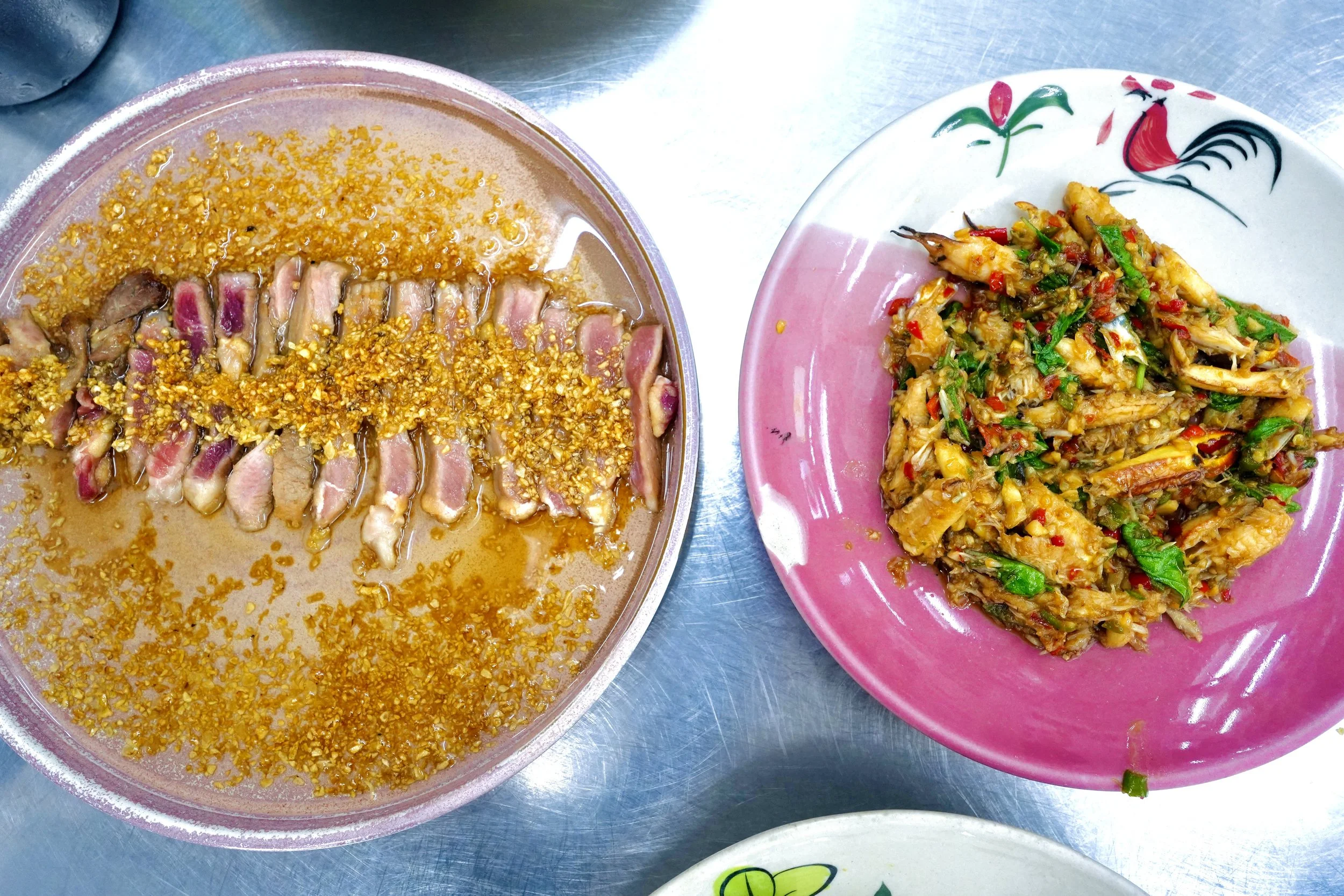
A familiar plate in a city that makes even the familiar feel new
My first real meal back in Bangkok wasn’t noodles or curry or anything pulled from a street cart. It was steak and stir-fried crab — simple at first glance, comforting in all the right ways. I found it at Louisvanich, a neighborhood restaurant sitting just steps from Chulalongkorn University.
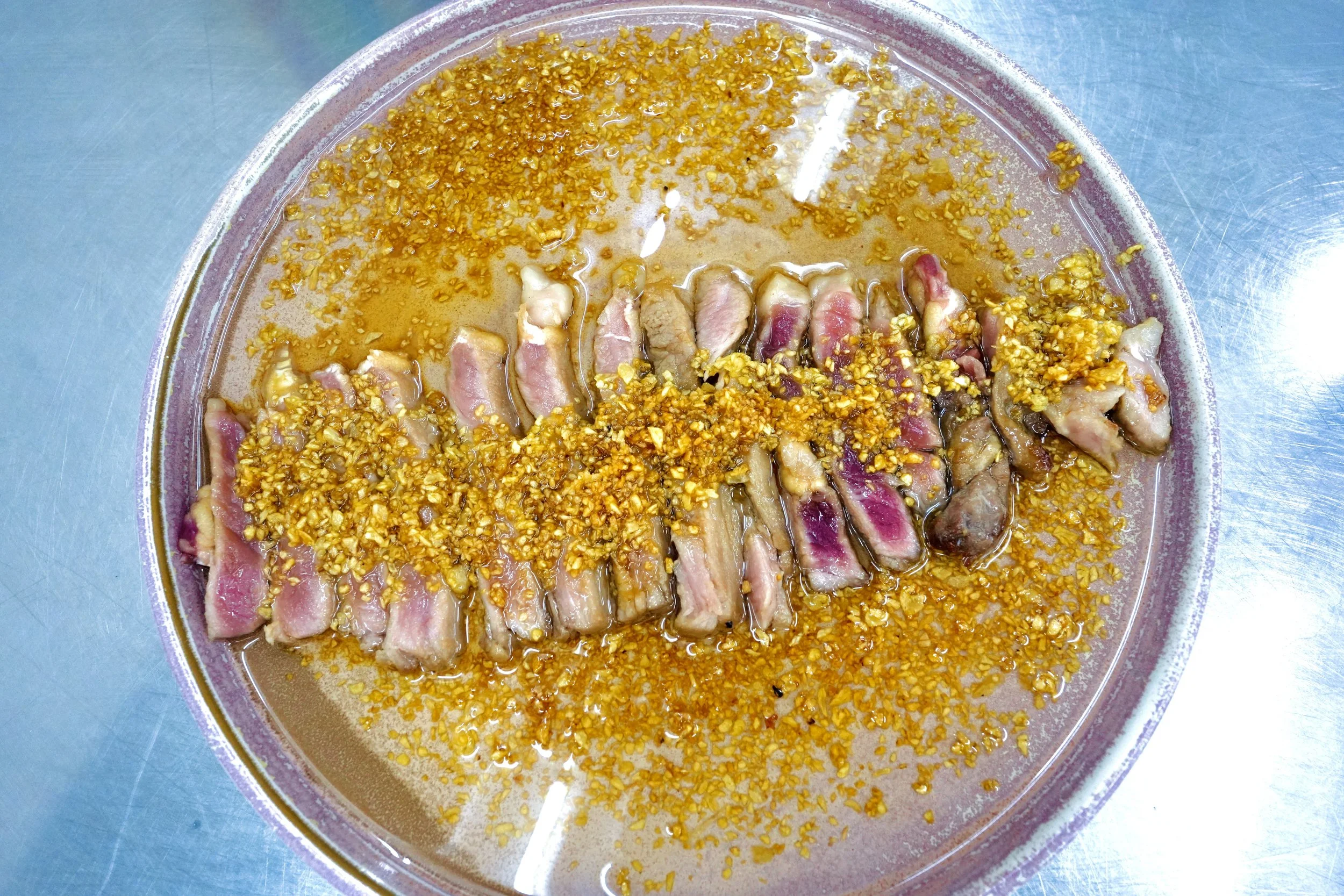
Straightforward, satisfying, and served with the kind of efficiency Bangkok has mastered
But what set the tone wasn’t just the food. It was the room. Louisvanich buzzed with life: students spilling into tables, conversations crossing over one another, the clatter of lunch trays and chopsticks and stainless-steel cups. It felt young, hungry, full of motion — the universal soundtrack of a campus neighborhood.
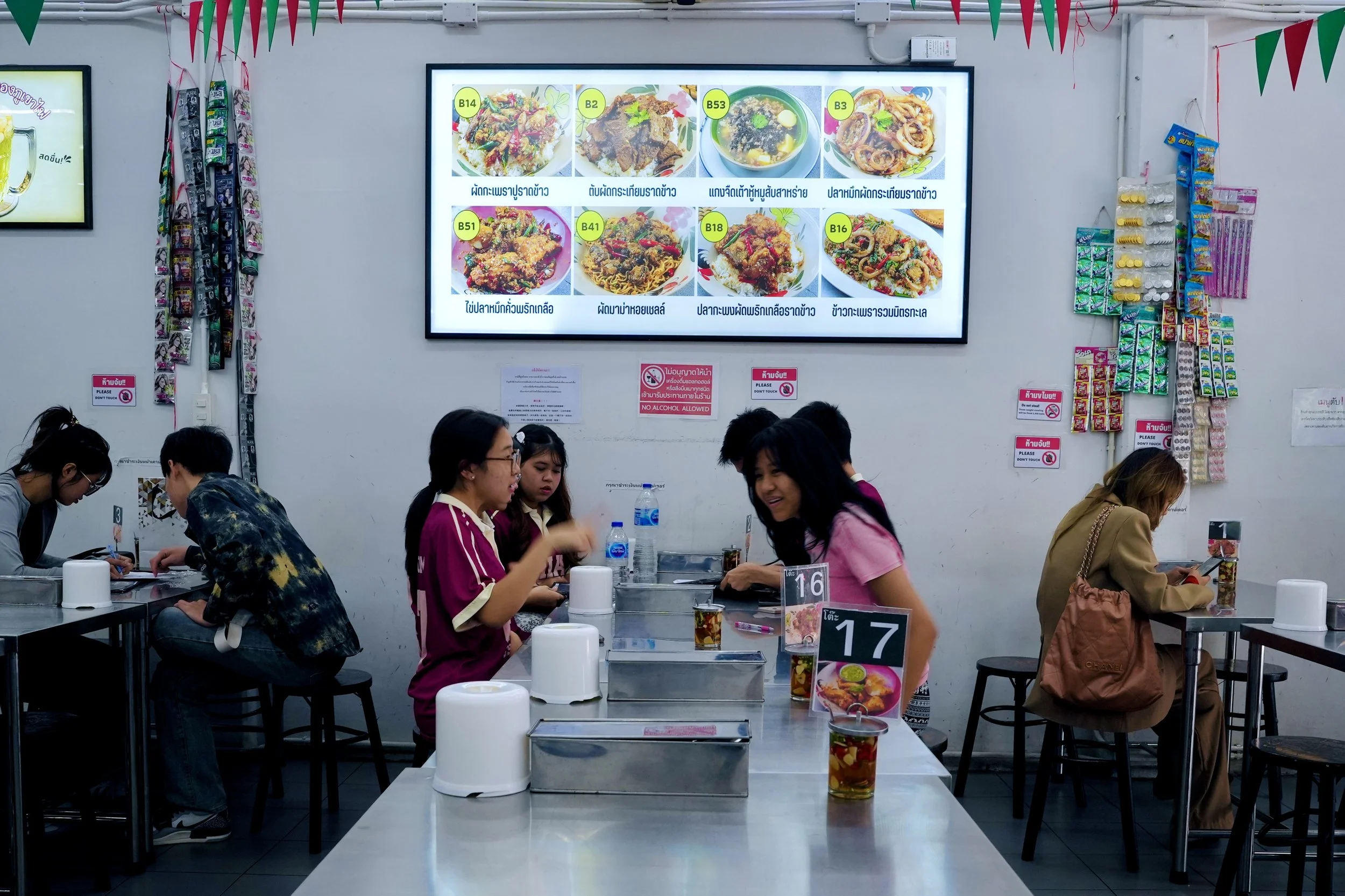
Next to Chulalongkorn University, Louisvanich hums with student energy every hour of the day
The energy was contagious. There’s something grounding about eating in a place like this — no pretense, no performance, just the familiar comfort of people taking a break from a busy day to enjoy something warm and satisfying.
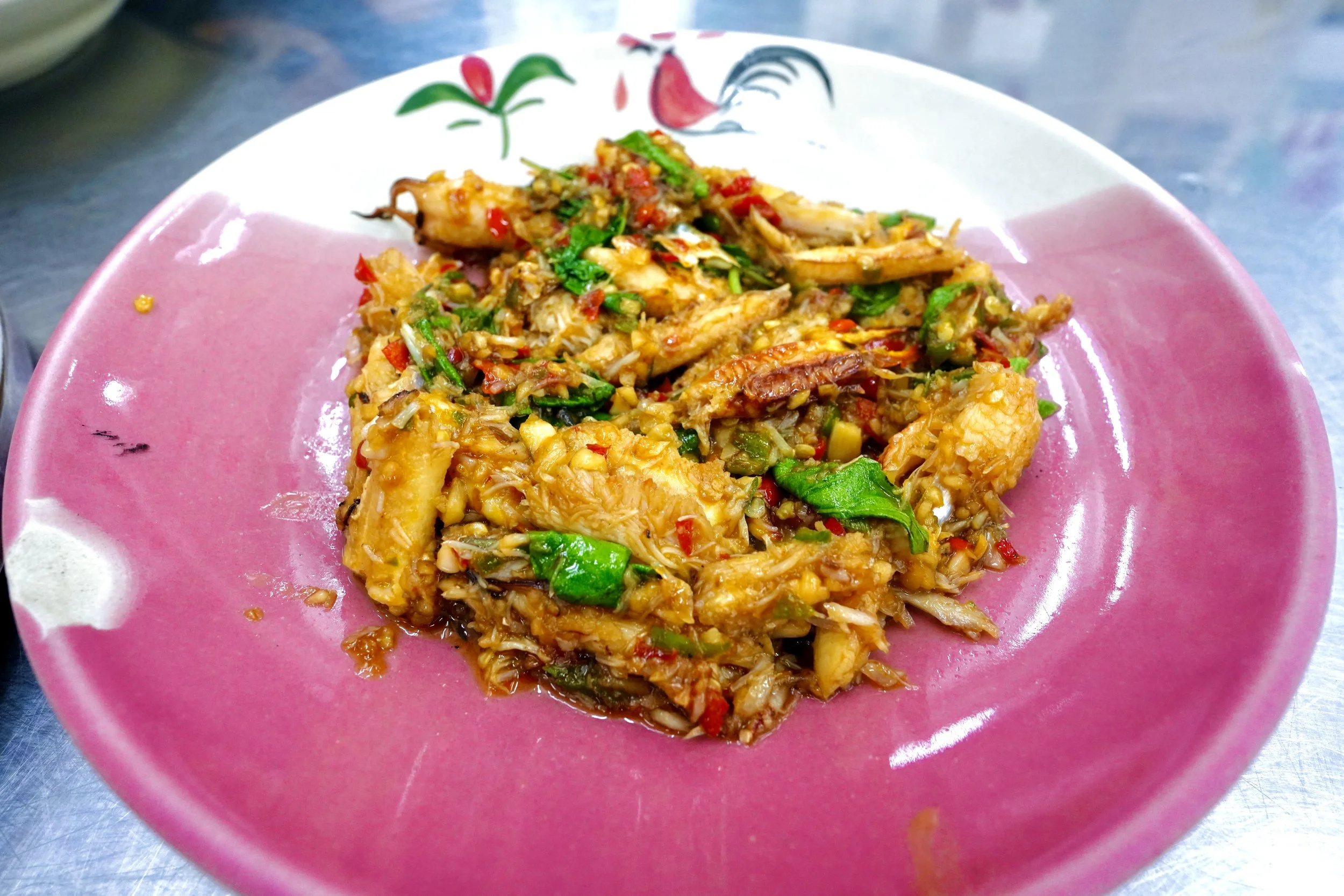
Even comfort food here carries a richness that lingers
The crab was fragrant and buttery, each bite reminding me that Bangkok’s food culture doesn’t have to be complicated to be memorable. Sometimes the best introductions are the soft ones — the ones that ease you back into the city’s rhythm.
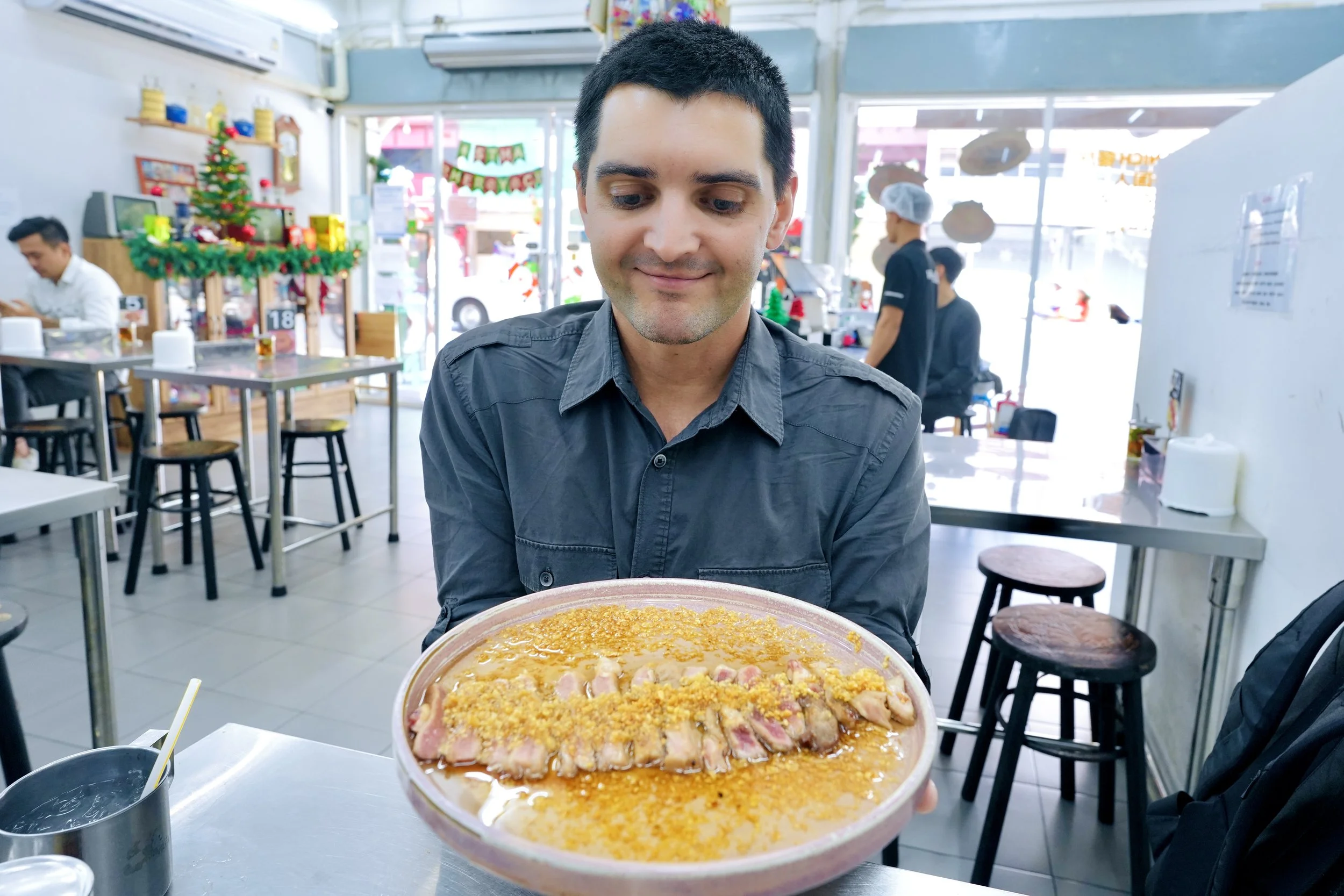
Sometimes the first meal tells you exactly what kind of trip you’re about to have
Holding the plate, surrounded by the laughter and chatter of students, I felt myself settle back into Bangkok — a city that embraces you quickly, through sound, through heat, and always through food. Louisvanich became the perfect beginning.
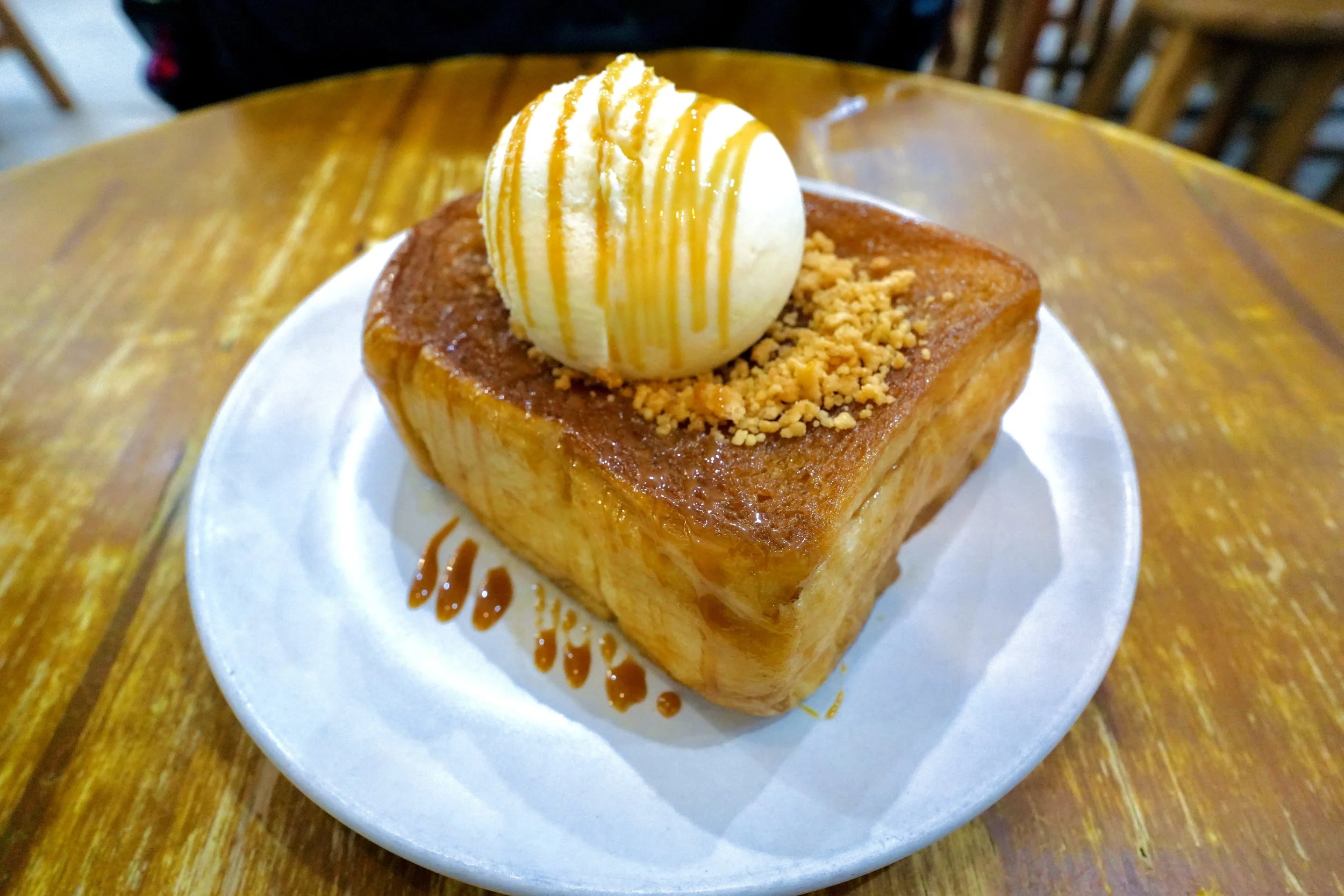
Bangkok ranks among the world’s top café cities — and dessert culture is one of its brightest signatures
If Louisvanich felt like a welcome, then June Pang felt like permission to slow down. Honey toast — a warm, butter-soaked tower topped with ice cream and caramel — is one of Bangkok’s quiet obsessions. Born from Japanese inspiration and shaped by Thai sweetness, it’s the kind of dessert you spend a few extra seconds admiring before taking the first bite.
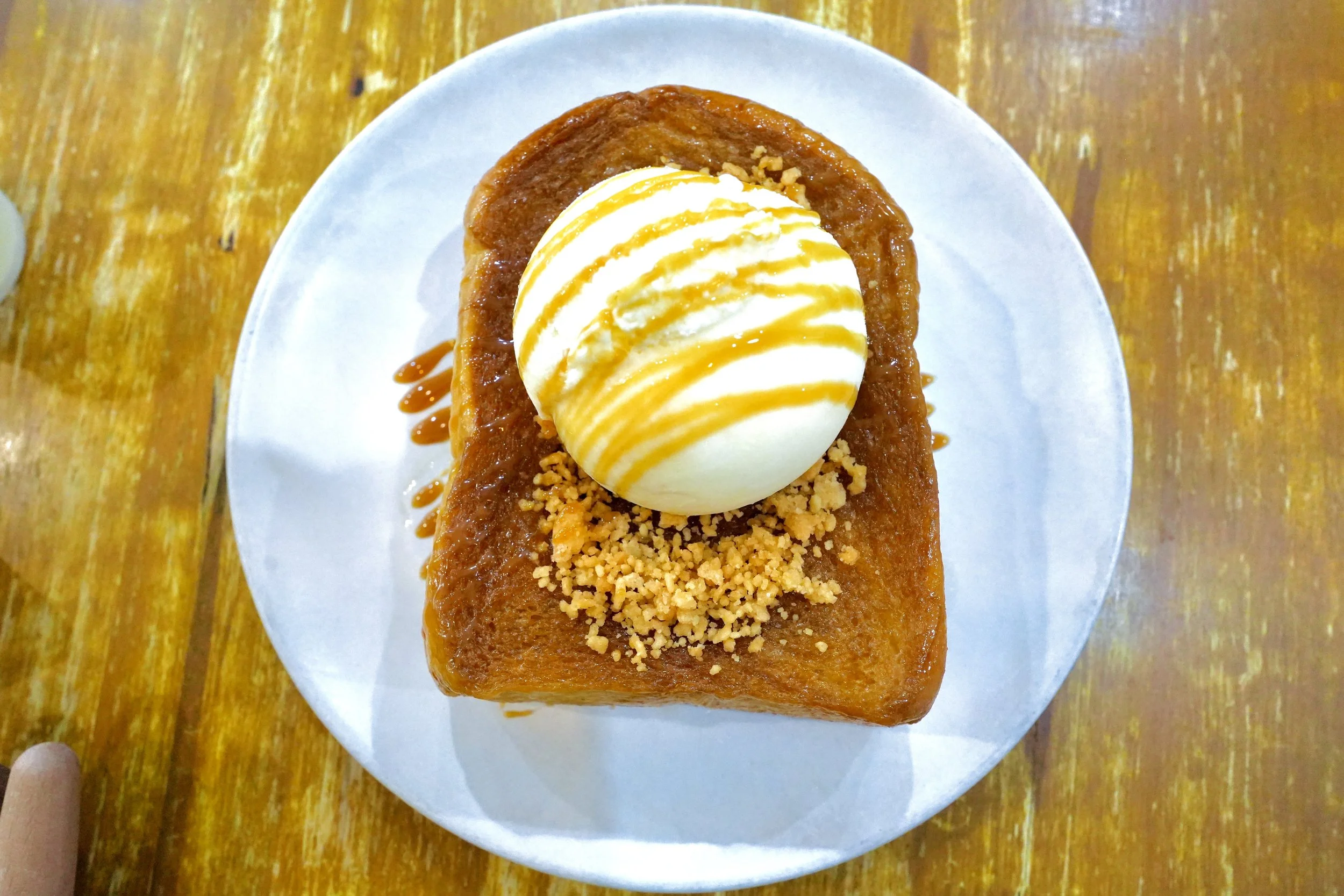
In a city known for noise, June Pang gives you quiet. Soft light, warm wood, gentle chatter — a calm that expands around you like the moment before a first bite.
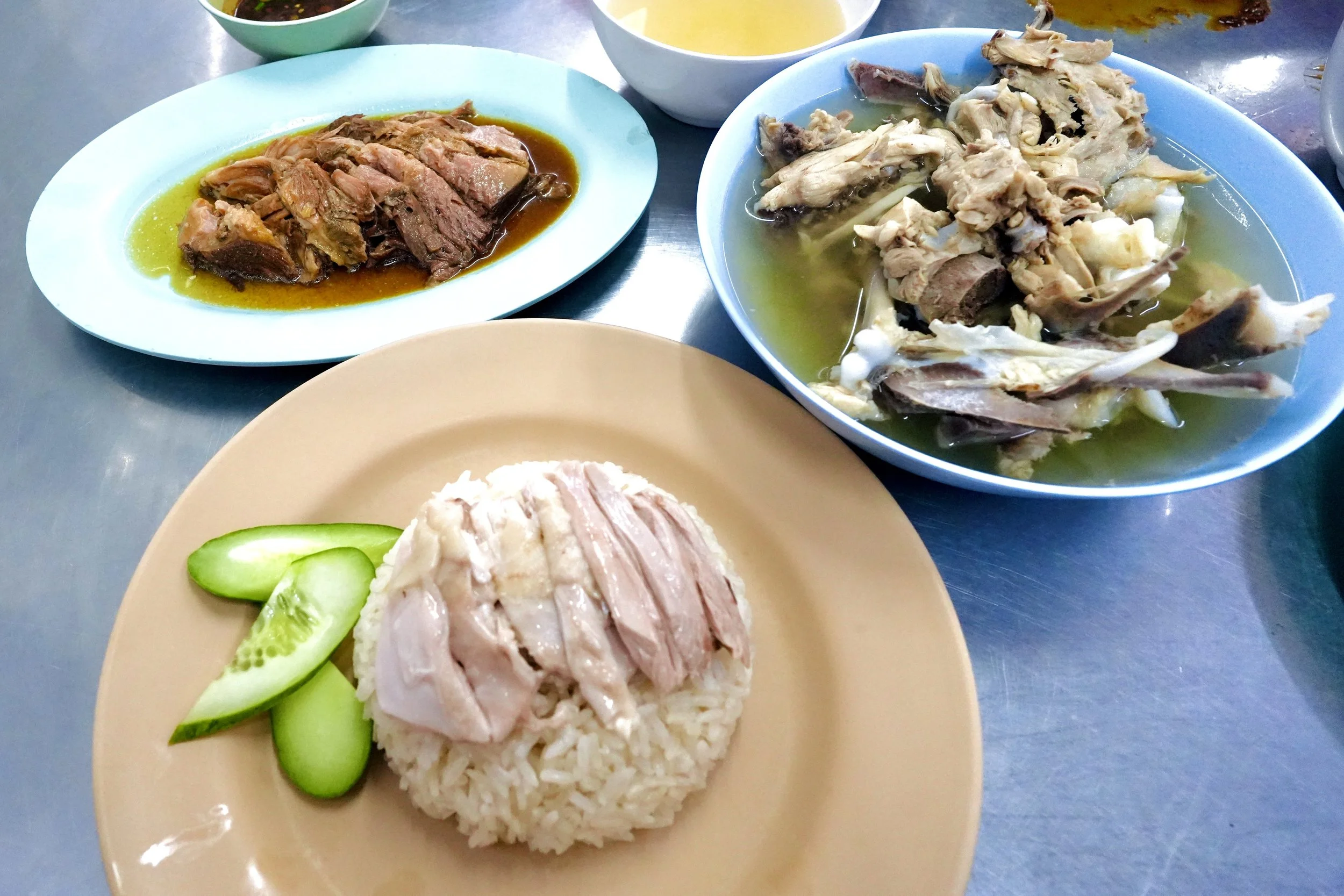
Chicken rice, braised pork, and broth — the whole Go-Ang experience in one frame
It’s one thing to eat Bangkok’s famous chicken rice. It’s another to eat it at Go-Ang — a place that feels like it’s running on pure momentum. The metal tables are always full, the air buzzing with clinking spoons, quick footsteps, and the soft thud of cleavers hitting chopping boards. Nothing here stands still. Not the servers, not the steam, not even your plate for long.

Tables packed, spoons clinking, everyone moving to Go-Ang’s steady rhythm
From the moment you step inside, you’re folded into the rhythm of it all — squeezed between office workers, tourists, taxi drivers, aunties with shopping bags, and regulars who haven’t even looked at a menu in years. Go-Ang isn’t chaotic; it’s choreographed. Everyone knows where to move, even if you don’t.
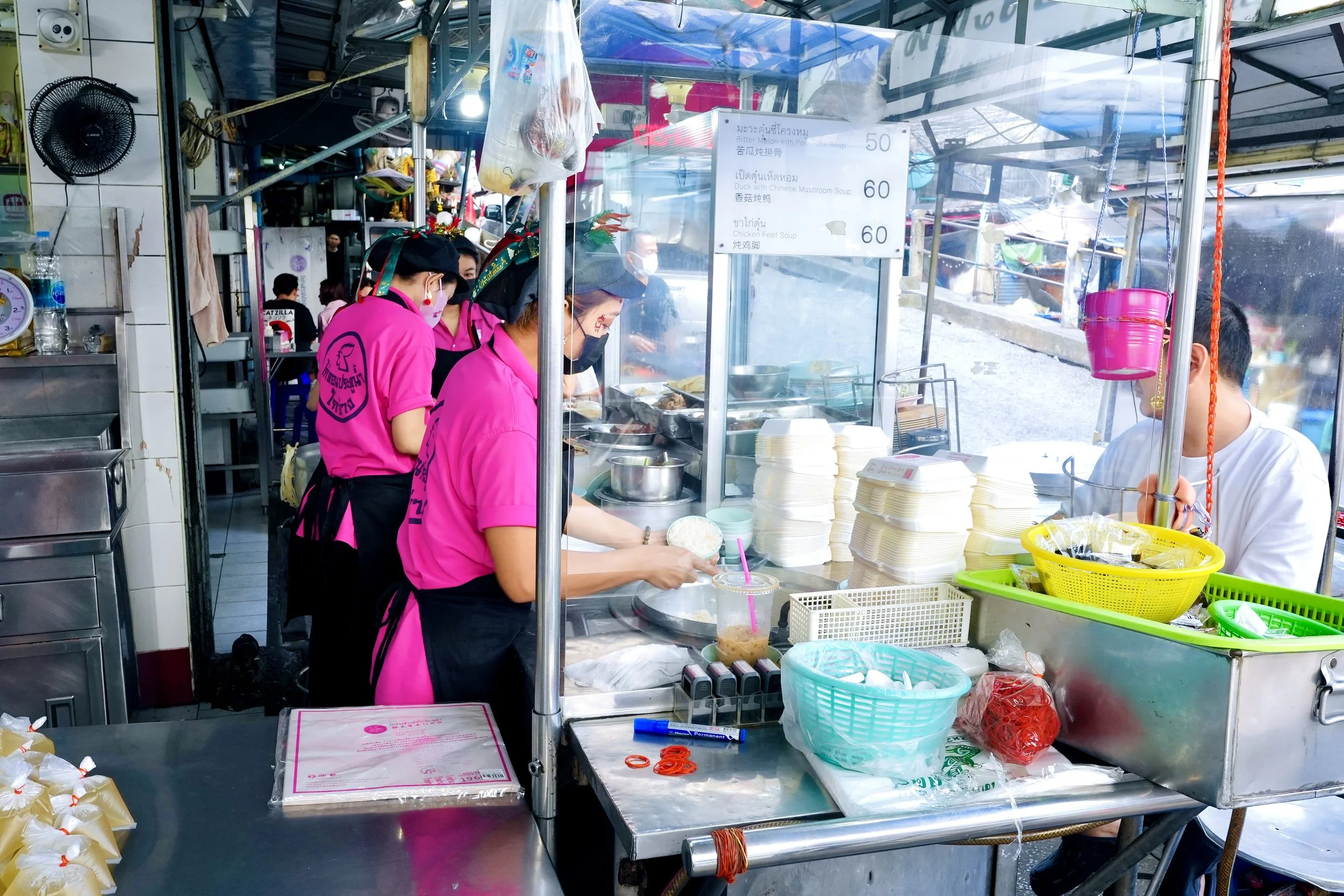
The pink-uniform crew, working with the speed and calm of longtime experts
At the front counter, the team in pink uniforms works with machine precision. Rice scooped, bowls handed off, plates stacked, chicken sliced with quiet authority. It’s the kind of operation you can only run when you’ve cooked the same dish thousands of times — and people still line up for more.
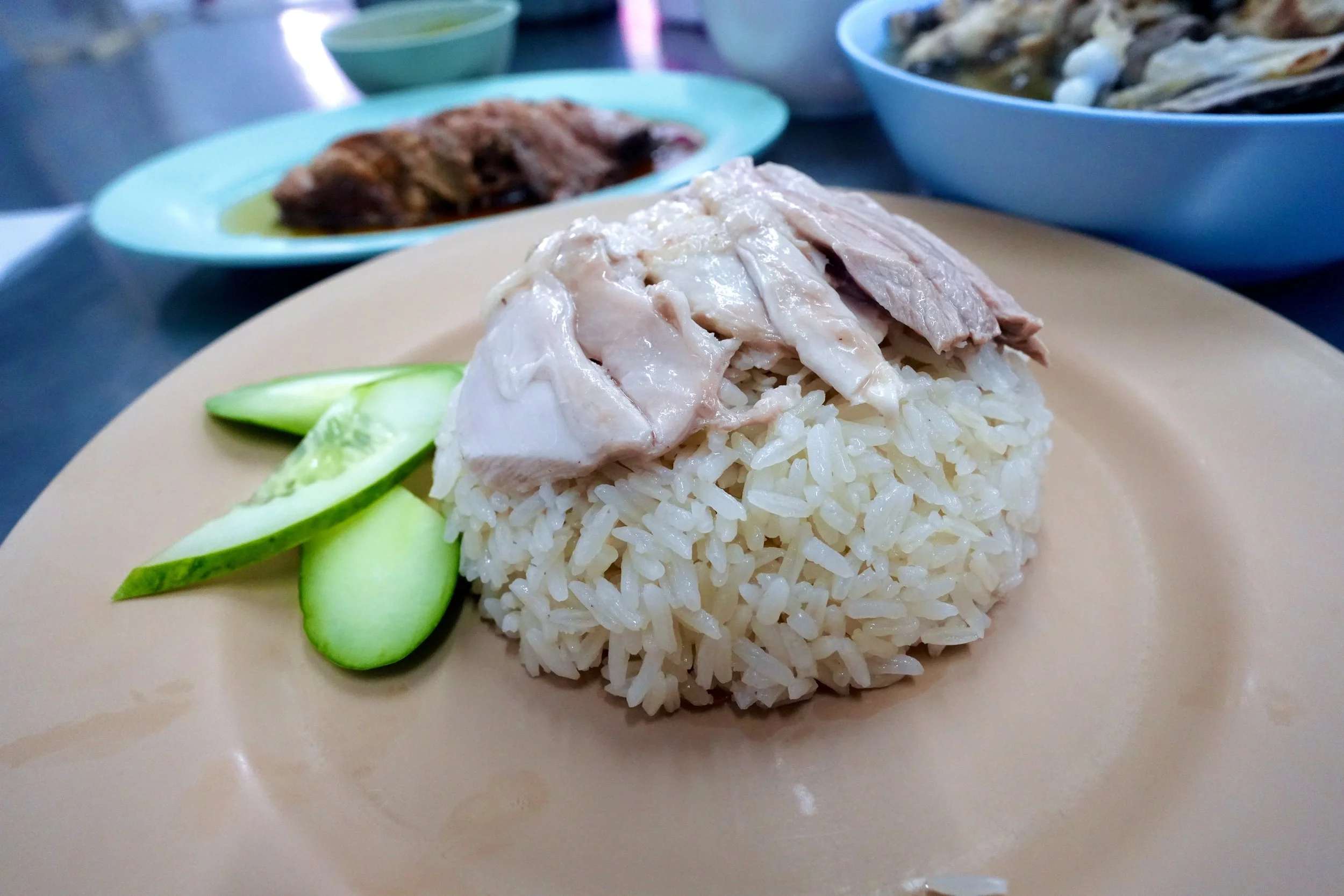
Soft poached chicken over fragrant rice — Bangkok’s simplest classic
The chicken arrives soft and pale, glistening with broth, resting over rice so aromatic it almost steals the spotlight. It’s simple, humble, honest — the reason this place earned a Michelin Bib and the reason everyone here looks so content between bites.
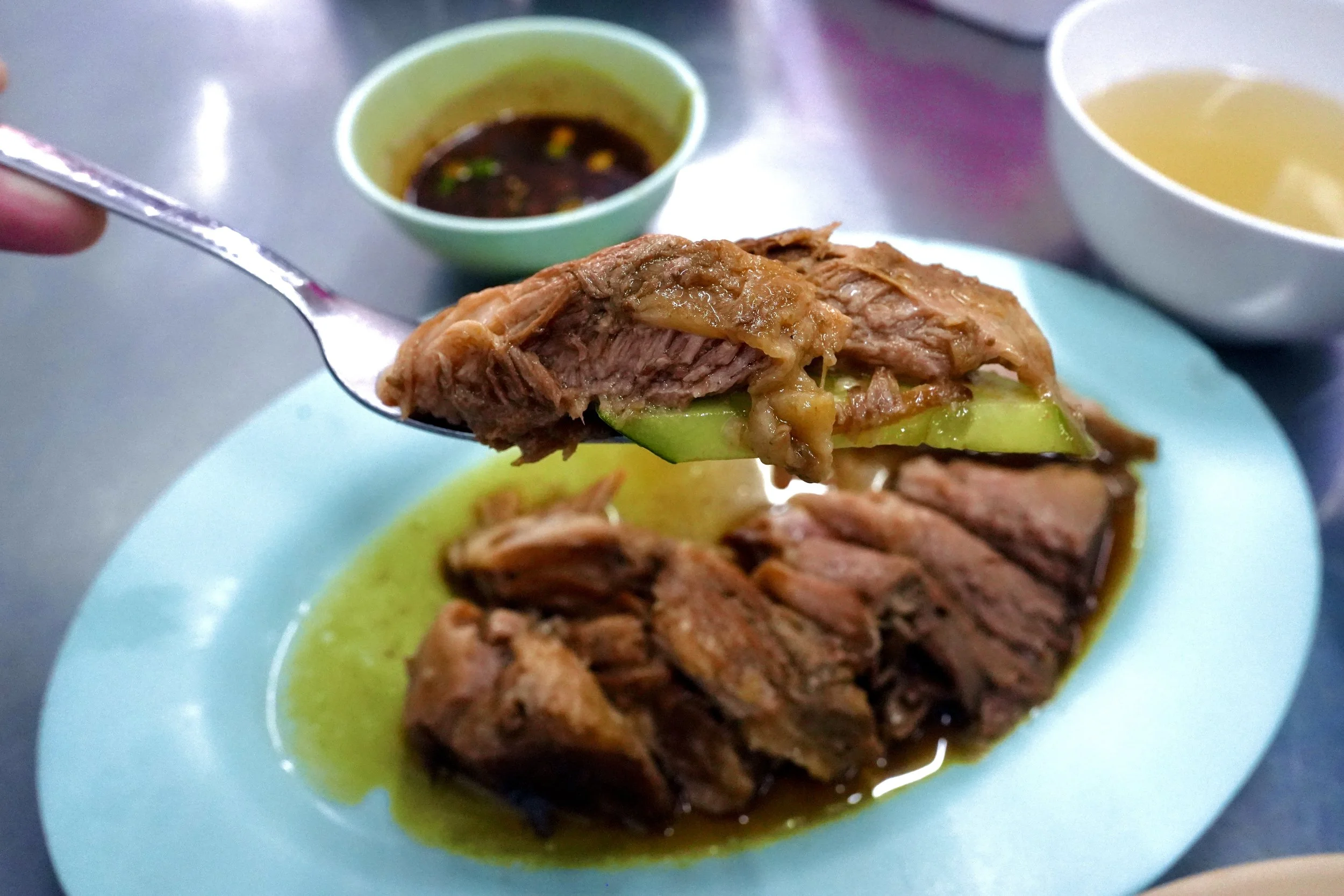
Fall-apart tender pork in sweet broth, the quiet star of the menu
But the secret star? The braised pork. Rich, sweet, fall-apart tender — the kind of dish that makes you stop mid-conversation. It’s deeper, darker, slower in flavor than the chicken rice, like the memory of a home-cooked meal someone perfected over time.
Go-Ang doesn’t need to convince you of anything. You’ll taste the reason people wait outside.
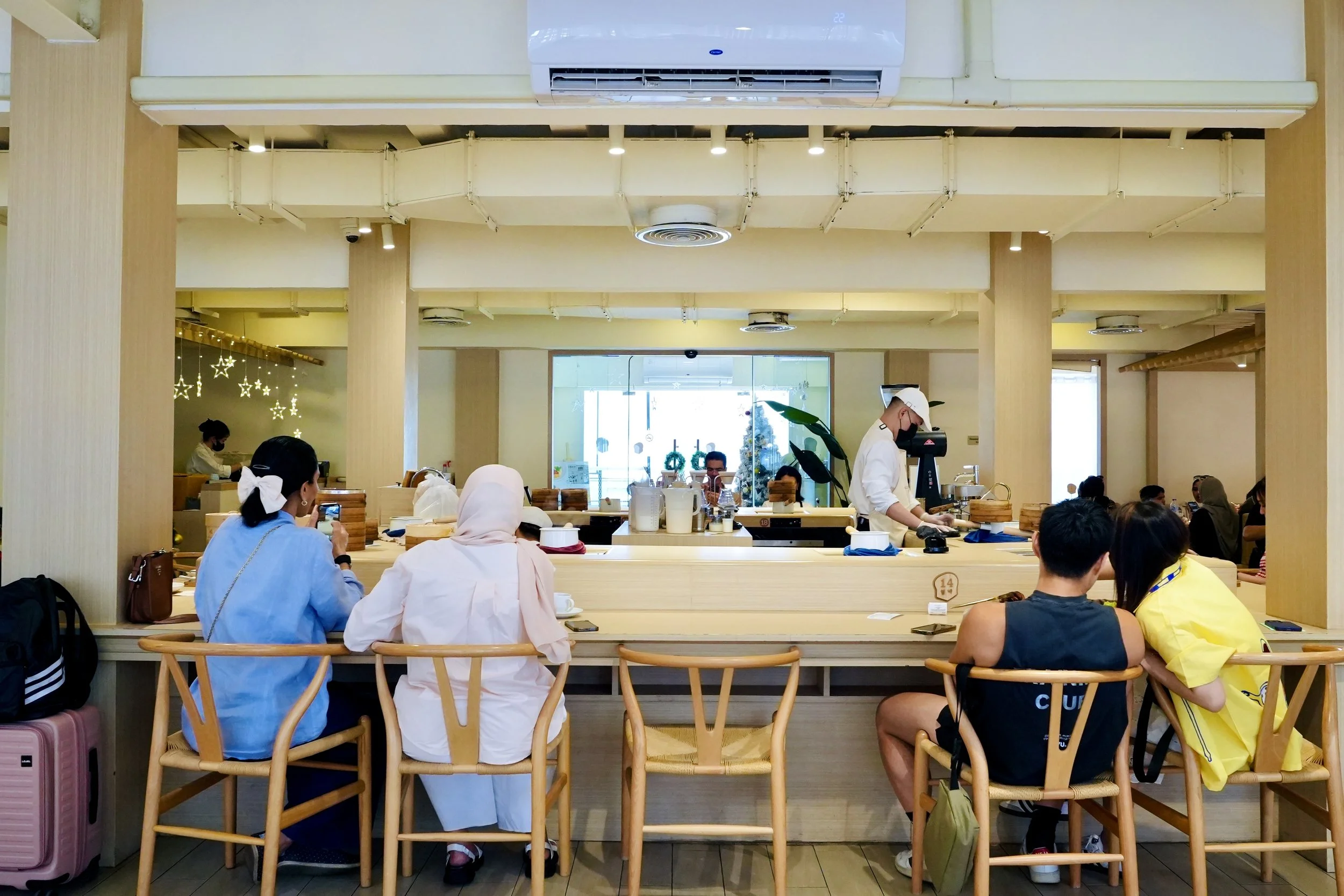
A calm, bright space in the middle of Siam’s constant motion
Mil Toast House feels like stepping out of Bangkok without ever leaving it. The moment you walk in, the noise of Siam softens — replaced by pale wood, clean lines, and a hush that settles naturally. People speak quietly, forks move gently, and the café glows like morning light, no matter the hour. The menu is simple, almost minimalist, but the space is not. It’s decorated with intention — revealing the identity of the café not through loud branding but through warm atmosphere.
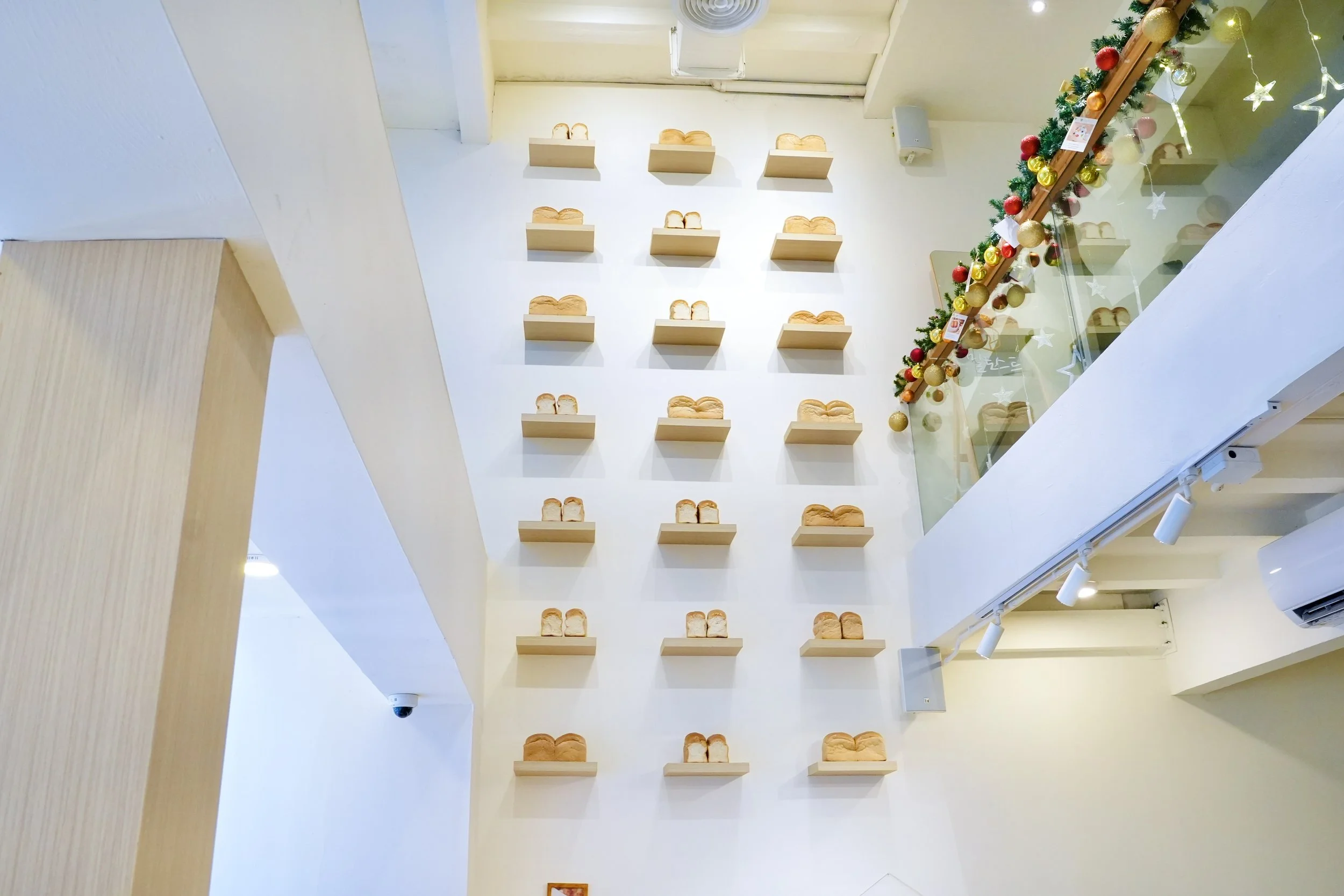
A playful wall of little loaves — Mil Toast House’s subtle humor
Even the walls participate in the aesthetic. Rows of miniature wooden bread sculptures climb toward the ceiling, giving the space a childlike charm without disrupting its calm sophistication. It’s whimsical, but it stays elegant — a balance Bangkok cafés are uniquely good at striking. And then the toast arrives. It looks simple at first glance — two petite slices shaped like butterfly wings, dusted softly with powdered sugar. But the shape, the texture, the attention to detail all say the same thing: this café takes “toast” seriously.
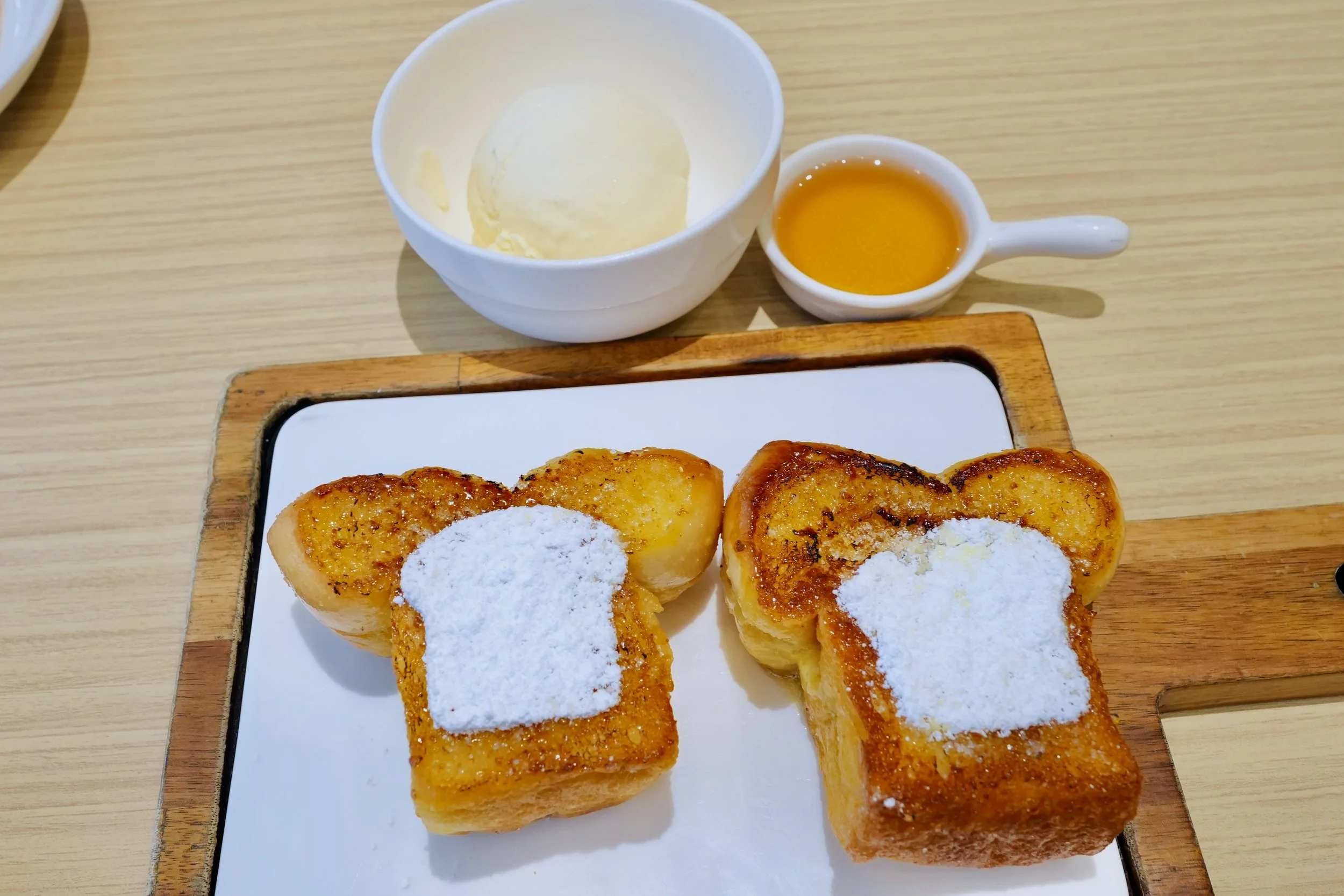
The iconic butterfly toast, neat and golden
Up close, it becomes clear why this place is so loved. The toast is thick and custardy inside, crisp and buttery on the edges, and sweetened just enough to stand on its own. The honey and ice cream on the side are supporting actors — the toast is the star.
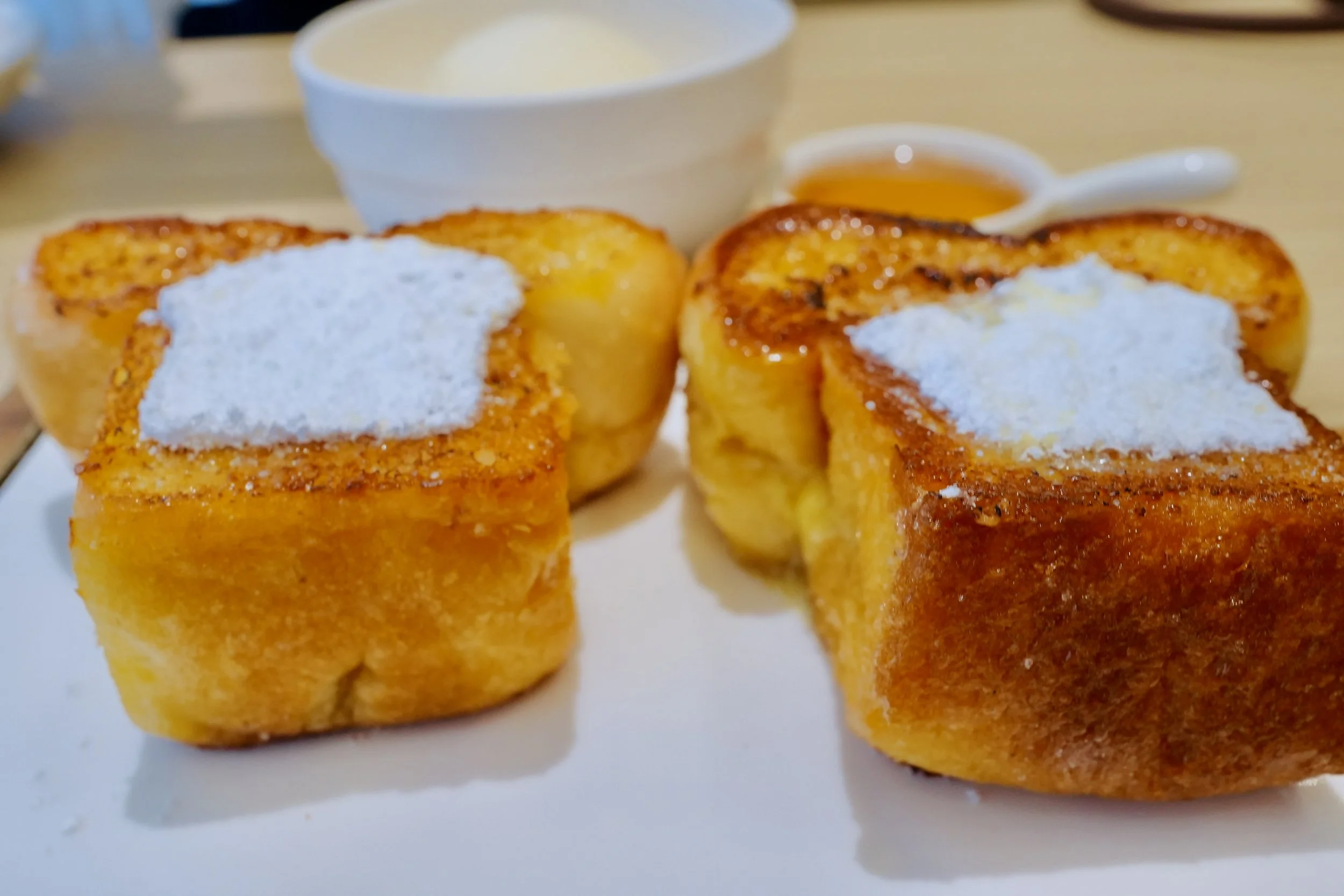
Texture, warmth, and edges caramelized just enough
Every bite tastes like comfort engineered with precision. It’s nostalgic — but upgraded. It’s simple — but not basic. This is the toast that turned a café into a destination.
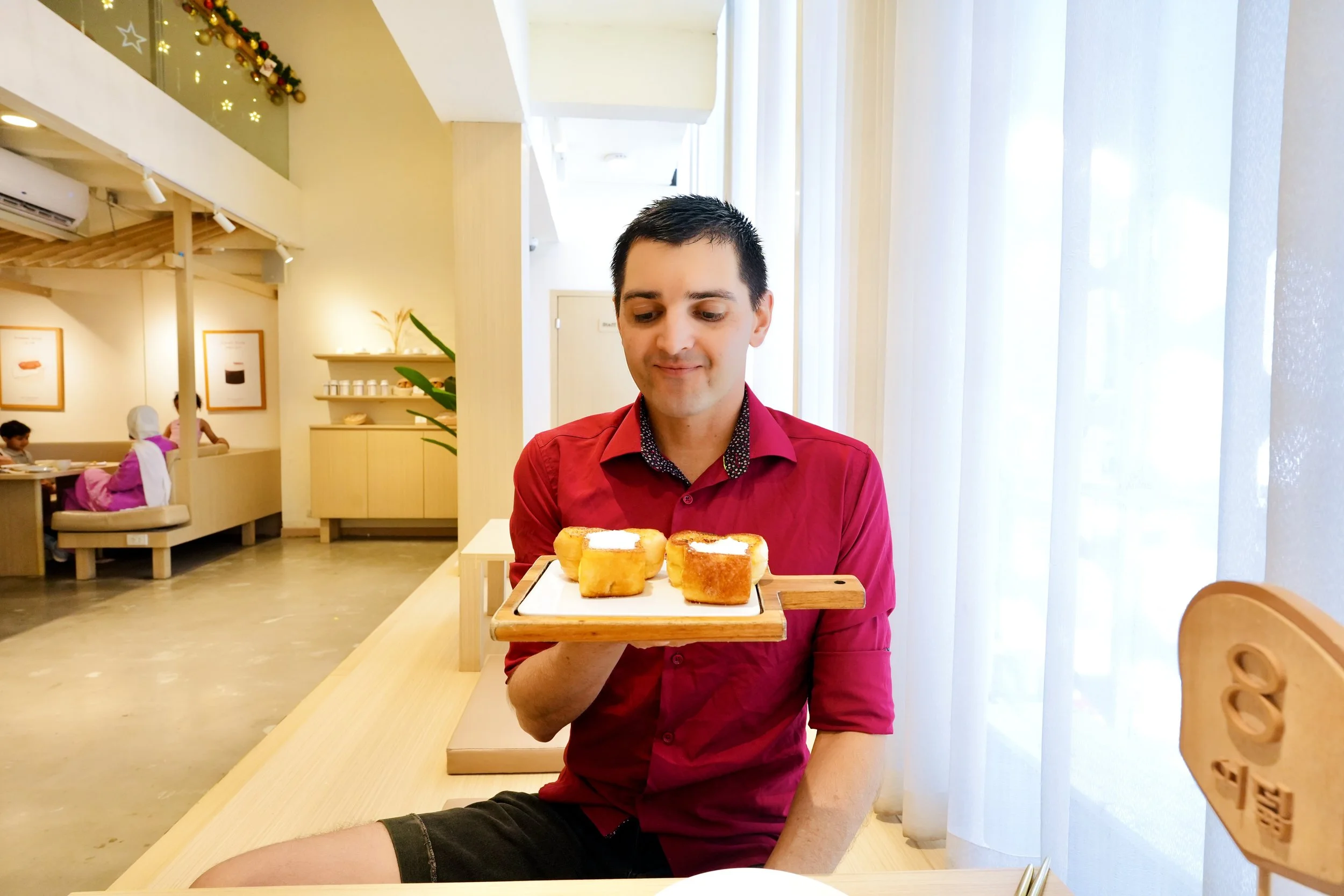
A small, sweet pause in the day
Sitting there with the toast on a wooden serving board, you can feel the world outside slow down. Bangkok rarely stops moving, but Mil Toast House creates a pocket of stillness big enough for one dessert, one breath, one quiet moment.
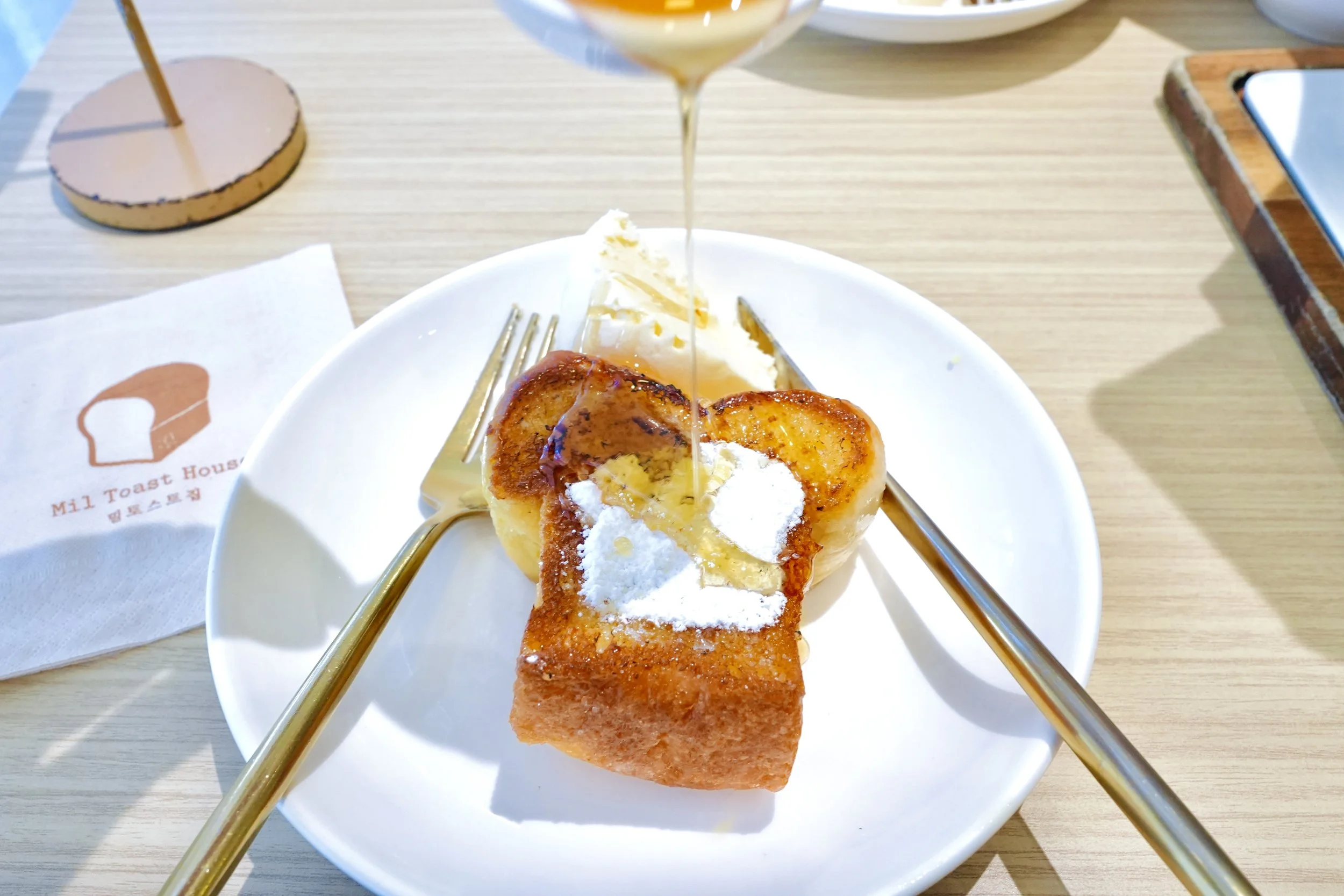
Honey falling like warm sunlight
The honey drizzle is the final touch — a small ceremony. Warm gold landing on crisp edges, pooling into soft centers, turning the toast into something you don’t rush through. Some foods are eaten; this one is experienced.
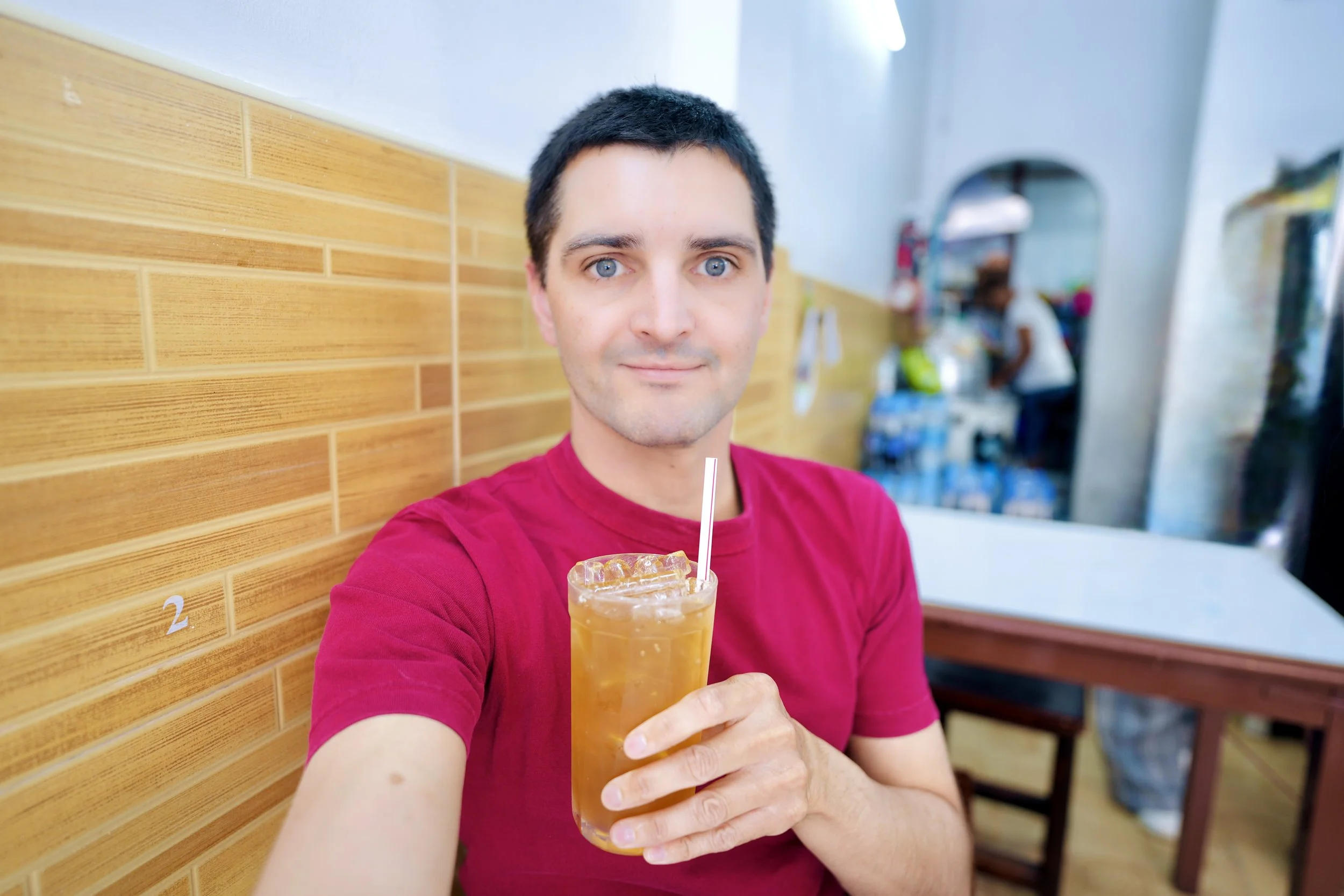
Cooling down with a glass of iced tea on a hot afternoon
Inside Baan Pad Thai, the air buzzed with the scent of woks hitting high heat and the clatter of metal spoons against plates. Everything felt humble and unfussy — the kind of place where the food does all the talking.
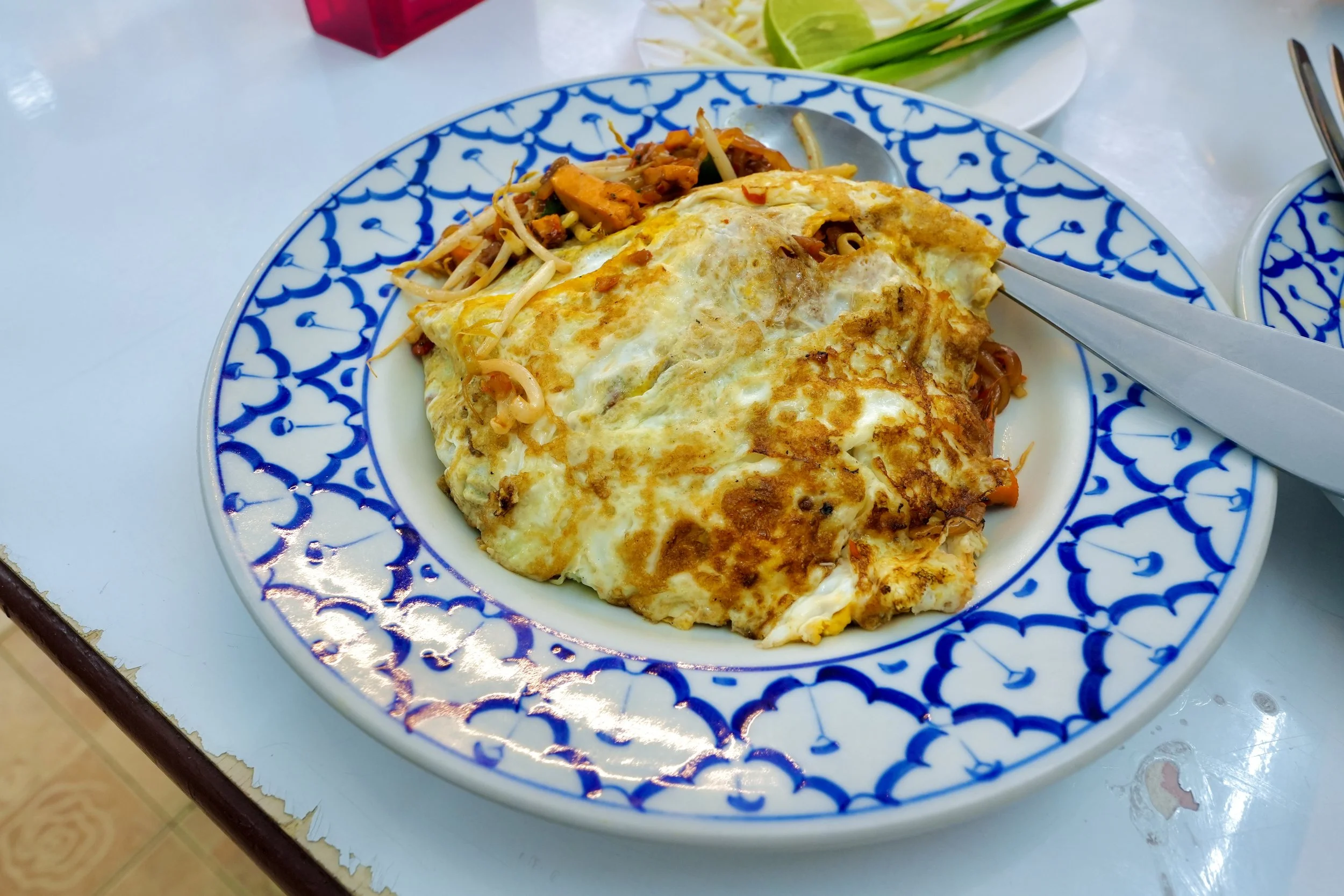
Pad Thai wrapped in a golden omelet — soft, smoky, comforting
The Pad Thai came wrapped in a thin omelet, a bundle of sweet-savory noodles waiting inside. Each cut into the egg revealed steam and the aroma of tamarind and garlic.
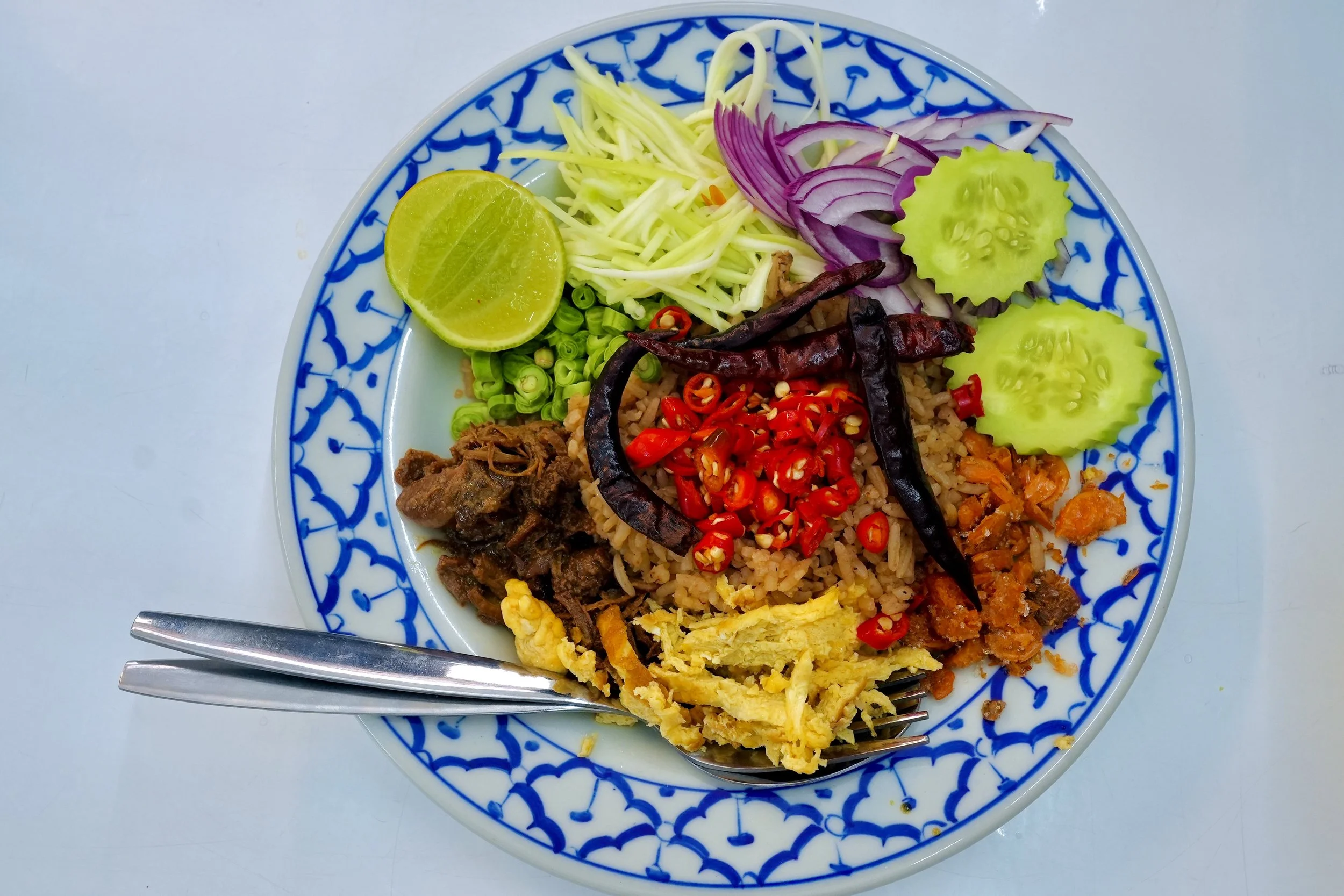
Khao Kluk Kapi — a colorful plate of textures and flavors
Khao Kluk Kapi looked like a painter’s palette: lime, mango, onion, long beans, dried chilies, shredded egg, sweet pork — each component waiting to be mixed into the rice.
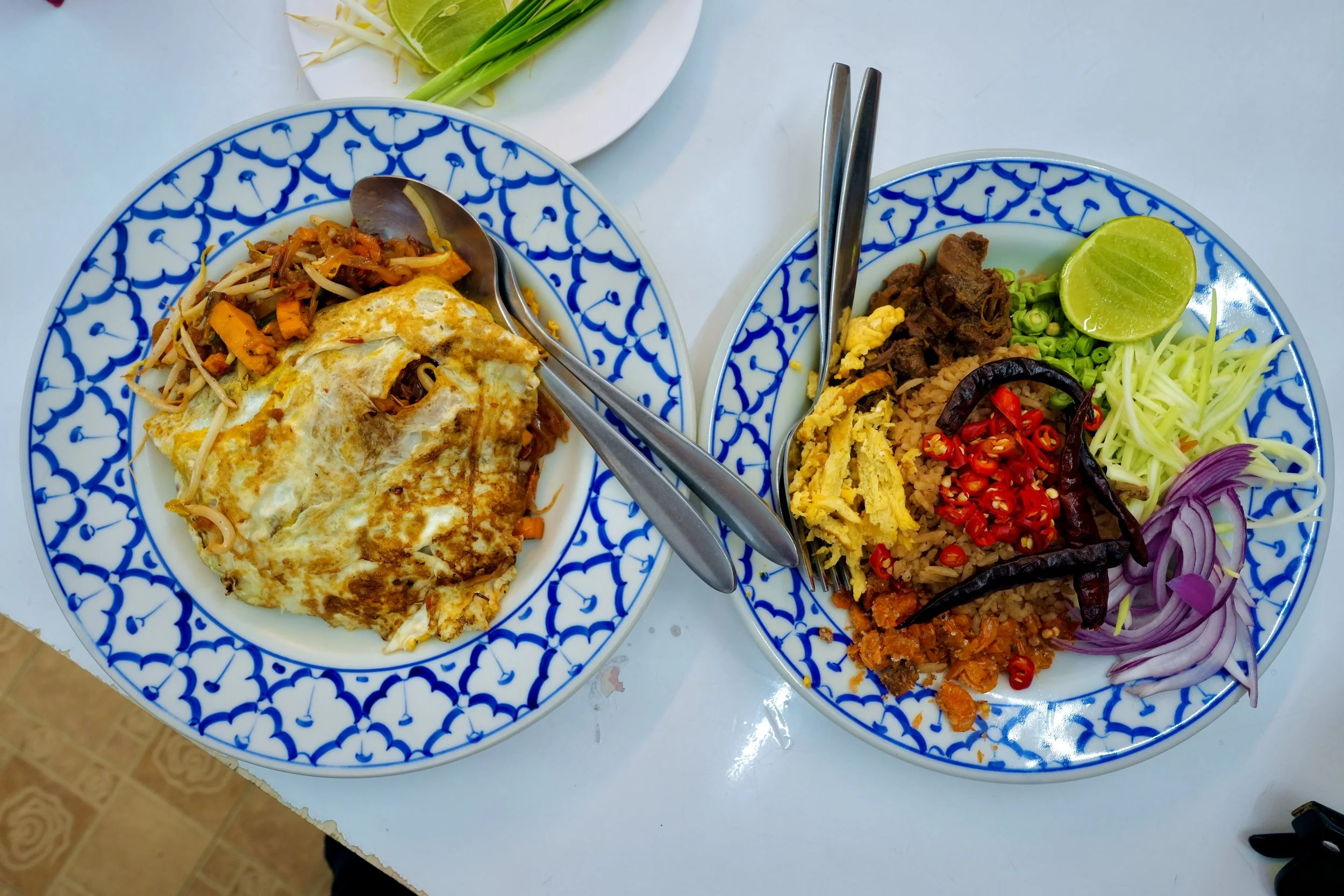
Two Thai classics side by side — expressive and comforting
Together, the dishes felt like two sides of Thai cooking: one wrapped and subtle, the other bold and expressive.
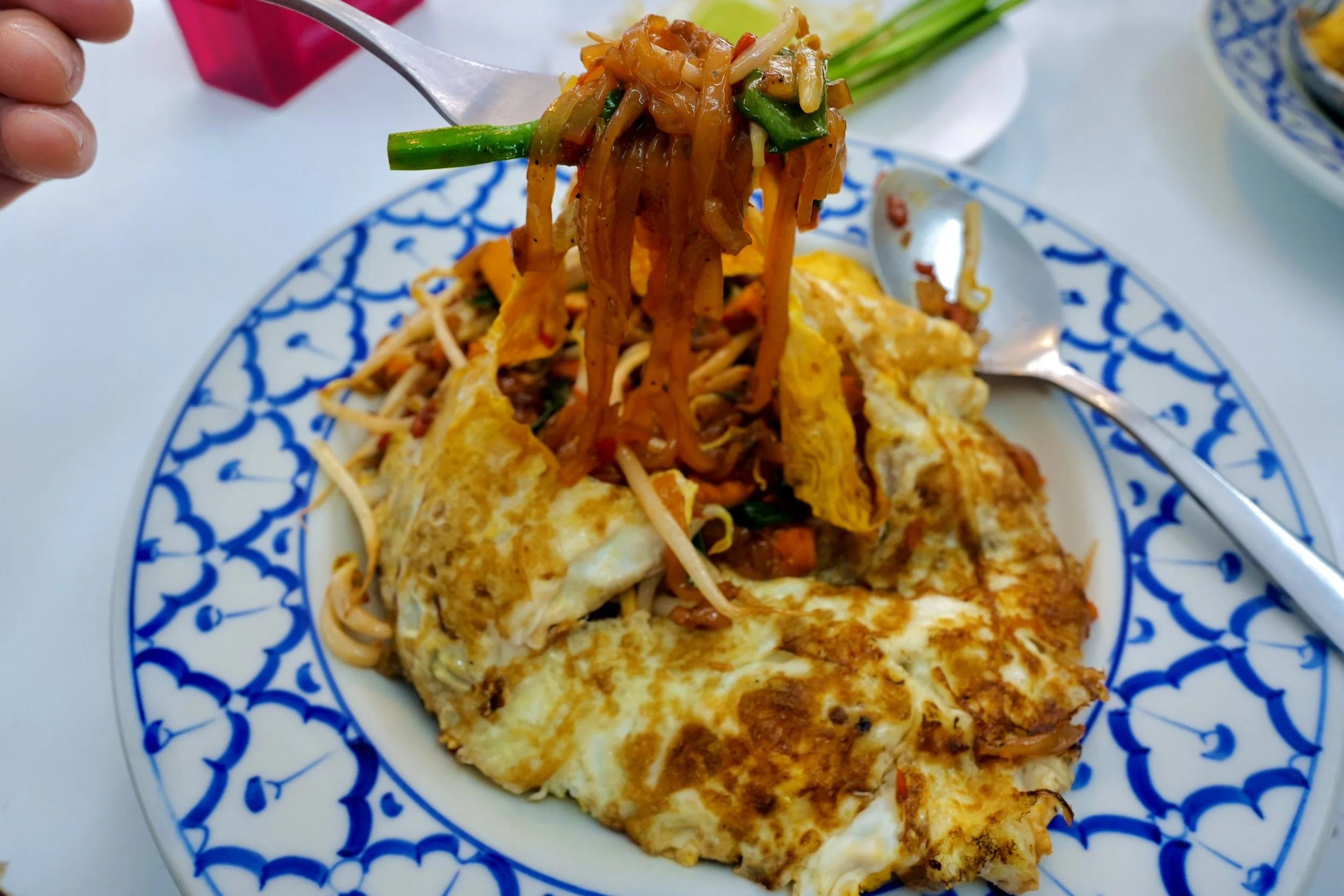
A final bite of noodles — sweet, smoky, and unforgettable
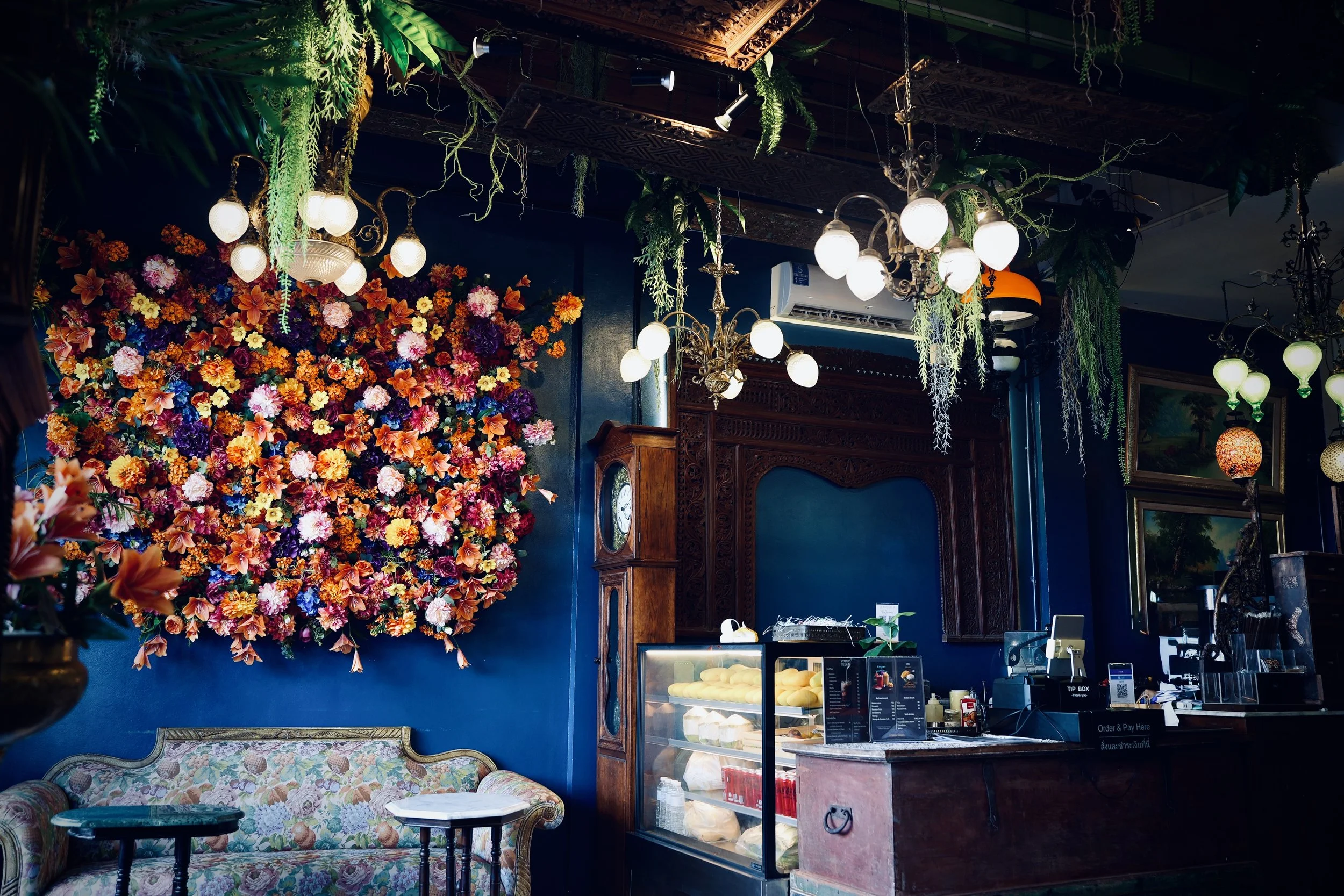
A café dipped in midnight blue and warm gold — a floral daydream tucked along a Bangkok sidewalk
There are cafés that serve desserts, and then there are cafés that build entire worlds around them. Samphanthamitr feels like the latter — a theatrical space where chandeliers hang like floating moons and a wall of flowers glows against deep indigo paint. It’s the kind of place that makes you slow down before you’ve even seen the menu.
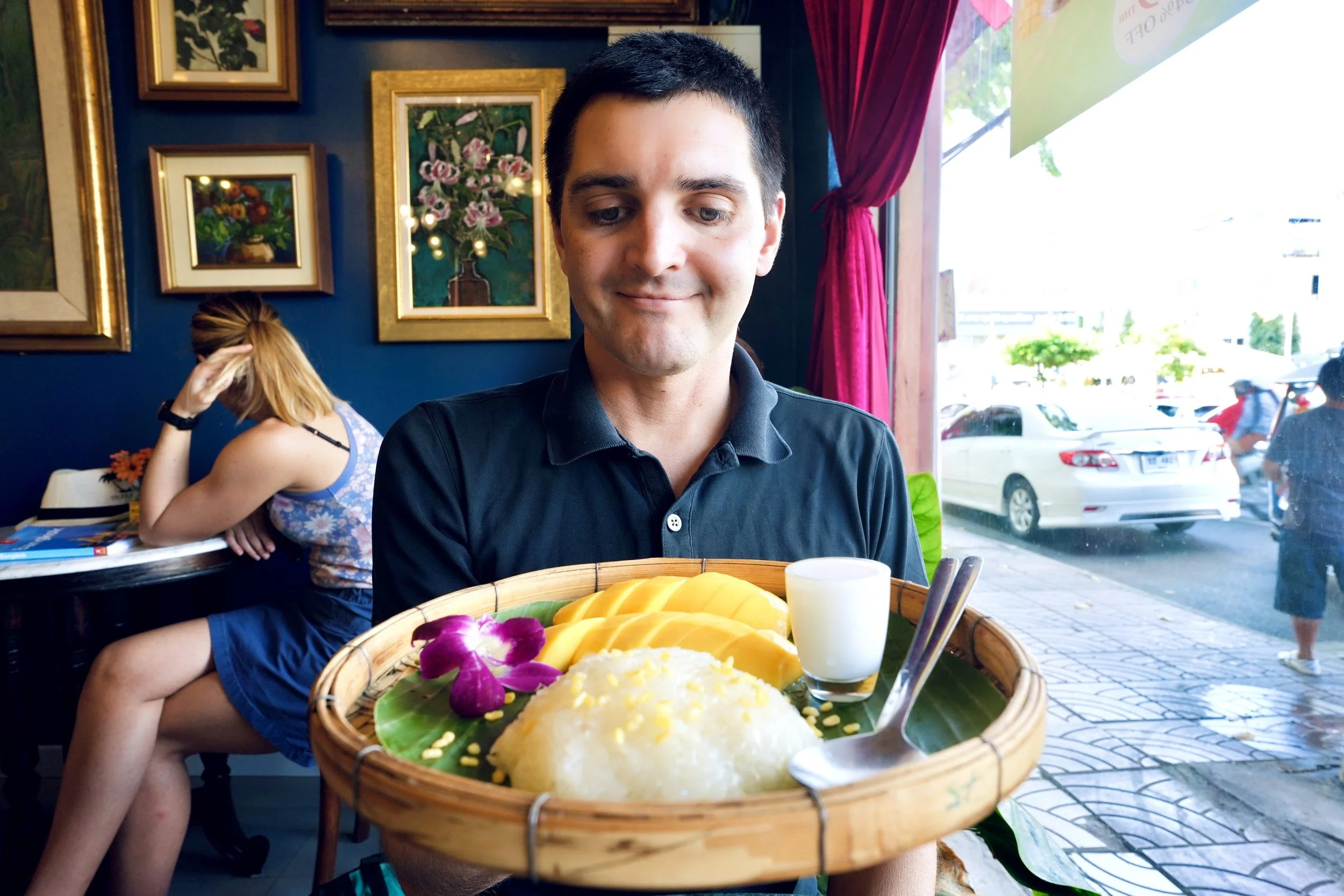
The moment of arrival — mango sticky rice presented like an offering of sunlight
I sat by the window, where soft afternoon light drifted through velvet curtains. The mango sticky rice arrived in a bamboo tray, arranged so beautifully it felt ceremonial — golden slices fanned like petals, sticky rice glistening beneath a scatter of crisp mung beans, a small cup of coconut cream waiting at the side like a finishing touch.
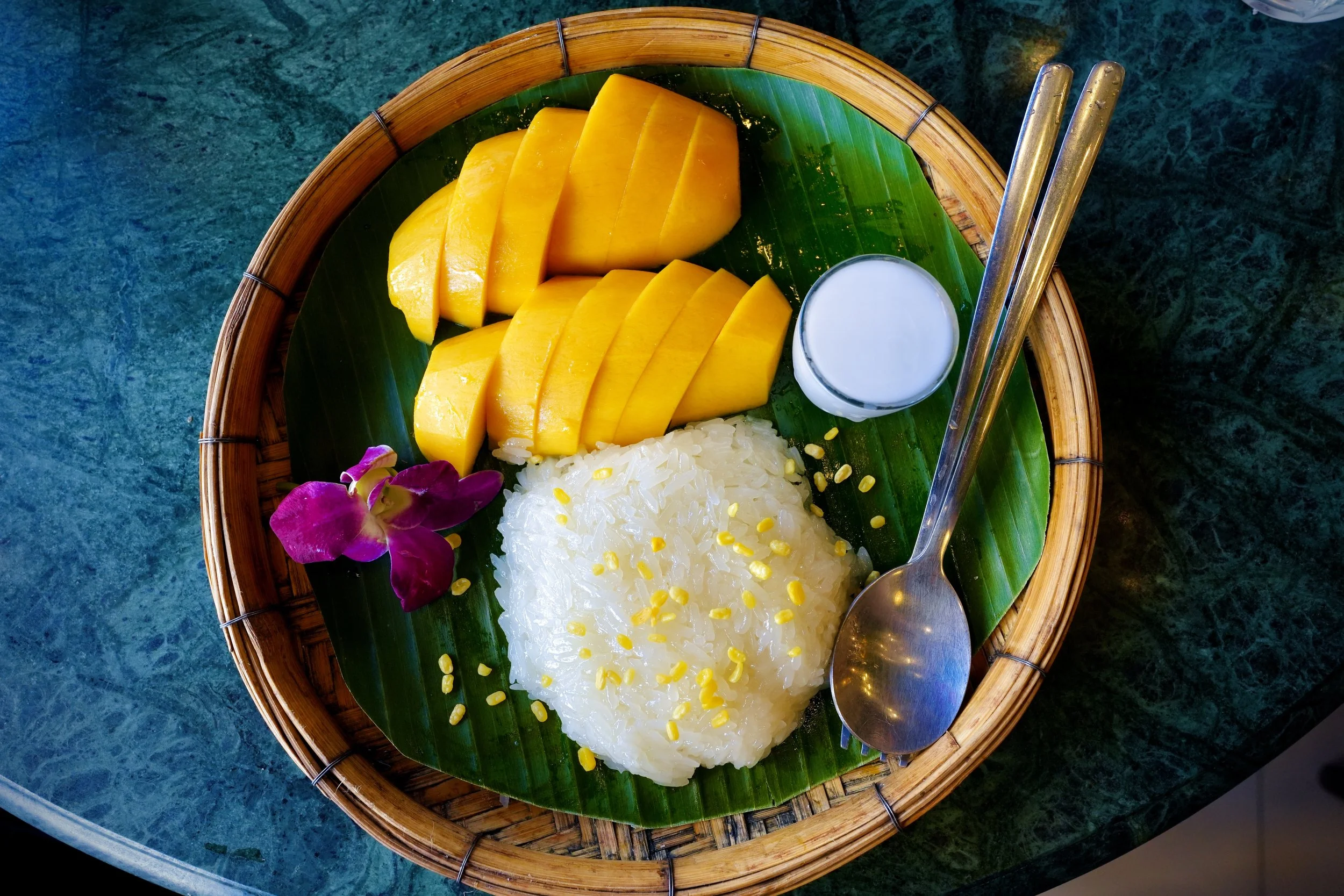
Bangkok’s iconic dessert — sweet mango, warm sticky rice, and cool coconut cream
The first bite was all comfort and brightness: warm rice, cool cream, mango that tasted like it had stolen its sweetness directly from the sun. Even with the café’s ornate décor and the quiet bustle of people around me, the dish stayed simple, honest, unmistakably Thai. This wasn’t just dessert. It was a pause in the day — a reminder that even in a city as energetic as Bangkok, there are pockets where time slows just enough for something sweet.
To see more photos & videos from my travels visit the links below
happy traveling,
~Sean
