Bangkok: On Foot Across the City
Morning — Pathum Wan, Where the Day Begins Narrow
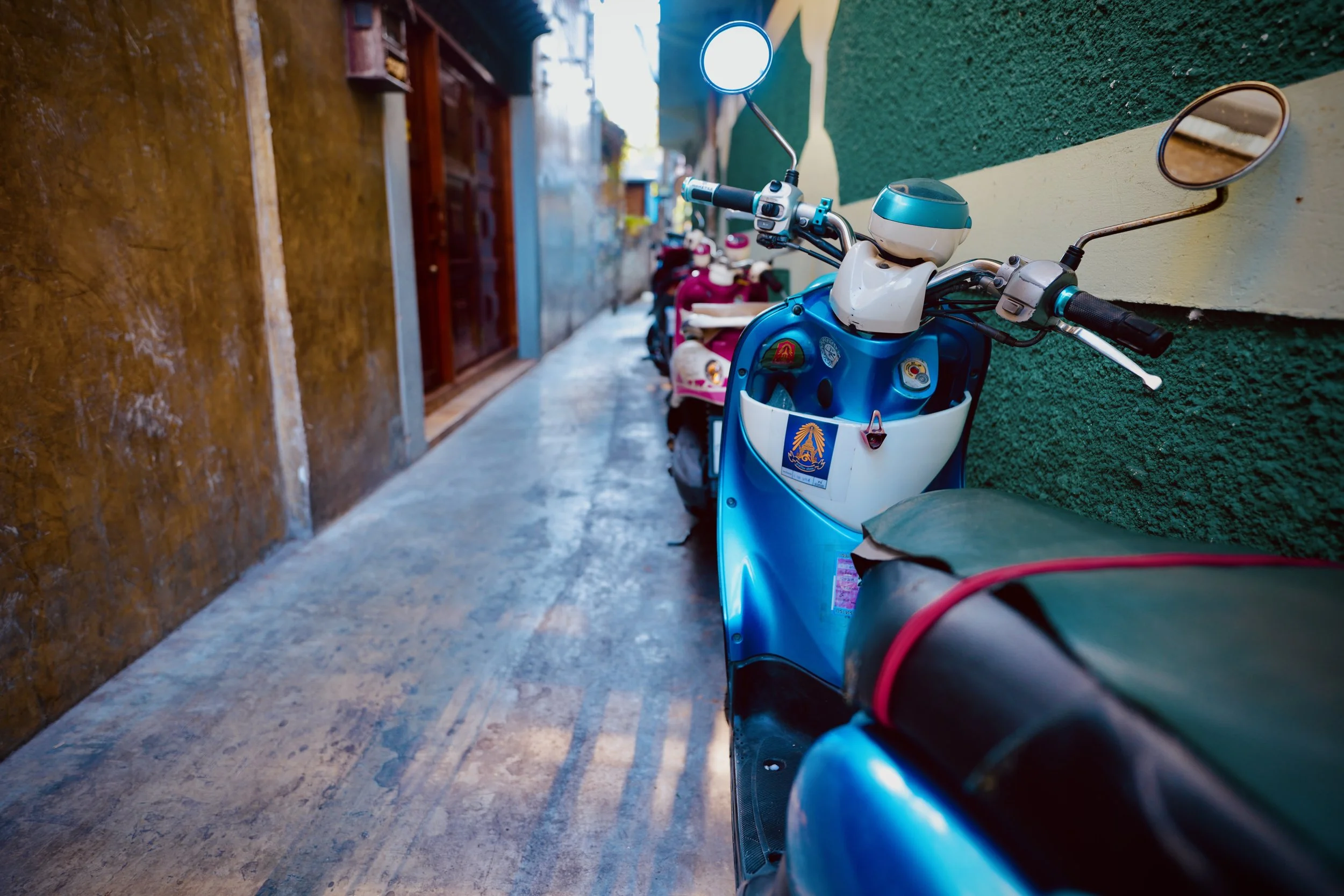
A narrow alley in Pathum Wan, where the city wakes slowly
Bangkok begins in narrow places.
Pathum Wan sits at the heart of one of the densest districts in a city of over 10.7 million people, yet in this alley, you wouldn’t know it. A blue motorbike waits in the shade while the BTS — part of a transit system that moves over 1.2 million riders daily — hums by overhead. Down here, the sound barely reaches.
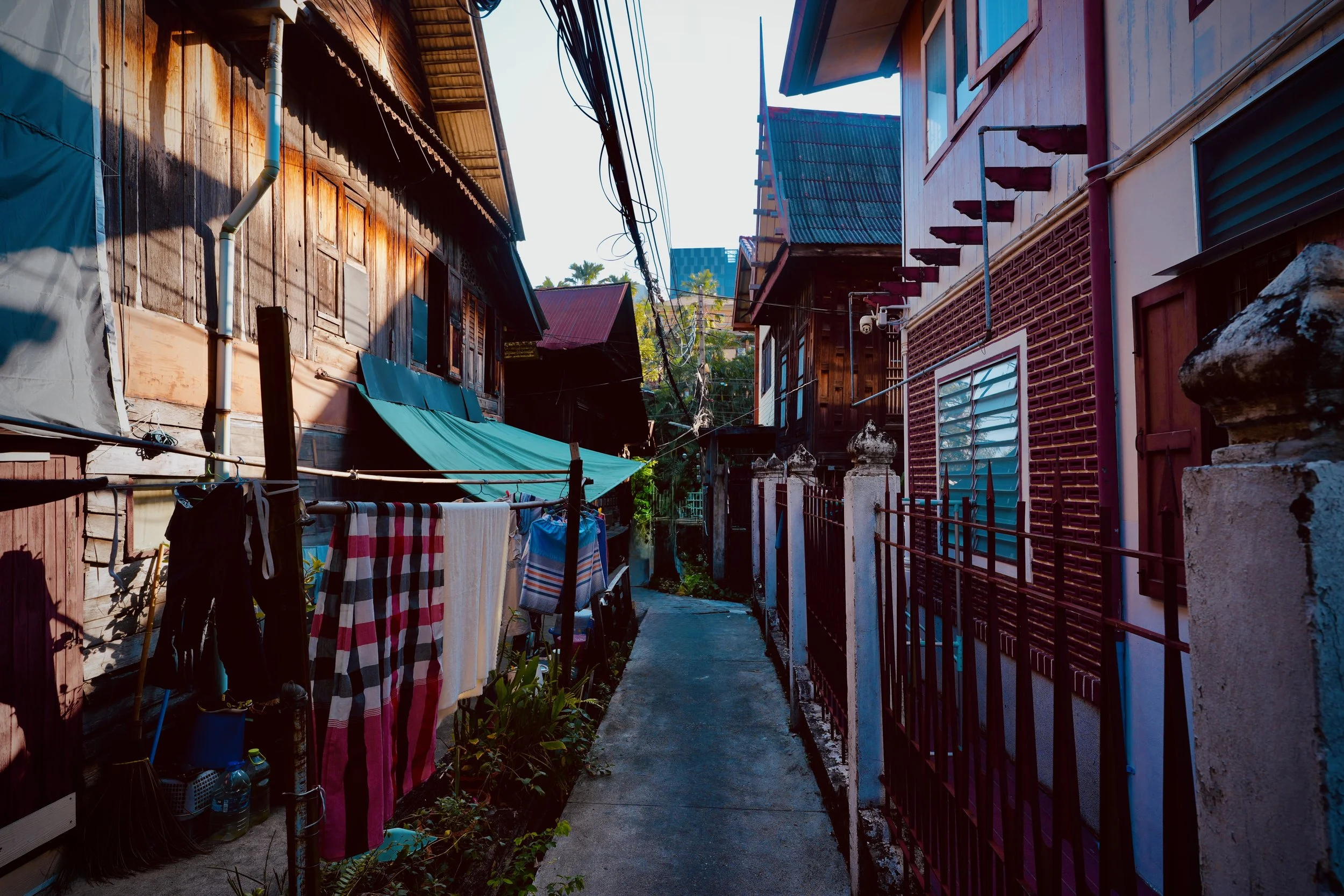
Homes built close to the canal, sunlight threading through wooden walls
The alley dissolves into the canal. Bangkok was once known as the “Venice of the East,” with over 2,000 kilometers of waterways threading the city. Only a fraction remain today, but the communities beside them are still alive with the same everyday rituals.
Laundry flutters above the water. A kettle whistles inside an open window. A wooden balcony creaks but still holds.
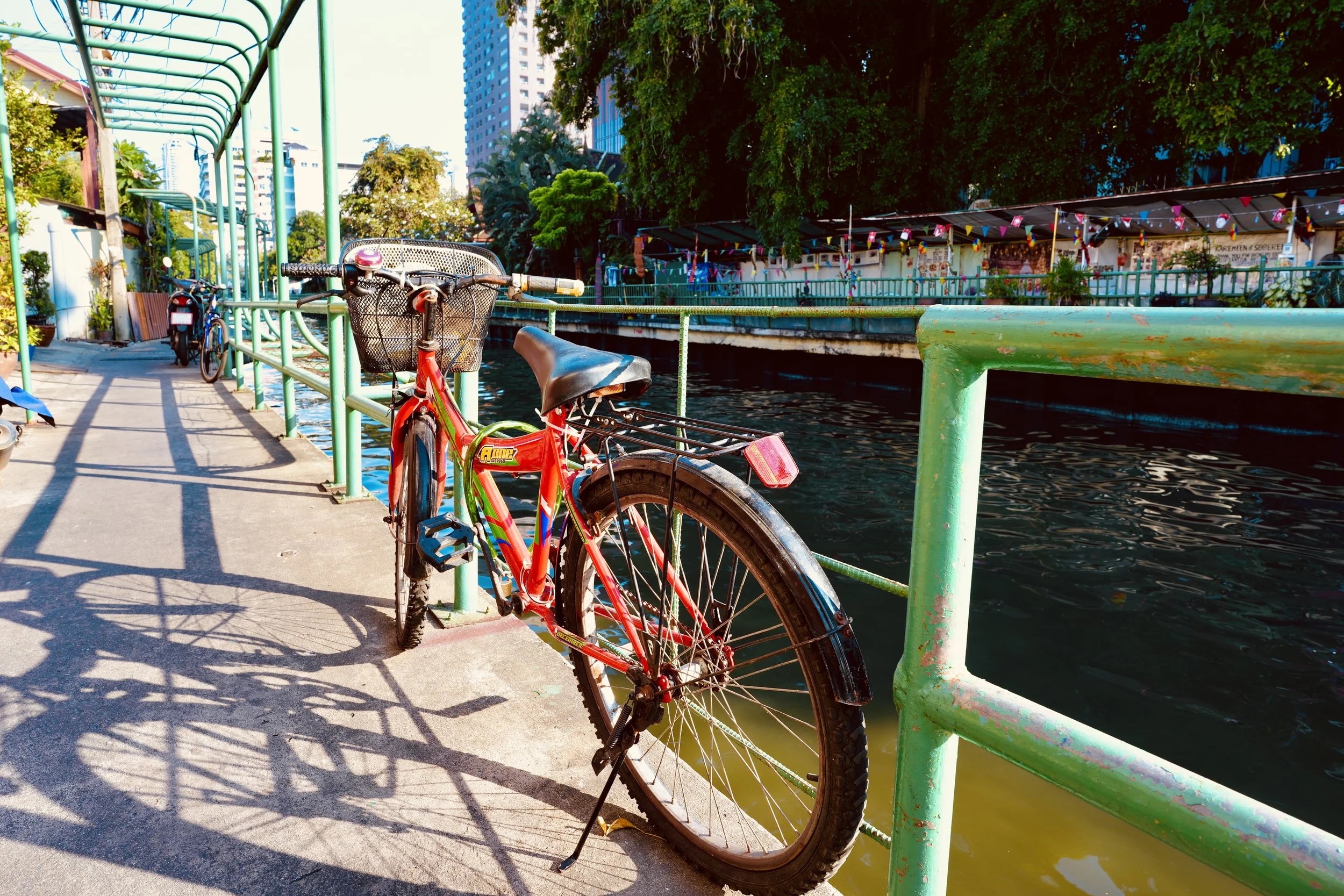
A red bicycle resting between concrete and current
A red bicycle leans against the railing, its frame chipped from use. Despite Bangkok’s sprawling transit options, over 40% of daily trips are still made by walking or informal, short-distance travel. This bicycle feels like part of that statistic — humble, reliable, unchanging.
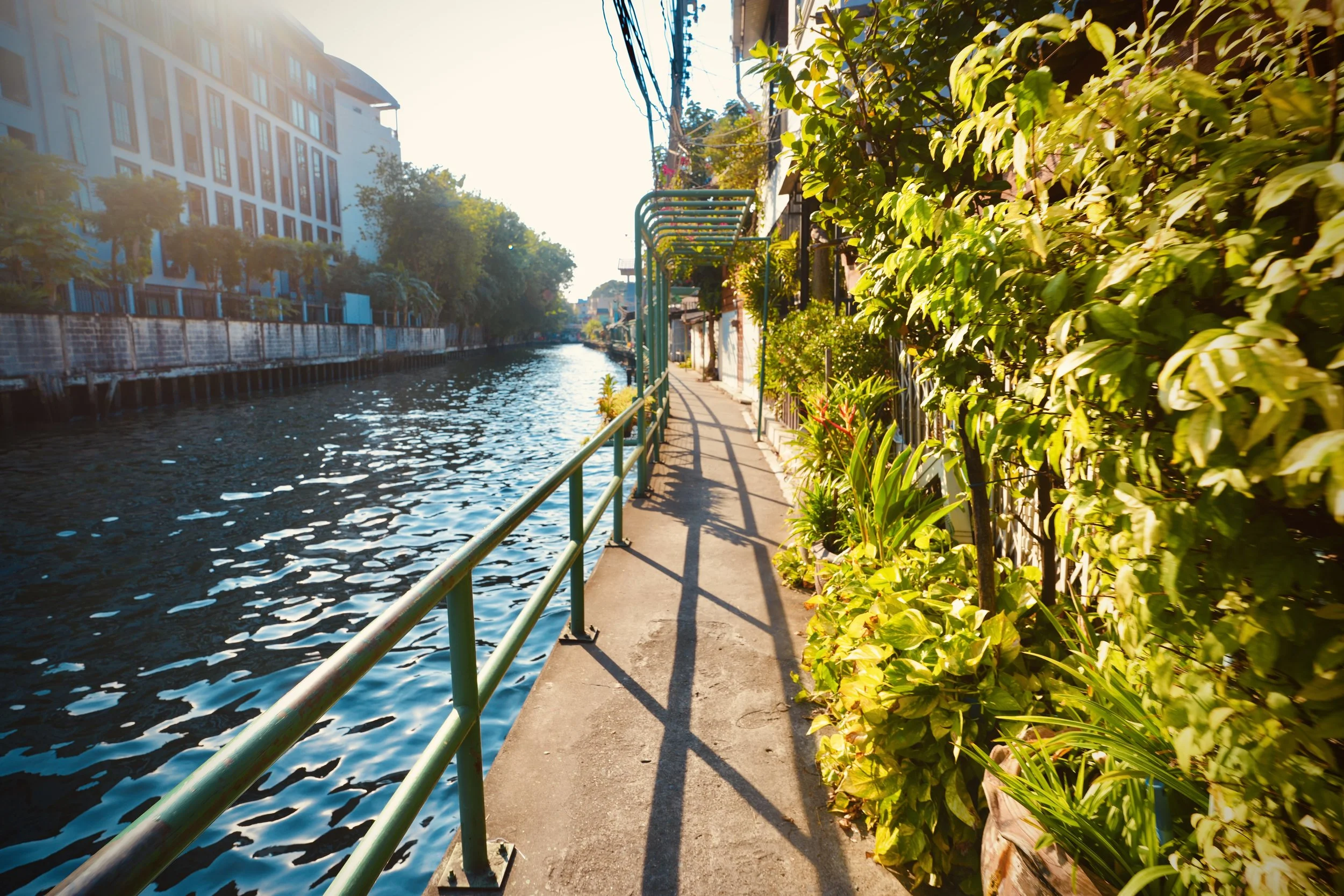
A thin ribbon of path connecting neighborhoods along the canal
The walkway tightens into a ribbon of concrete between the canal and a row of tightly packed homes. Potted plants catch the morning light; cats weave between their shadows. The path forces everyone into single file — not a flaw, but a reminder that this city grew from water first, streets later.
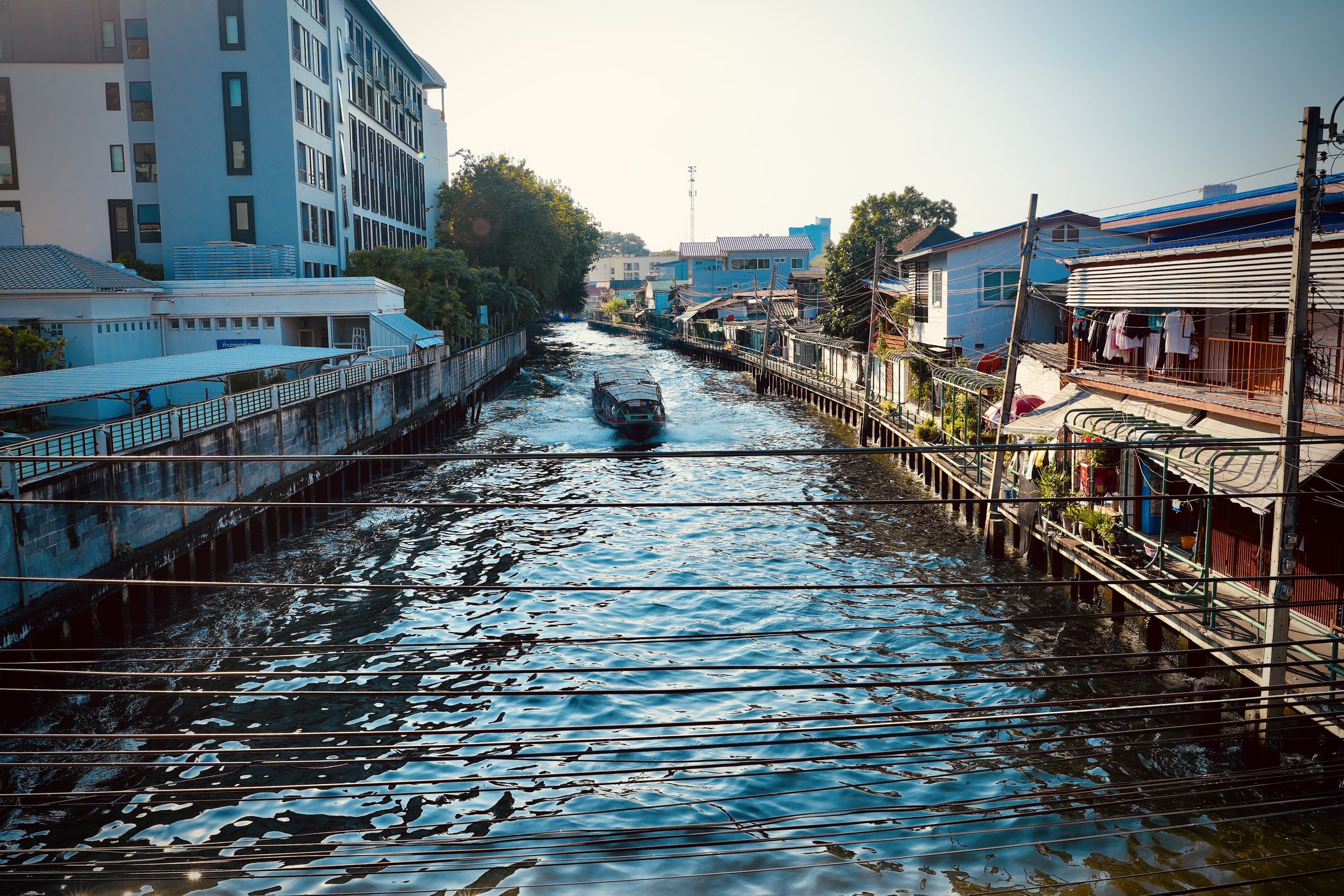
A boat traces a line through water while wires tangle the sky
A longboat bursts forward, sending ripples to the walls. The canal boats still serve communities unreachable by road, carrying tens of thousands of commuters each day along routes unchanged for generations. Above the water, power lines lace the sky — the city’s other river system, just louder and electric.
The walkway ends. The city widens. My steps carry me toward Old Town.
Late Morning — Toward Old Town
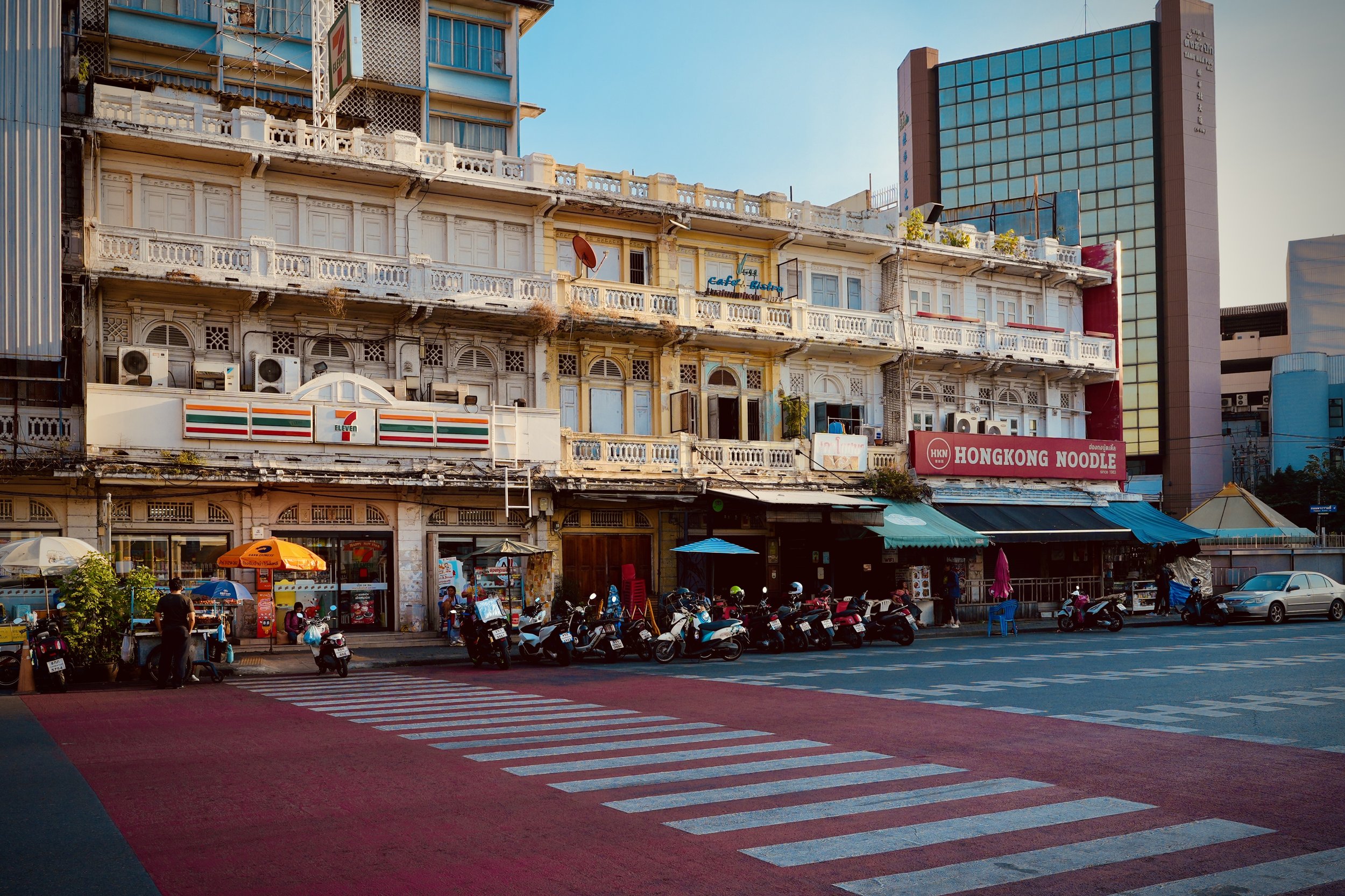
Layered architecture: shophouses, chain stores, noodle shop, all sharing a façade
Old Town holds some of the oldest surviving street grids in Bangkok, dating back to the late 18th century. Here, the humidity thickens and the traffic multiplies. Scooters weave in tight arcs; buses sigh to a stop. Bangkok’s traffic is famous — commuters spend an average of 97 hours per year sitting in it — yet somehow, watching it is hypnotic.
Shophouse façades from another century rise above modern signs. Thailand has over 13,000 7-Elevens, one of the highest densities in the world. Yet each one still feels camouflaged into the landscape — as if it negotiated for space among the older bricks.
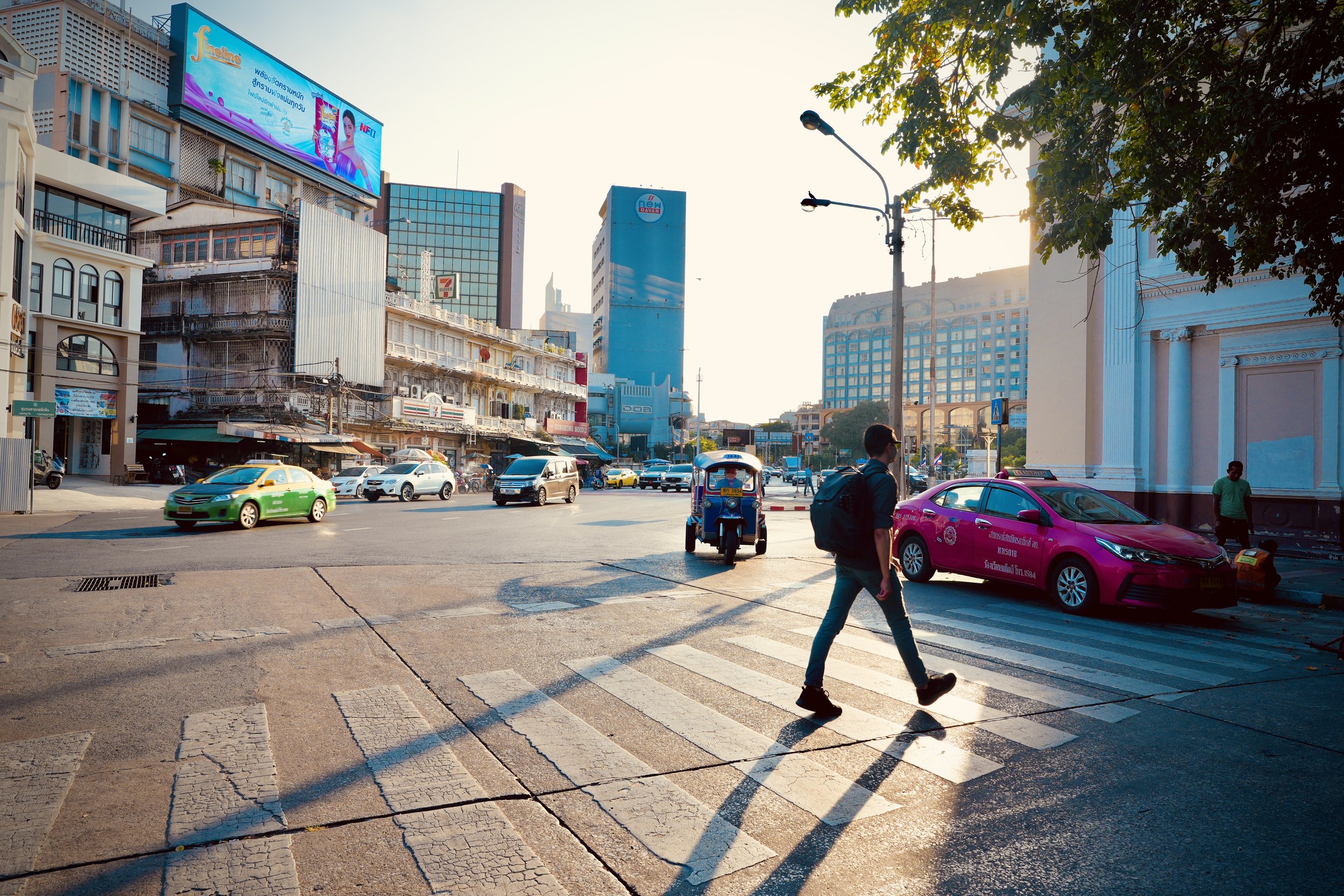
One crossing, many directions: you, a tuk-tuk, and the day pushing forward
A tuk-tuk rattles behind me — one of nearly 9,000 navigating Bangkok’s streets. On foot, I’m the slowest part of this choreography, but the one who sees the most.
I turn west, following the light toward the river.
Golden Hour — Streets Leaning Toward the River
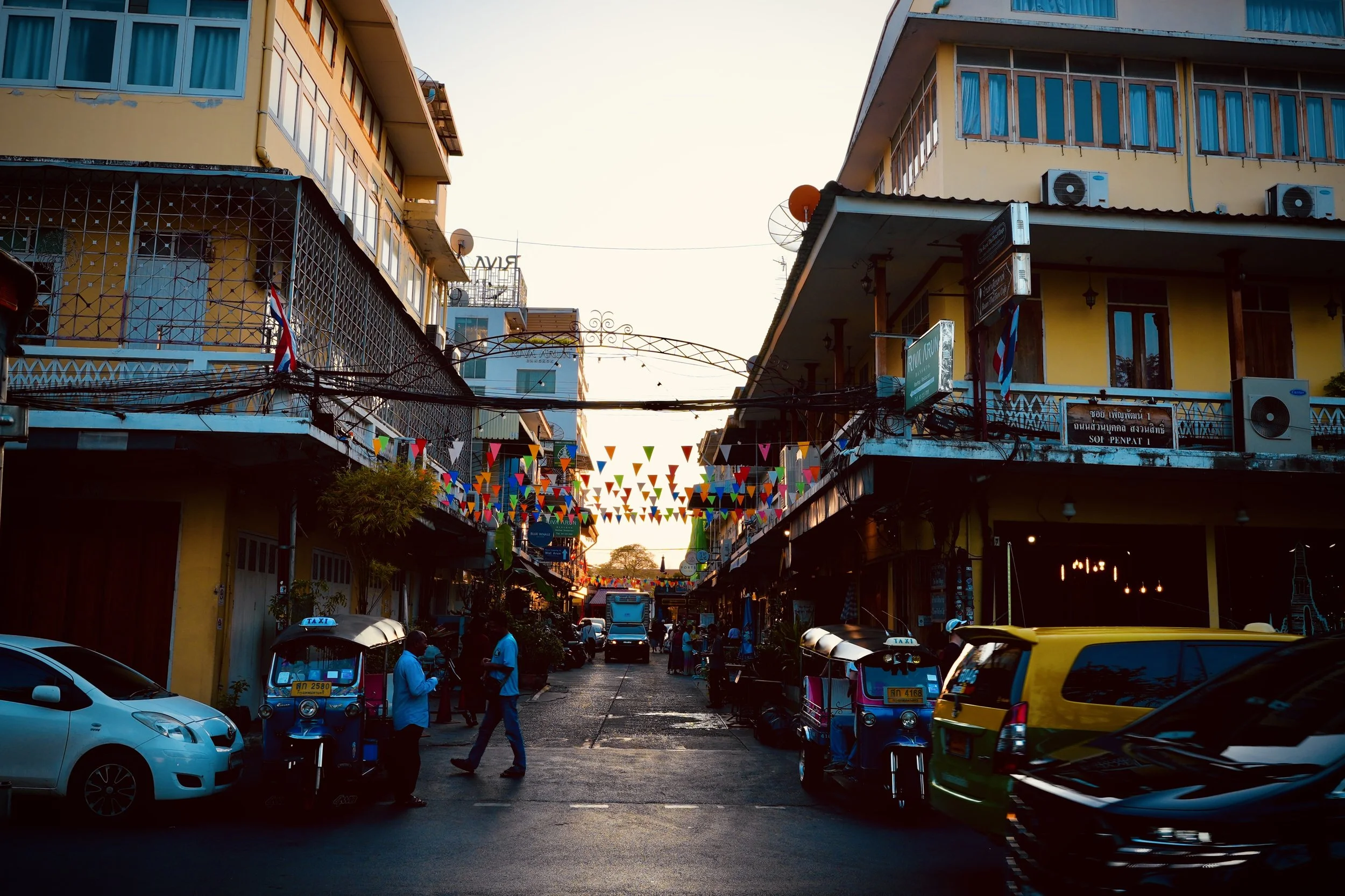
Colorful flags leading toward the Chao Phraya, catching the last of the sun
By late afternoon, the light thickens into gold. A line of colorful flags flutters overhead as the air grows warmer. Through the alleys, I can feel the river pulling everything toward it — ferries, pedestrians, heat, sound.
The Chao Phraya carries over 50,000 passengers a day, but from here, it is still just a shimmer.
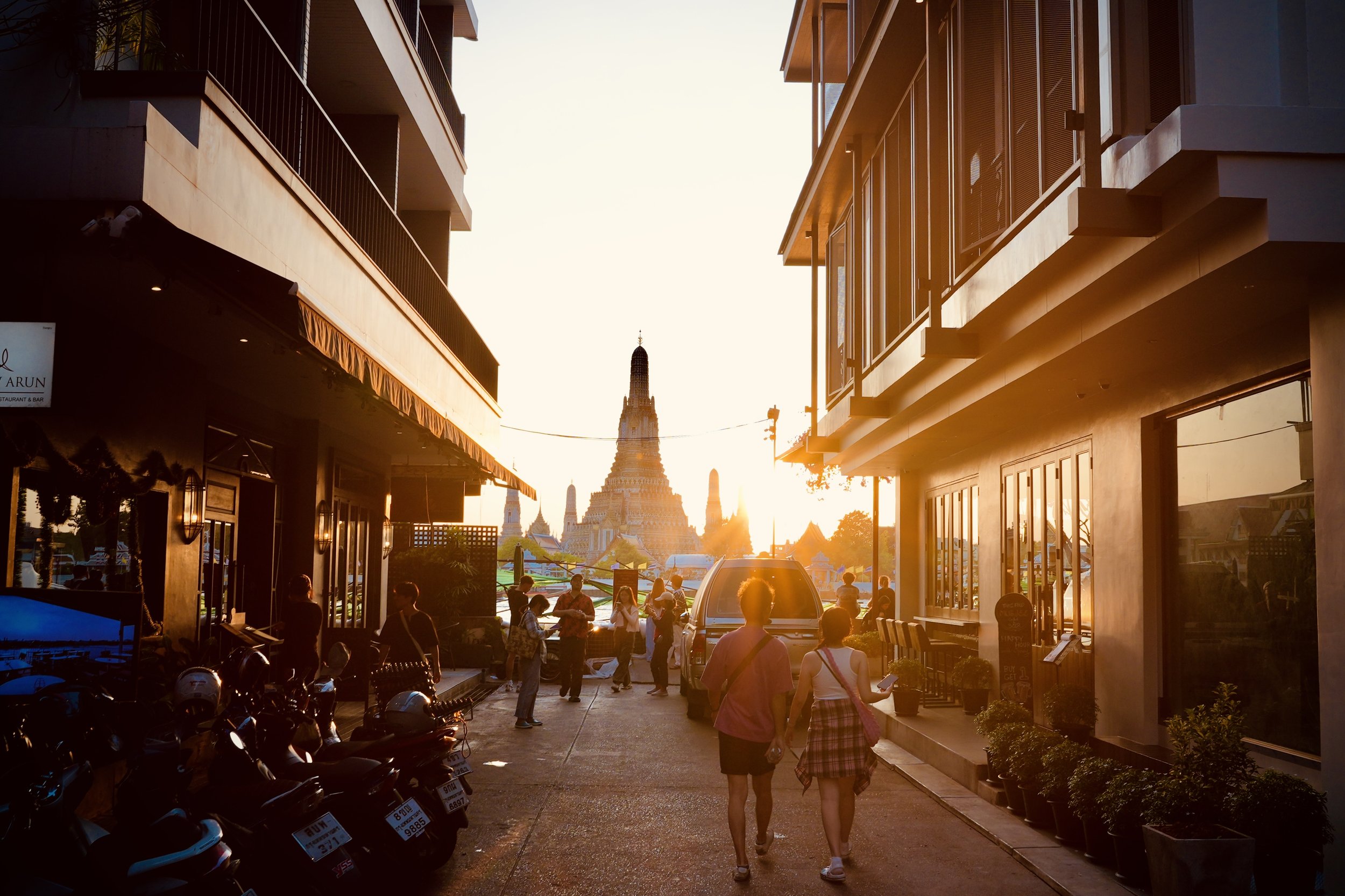
People gather to watch the sun setting over Bangkok’s most famous landmark
Then the street bends and reveals it: Wat Arun perfectly framed between two buildings, glowing as if lit from within. Its central prang is 82 meters tall, its surface decorated with over one million pieces of porcelain and tile.
People stop. Phones rise. Even cars slow down.
For a moment, everyone shares the same direction.
Rooftop — Watching the City Tip Into Evening
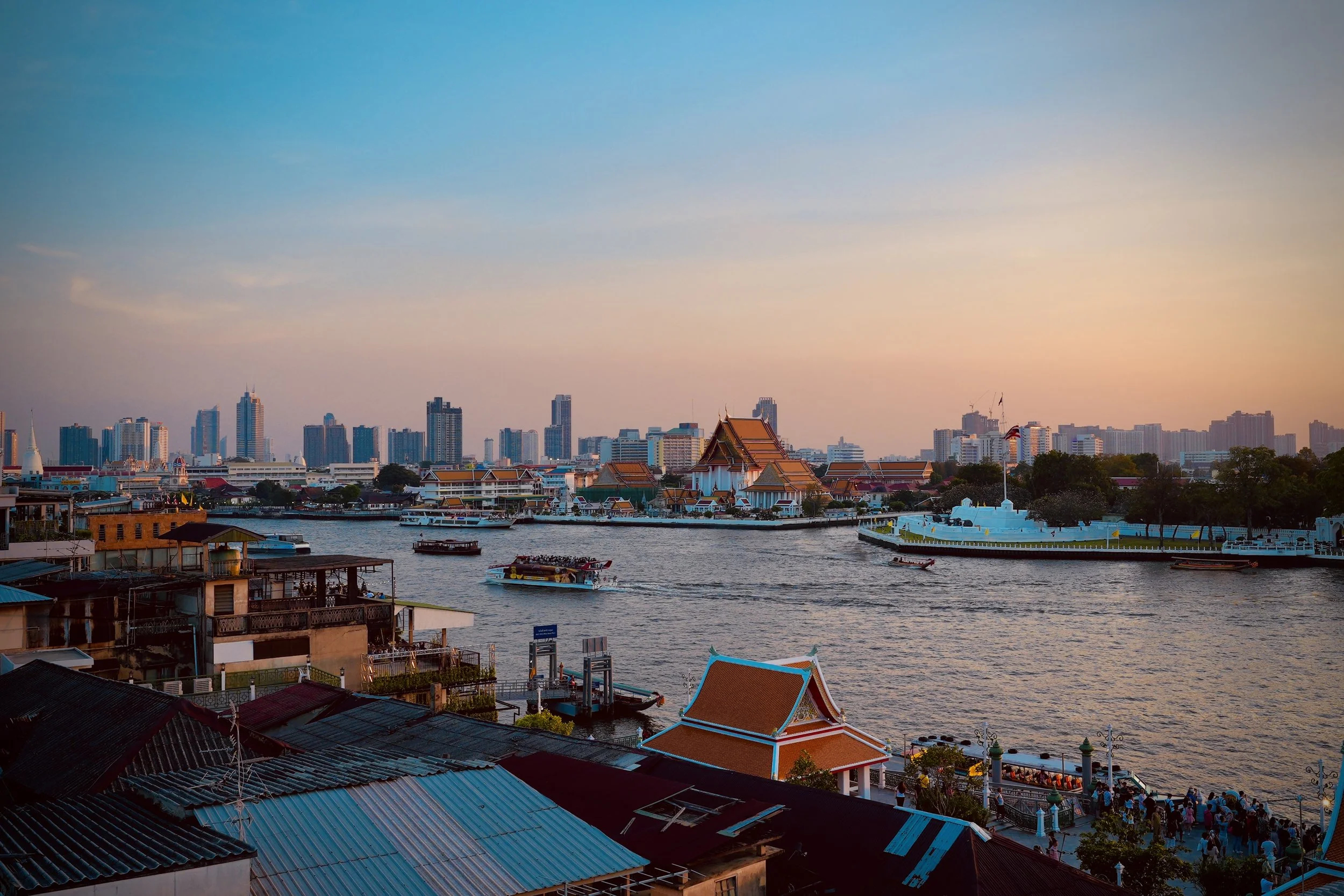
Bangkok expanding in every direction from above the river
A narrow stairwell leads to a rooftop where the city opens like a map. Greater Bangkok stretches across over 7,000 square kilometers, spilling outward rather than upward. From here, the river looks purposeful and calm — a spine connecting district to district.
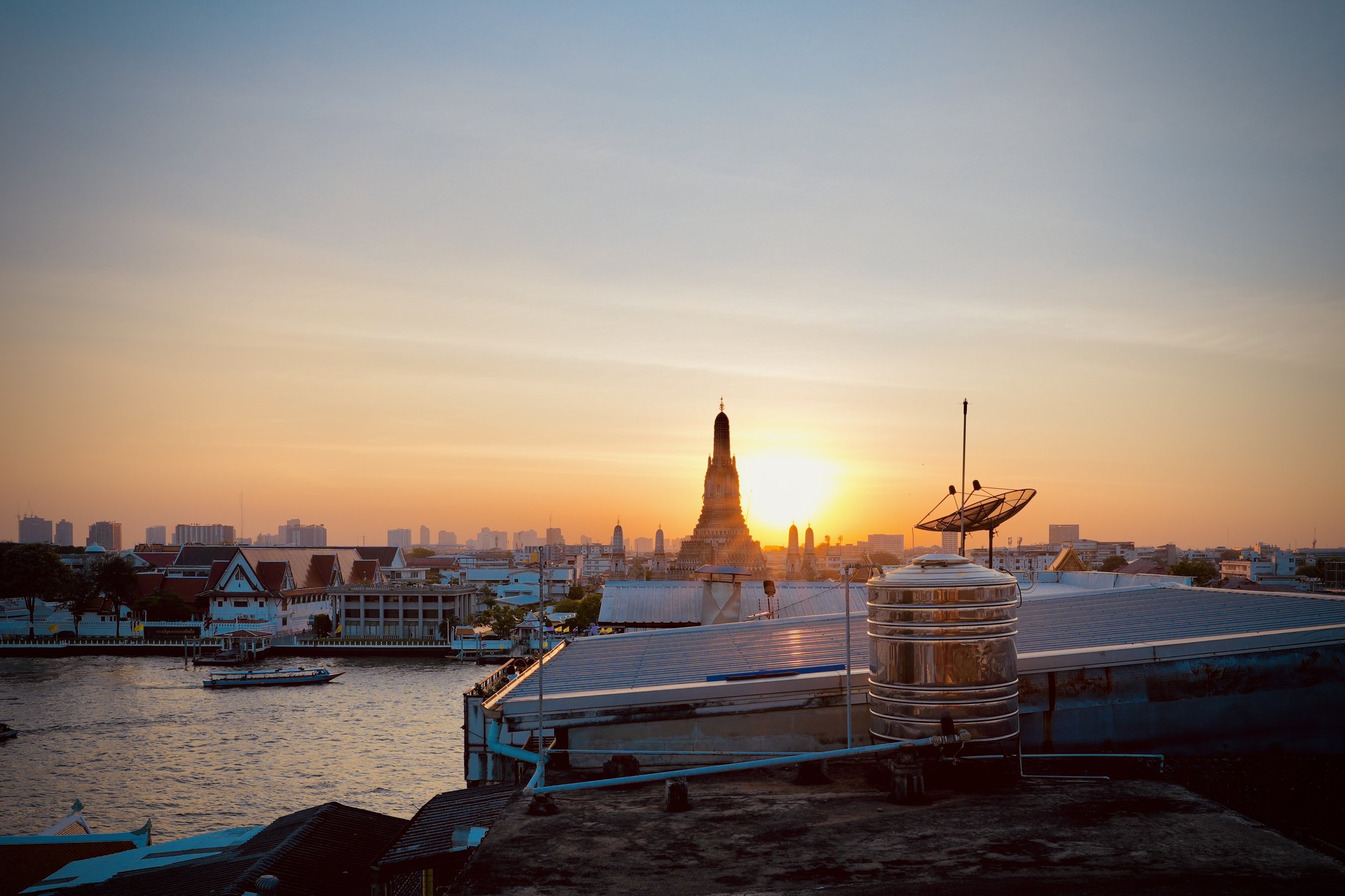
Wat Arun catching the last hard edge of daylight
The temple glows in brilliant gold. No matter how many times I see it, the sight catches me off guard.

The sun lowering itself toward the temple, second by second
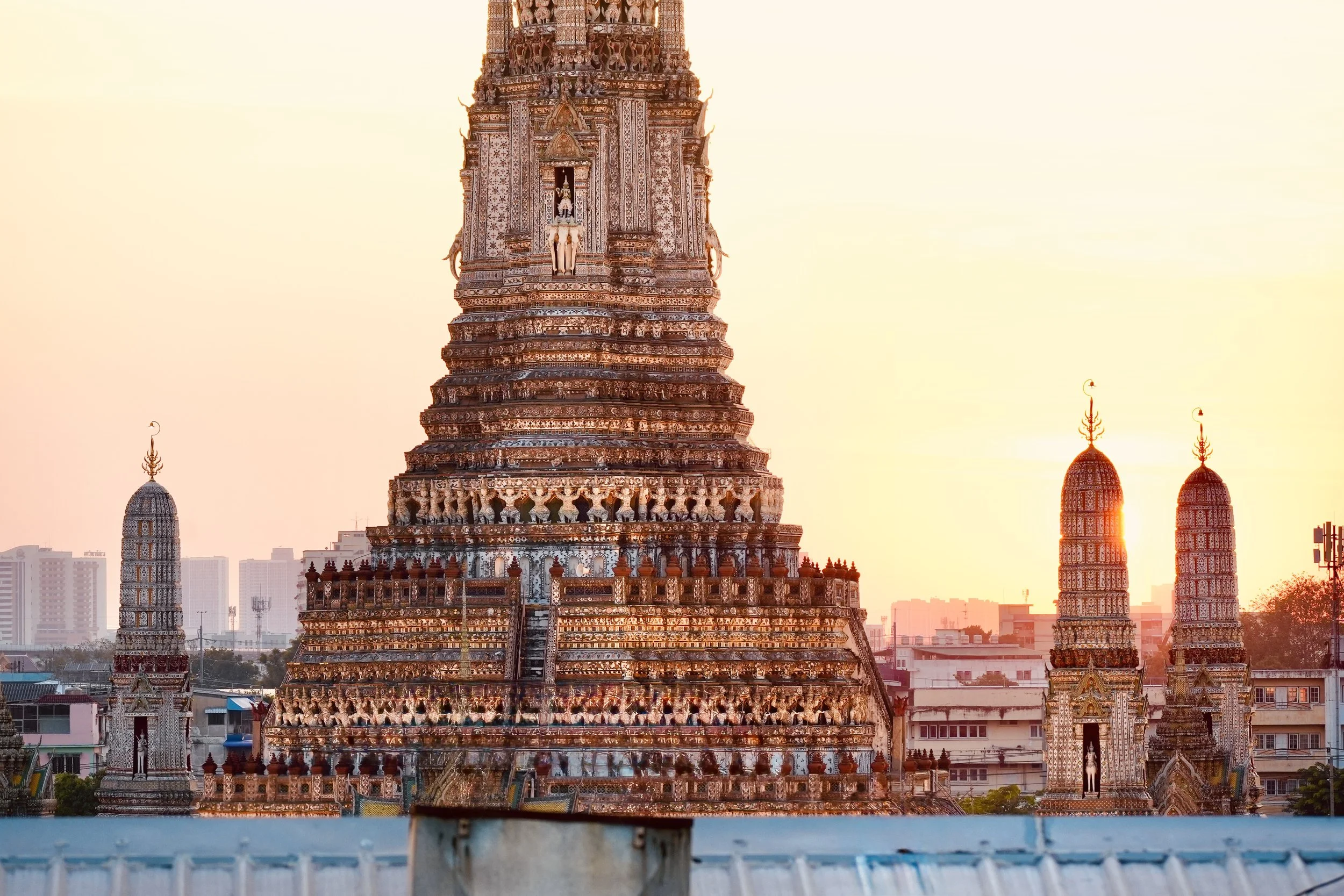
The sun aligns with the temple’s silhouette. Bangkok receives more than 22 million international visitors per year, yet this rooftop moment feels somehow private — like the city is performing just for the handful of us who climbed the stairs.
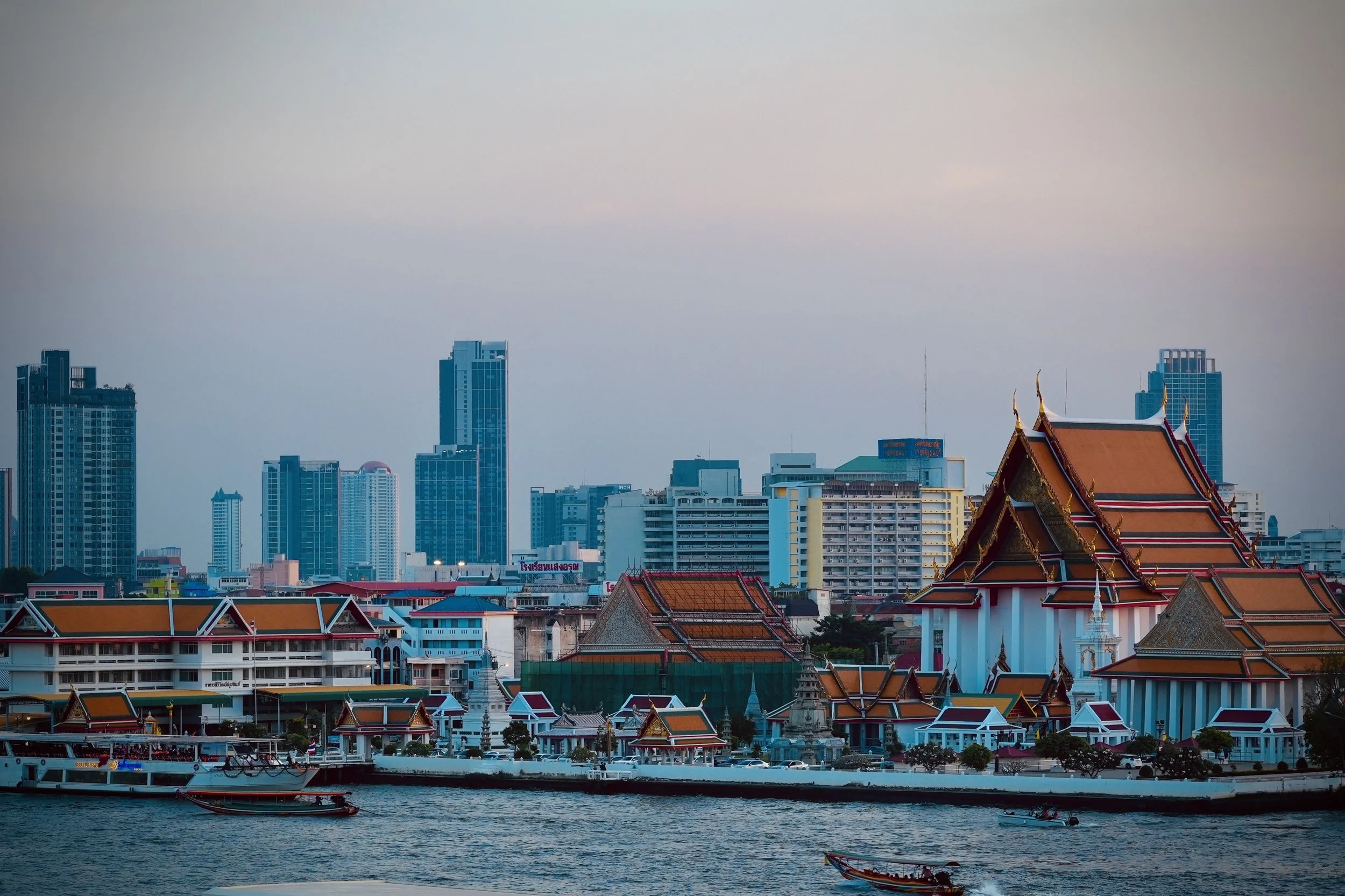
The river turning bronze as the light drifts from gold to pastel
As the sun sinks, the river blushes bronze, then blue. Ferries leave thin silver strokes behind them.
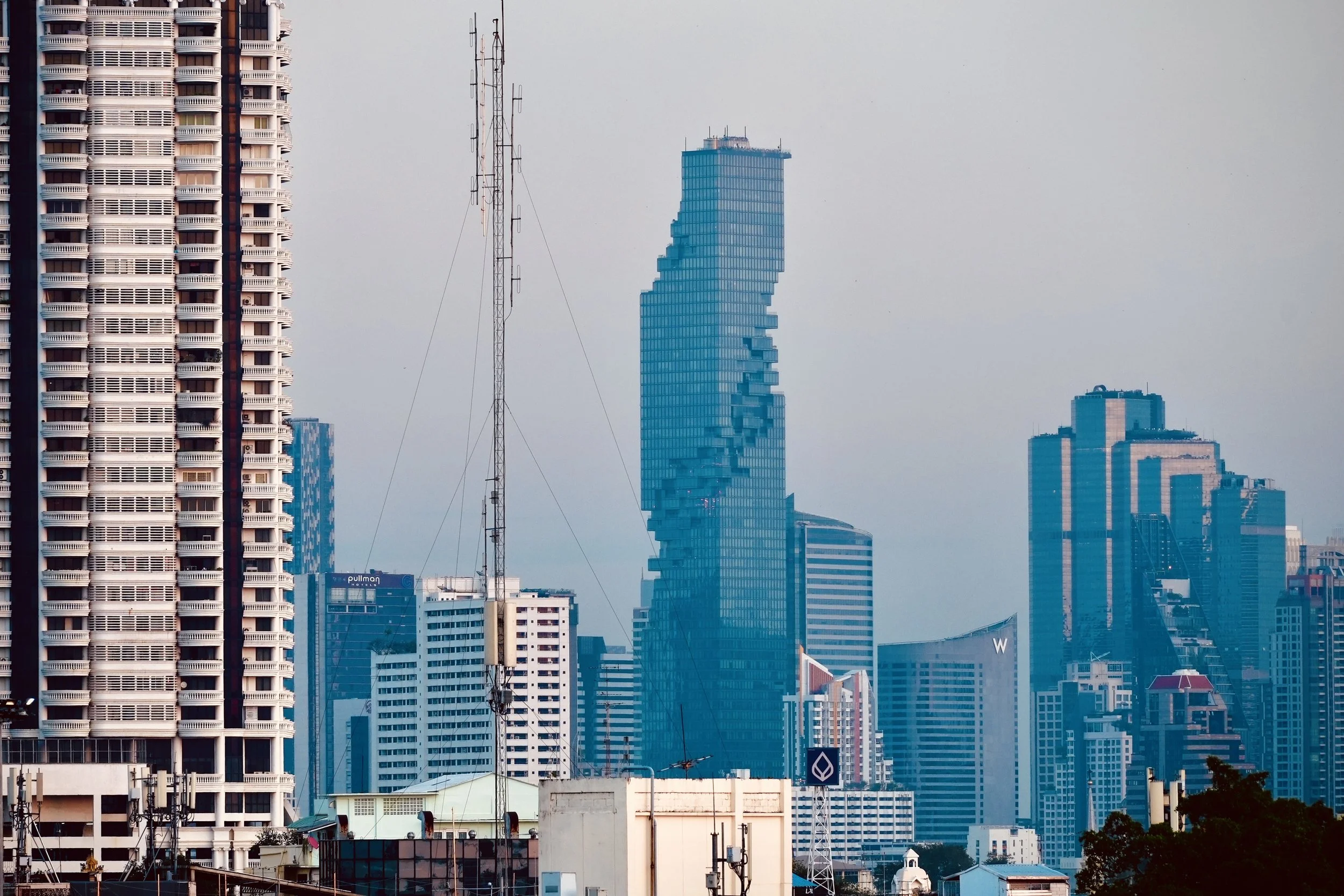
Rooflines from different centuries sharing the same horizon
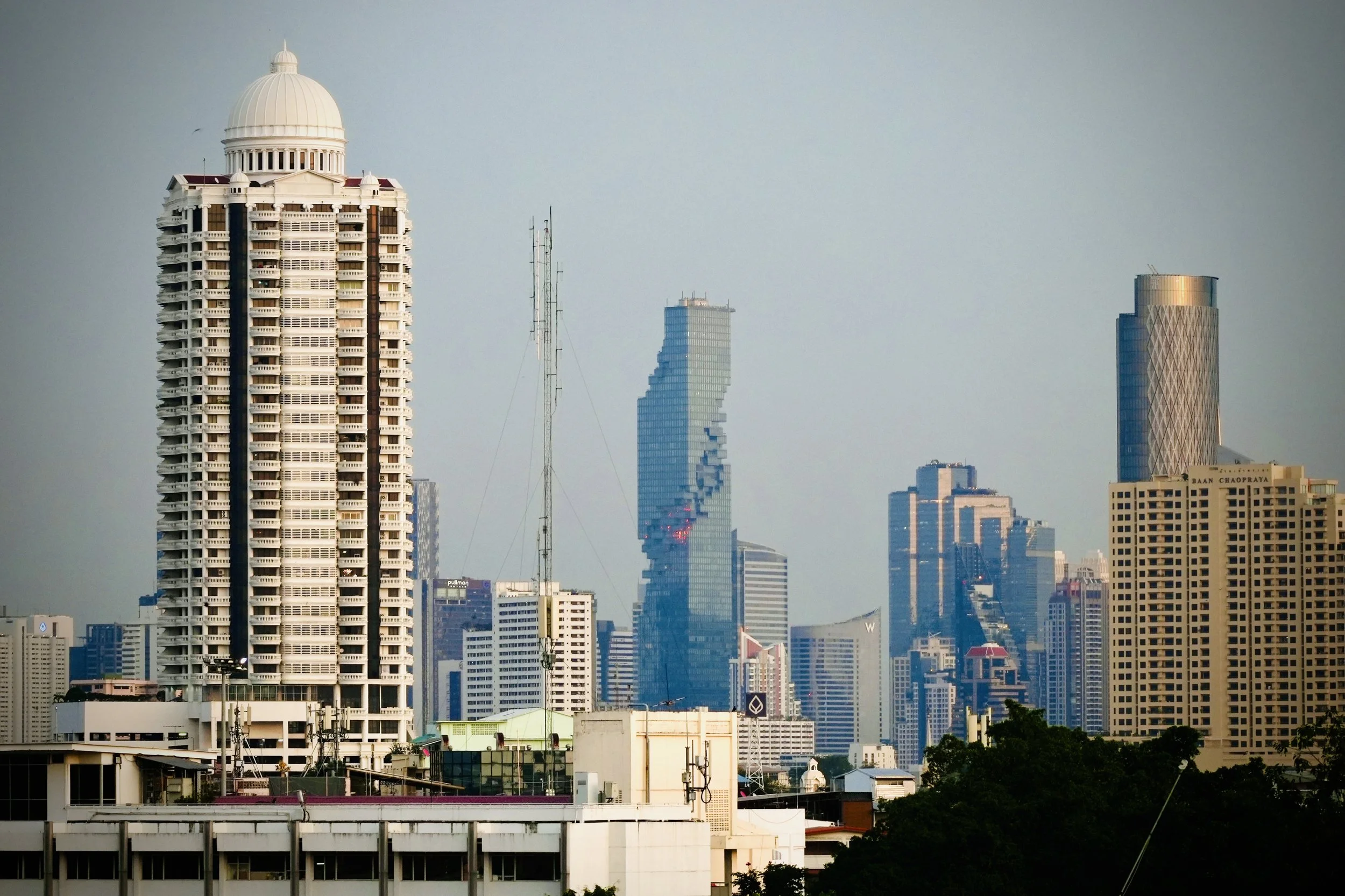
Bangkok’s skyline is a timeline — Rattanakosin roofs, mid-century concrete, modern towers. In a country where 95% of the population identifies as Buddhist, the temples feel like anchors amid the growth.
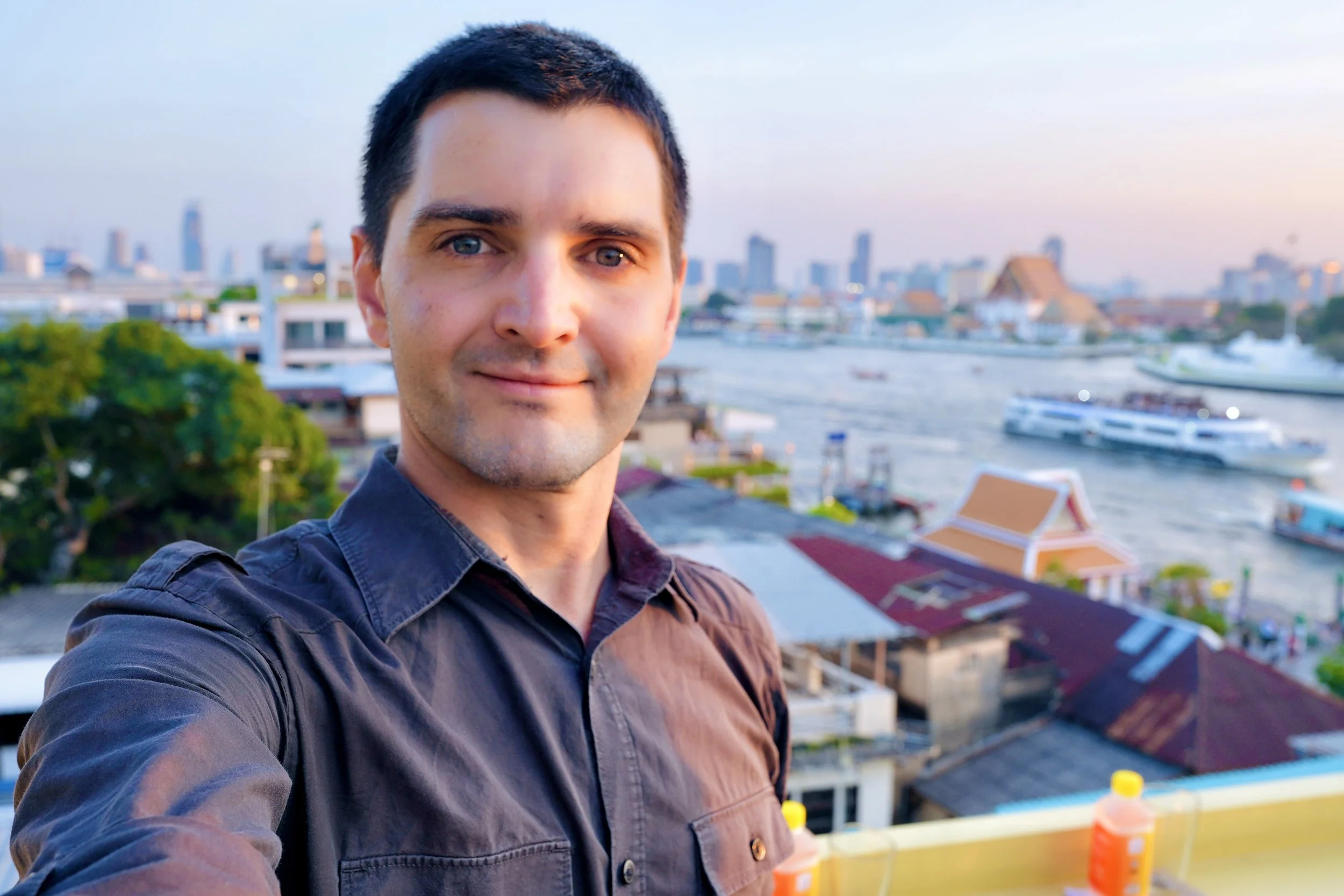
A small figure in a very large city, borrowing its light for a moment
Selfie time. It’s a quick snapshot, but it anchors me in the memory: a passerby in a city too large to know all at once.
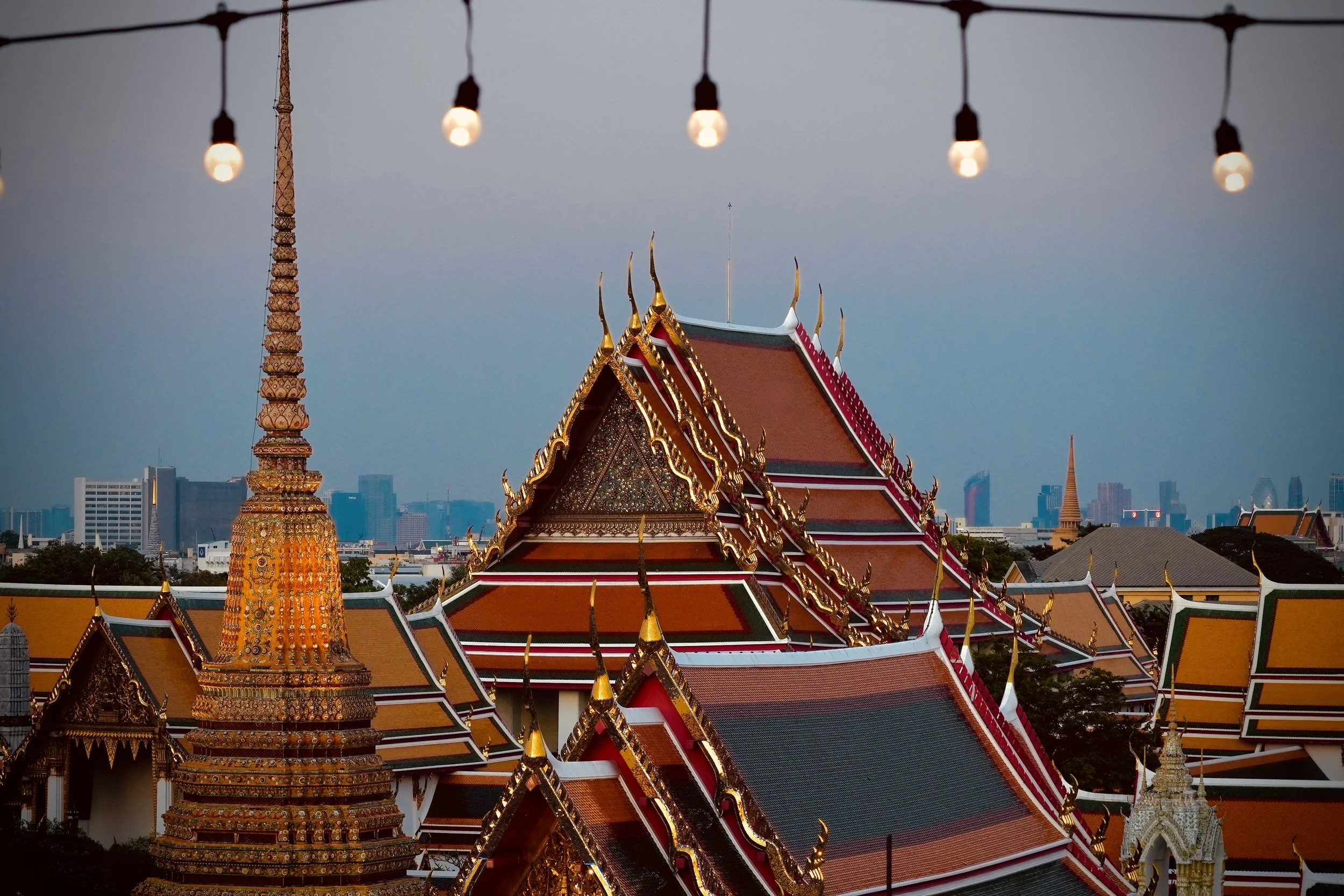
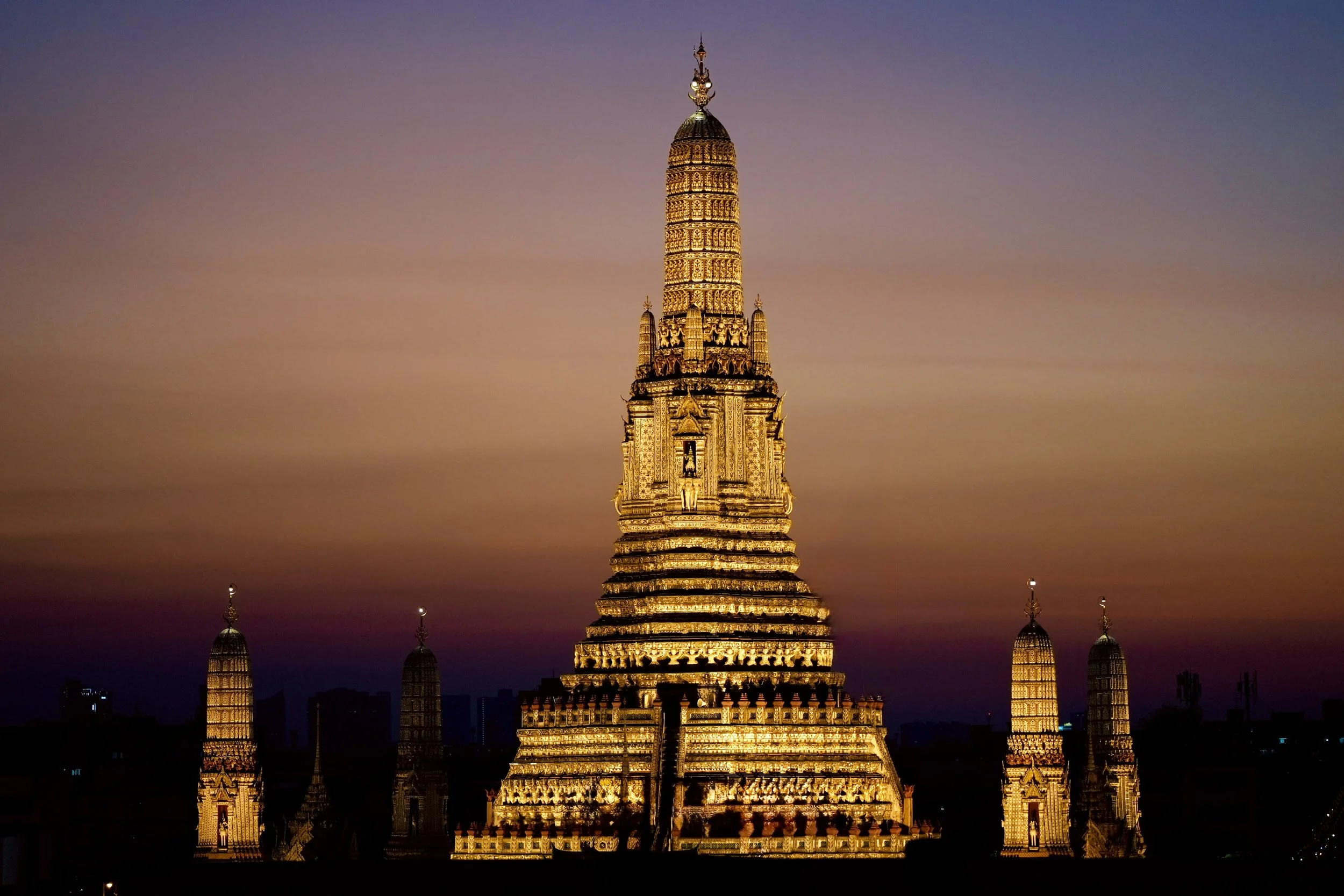
Wat Arun and the river trading colors as day gives way to night
The sky slips through its final colors — orange, rose, violet. The temple lights flick on, and Bangkok folds gracefully into night.
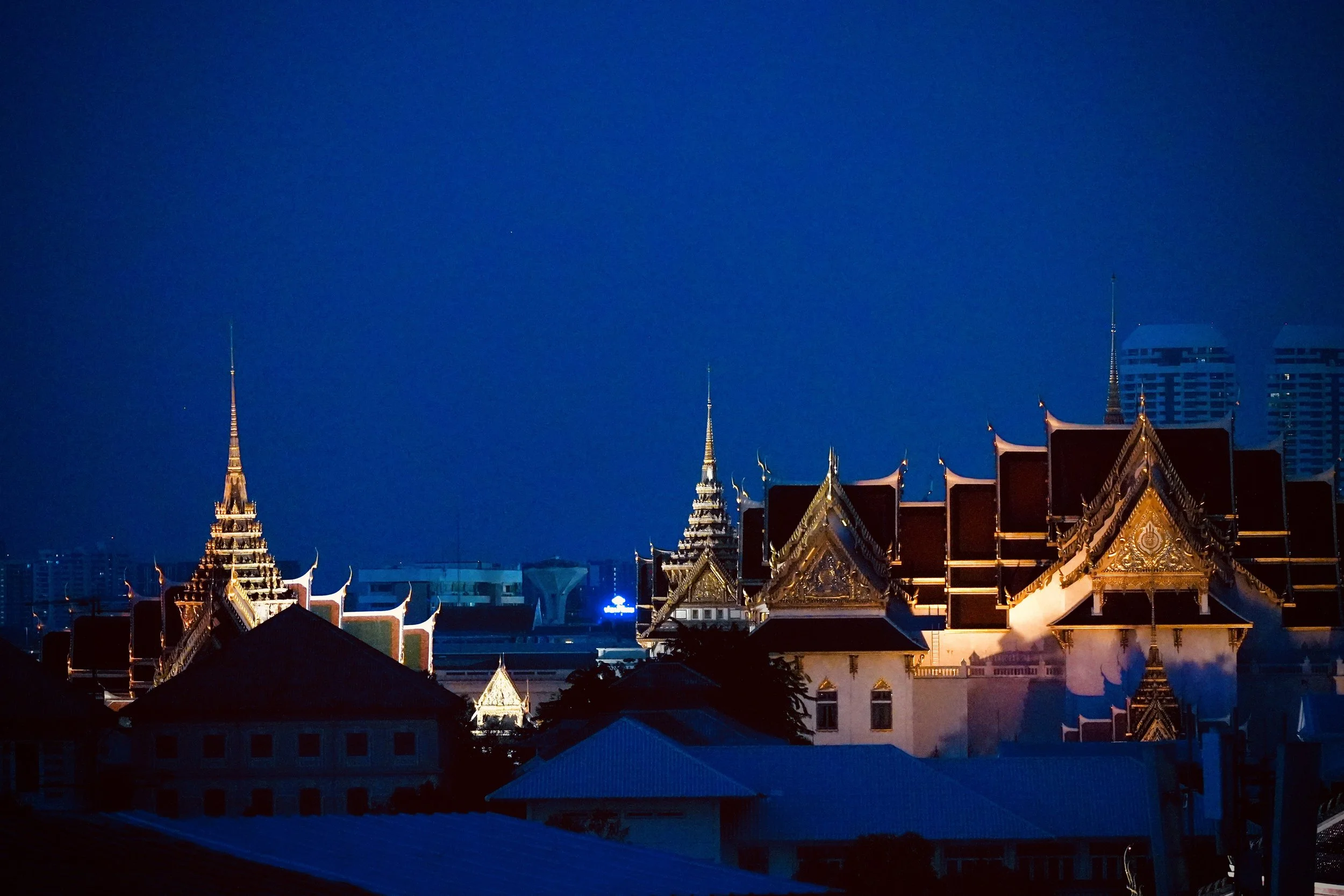
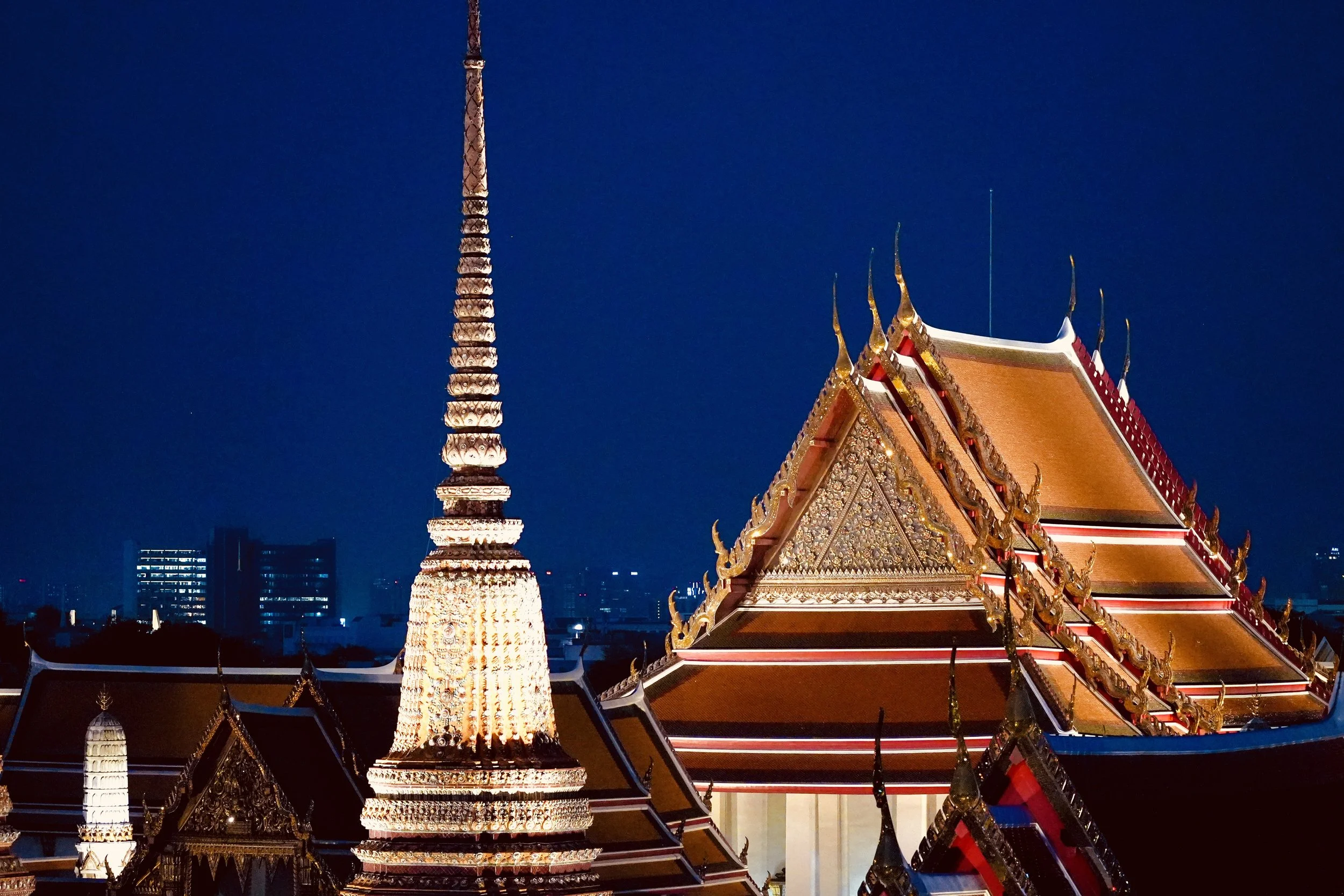
Crossing Bangkok at Night — Yaowarat and Pathum Wan
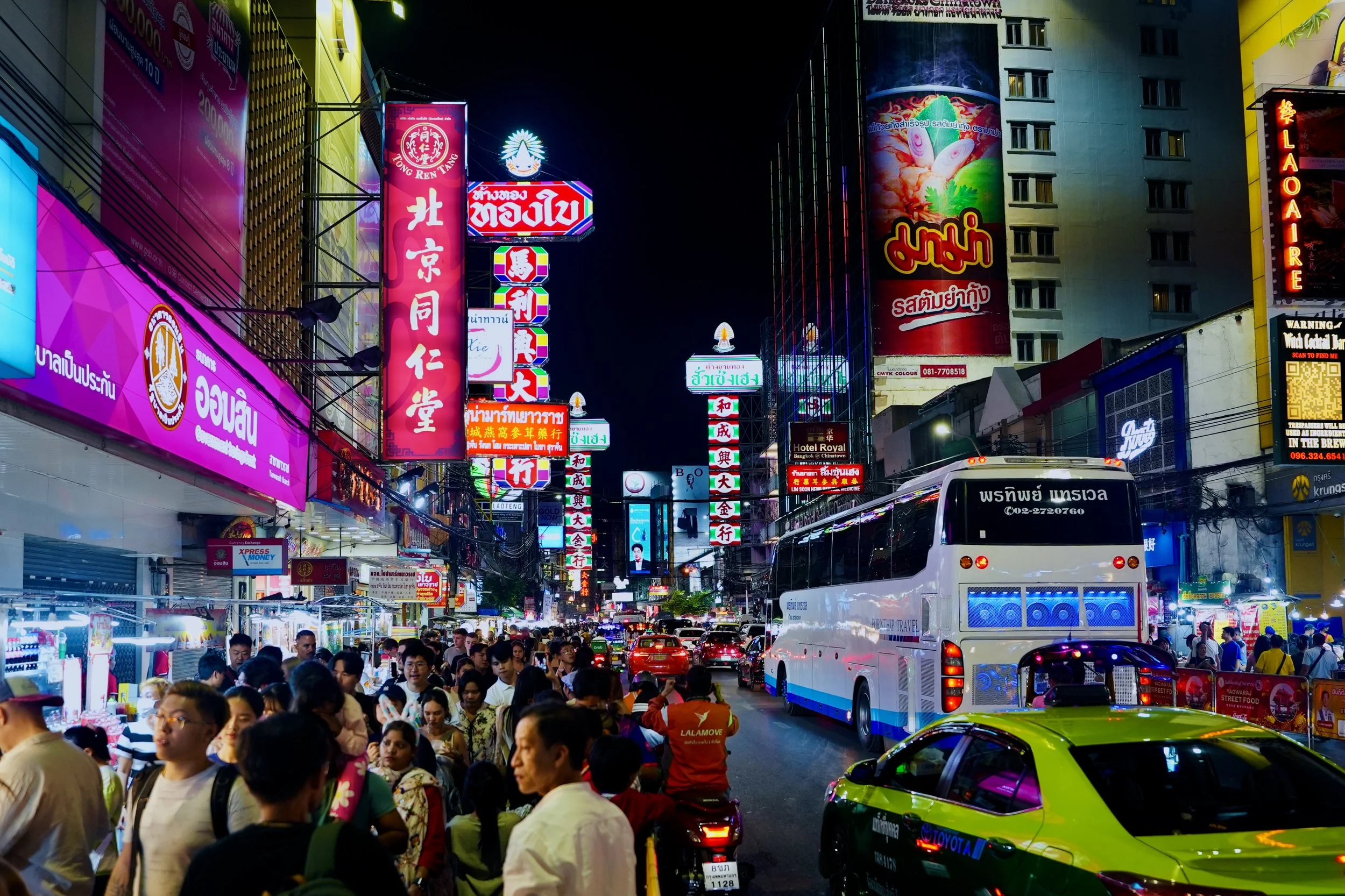
Yaowarat at night, when every sign competes for your attention
Yaowarat glows with its own logic. Chinatown is home to over 1,000 eateries and vendors, and the density of lights feels almost tidal. People move like water around grills, steam stacks, neon, and menus printed in multiple languages.
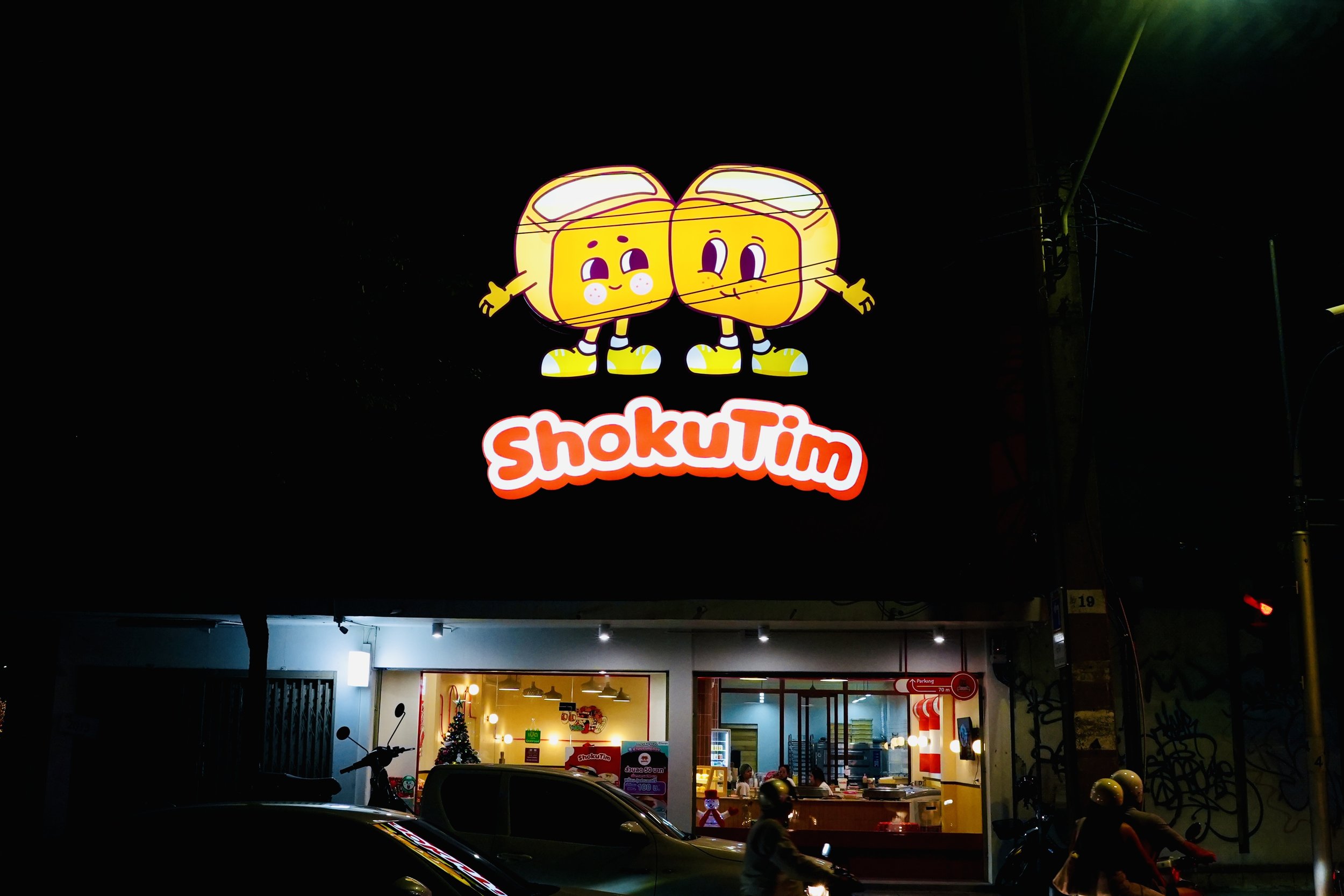
Color that doesn’t ask for permission
The colors deepen as I walk — reds, golds, sharp whites from fluorescent bulbs. Everything here feels alive.
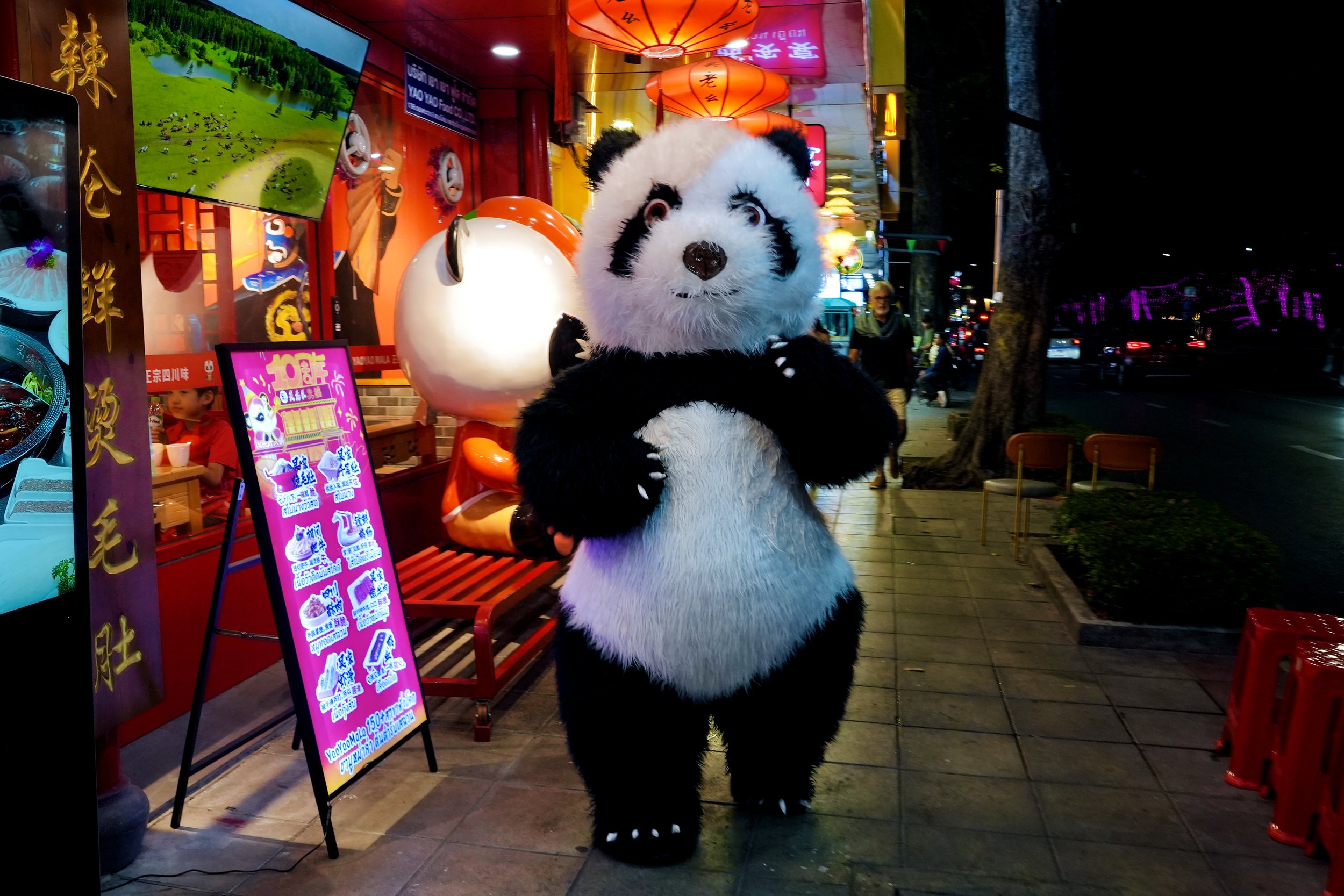
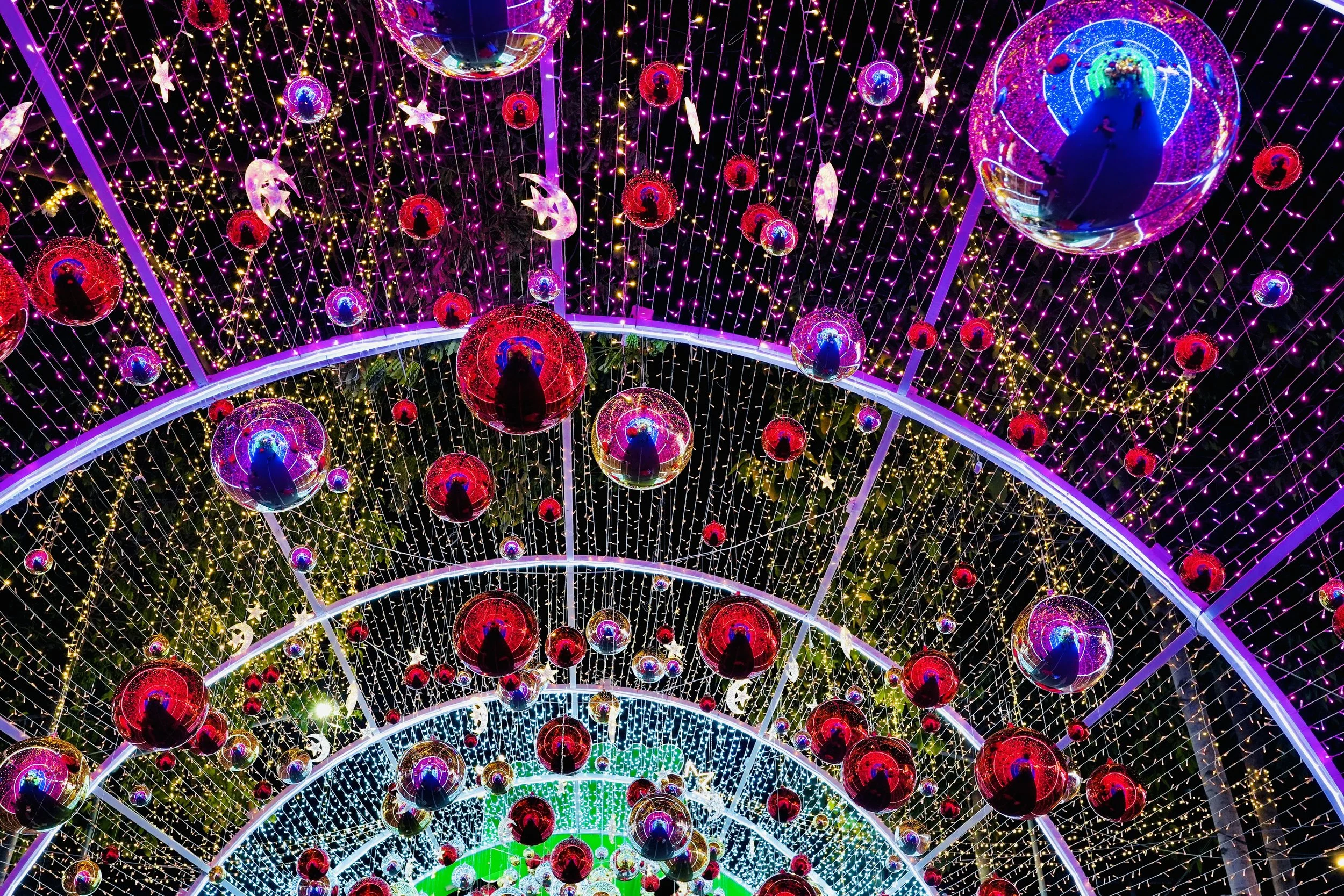
Walking through color and motion, just for the sake of wonder
In Pathum Wan, the malls erupt in Christmas decorations. Only 1% of Thais identify as Christian, but the display is enormous — a seasonal performance embraced as shared spectacle rather than religious ritual.
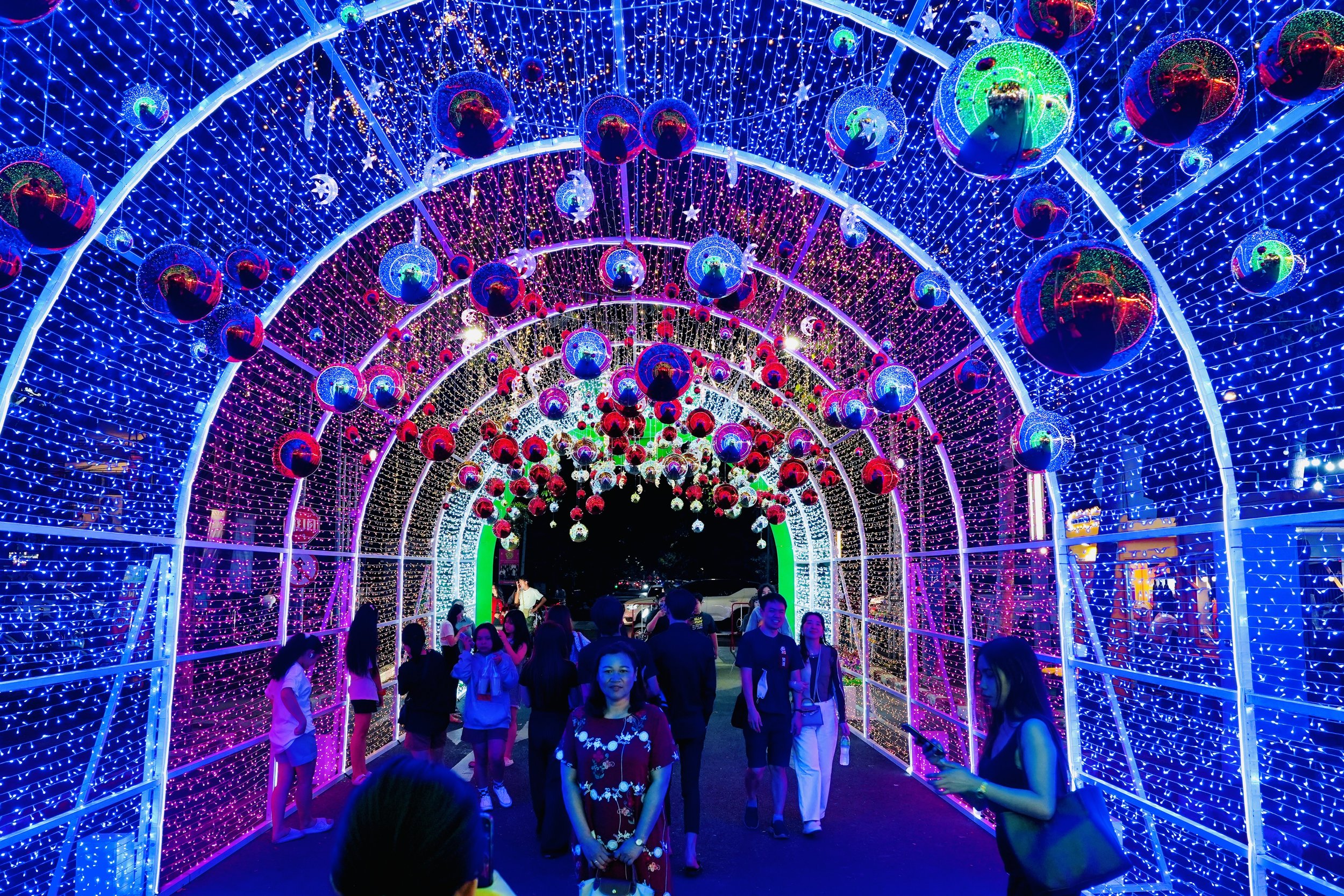
Christmas in a mostly Buddhist city — light as a shared language rather than a doctrine
Families linger in the light tunnels, collecting photos, videos, memories. Strangers share space without needing conversation.
The Last Stretch — Canal Night
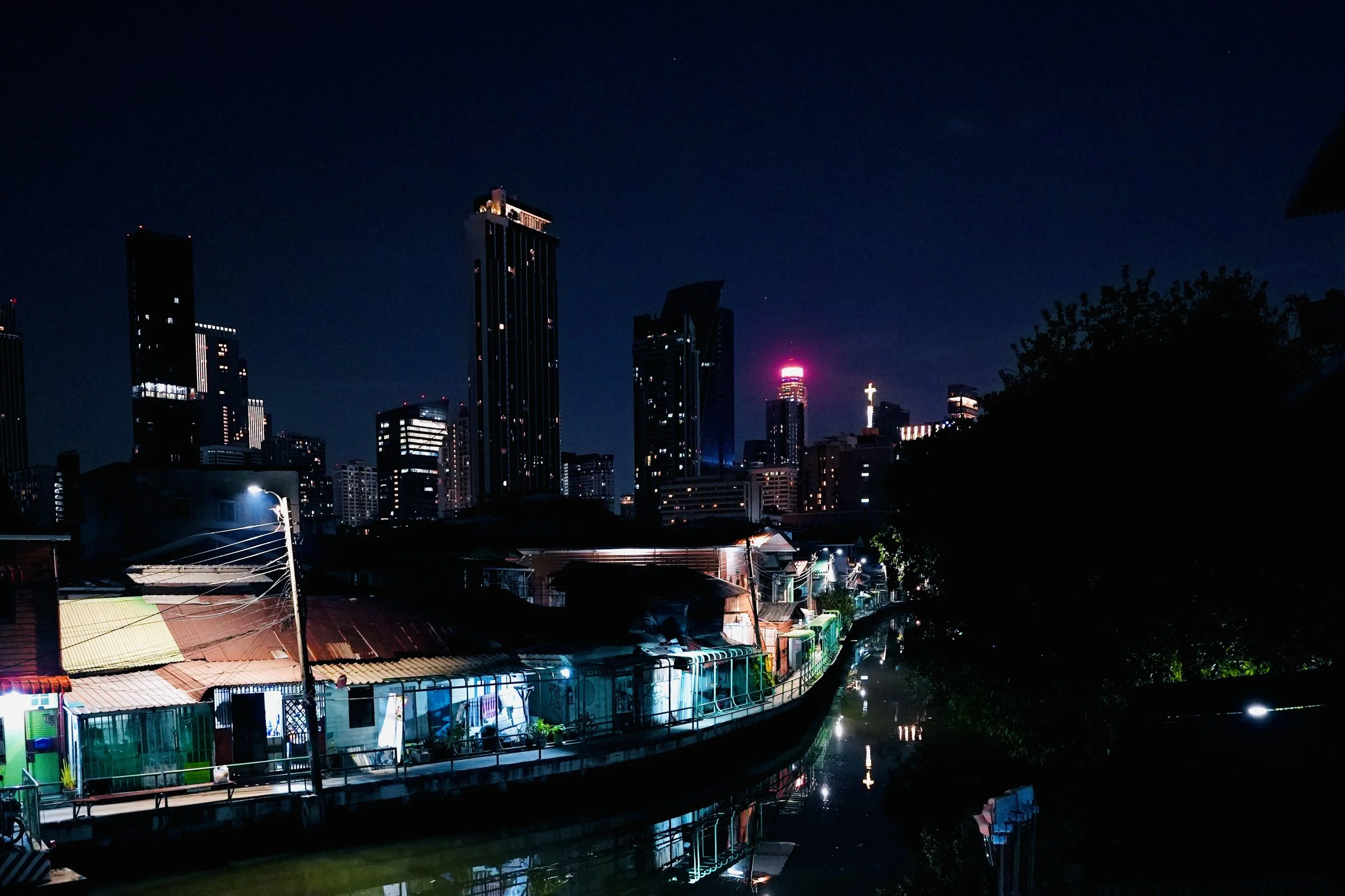
The canal at night, holding reflections instead of traffic
By the time I return to the canal, the city has softened again. The water reflects a few scattered windows and the quiet geometry of the walkway. The boats have stopped; only the hum of insects remains.
I pause with my hands on the rail. The same canal I saw under bright sun now holds only glints of reflected light. Bangkok is loud, massive, complicated — but it also contains these still moments that feel like reminders of its past life as a water city.
Then I turn and walk the final few steps home.
Bangkok is not a single impression.
It’s the sum of days like this —
walked, watched, and quietly stitched together along the water.
To see more photos & videos from my travels visit the links below
happy traveling,
~Sean
