Bangkok: Where Gold Meets Color
Wat Trai Mit Witthayaram Worawihan - A monument of gold and marble in Old Bangkok
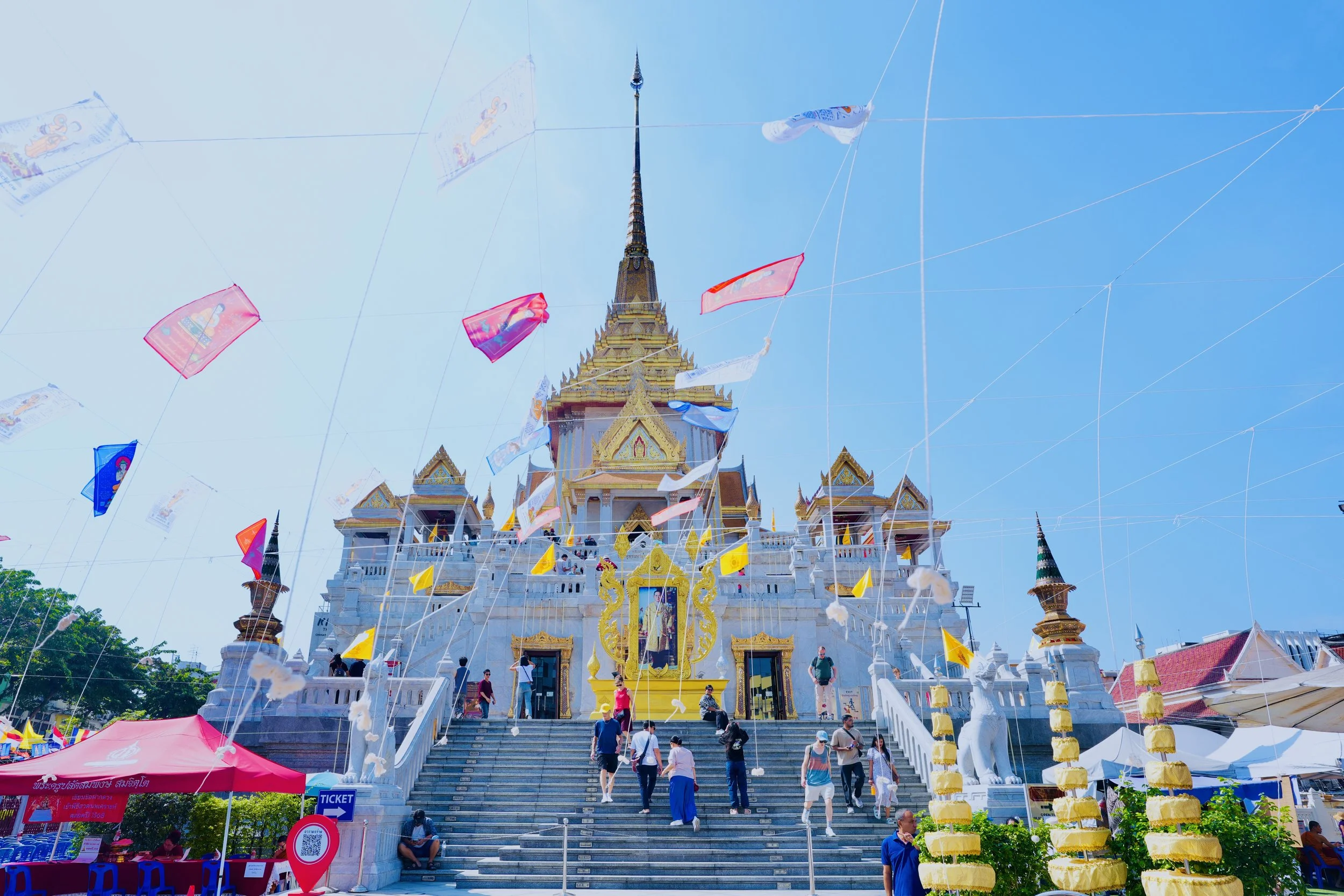
During the New Year season, Wat Traimit welcomes thousands of visitors per day, yet the climb still feels calm in the morning light
Bangkok is a city of contrasts—quiet mornings that unfold into vibrant afternoons, gold-tipped rooftops rising beside neon streets, Buddhist chants echoing not far from the sounds of Tamil devotion. With over 400 temples scattered across the capital, spiritual life here is not a single story but a tapestry of cultures woven together. During my late-December days in the city, two temples stood out: one gleaming with the calm geometry of Thai Buddhism, the other alive with the color and energy of South Indian Hinduism. Together, they revealed a Bangkok shaped not just by faith, but by the movement of people, history, and tradition.
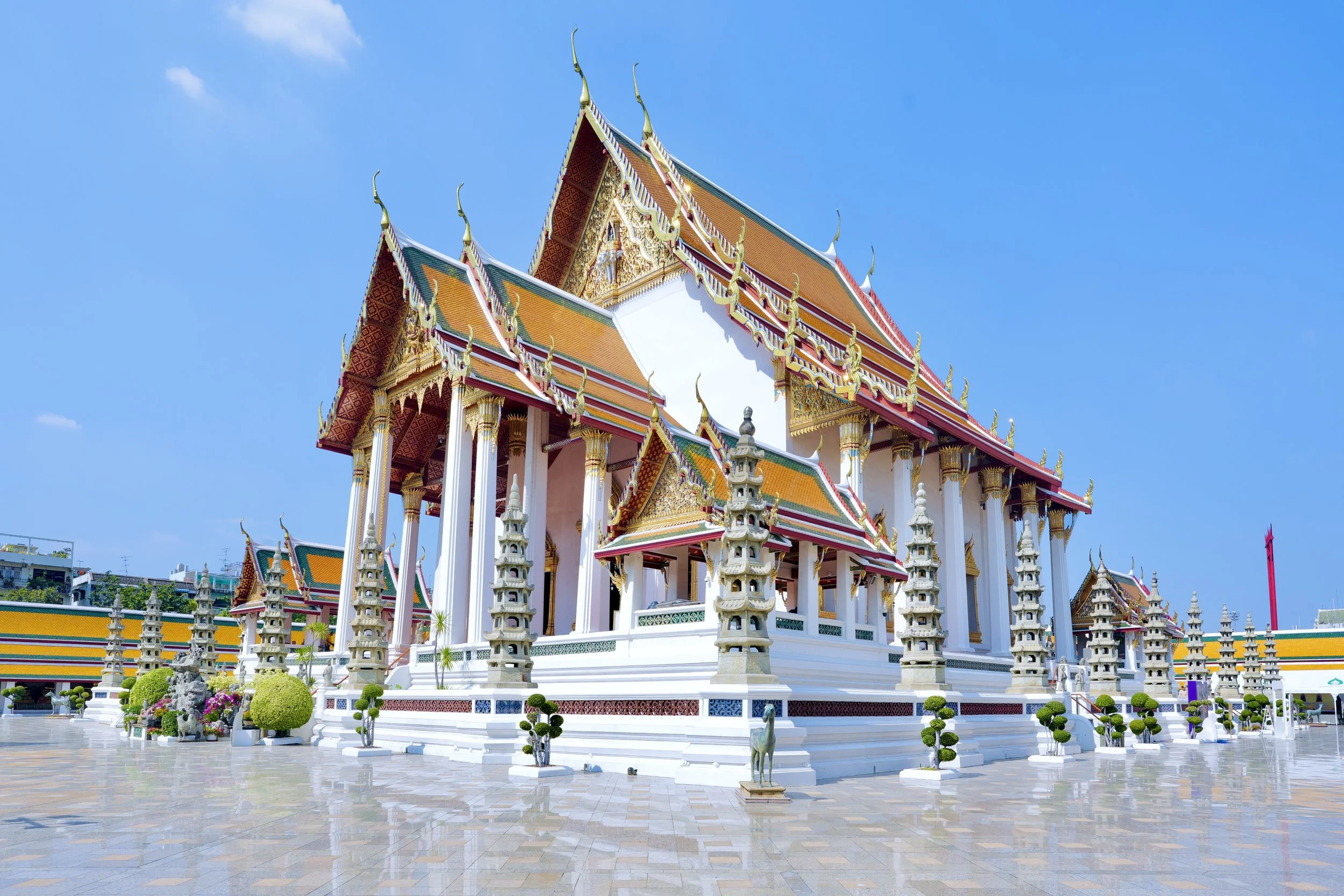
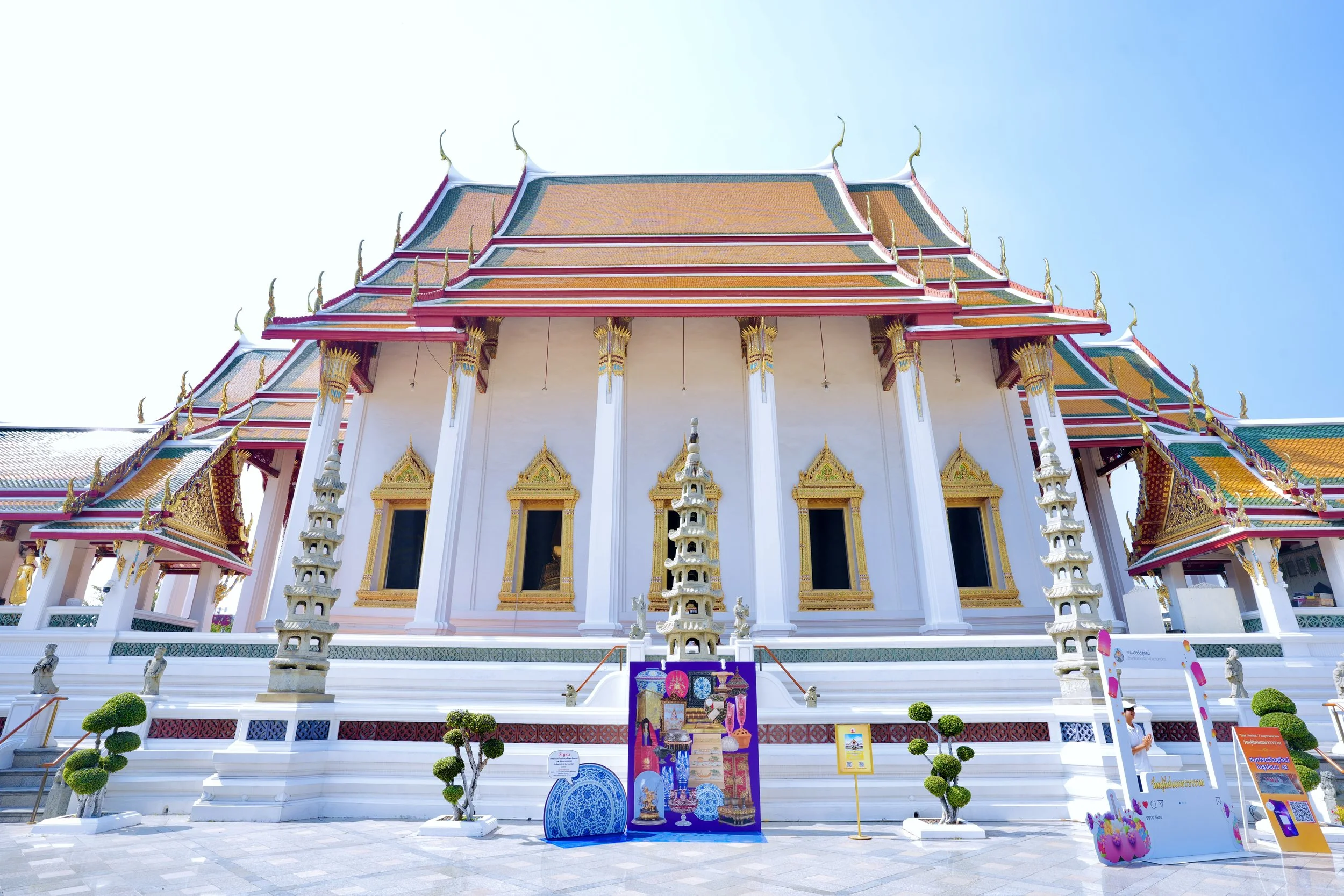
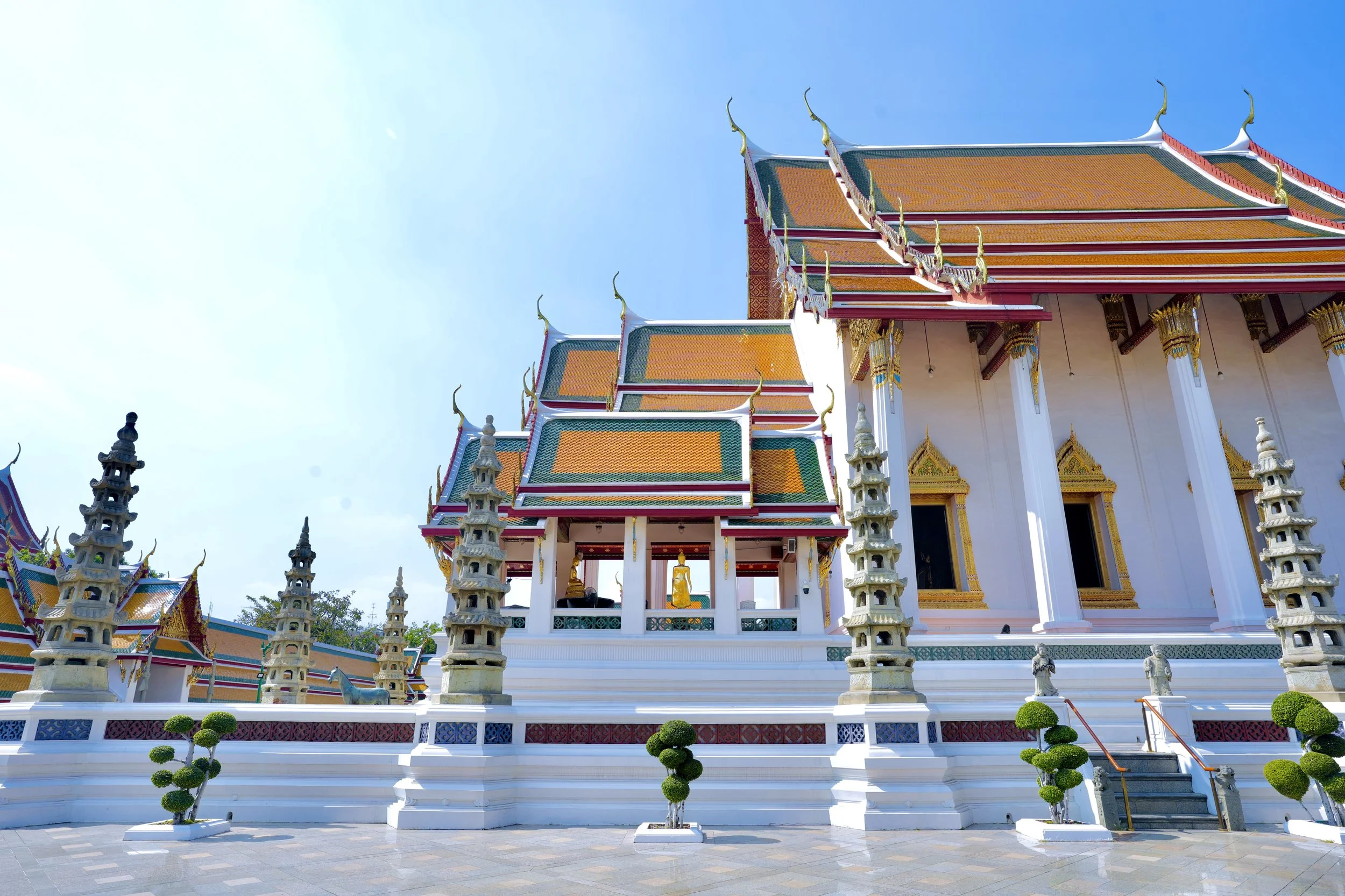
Thai Buddhist architecture balances symmetry and symbolism, turning every corner into a lesson in precision
Walking into Wat Traimit feels like stepping into a story told in gold. The temple is best known for the Golden Buddha — a statue that weighs about 5.5 tons and is often described as the largest solid gold Buddha image in the world — but its true magic emerges when you start paying attention to everything that surrounds it.
Even early in the day, the air was warm, the street vendors were setting up their basins of fruit, and motorbikes hummed in the distance. But as I climbed the stairs, the movement softened into something quieter. Bangkok, at this hour, feels unhurried.
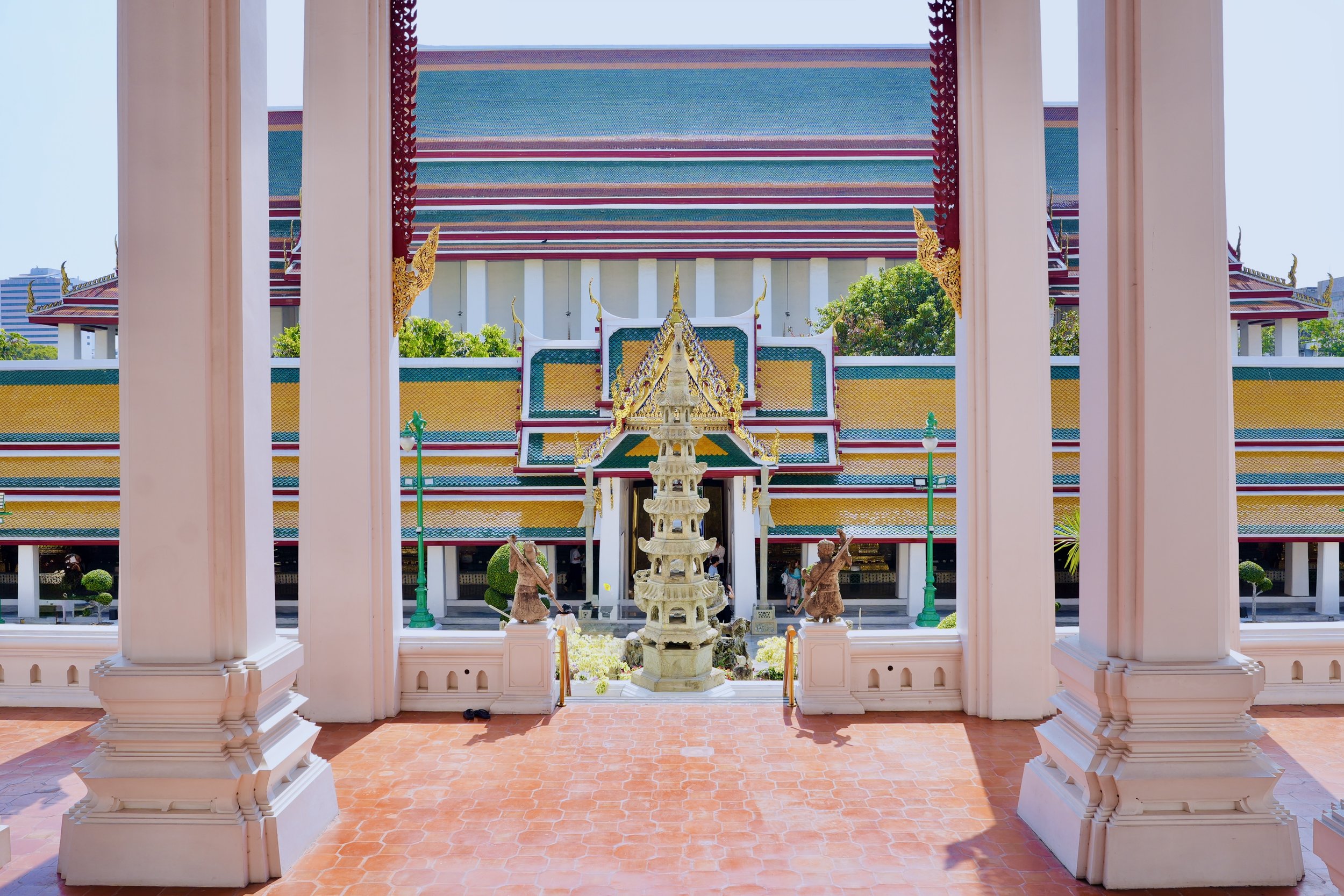
At the top platform, the morning light revealed the temple like a sculpture carved from sun itself. Every edge caught the brightness. Every window frame and roof tile glittered with layers of lacquer and gold leaf, arranged so meticulously that it felt like the building itself was meditating.
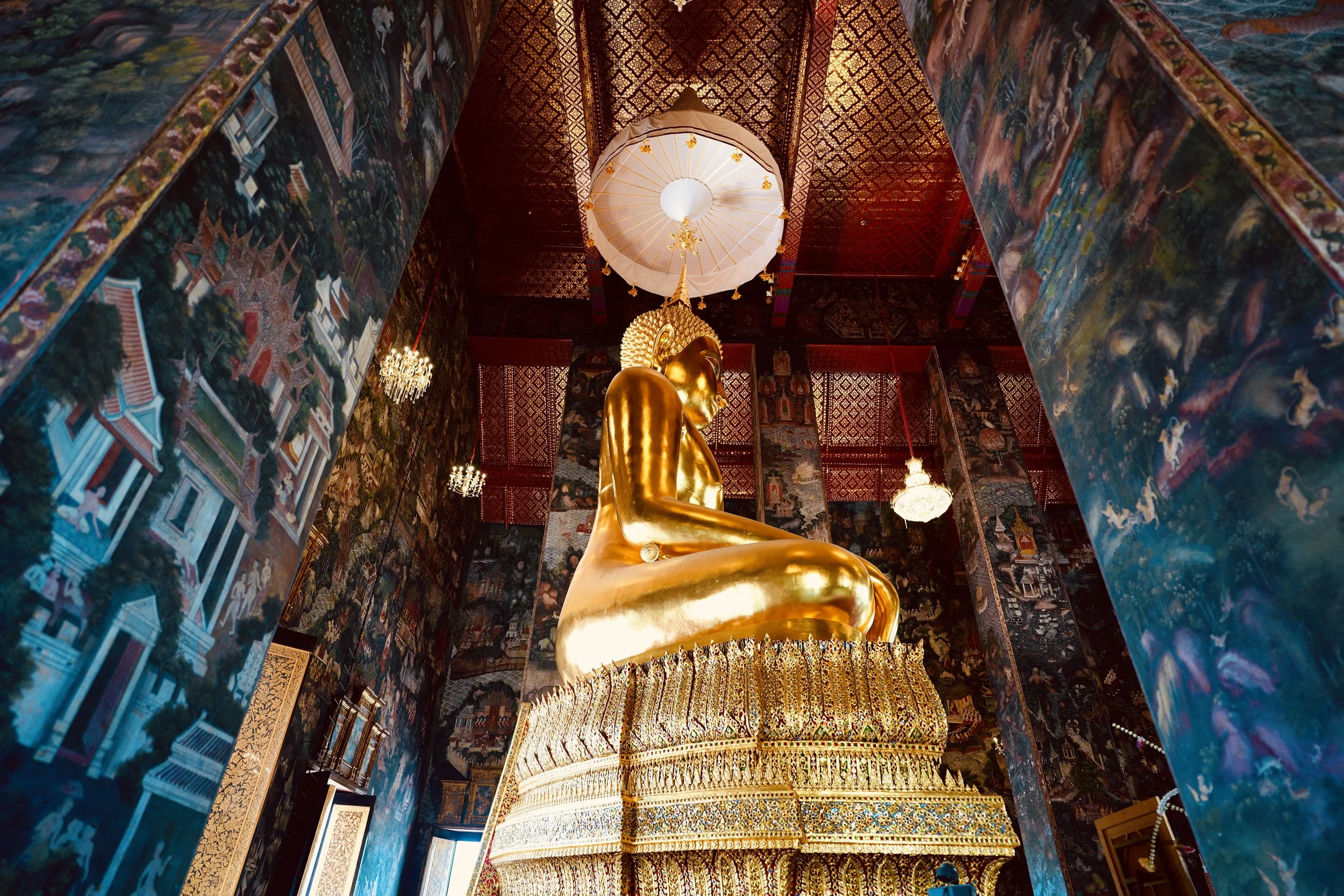
The Golden Buddha weighs 5.5 tons and is considered the largest solid-gold statue in the world
Stepping into the ordination hall feels like entering a gilded universe. Before you even see the statue itself, the room shifts — quieter, dimmer, more focused — as if the air has learned to move around something ancient and luminous.
At the heart of the chamber stands the Golden Buddha, but its presence is inseparable from the immense pedestal supporting it. The pedestal isn’t merely structural — it’s a mountain of devotion. Layer upon layer of gold leaf, lacquer, mirrored glass, and flame-like spires rise in perfect symmetry. At its center, a cool stone panel etched with scenes from the Buddha’s life interrupts the sea of gold — a calm, matte surface framed by tens of thousands of tiny mosaics that glitter like stars.
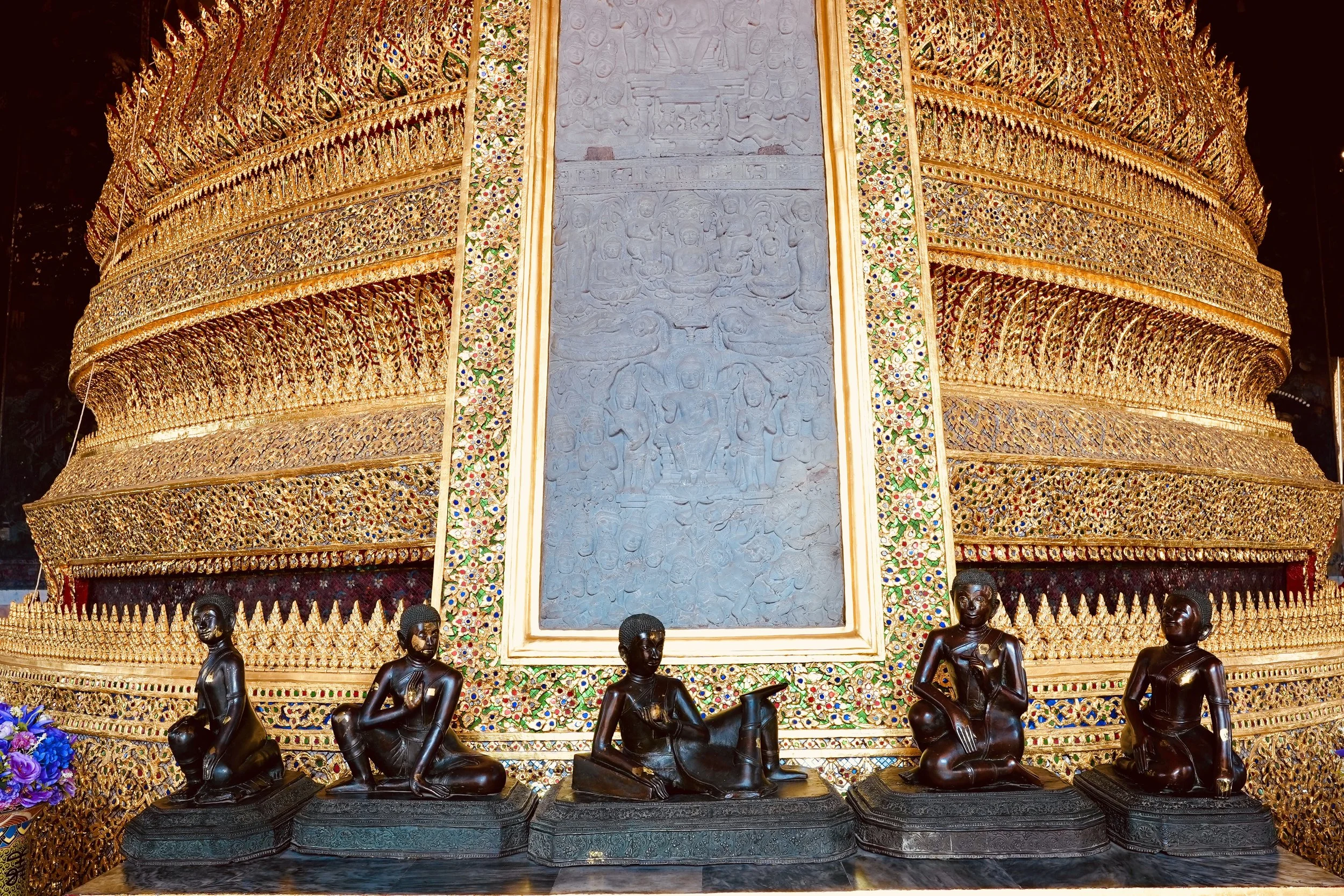
The Golden Buddha’s pedestal — a soaring structure of gold leaf, lacquer, and mosaics — surrounds a carved stone panel depicting scenes from the Buddha’s life. Five bronze disciples sit quietly at the base, grounding the radiance with their humble presence
Five bronze disciples sit serenely at the base. Their dark forms — kneeling, resting, listening — feel almost human in the softness of their poses. Against the brilliance of the gold, they hold space for humility. These figures ground the entire room, reminding you that enlightenment begins on the floor, at eye level, among people.
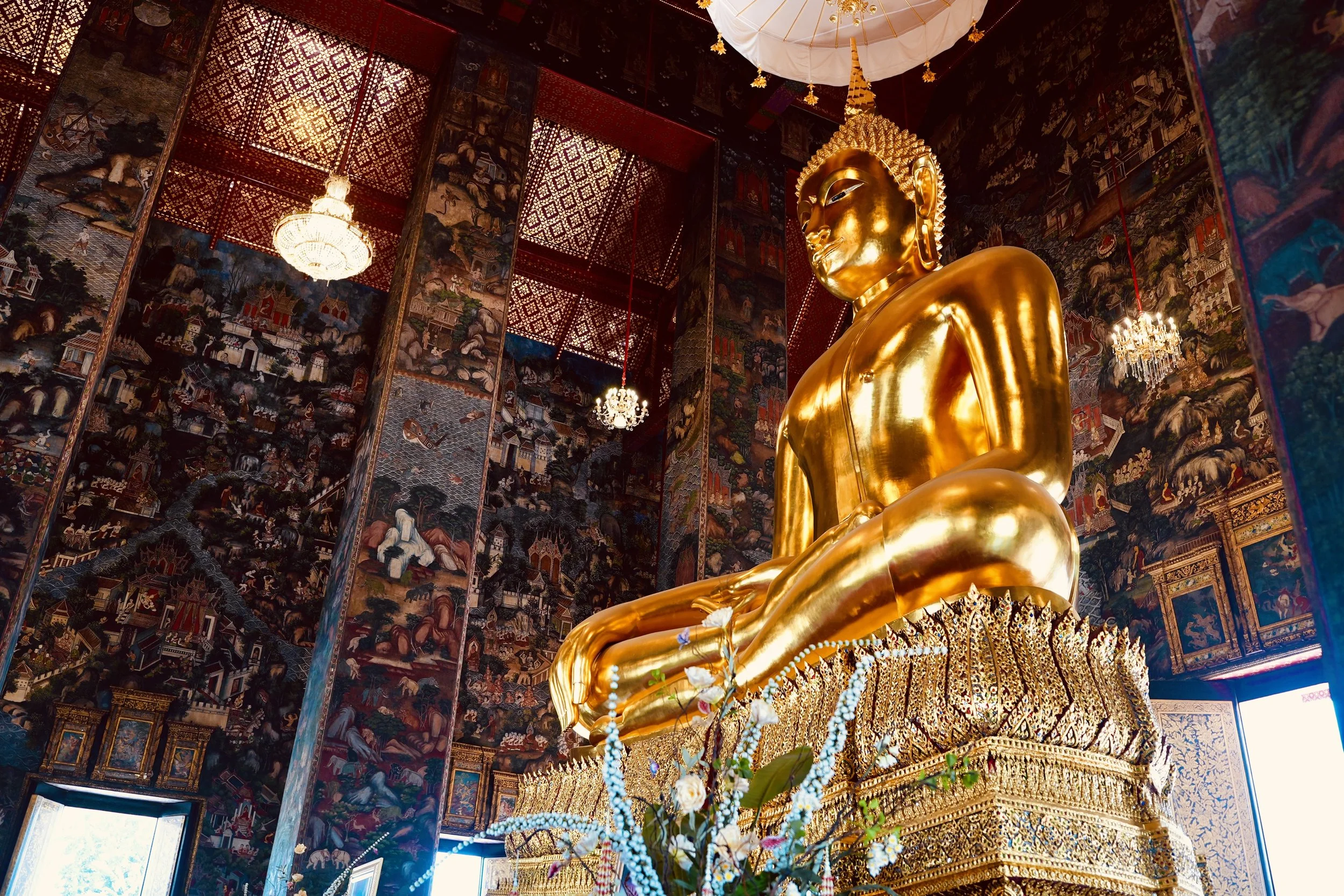
Inside the ordination hall, the Golden Buddha rises against a universe of murals. Jewel-toned scenes of forests, kingdoms, and mythic journeys wrap the chamber like an illustrated cosmology
The Buddha itself rises nearly 10 feet tall, its polished surface catching every reflection in the room. Behind it, the murals turn the hall into a cosmic map — forests, battles, floating kingdoms, and celestial beings rendered in deep jewel tones. Painted centuries ago and restored many times since, these walls are a living archive. When sunlight enters through the small windows, the gold reflects onto the murals, making entire scenes glow as though lit from within.
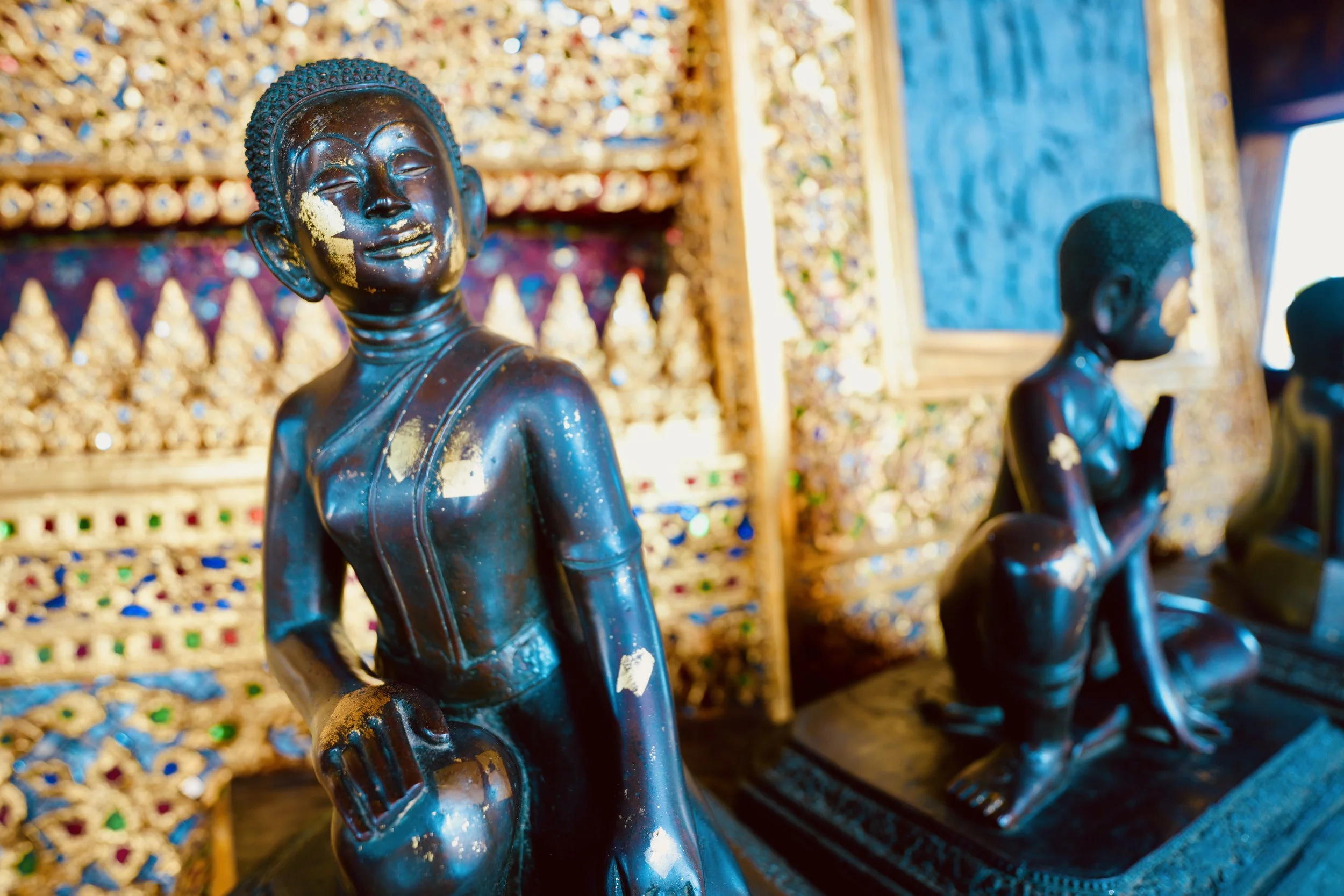
A bronze novice dotted with delicate patches of gold leaf — each one pressed on by a worshipper’s fingertips — creates a constellation of prayers across his serene expression
Near the base sit the bronze novices, their faces dotted with uneven patches of gold leaf pressed onto them by worshippers. Each fleck of gold is a prayer, placed with fingertips and intention. Over time, these offerings accumulate into constellations — speckled across cheeks, arms, foreheads, robes. One novice smiles gently, a soft upturn of the mouth that feels startlingly alive. These statues embody the temple’s quiet truth: devotion is not made only of grand gestures, but small, repeated acts of hope.
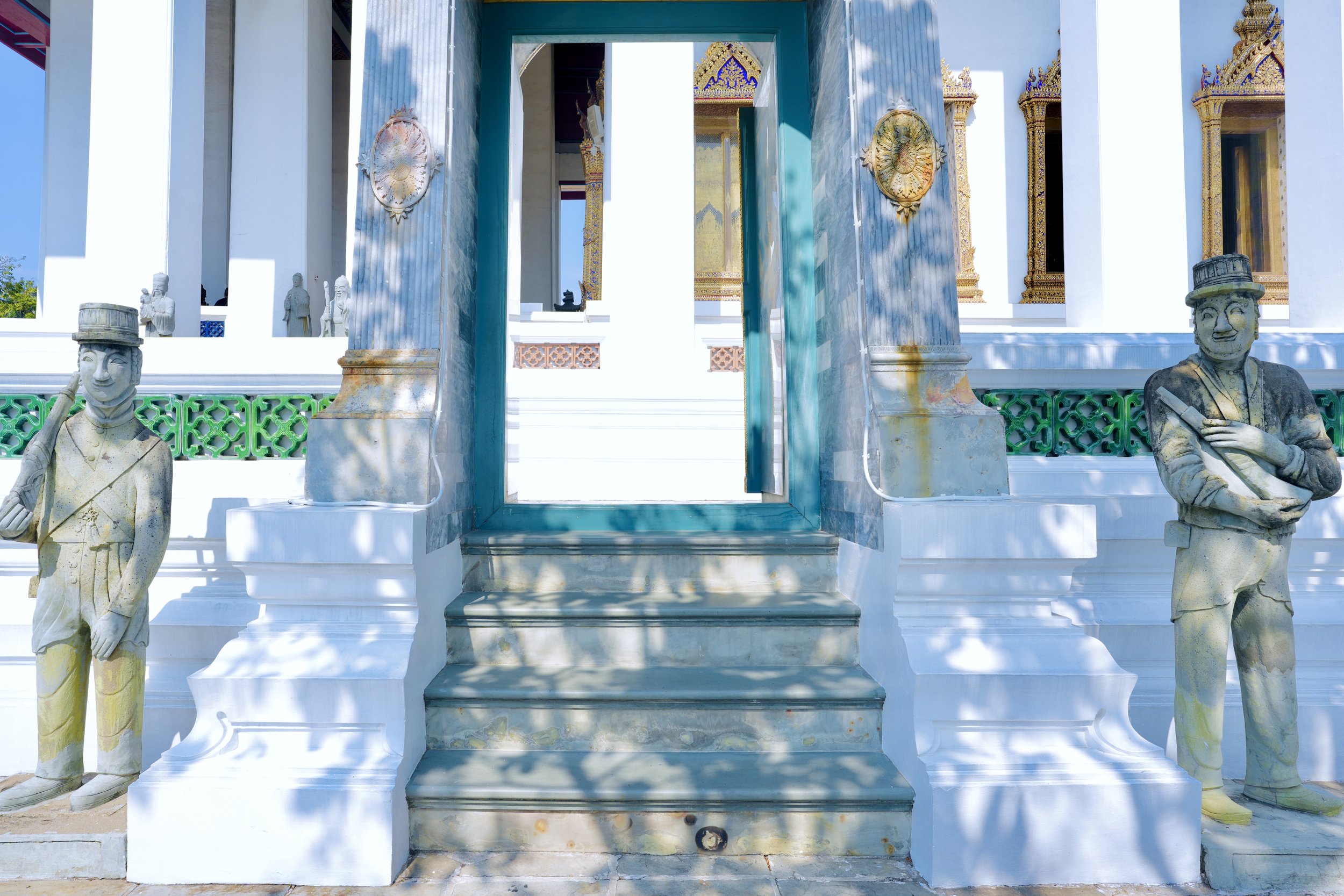
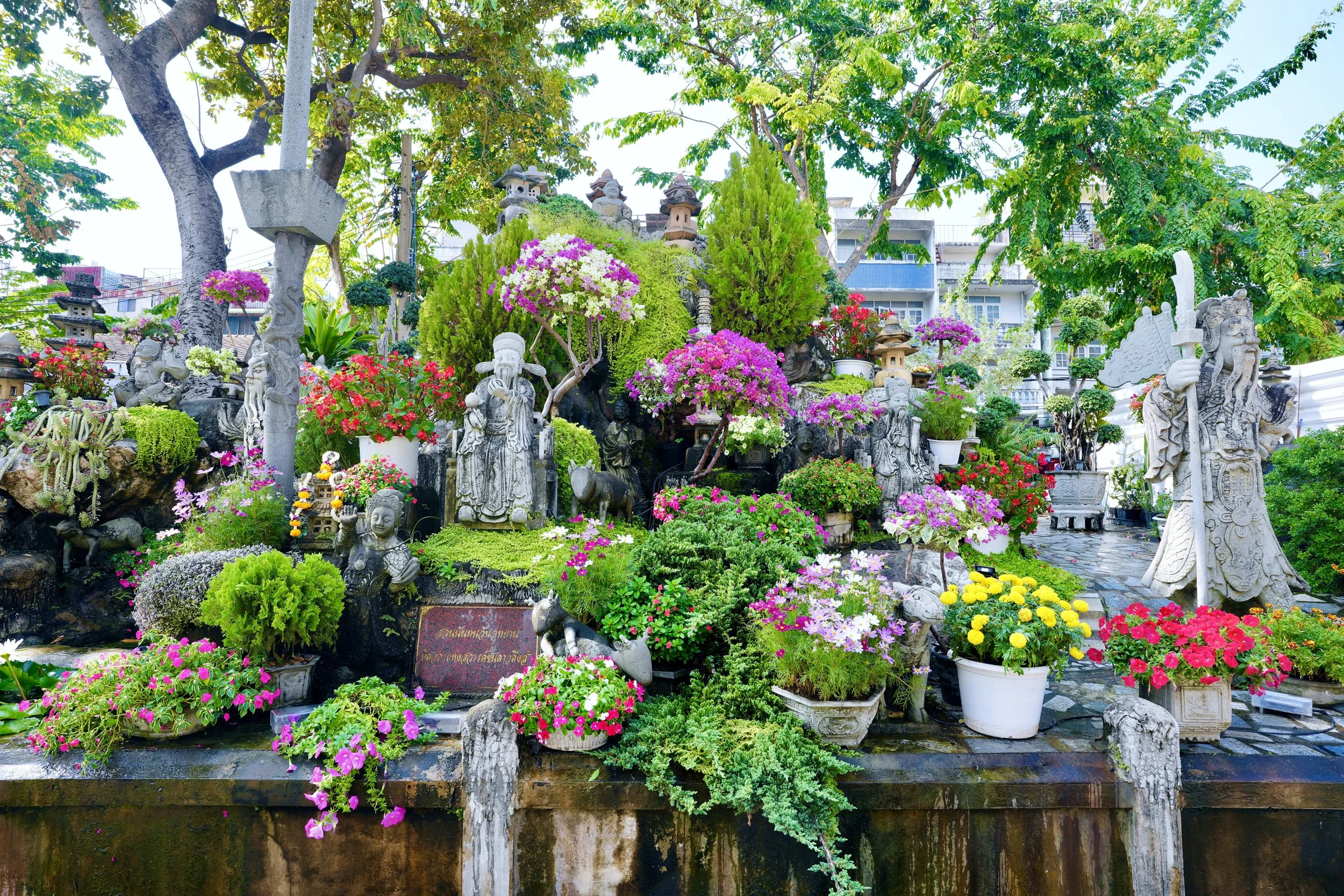
Outside, Wat Traimit’s courtyard blooms in a tangle of flowers and Chinese stone guardians. Pink bougainvillea cascades over carved figurines, while bonsai-like shrubs curl around ancient statues. Together, they form a miniature mountain of stories — a meeting place of cultures shaped by centuries of migration and trade.
Sri Maha Mariamman - Where color, devotion, and centuries of migration pulse through Silom’s heart
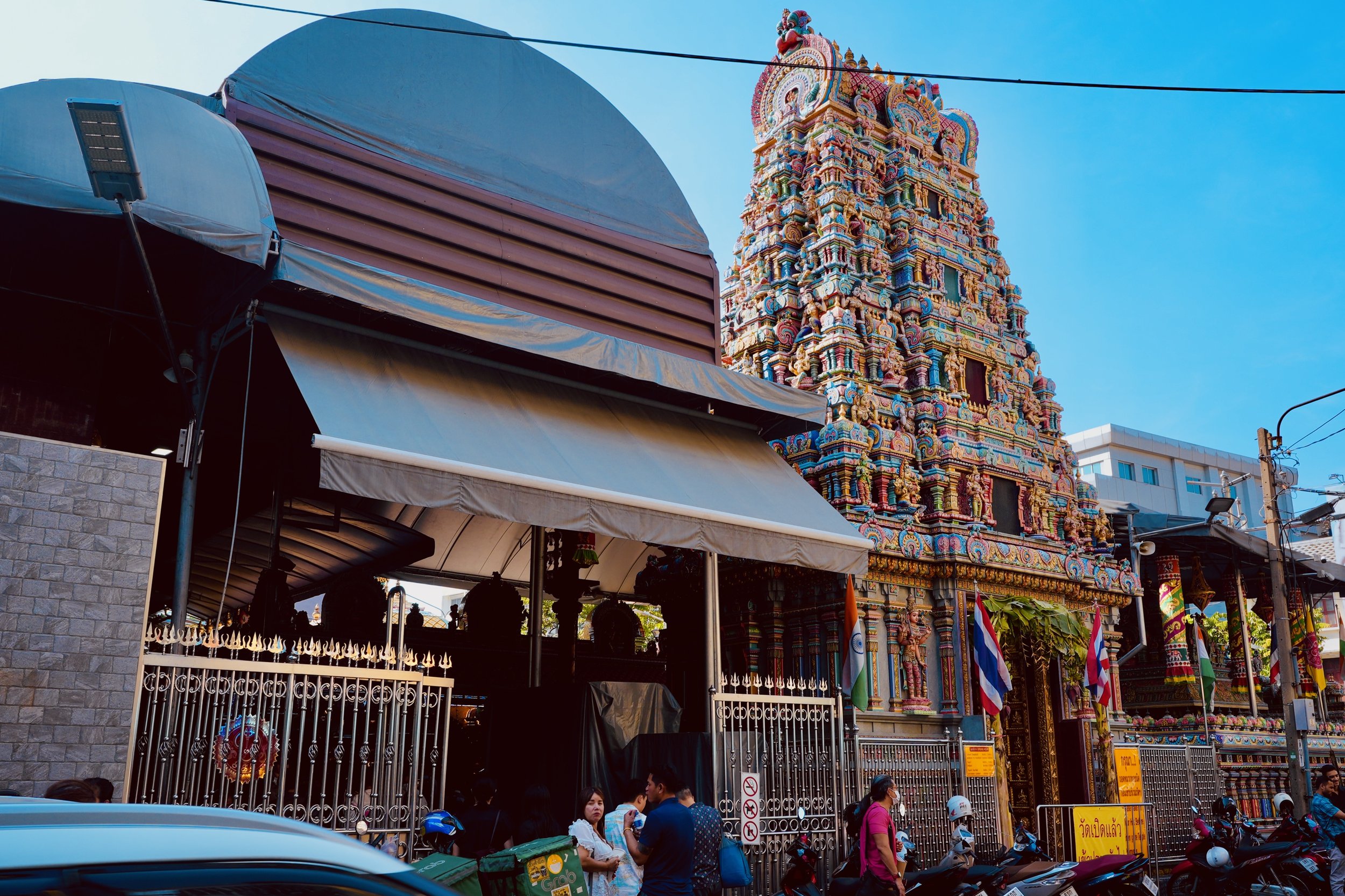
The temple’s towering gopuram holds over 200 hand-painted deities, each one telling a story from South Indian mythology.
If Wat Traimit is shaped by stillness, Sri Maha Mariamman Temple—known locally as Wat Khaek—is shaped by movement. Built in 1879 by Tamil immigrants, this temple remains one of the most important Hindu sanctuaries in Thailand. Here, devotion flows through color, sound, ritual, and rhythm. Two days after my quiet morning at Wat Traimit, I crossed the city toward Silom and stepped into a completely different spiritual world.
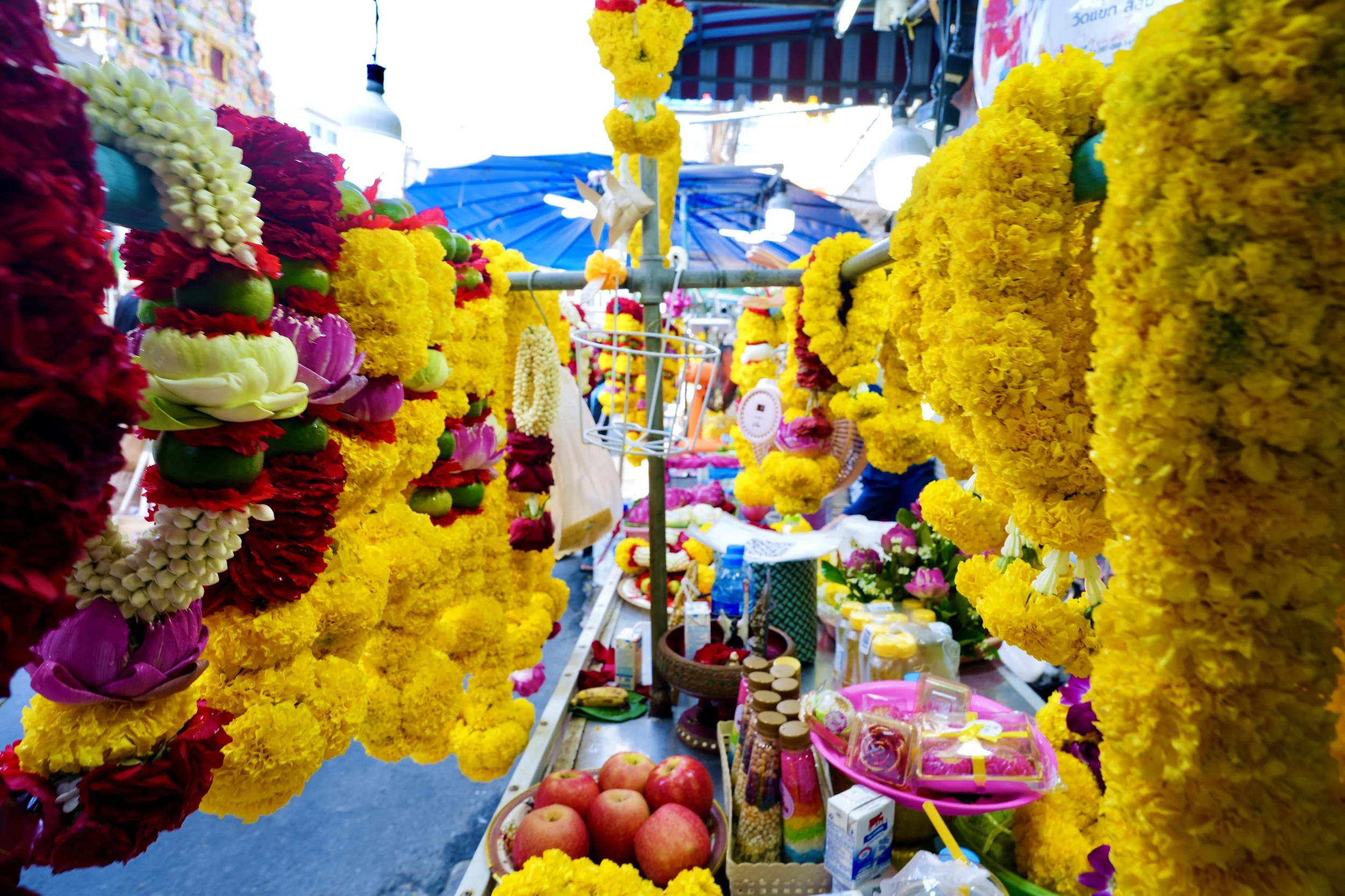
Marigold garlands—tens of thousands sold monthly—sustain a small ecosystem of vendors who have supplied the temple for generations.
The approach to Wat Khaek begins long before you reach its gate. The scent of jasmine, incense, and fresh petals gathers in the air like a soft cloud. Vendors sit on low stools threading flowers with practiced speed, their hands moving in a blur. Offerings are made fresh here—nothing stays on the table long.
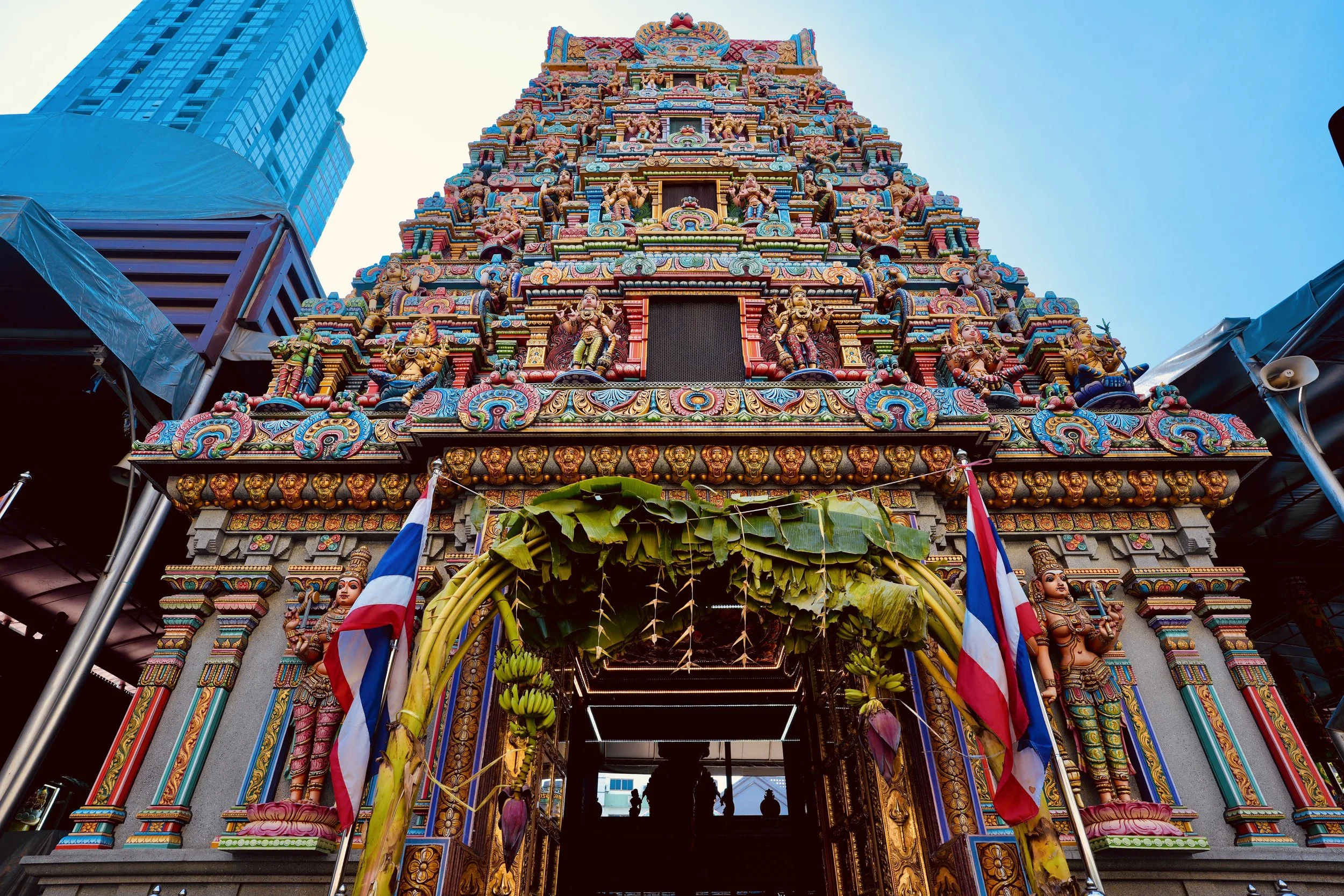
The temple’s towering gopuram holds over 200 hand-painted deities, each one telling a story from South Indian mythology.
As soon as you reach the entrance, the temple reveals itself as an explosion of color and narrative. Unlike the clean geometric lines of Thai temples, the gopuram here is a mountain of sculpted myth. Every inch is alive—guardian figures, warriors, animals, gods, celestial beings—all balanced on one another in a tapestry of motion.
The closer you look, the more you see. Hands holding weapons, dancers frozen mid-movement, beasts with curling fangs, goddesses crowned in red and gold. The colors are layered like pigments in a festival powder bowl, bright enough to feel warm even in the shade.
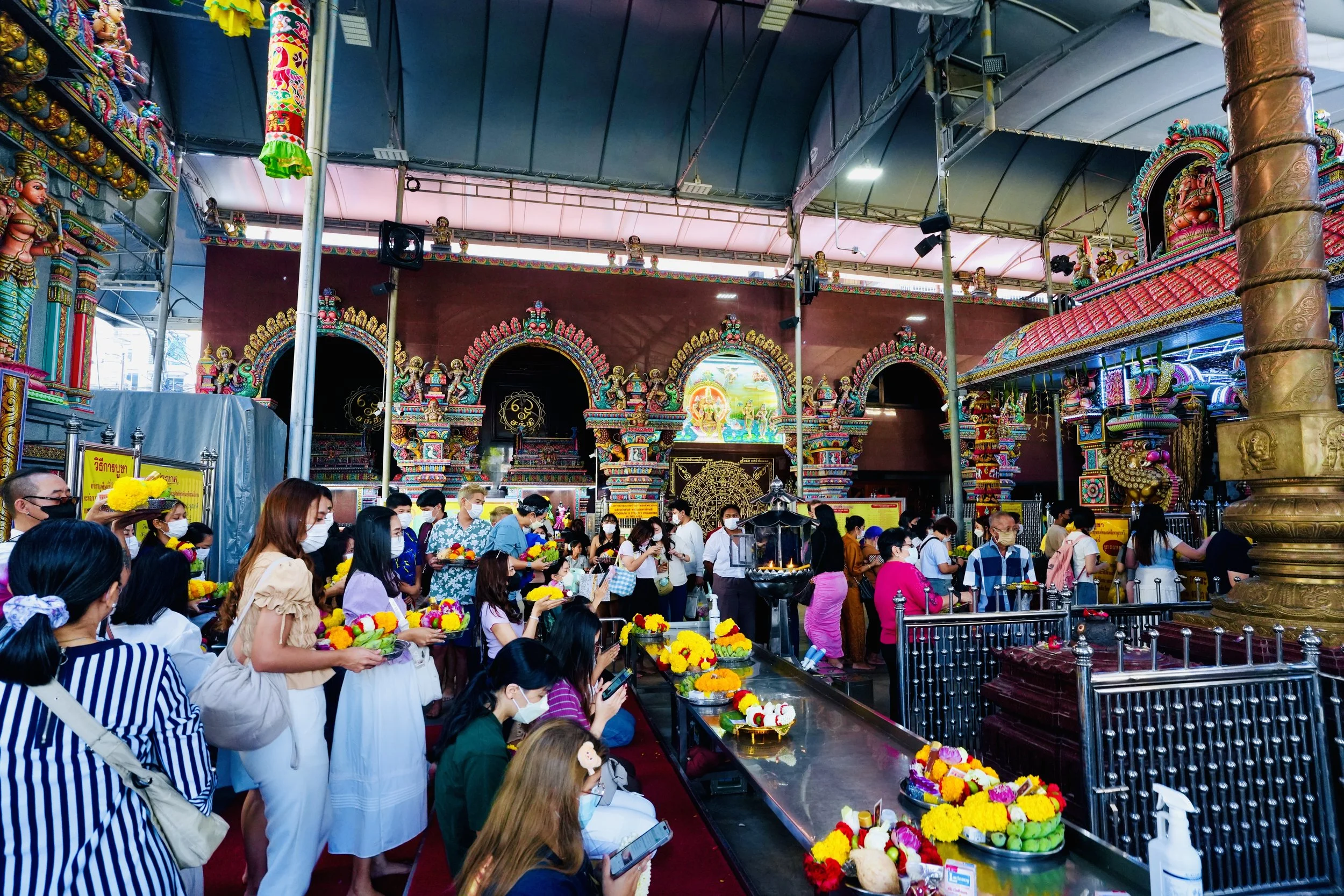
During major festivals, Wat Khaek receives up to 10,000 visitors in a single day, filling the halls with movement and sound
Inside, everything shifts: bells ringing, priests chanting, candles glowing through incense haze. The temple feels alive in a way that is nearly kinetic. Devotion here isn’t quiet—it moves.
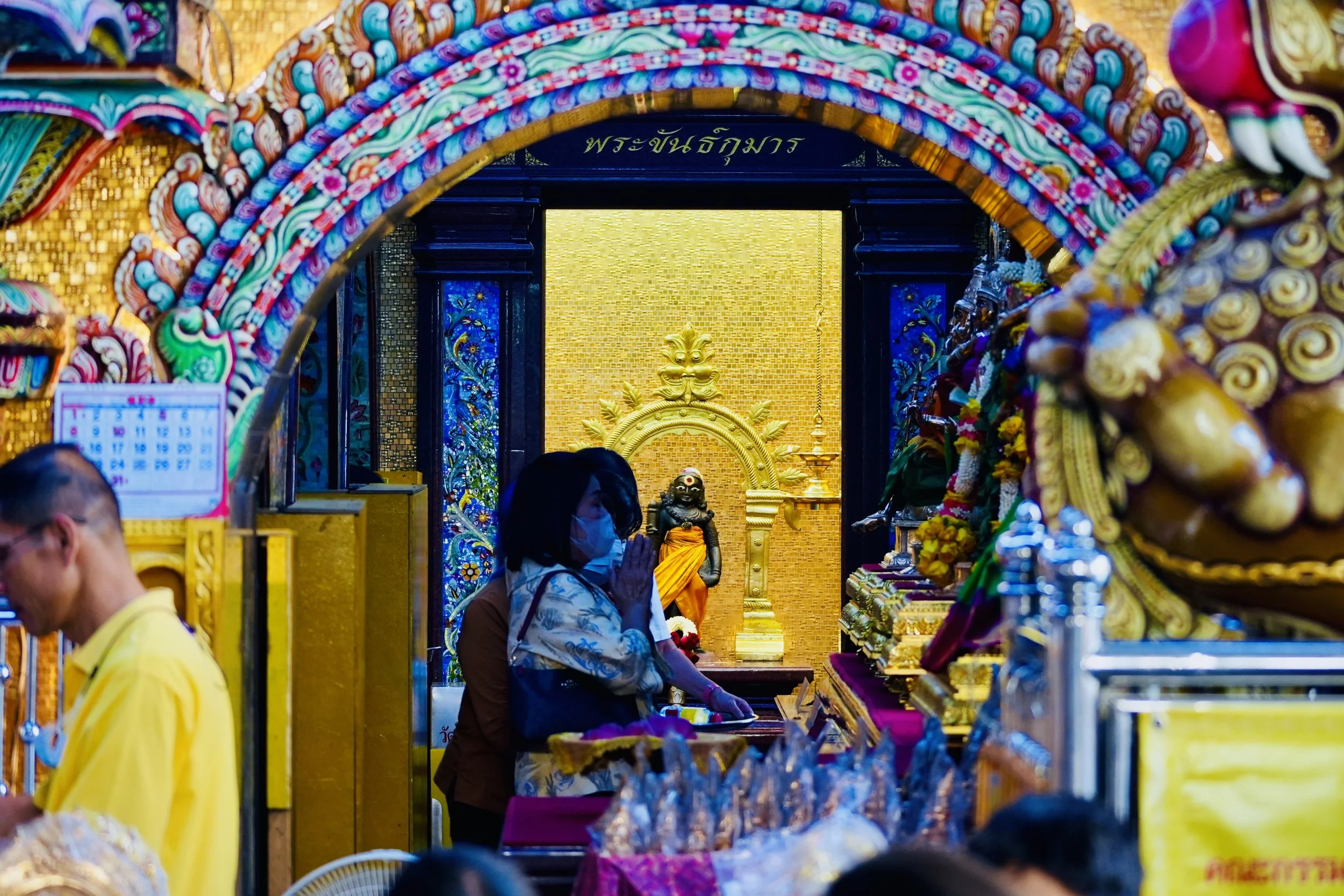
Ghee lamps, coconuts, fruit, and garlands form the vocabulary of worship inside the sanctuary
A warm, flickering light fills the inner space. Shrines glow in shades of red and gold. Offerings pile high—bananas, coconuts, flowers, coins, oil lamps. Every gesture feels intentional.
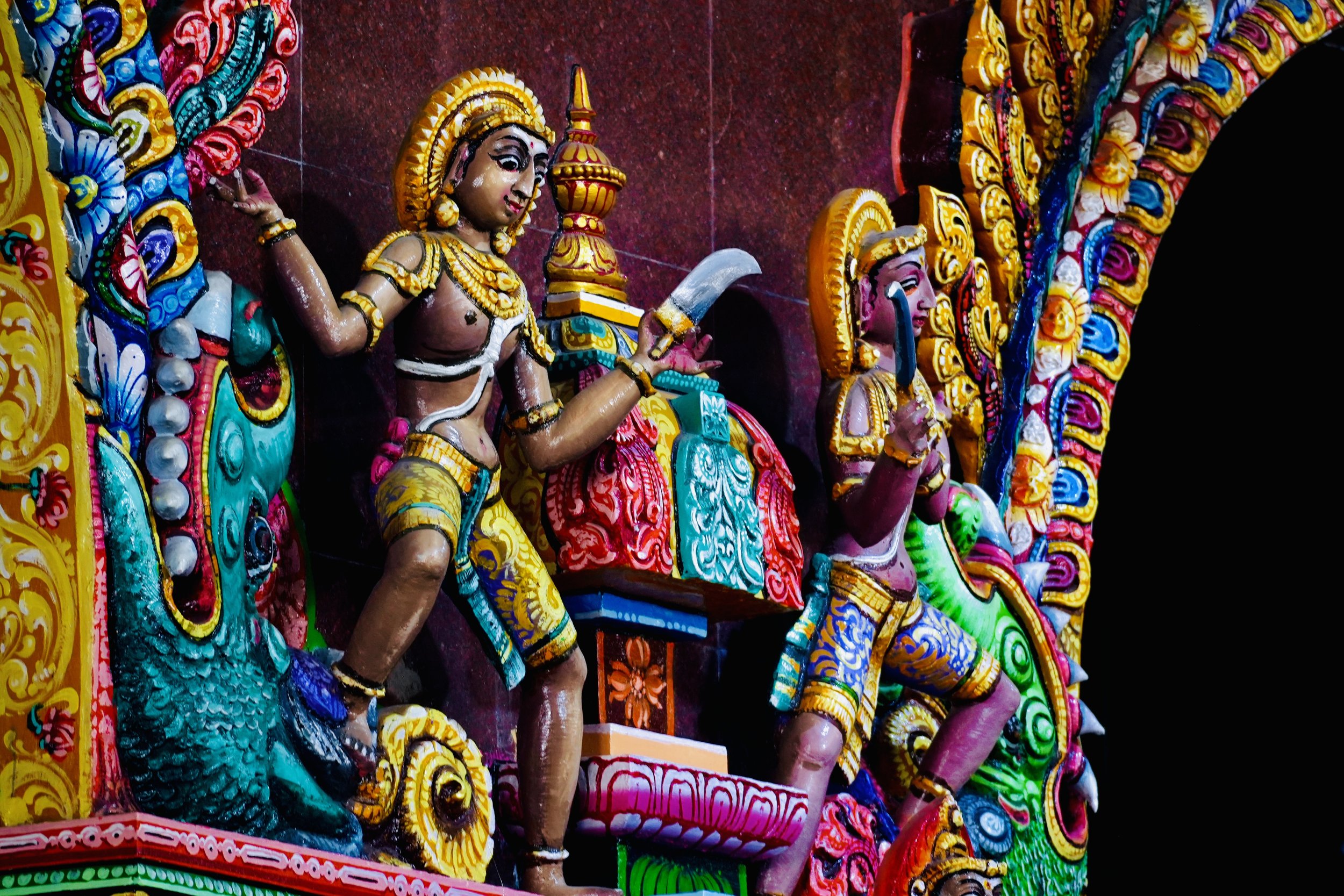
Mythic guardians stand watch at every level of the gopuram, symbolizing protection and divine strength
These carvings—fierce, watchful, brilliantly painted—serve as protectors. They’re dramatic, expressive, textured with centuries of retouching and repainting.
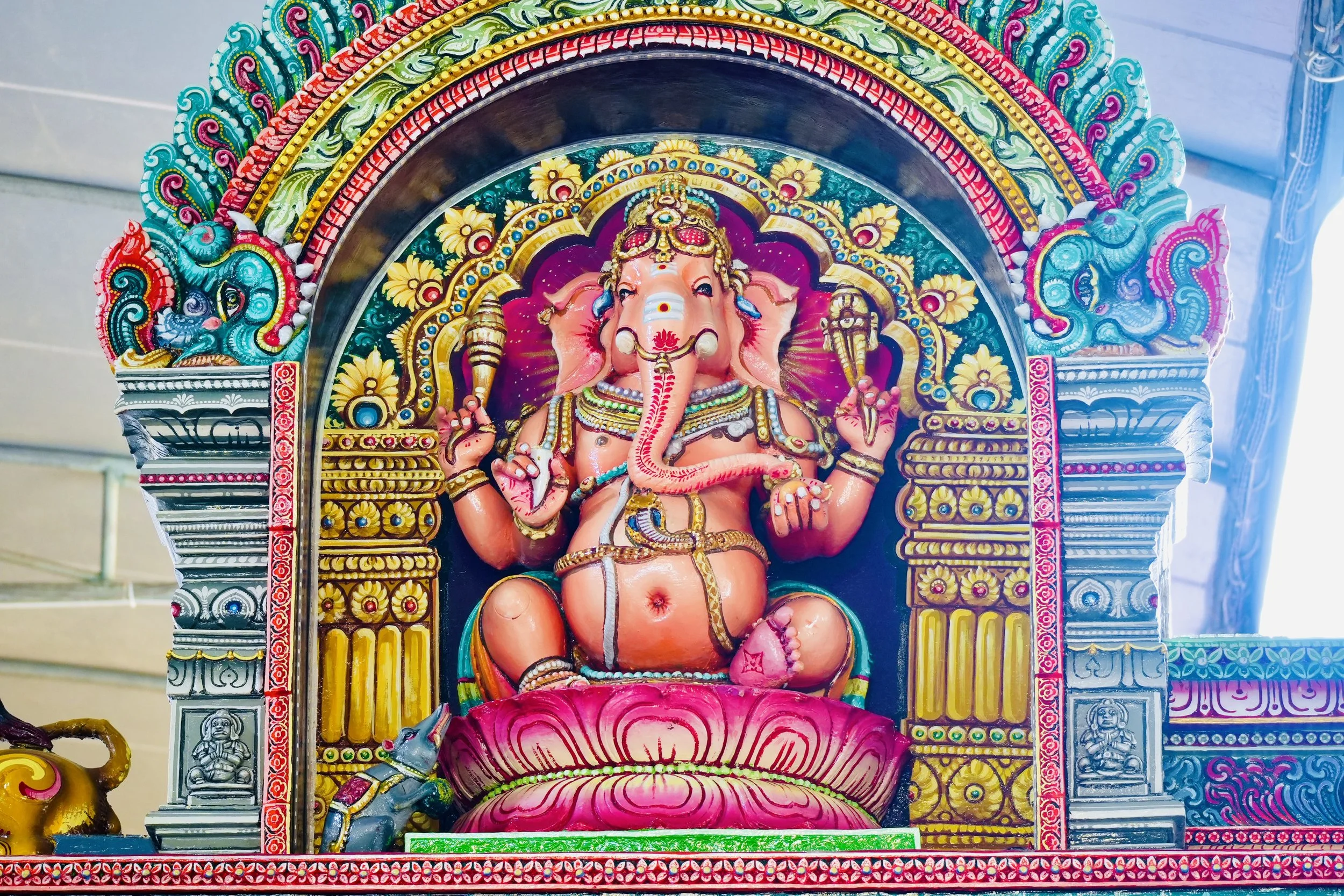
Ganesha, remover of obstacles, greets visitors near the entrance—an anchor of calm amid the temple’s energetic rhythm
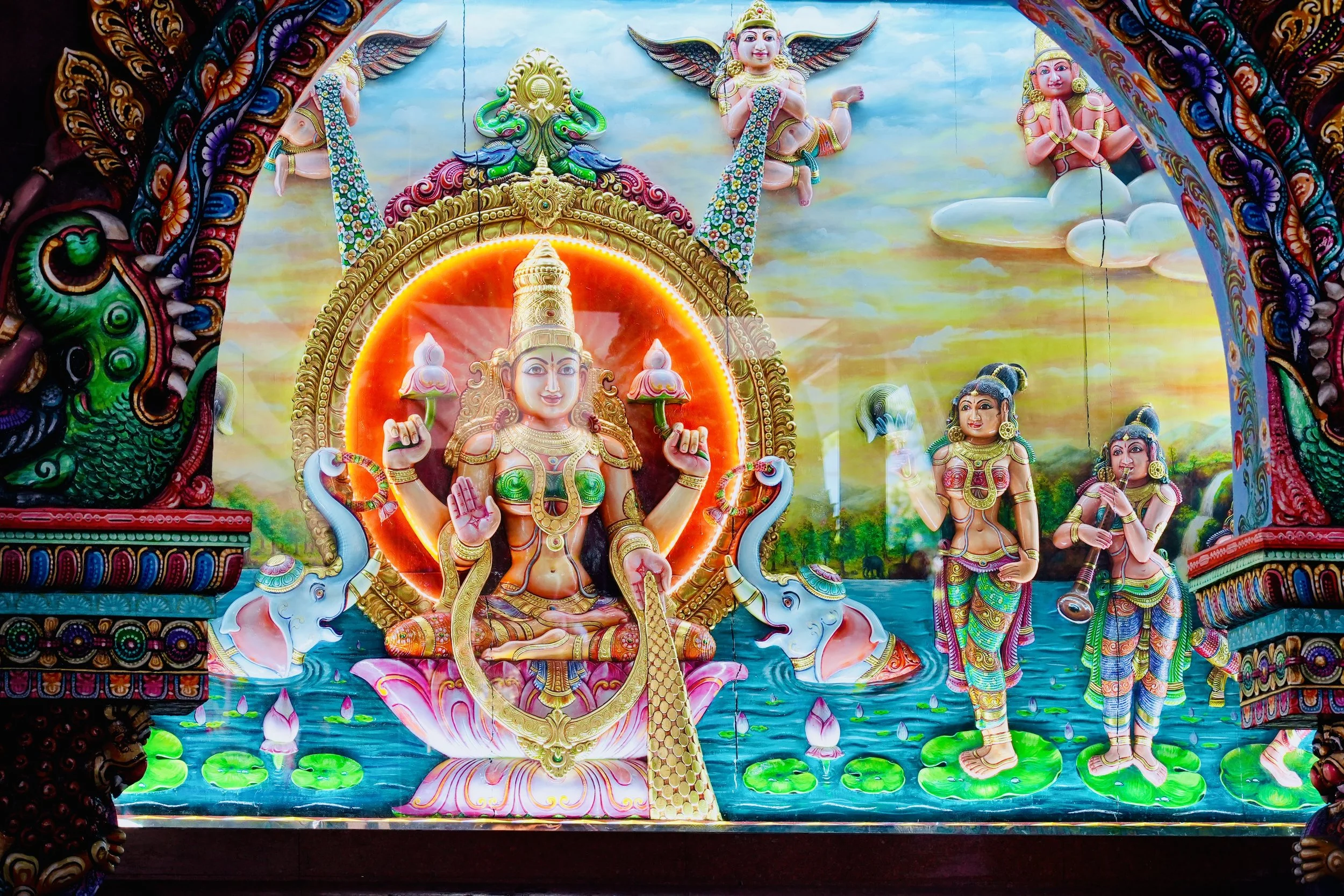
Lakshmi—goddess of prosperity—is one of the temple’s most beloved figures, her mural shimmering with gold accents
The mural of Lakshmi is radiant—soft pinks and blues surrounded by gold trim. She looks out over the space with calm benevolence, accompanied by elephants pouring water in blessing.
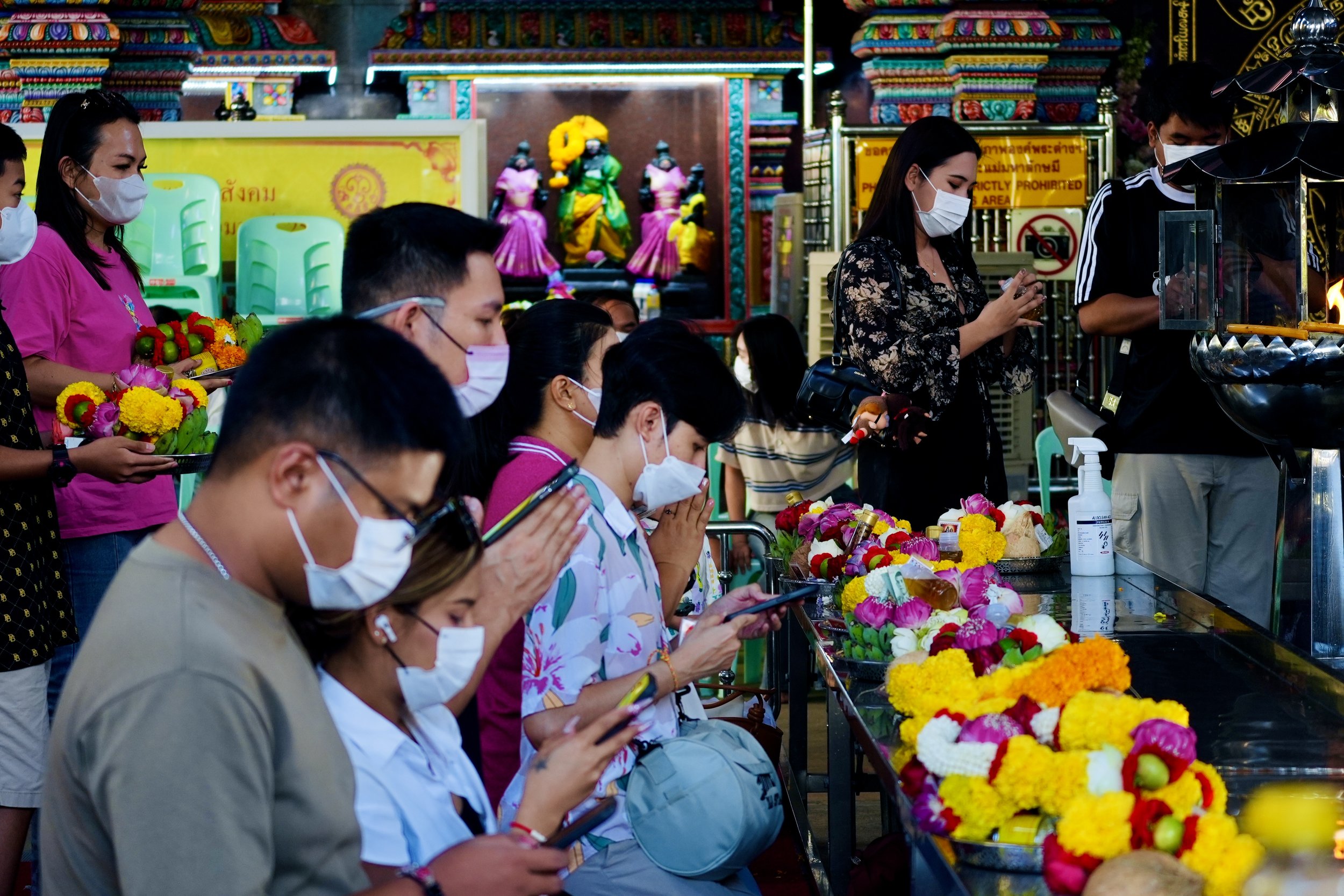
Even outside festival days, the temple’s rituals continue from early morning until late evening
Inside, people knelt in front of shrines: mothers holding flowers, office workers still in their uniforms, elders whispering prayers that seemed older than the building itself. Ritual here is a daily rhythm, not an occasional practice.
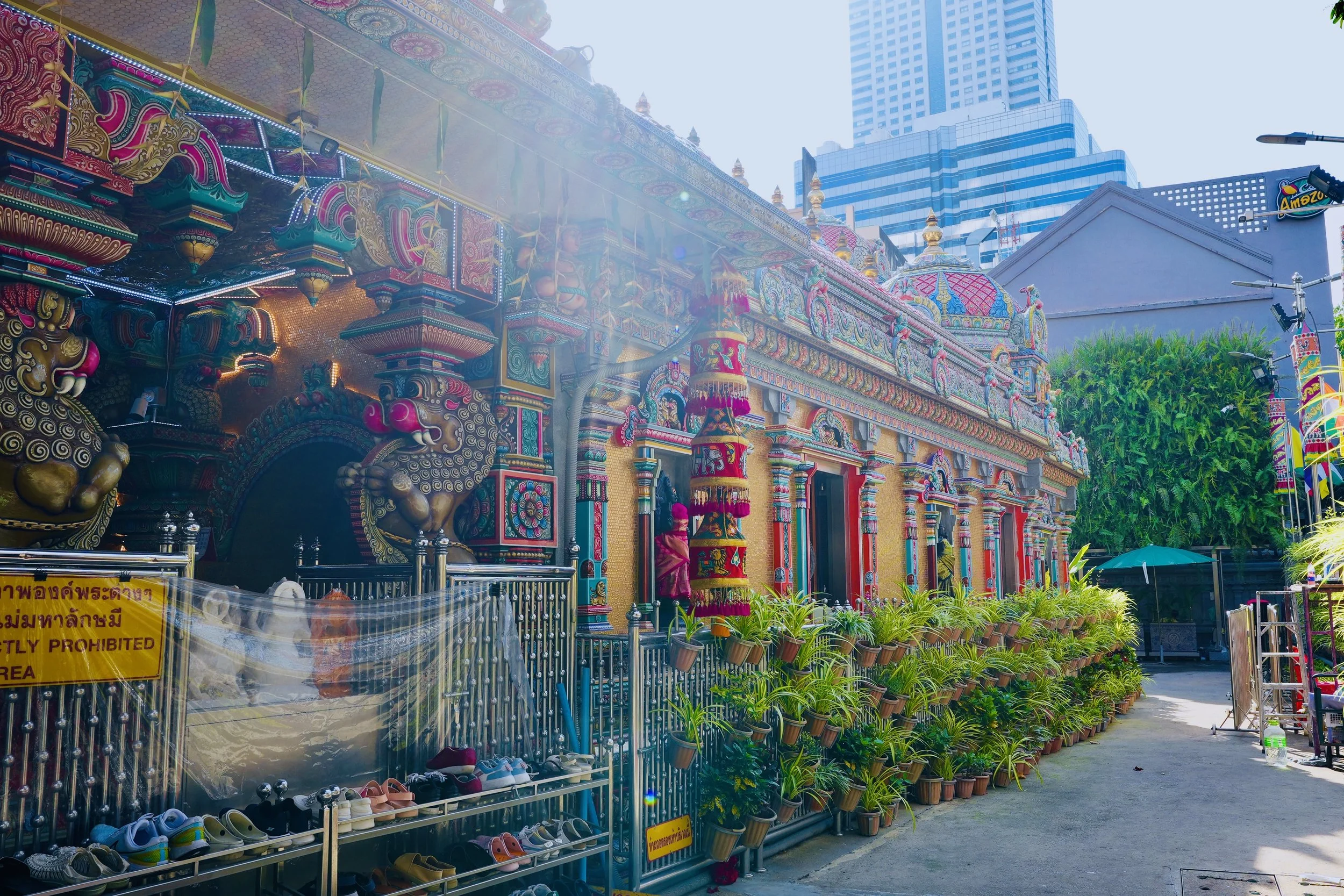
The quiet ritual of removing your shoes marks a threshold: the moment everyday life softens into devotion
Stepping out, the city’s noise returns—motorbikes, street vendors, buses, office workers rushing to lunch. But the silence lingers for a moment, as if carried out with you.
Wat Khaek is a reminder that Bangkok is not just a Buddhist city; it is a mosaic city—built from migrations, layered with faiths, and pulsing with communities that have shaped its rhythm for over a century.
To see more photos & videos from my travels visit the links below
happy traveling,
~Sean
