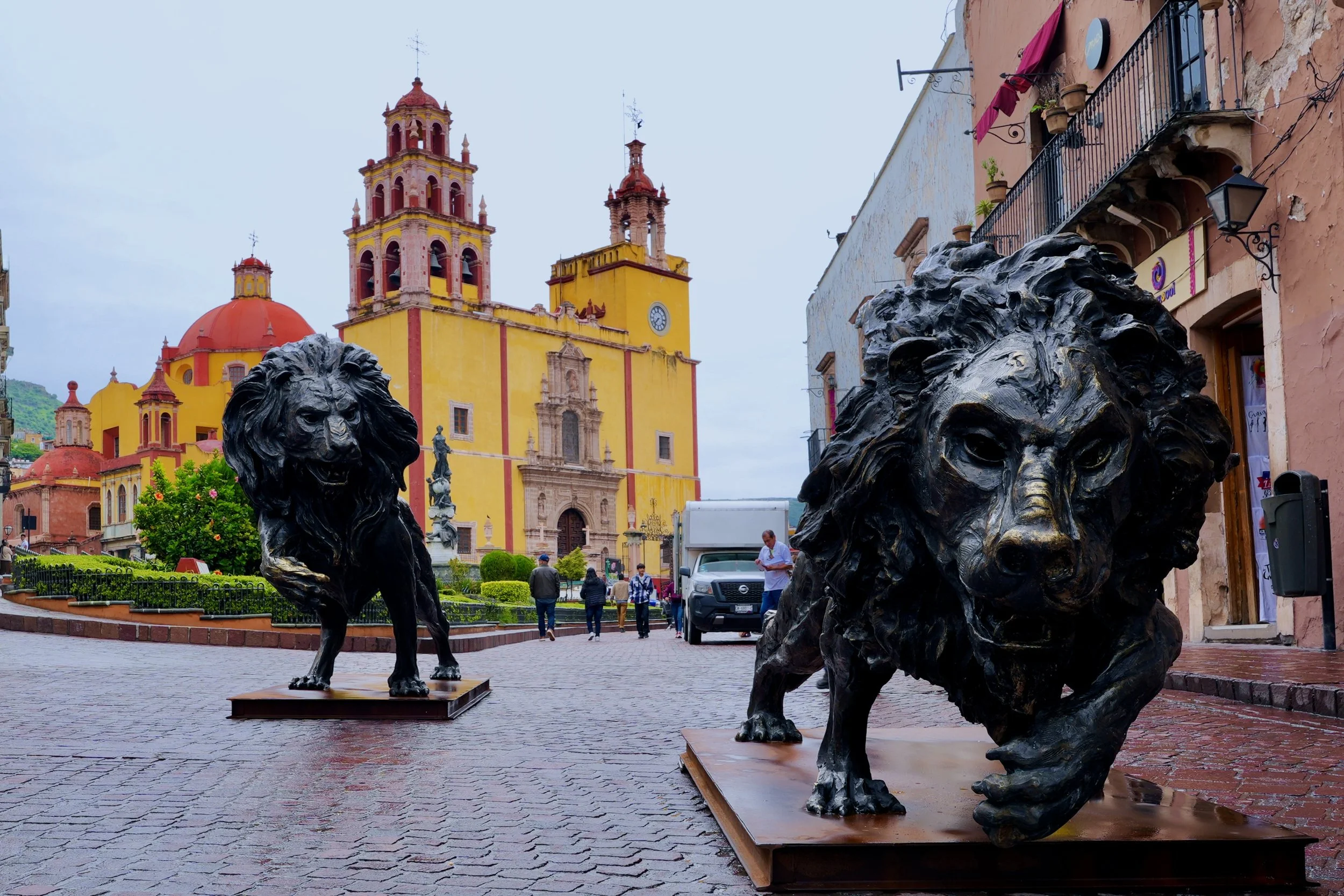
The Vertical Canvas
Suspended 2,000 meters above sea level in the sharp folds of a high-altitude valley, Guanajuato is a city that completely rejects the flat horizon. From the monumental heights of El Pípila to the subterranean stone tunnels and the vibrant, multi-layered flavors of traditional artisan moles, discovery here is a deeply physical, vertical act. Join us as we step off the cobblestones to explore a labyrinth carved from colonial ambition, brilliant architectural sanctuaries, and a nocturnal amphitheater glowing under the Mexican sky.
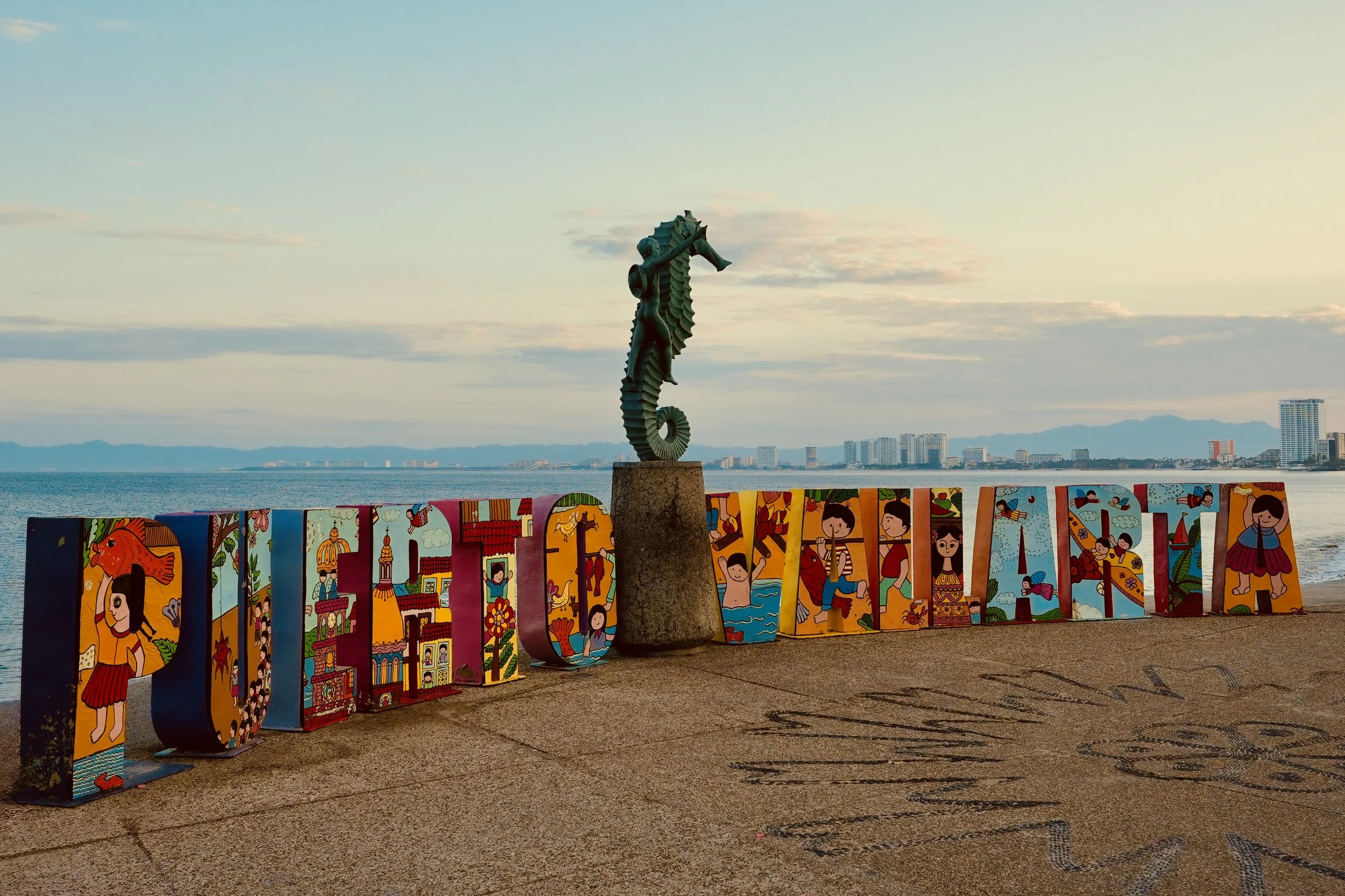
The Architecture of Sentiment
There is a specific suspension of time that occurs above the rooftops of Puerto Vallarta. As the sun begins its slow descent into Banderas Bay, the city undergoes a chromatic shift—transforming whitewashed walls into a hoarding of golden light.
From the tactile "braille" of the Malecón’s stones to the emerald silence of Playa Colomitos, I’m exploring the balance between the structured city and the untamed edge. This is Part I of a pilgrimage through the altitudes of Mexico.
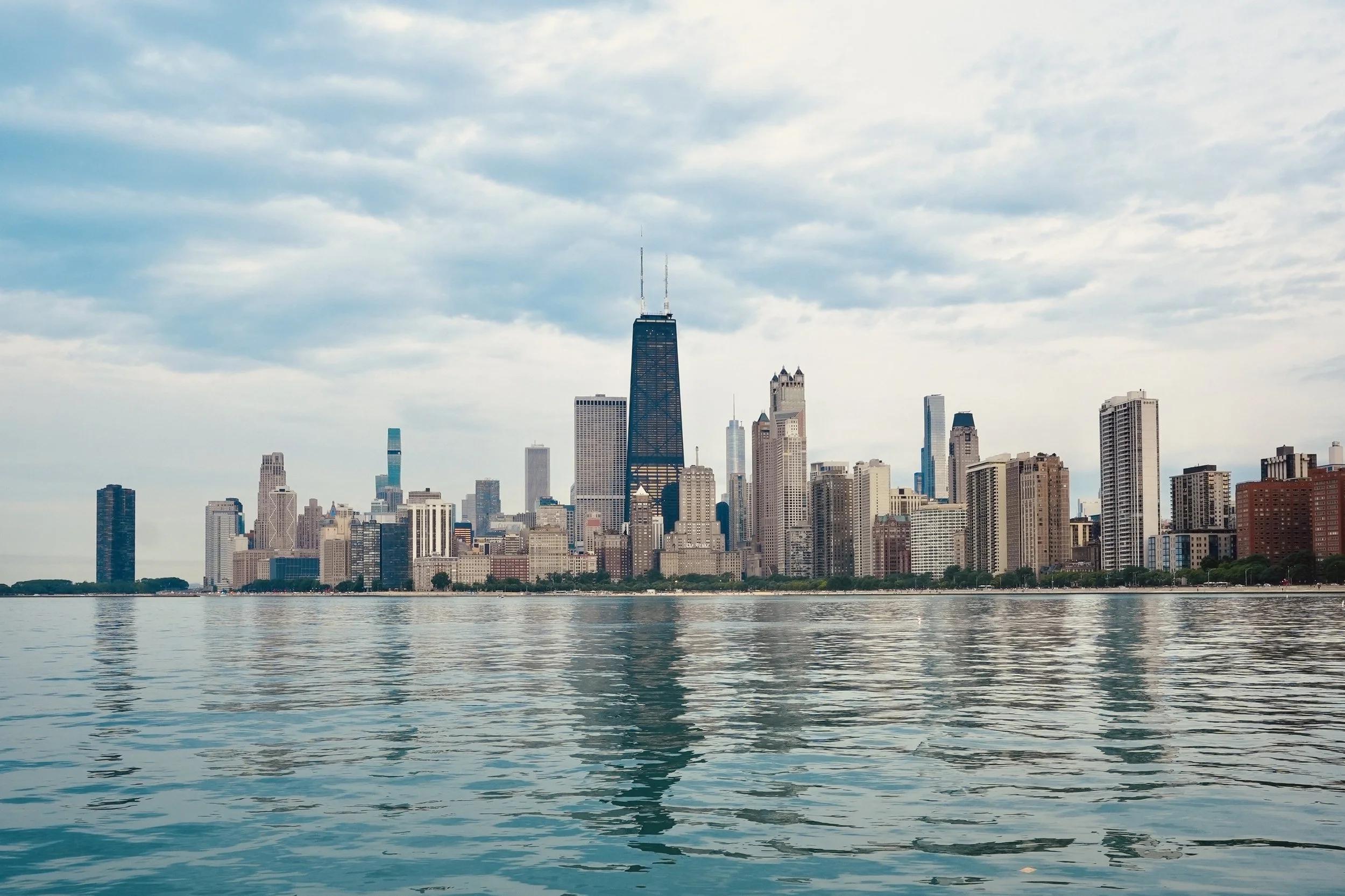
The Reversal: Notes on Chicago as a Working System
In 1900, Chicago reversed its river — rerouted the water that had flowed east into Lake Michigan since the last ice age, so the city would stop drinking its own sewage. It remains a useful frame for everything the city has done since.
New essay on Chicago as a continuously adjusted thing — the manufactured lakefront, the prairie replanted in the Loop, the egg tart as compressed migration history, the lighthouse alone on its breakwater.
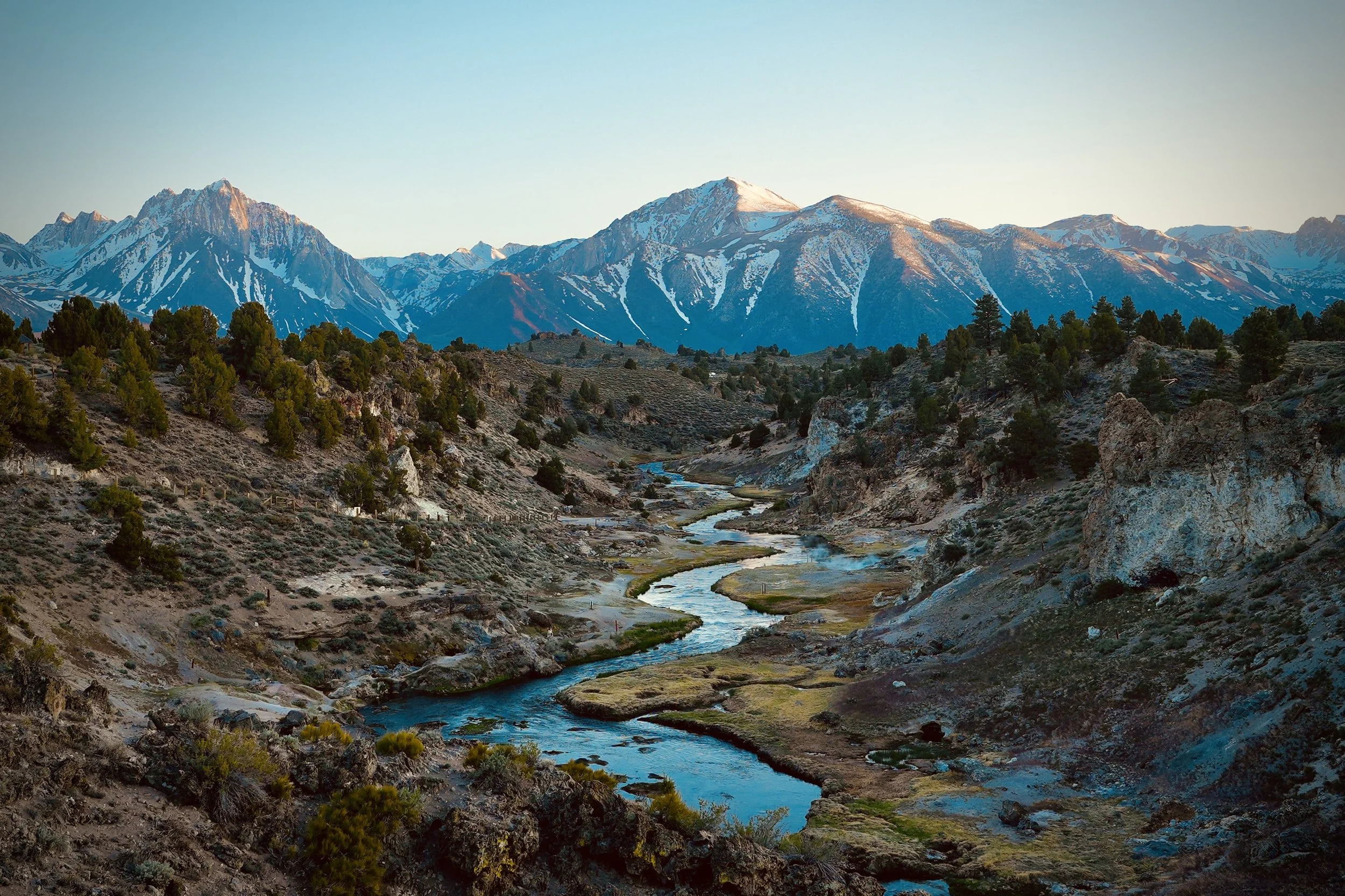
Mammoth Lakes: At the Base of Everything
Mammoth Lakes sits at 7,880 feet on the shoulder of a supervolcano, at the base of the most dramatic mountain escarpment in the contiguous United States. The snow that falls here averages 400 inches a year — it feeds the ski resort above, the ranches below, and through a 233-mile aqueduct, a significant portion of Los Angeles. This essay looks at what it means to live at the base of something that large.
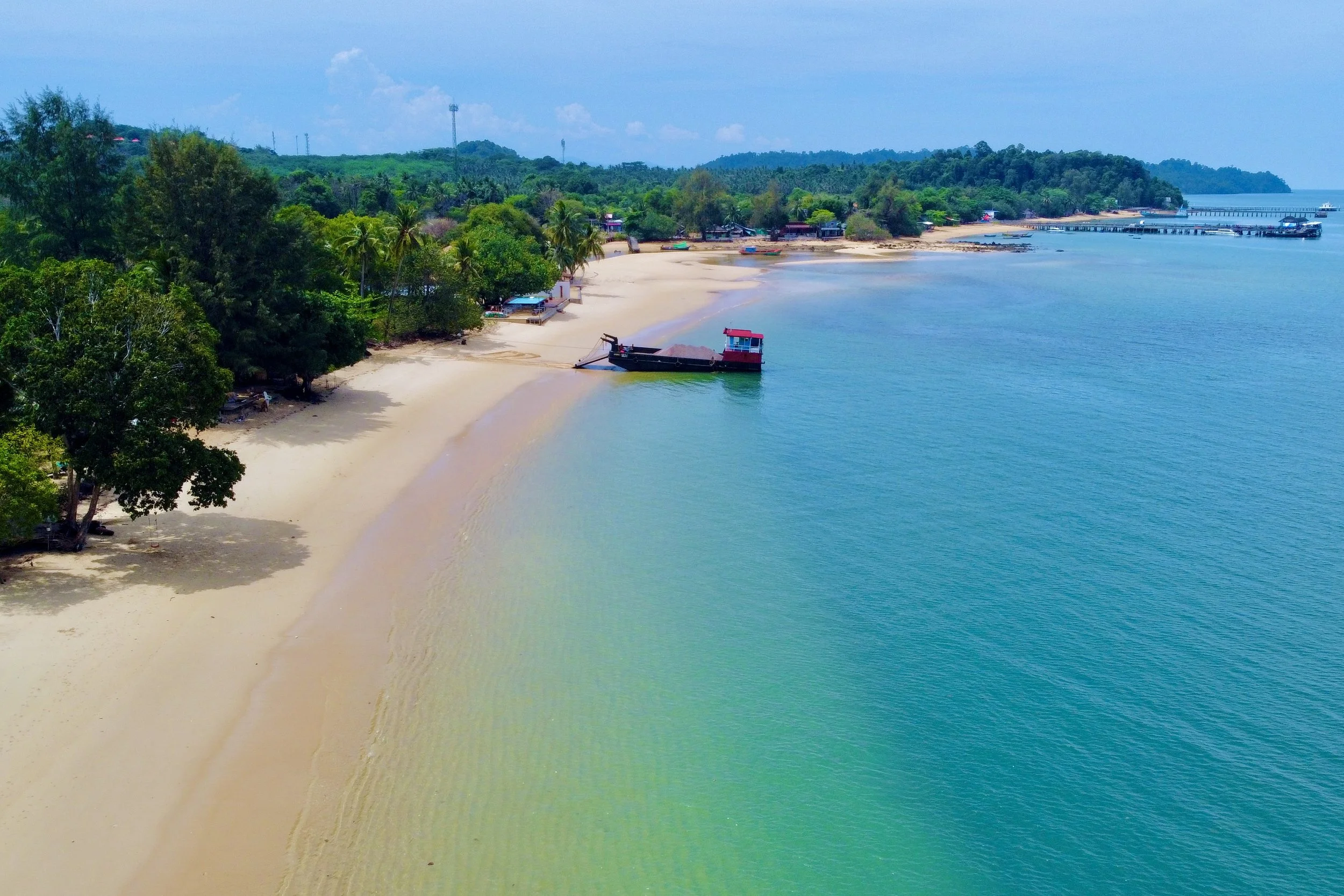
Koh Phayam: Try Again
Koh Phayam sits thirty kilometers off the coast of Ranong, accessible only by boat, home to around 500 permanent residents and one of the last Moken sea nomad communities in the Andaman. It is an island that has not yet been optimized for arrival — and that, entirely, is the point.
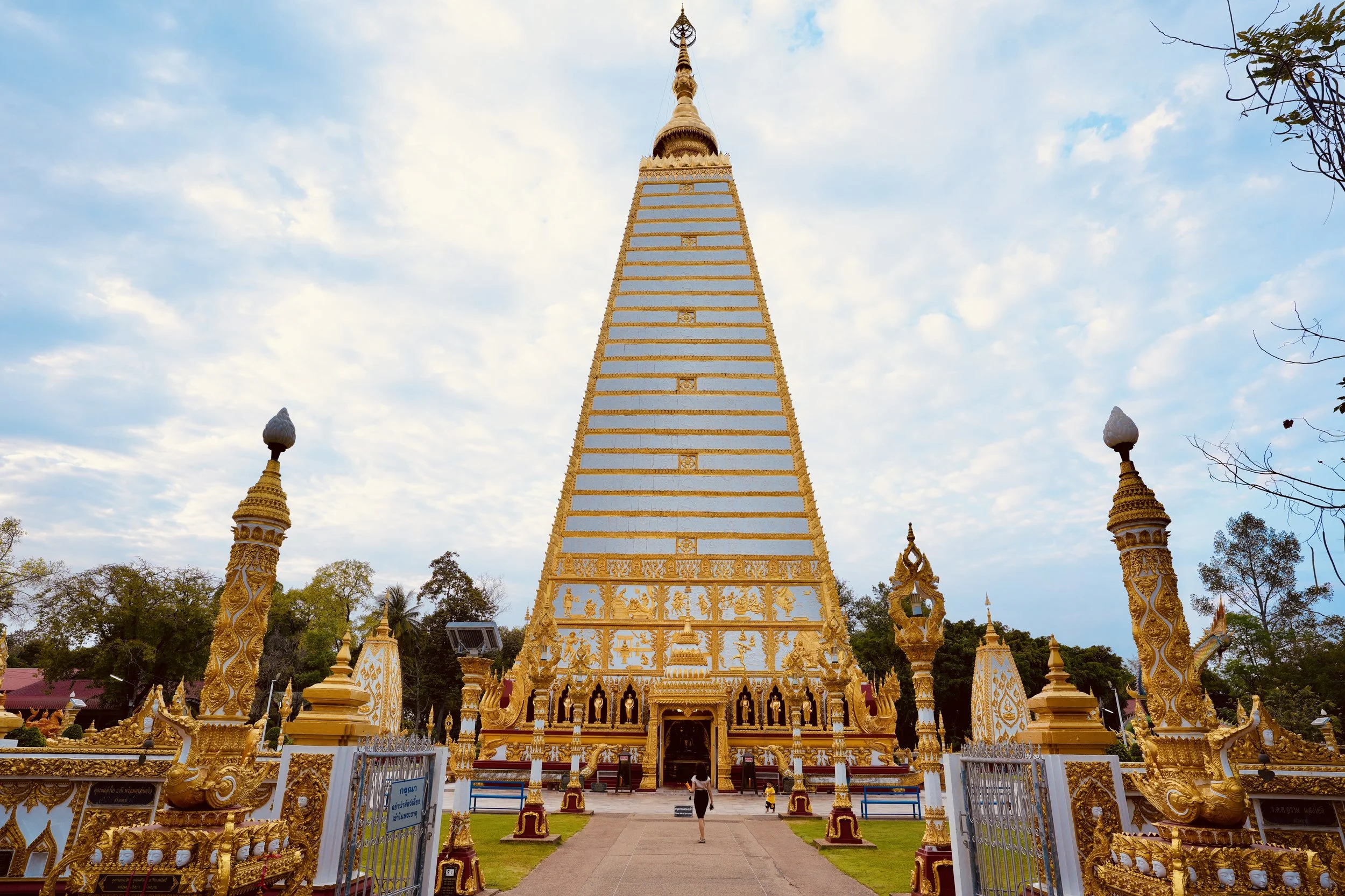
Ubon Ratchathani: First Impressions
Ubon Ratchathani is not a city that announces itself. With a metro population of 521,000 and borders touching both Laos and Cambodia, it sits at the convergence of cultures, rivers, and histories that most of the world has overlooked. The first essay in our Ubon series explores what it feels like to arrive in a place that has never needed to explain itself.

Ubon Ratchathani: Eating at the Edge
From giant freshwater prawns pulled from the Mun River to fermented sausage with three thousand years of culinary history behind it, eating in Ubon Ratchathani is an exercise in tasting a place as much as a meal. The second essay in our Ubon series explores the food that defines this city — and why the version you find here is unlike anything you'll eat anywhere else.
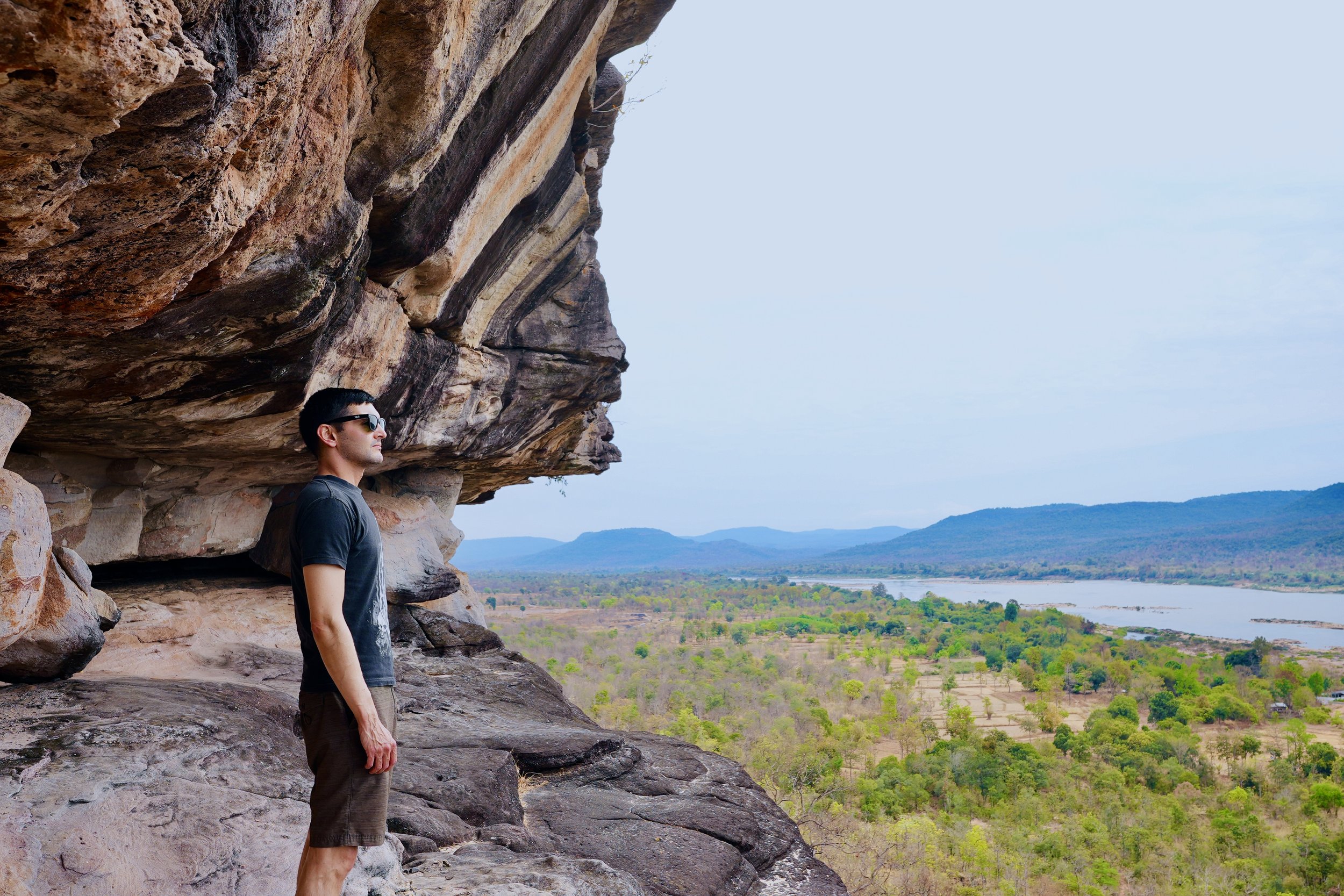
Ubon Ratchathani: Where the Land Runs Out
Ninety-five kilometers east of Ubon Ratchathani, the Khorat Plateau ends abruptly at a sandstone cliff above the Mekong River. At Pha Taem National Park, more than 300 prehistoric rock paintings stretch across 180 meters of cliff face — fish, human figures, handprints, scenes of daily life pressed into stone between three and four thousand years ago. The third essay in our Ubon series explores a landscape where geology, history, and the natural world converge at the edge of Thailand.
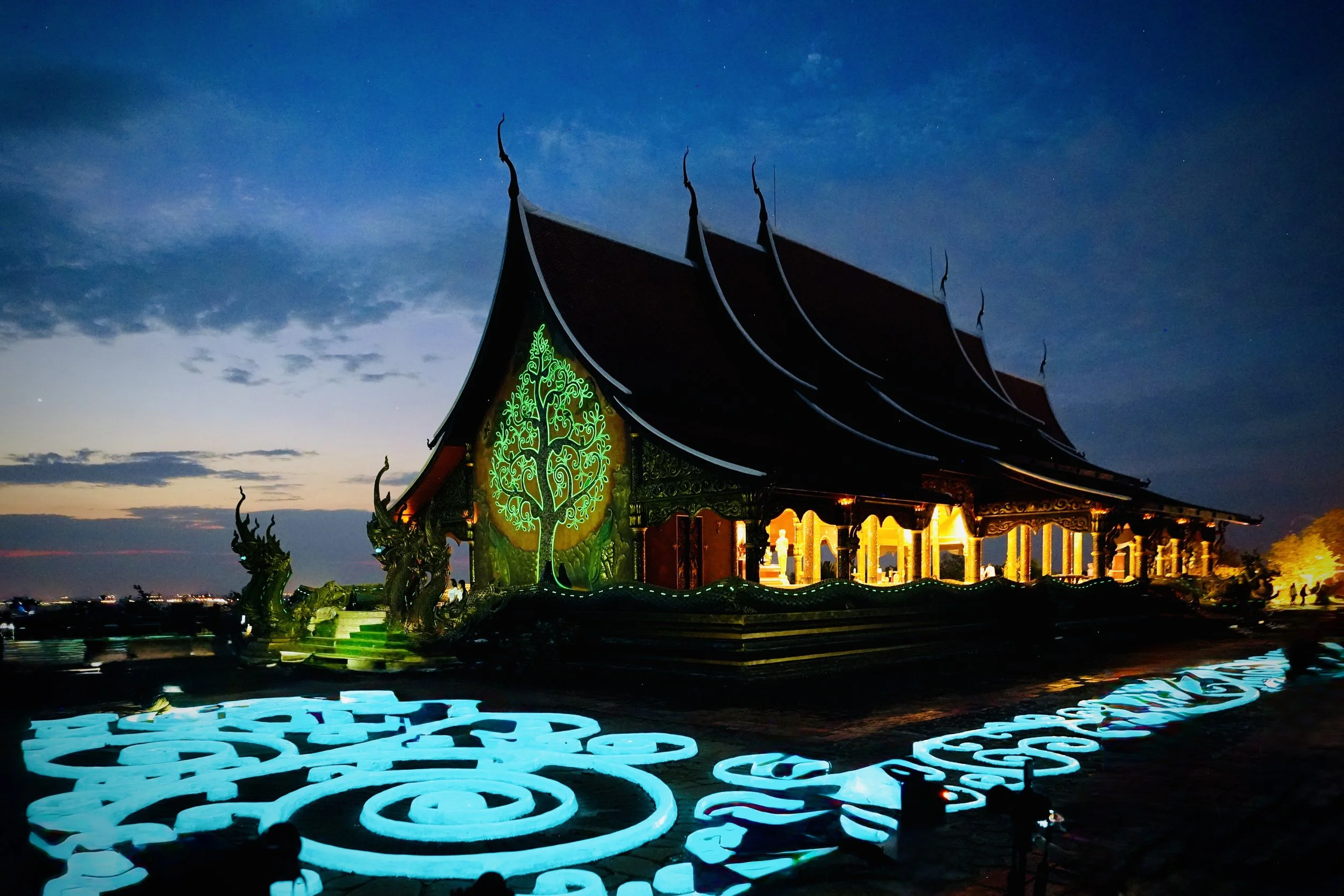
Ubon Ratchathani: What the Walls Say
Ubon Ratchathani's architecture spans two and a half centuries — from Lao-influenced temples built by settlers from Vientiane, to a chedi modeled on the sacred site of the Buddha's enlightenment in India, to a contemporary temple whose phosphorescent bodhi tree is invisible in daylight and glows green against a black facade after dark. The fourth essay in our Ubon series reads the city's built environment as what it truly is: an autobiography written in gold leaf, timber, and devotion.
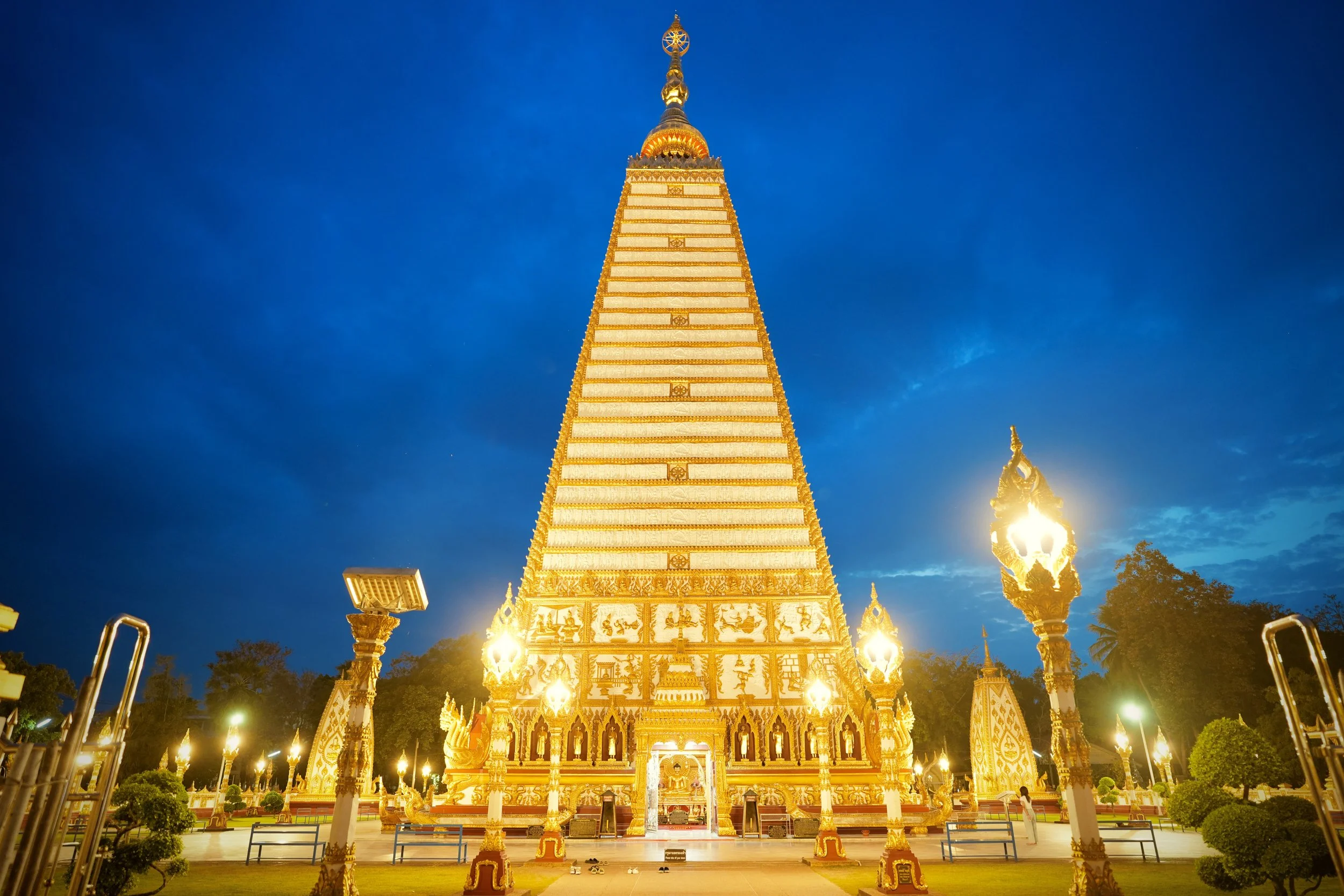
Ubon Ratchathani: Deeper Than the Road
Ubon Ratchathani is 630 kilometers from Bangkok, produces more rice than any other province in the country, and contains prehistoric rock paintings that are four thousand years old. Its food has traveled to every corner of Thailand. Its Buddhist teachers have built monasteries on five continents. The city itself remains largely undiscovered. The final essay in our Ubon series puts the numbers on the table — and asks what they fail to explain.
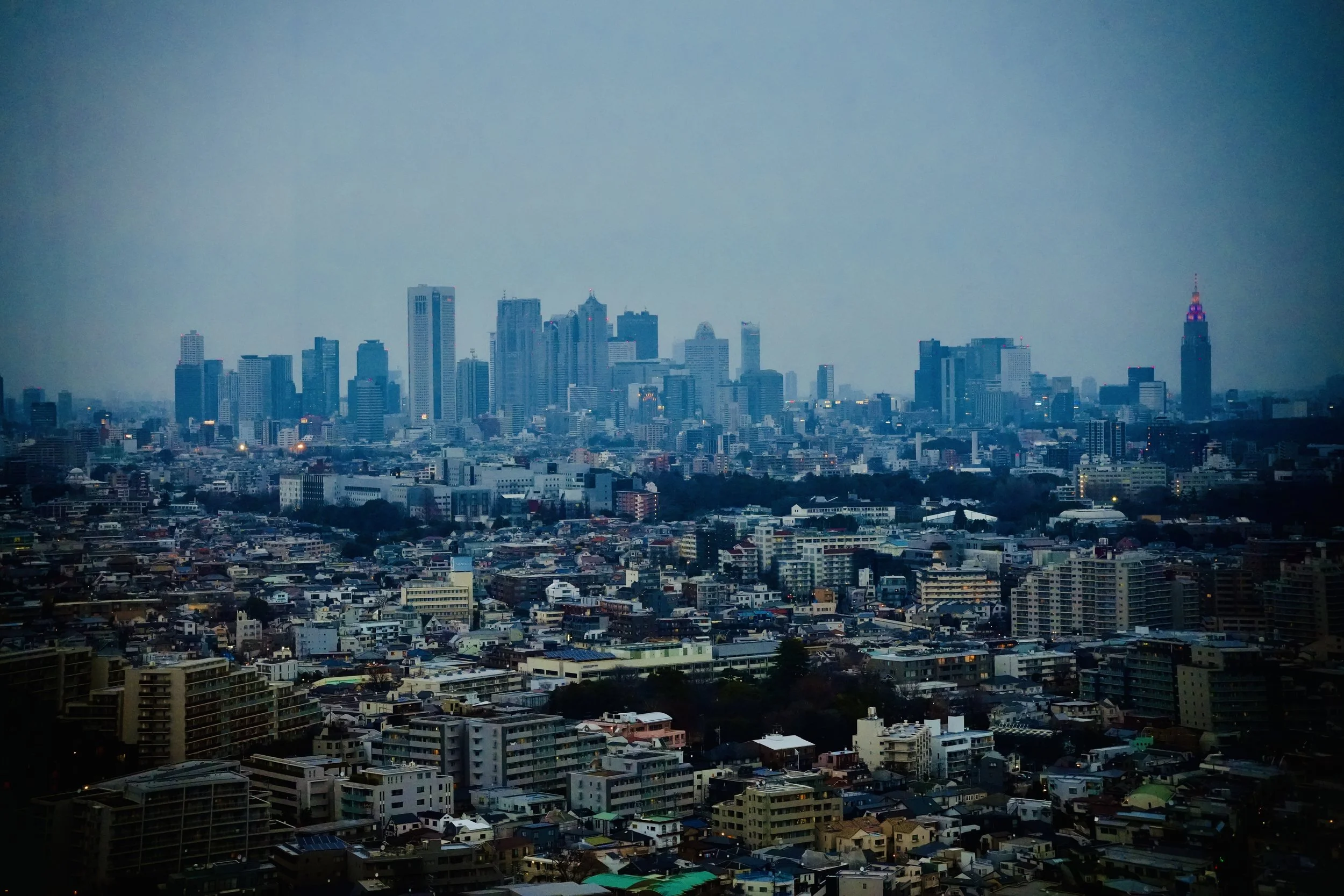
Tokyo: Precision at Scale
Tokyo holds 37 million people in its orbit and moves tens of millions by train each day — yet nothing feels chaotic. The numbers suggest overwhelm. The experience suggests precision.

Tokyo, Measured in Meals
Two weeks. 37 million people. 160,000+ restaurants.
From ramen booths to airport tonkatsu, Tokyo felt less like chaos and more like calibration.
Nothing loud. Nothing sloppy.
Just precision — repeated millions of times a day.
Japan performs. Quietly.
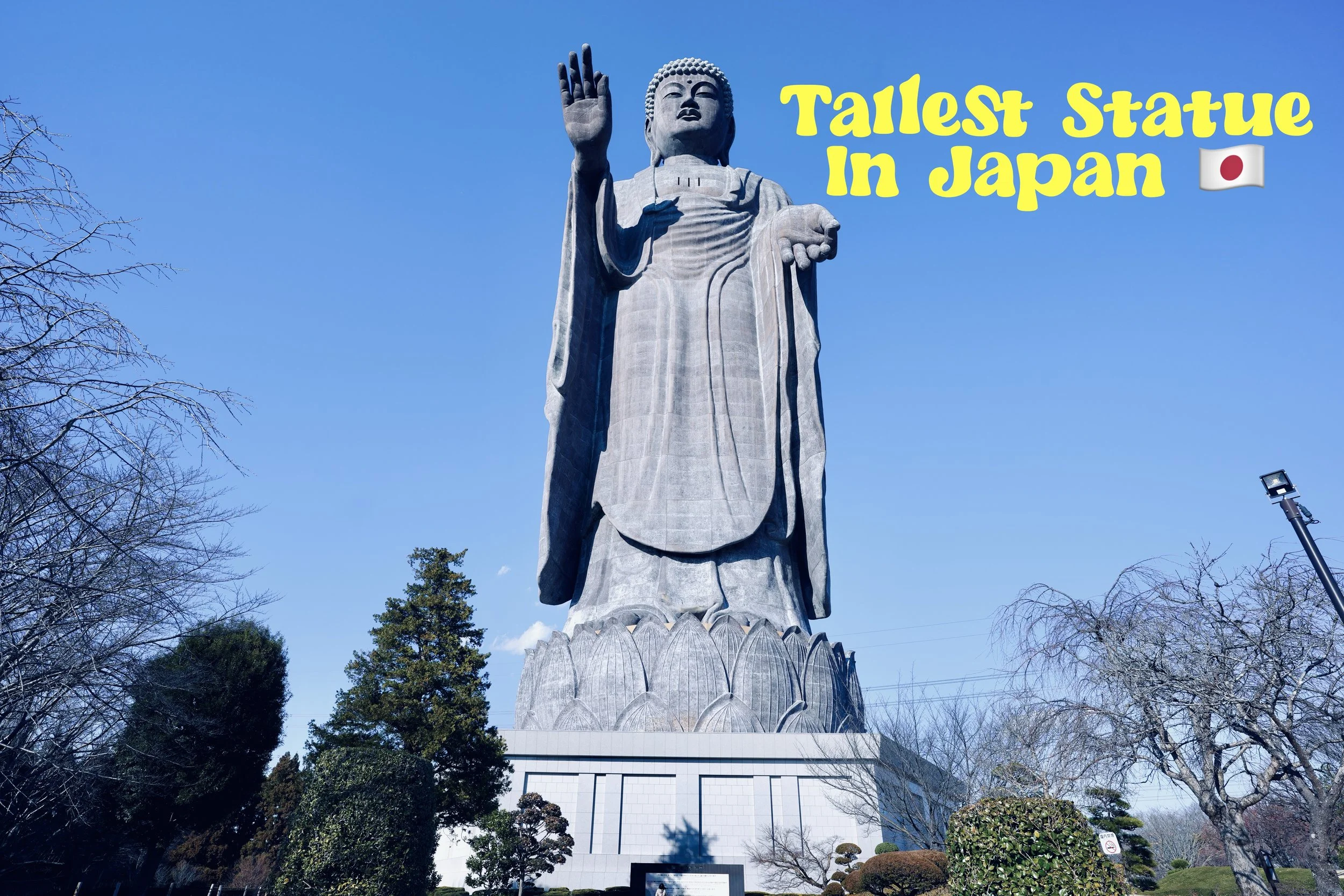
Ushiku Daibutsu: Stillness at 120 Meters
An hour outside Tokyo, the city disappears and scale takes over.
At 120 meters tall, Ushiku Daibutsu stands nearly twice the height of the Statue of Liberty — over 4,000 tons of bronze, unmoving and deliberate.
In a country built on motion and precision, I found stillness towering above it all.
somewhere-else.org
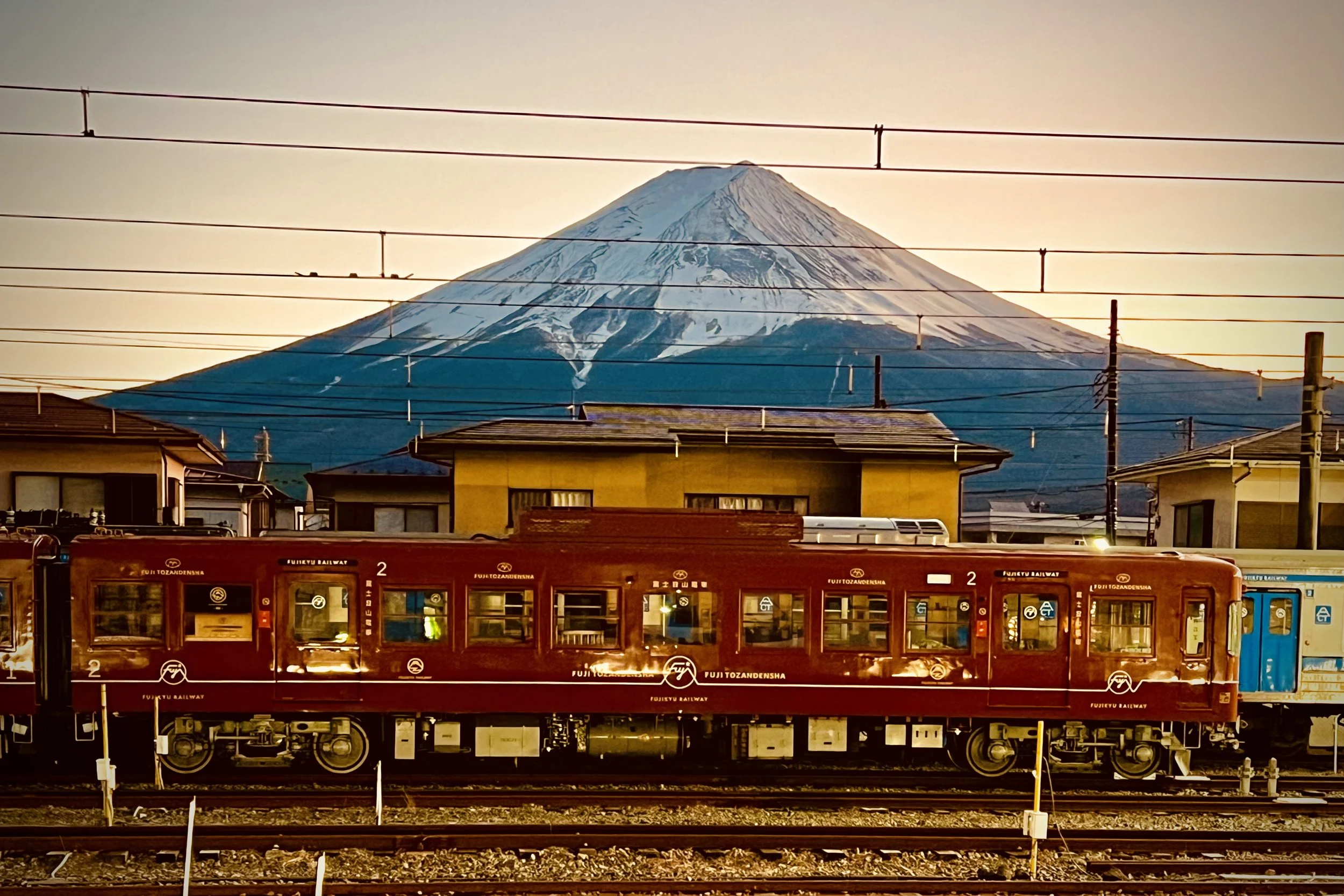
Lake Kawaguchi: Where the Data Falls Silent
Lake Kawaguchi sits at 830m. Mount Fuji rises to 3,776m behind it.
5.7 km² of water framing 300,000 annual climbers.
The data is clear. The feeling isn’t.
Sometimes awe refuses to be modeled.
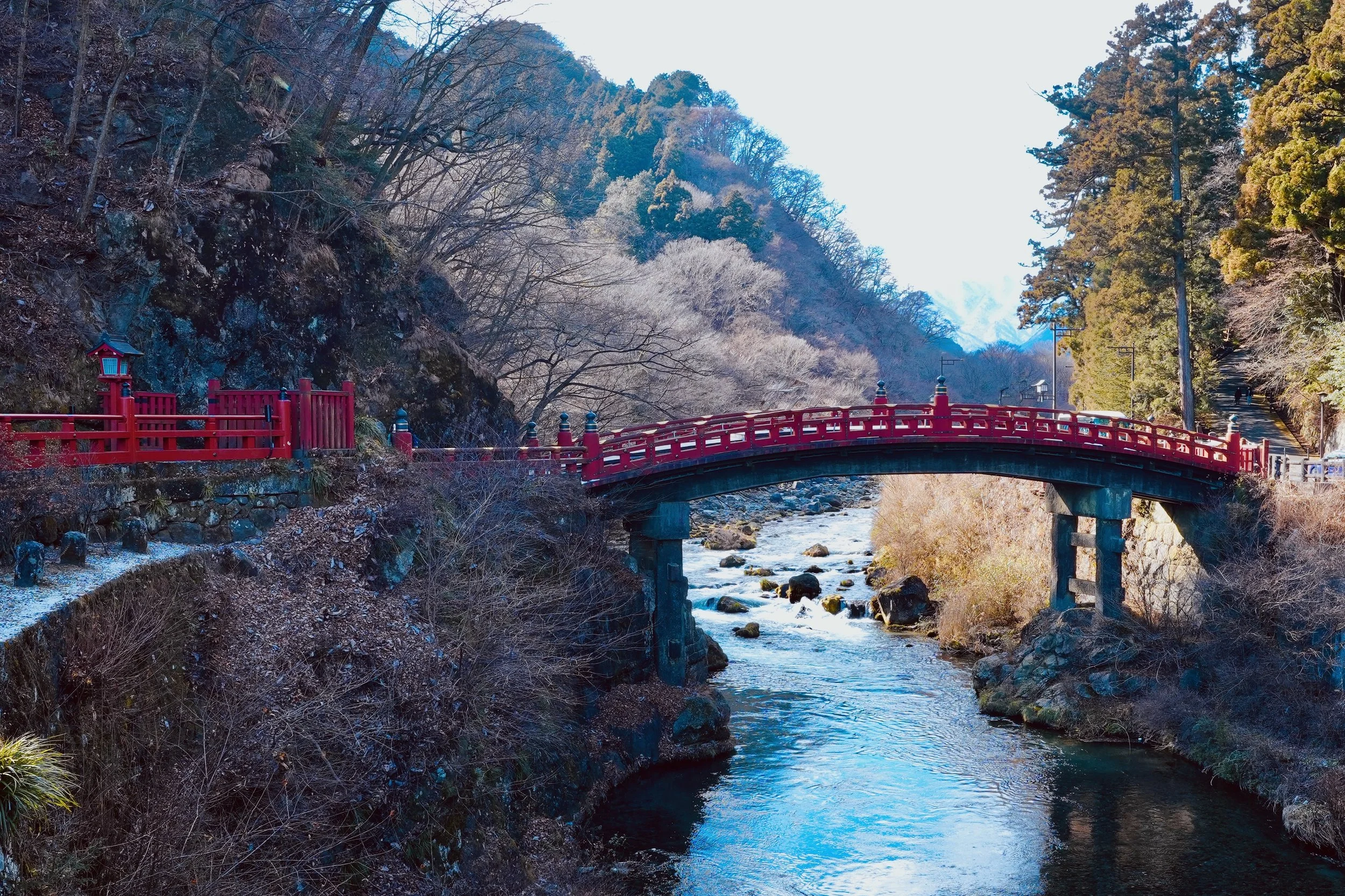
Nikko: Where Time Becomes Measurable
Nikko feels grown, not built.
Cedar forests, vermilion gates, Shinkyo Bridge, and Kegon Falls dropping 100 meters into winter ice. A UNESCO site shaped by Tokugawa legacy and mountain gravity.
Tokyo moves fast. Nikko steadies you.
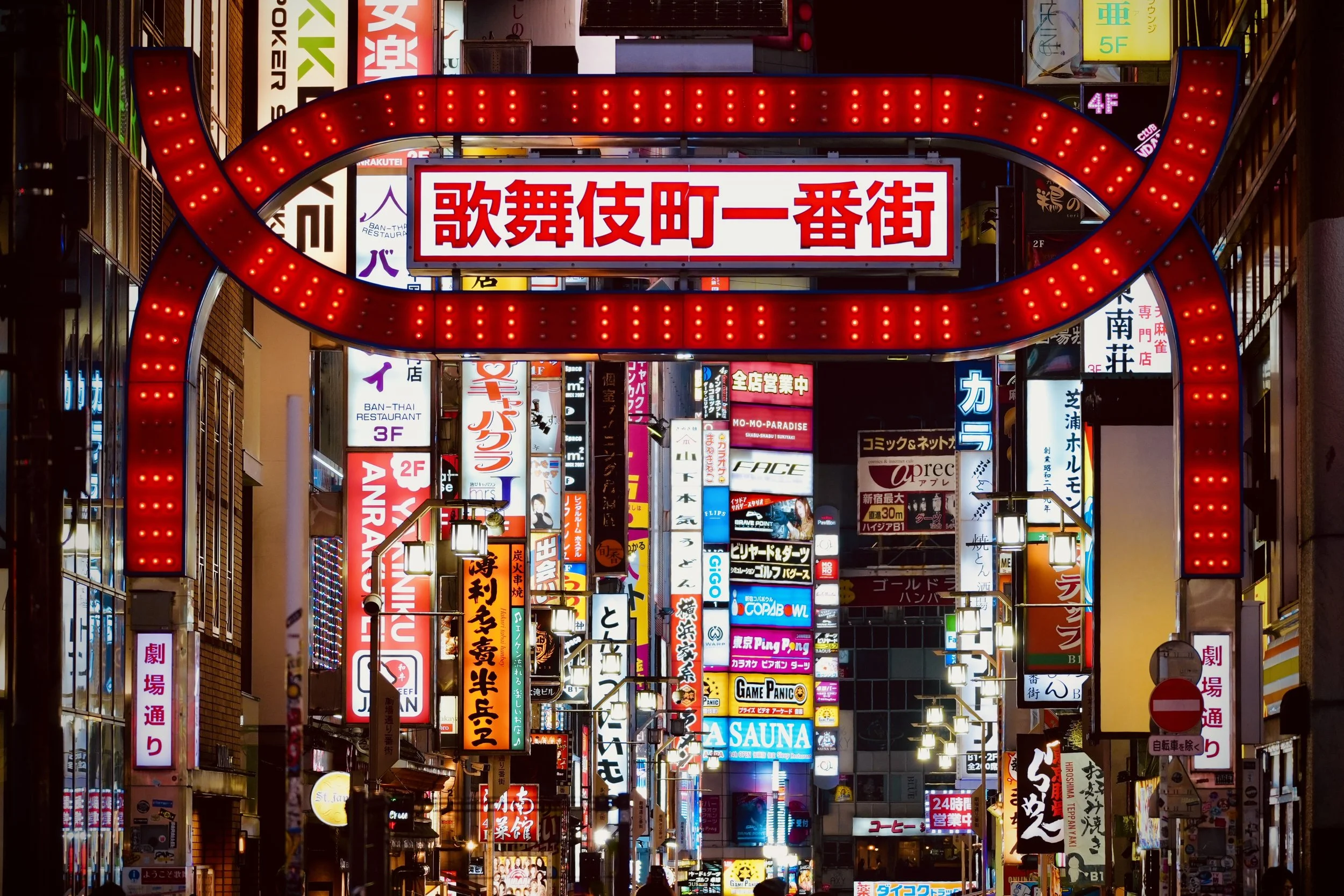
Tokyo After Dark: A City Measured in Light
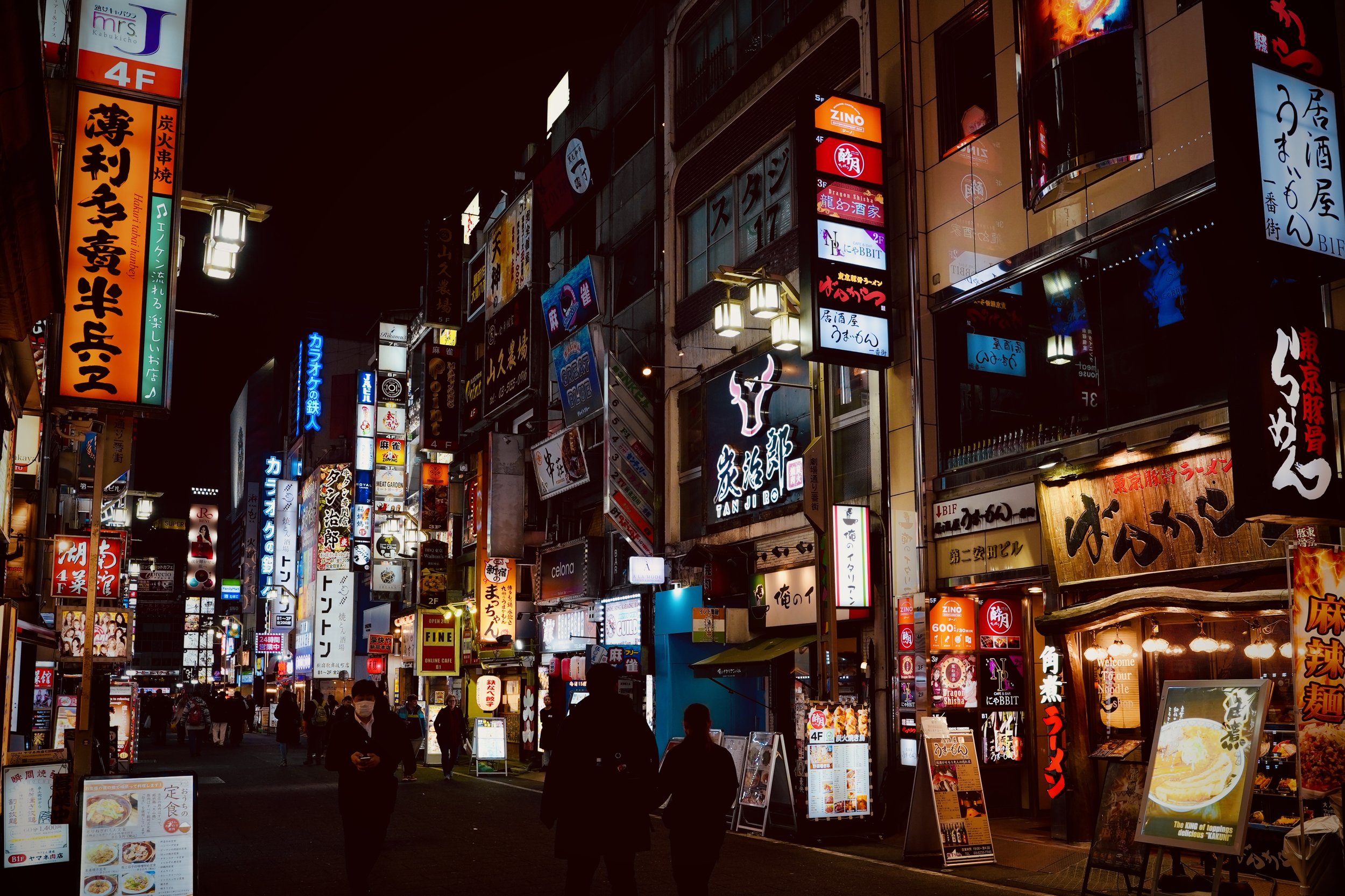
Neon lanterns flicker through narrow alleys, then the city opens into an endless grid of rooftops and steel. Tokyo feels chaotic at street level, but from above it’s pure structure — density without collapse, motion without disorder. A living dataset of 37 million stories, glowing long after sunset.
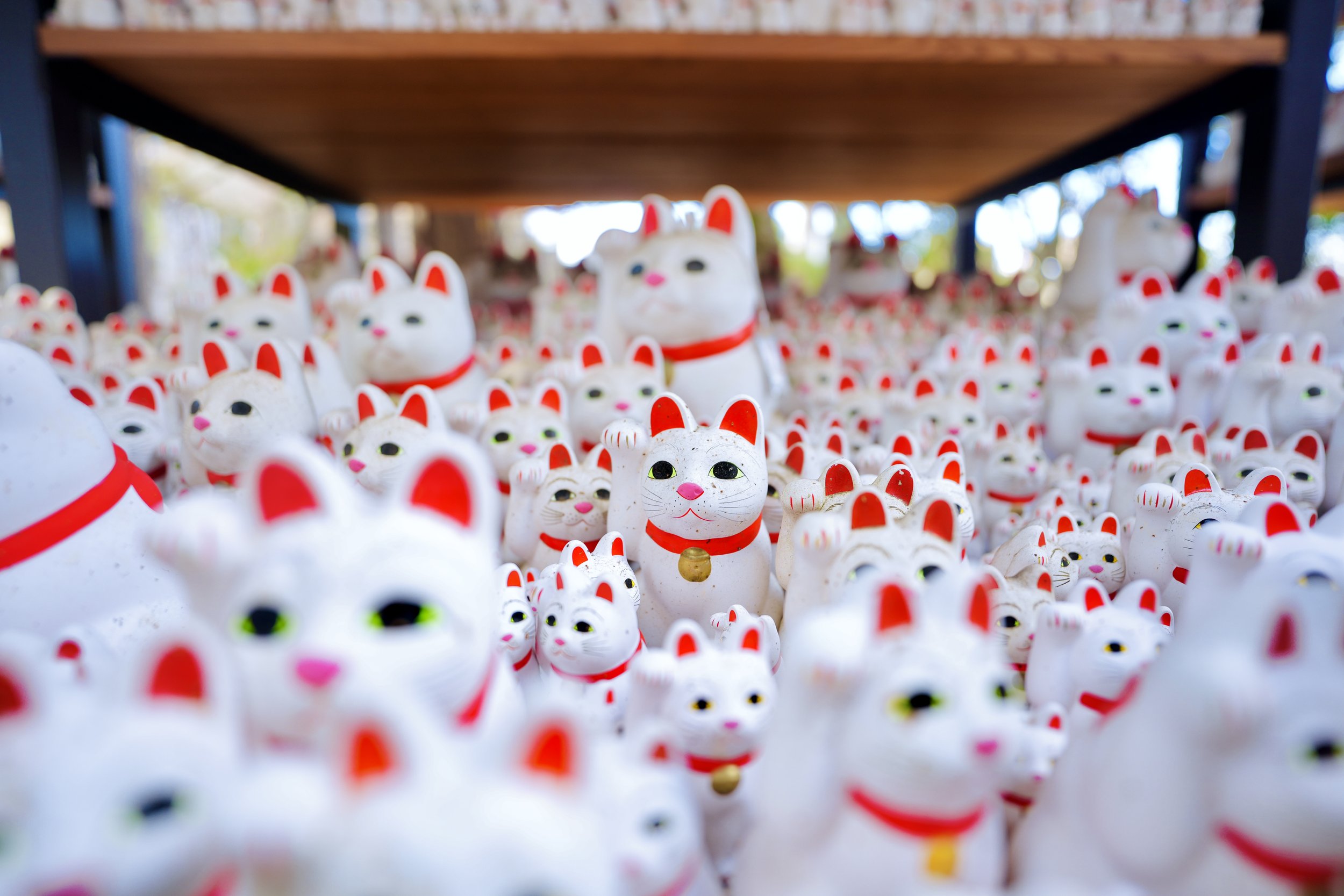
Temple Light in a City of Millions
Tokyo moves at the scale of millions—~37M in the metro area—yet inside a temple garden, the dataset shrinks to wind, wood, and rows of maneki-neko. Hundreds of tiny wishes forming one quiet pattern. Scale teaches awe. Resolution teaches meaning.
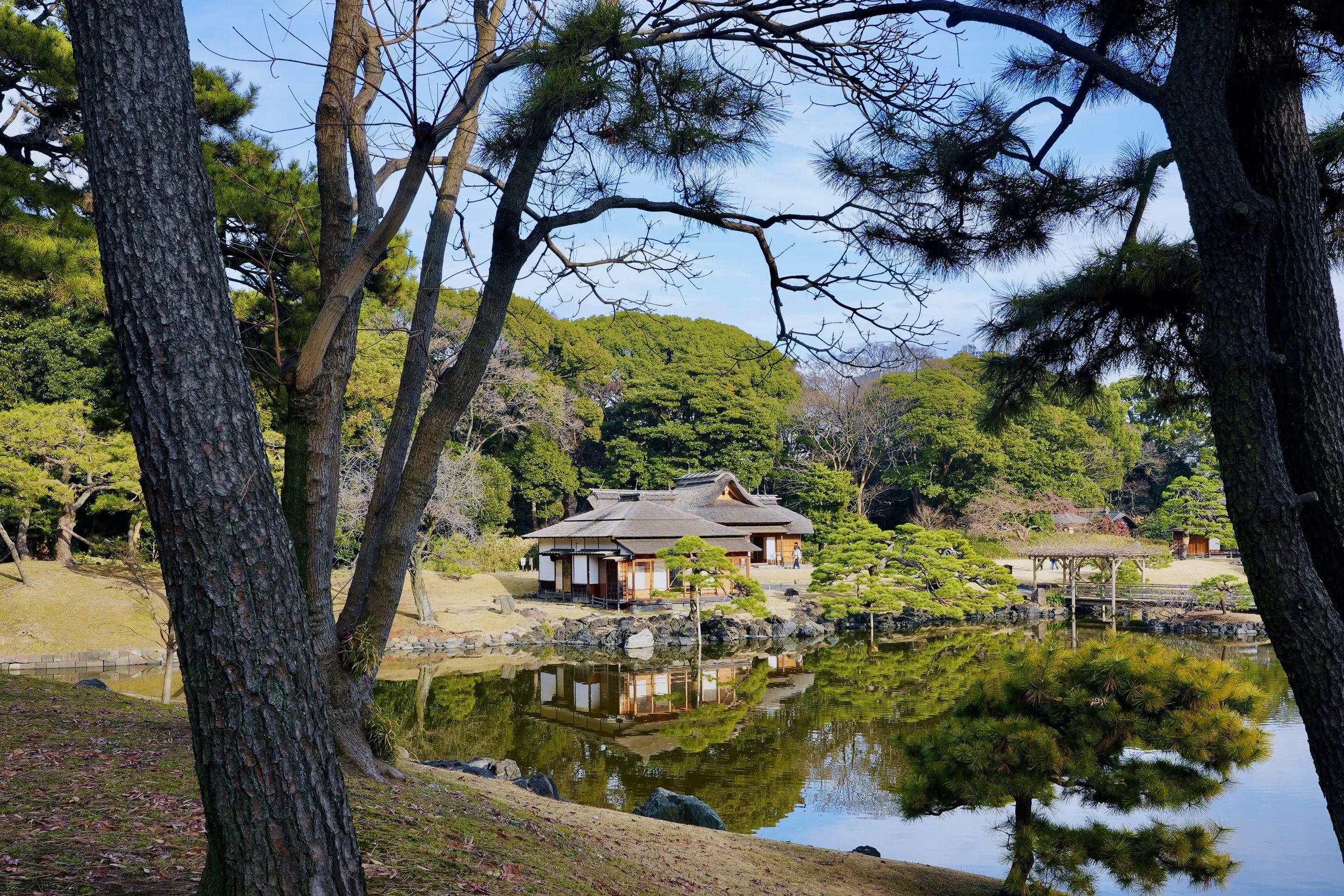
Between Tides and Towers
Hamarikyu Gardens sits between centuries—Edo-era bridges, tidal ponds, and tea houses framed by Tokyo’s $1.5T skyline. In a city of 37M moving at full speed, this 25-hectare garden slows the algorithm. Stillness, by design.
Tokyo, Measured in Motion
Tokyo is home to 37 million people, runs trains with 99% punctuality, and operates within a country that is 73% mountainous. Over two weeks, I traced its systems — from neon density in Shinjuku to Mount Fuji’s stillness, from tidal gardens to airport departures. A city defined not by scale, but by how it moves.
Chiang Rai: First Impressions
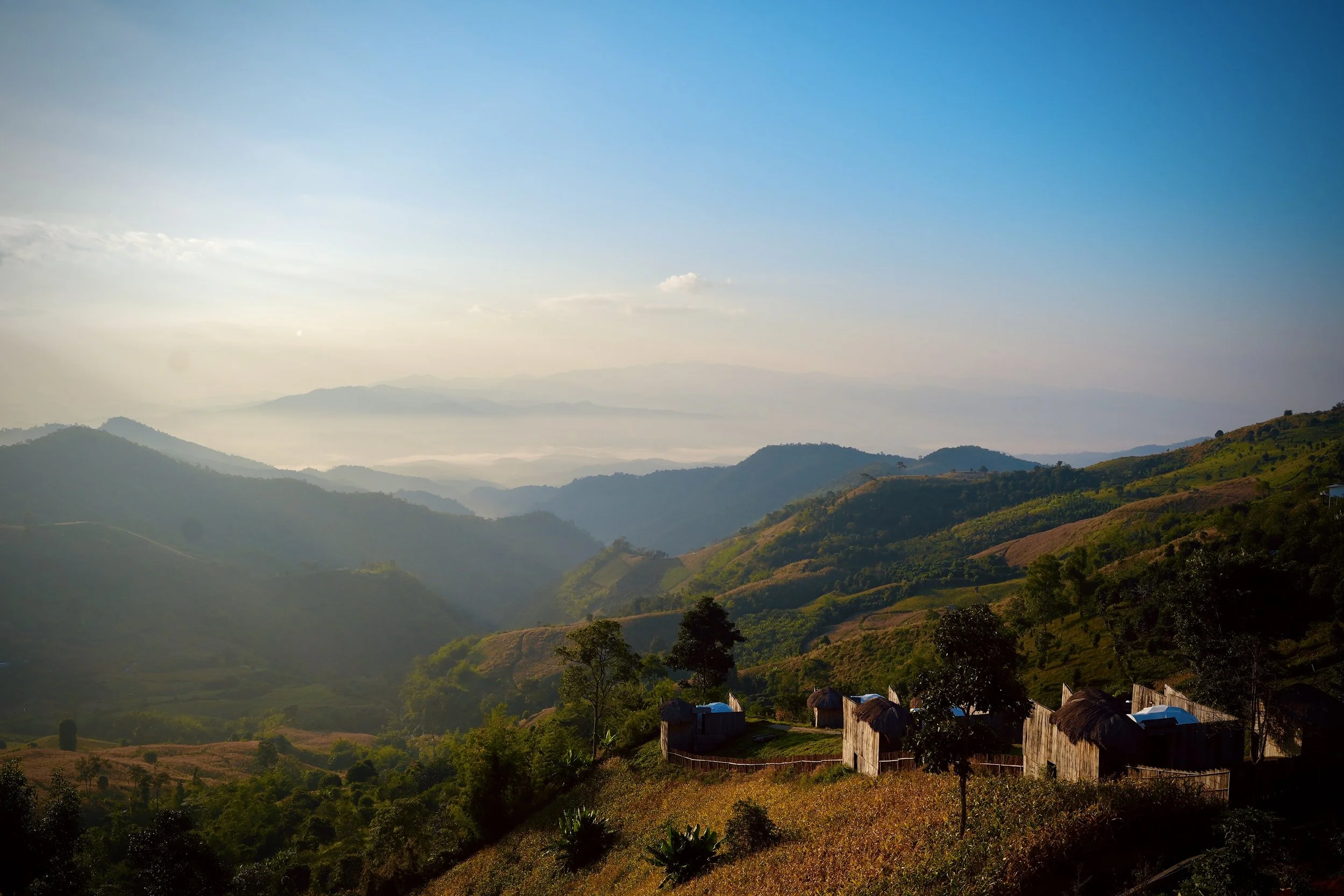
First time in Chiang Rai. Cooler air, quieter streets, mountains at the edge of the city. A place that doesn’t ask for attention — it gives you space to notice.