Chiang Rai: The Shape of Devotion

Northern Thailand’s temples sit closer to the land — shaped as much by geography as belief.
Temples appear early in Chiang Rai. Not as monuments meant to impress, but as quiet constants woven into daily life. They sit beside roads, near neighborhoods, at the edge of fields — present without insisting on attention.
This was my first time in Chiang Rai, and the temples became my way in. Not as destinations to check off, but as places to return to: in the morning, in the afternoon, sometimes simply to pass through. They offered a rhythm — a way to understand the city not through movement, but through pause.
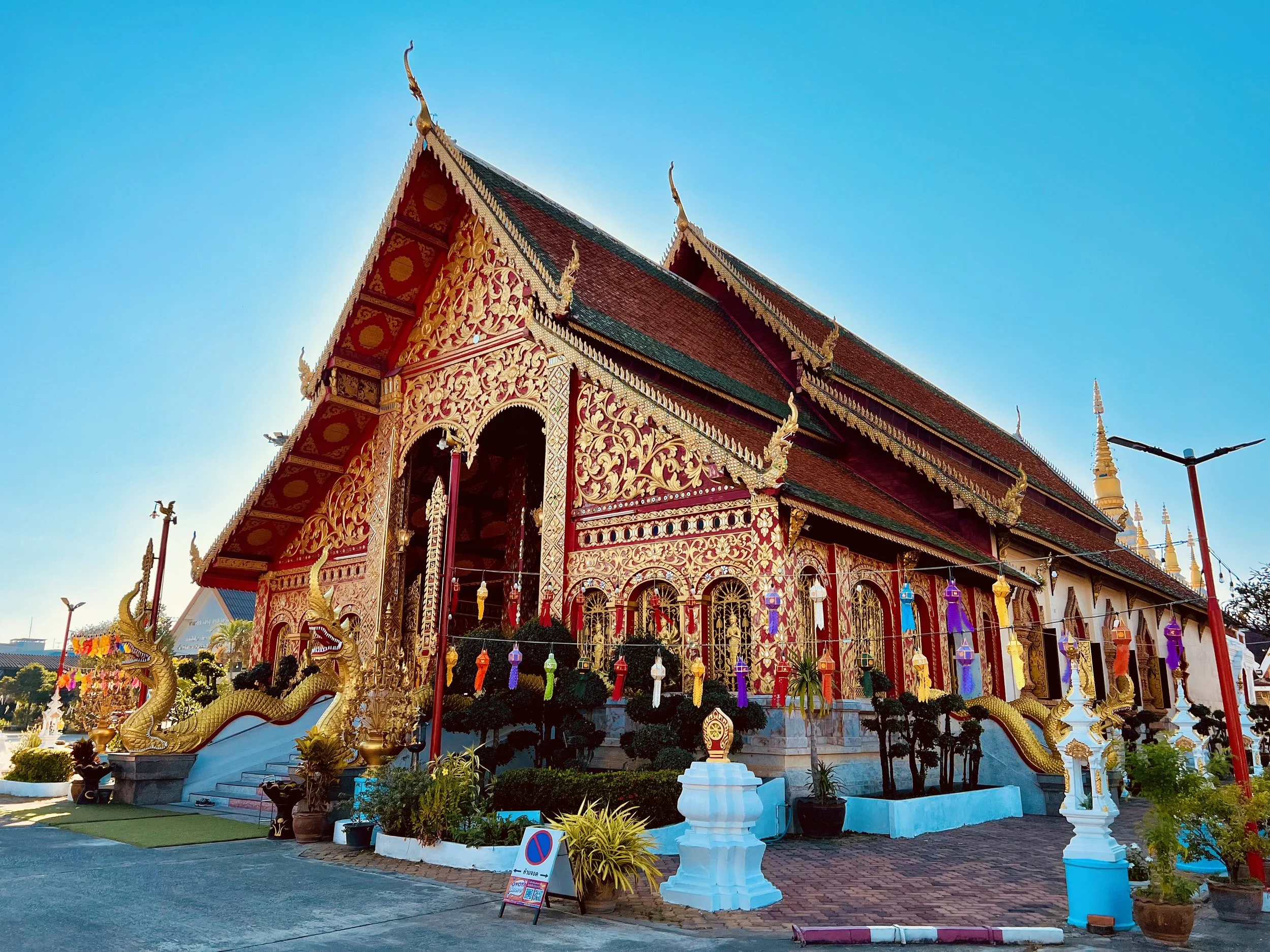
At roughly 390 meters above sea level, Chiang Rai’s temples feel open, airy, and unhurried.
In late December, the climate shaped everything. Daytime temperatures hovered around 20–25°C, cool enough to linger outdoors. Temple grounds felt especially alive in this air — not busy, but inhabited. Monks swept leaves. Bells chimed softly. The day began without urgency.
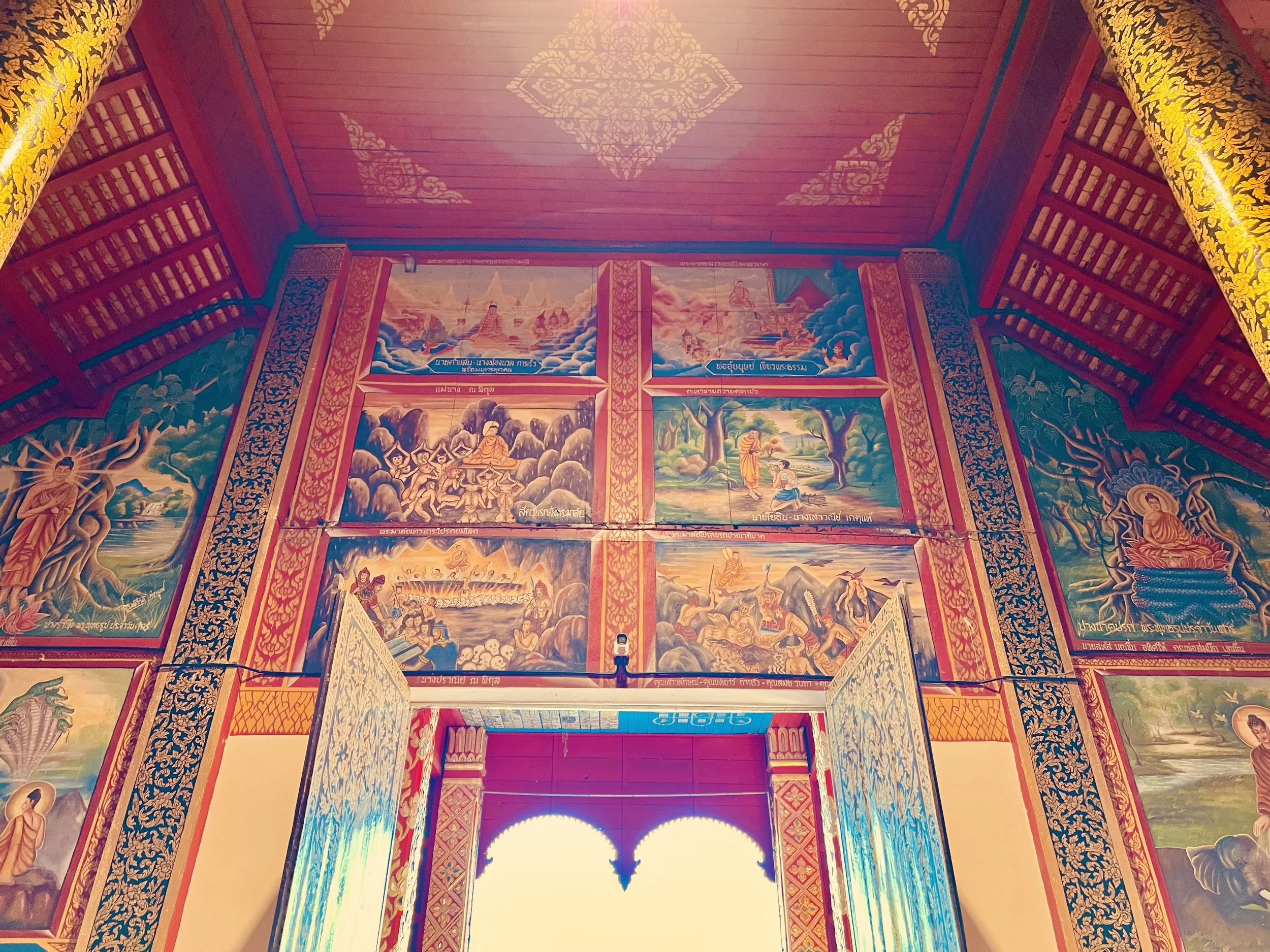
Northern Thai temple architecture favors openness over density.
Unlike the heavy ornamentation found in larger cities, Chiang Rai’s temples often feel lighter and more spacious. Rooflines breathe. Courtyards open outward. Architecture here doesn’t compete with the environment — it responds to it. Even when the mountains aren’t visible, you sense them.
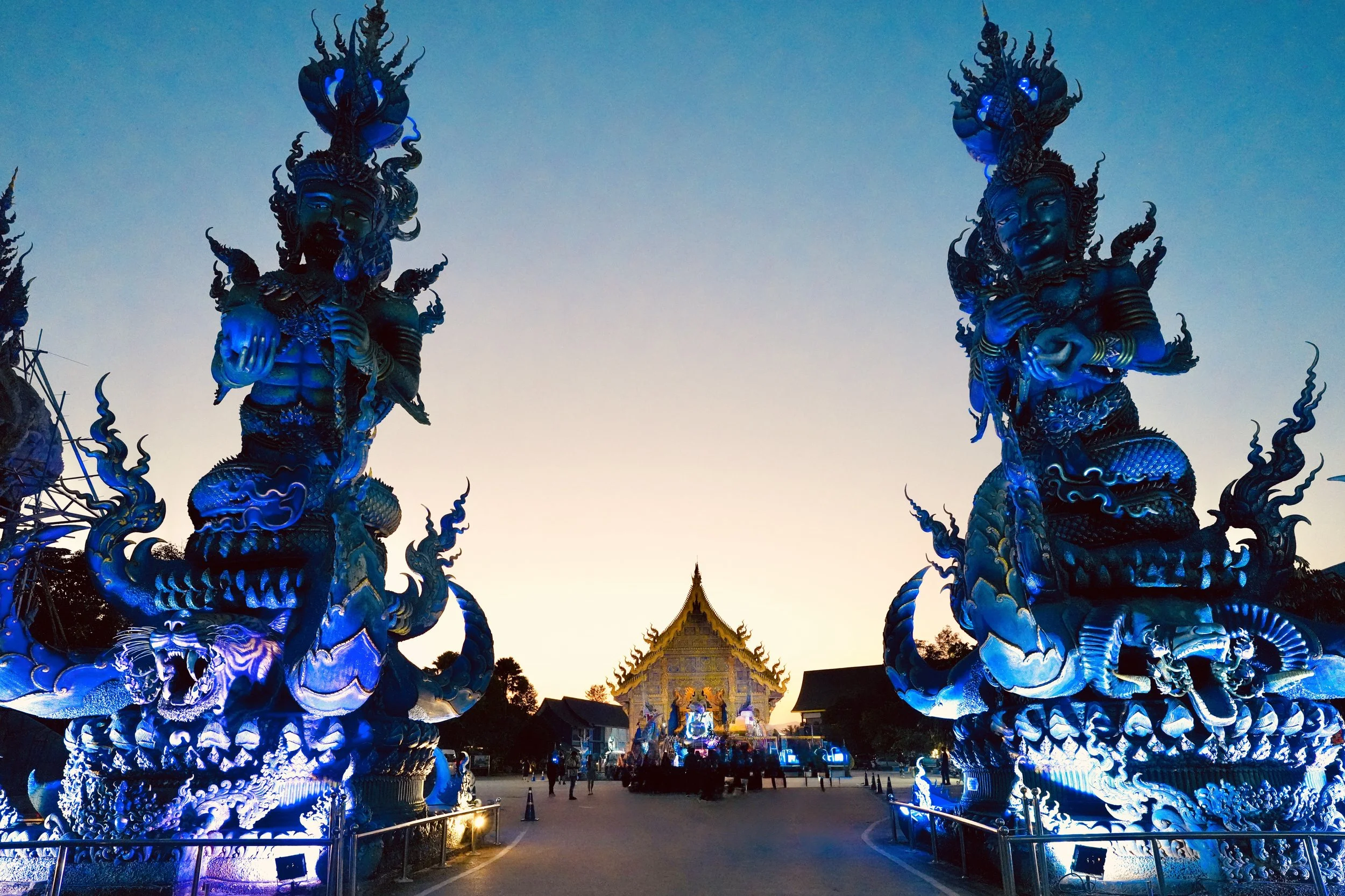
Chiang Rai’s temples are spread across the city rather than concentrated in a single district
The temples I visited were scattered throughout Chiang Rai. From the scale and symbolism of Wat Huay Pla Kang, to the quieter neighborhood presence of Wat Khua Khrae and Wat Klang Wiang, each space carried its own tempo.
At Wat Phra Kaew, history felt close and tactile. Meanwhile, Wat Jed Yod and Wat Phra That Doi Khao Kwai Kaewfelt more removed — places where elevation and distance encouraged lingering rather than movement.
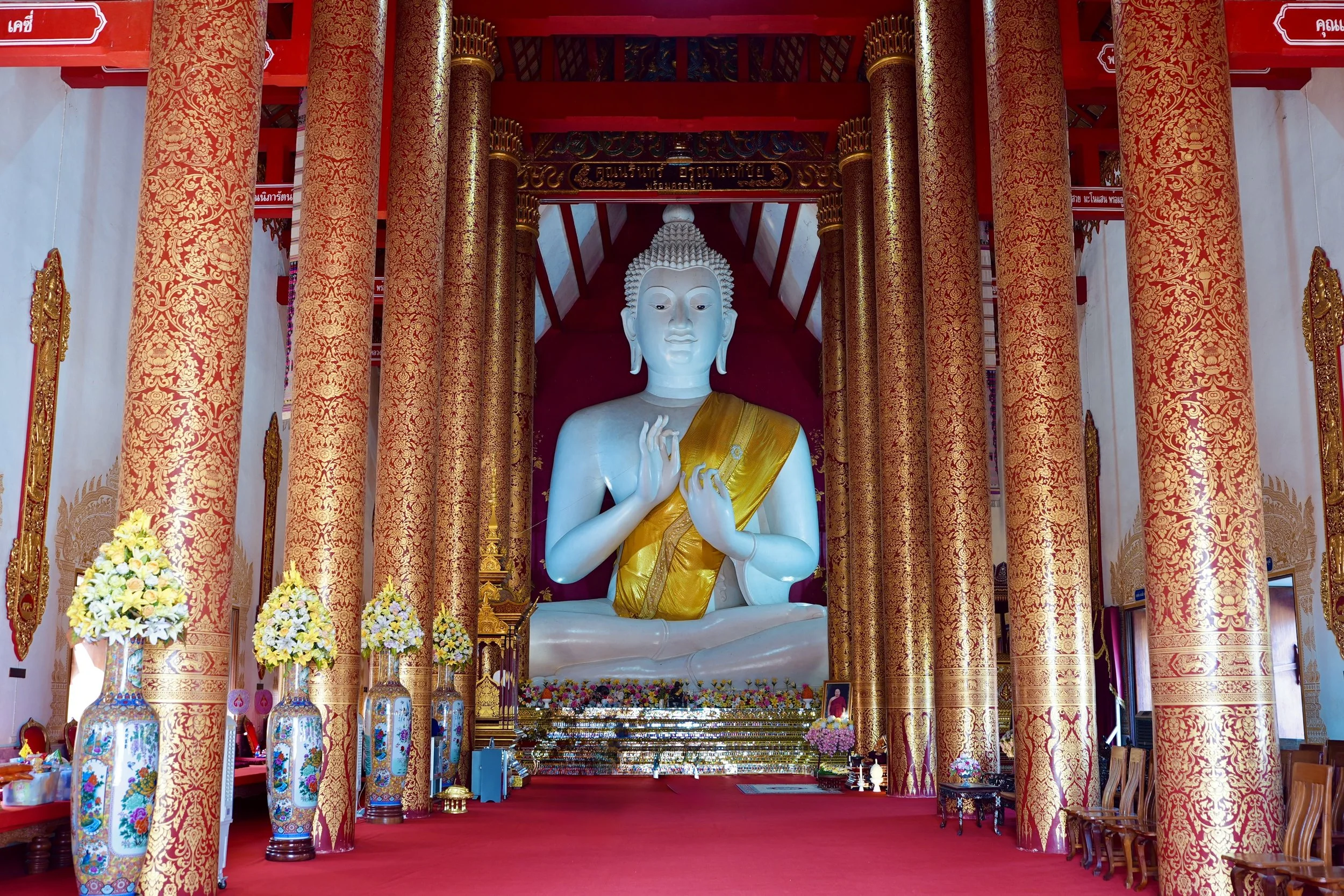
Temples in Chiang Rai serve a province of over 1.3 million people, spread across valleys and highlands
Inside, the atmosphere shifted. Light dimmed. Sound softened. Interiors felt less like museums and more like working spaces — lived-in, imperfect, sincere. These weren’t places reserved only for ceremony. They were woven into daily life.
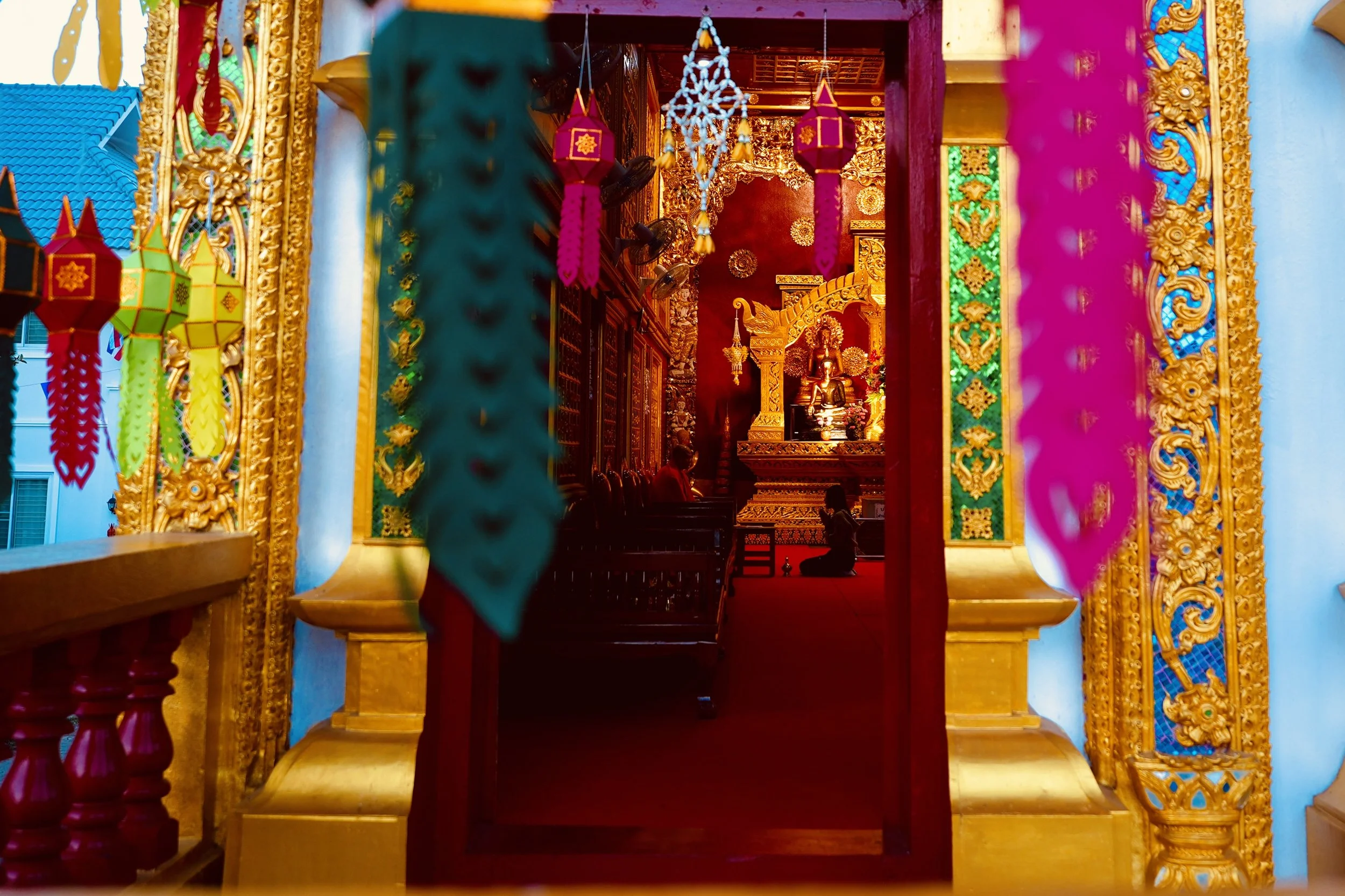
Buddhism here is practiced daily, quietly, without spectacle
What stayed with me most were the small moments: a blessing offered, a prayer whispered, a pause taken. These interactions passed quickly and without performance. Faith, here, felt less about display and more about continuity.
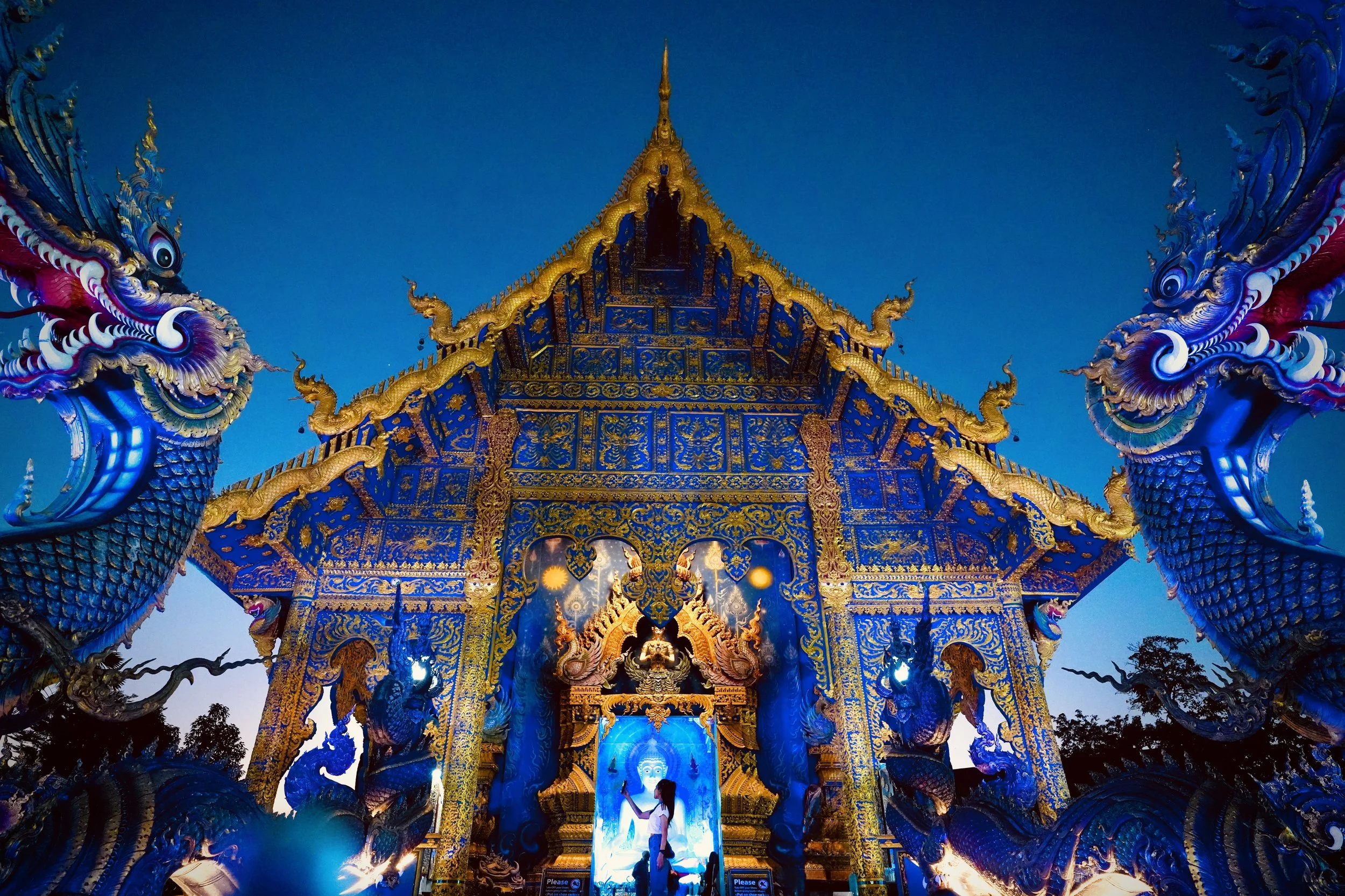
Devotion in Chiang Rai is allowed to evolve
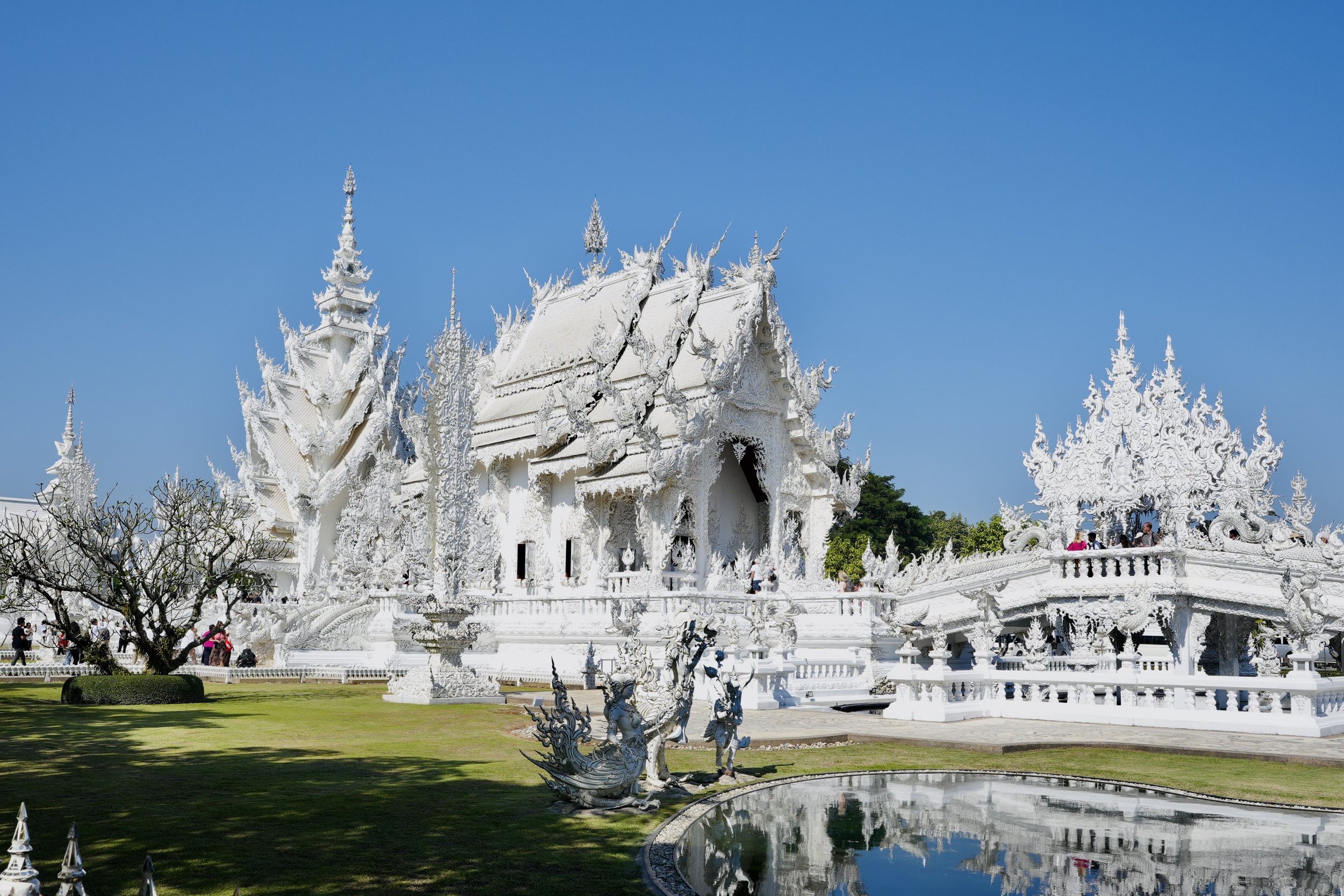
Chiang Rai also embraces bold expression. The vivid blues of Rong Suea Ten Temple and the stark, symbolic white of Wat Rong Khun feel less like departures from tradition and more like continuations of it — reminders that spirituality here isn’t frozen in time.
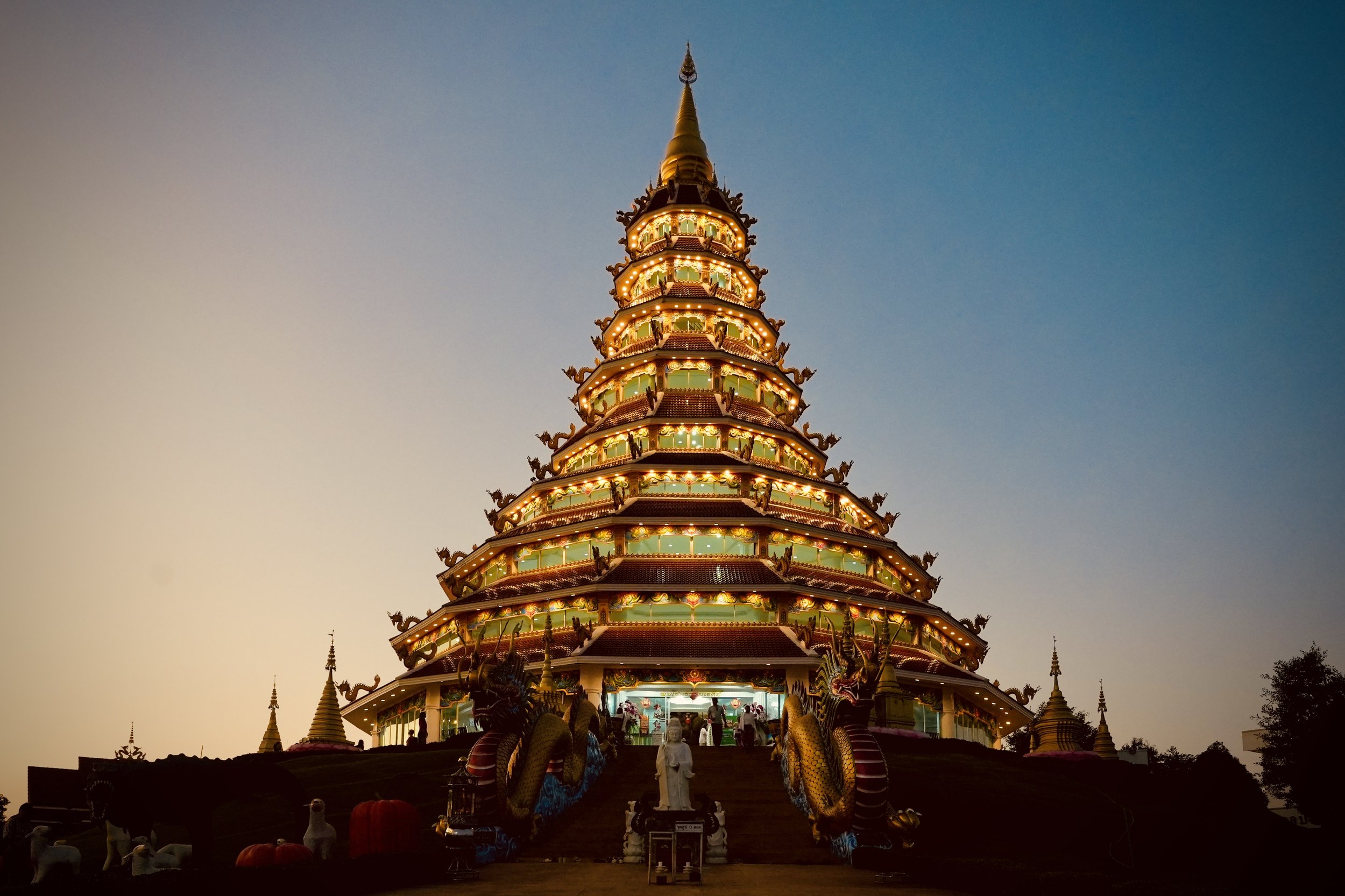
As daylight fades, temples absorb the changing light
In the late afternoon, shadows stretched and gold softened. The heat released its grip. This transition — from day to evening — felt especially pronounced in a city that quiets early.
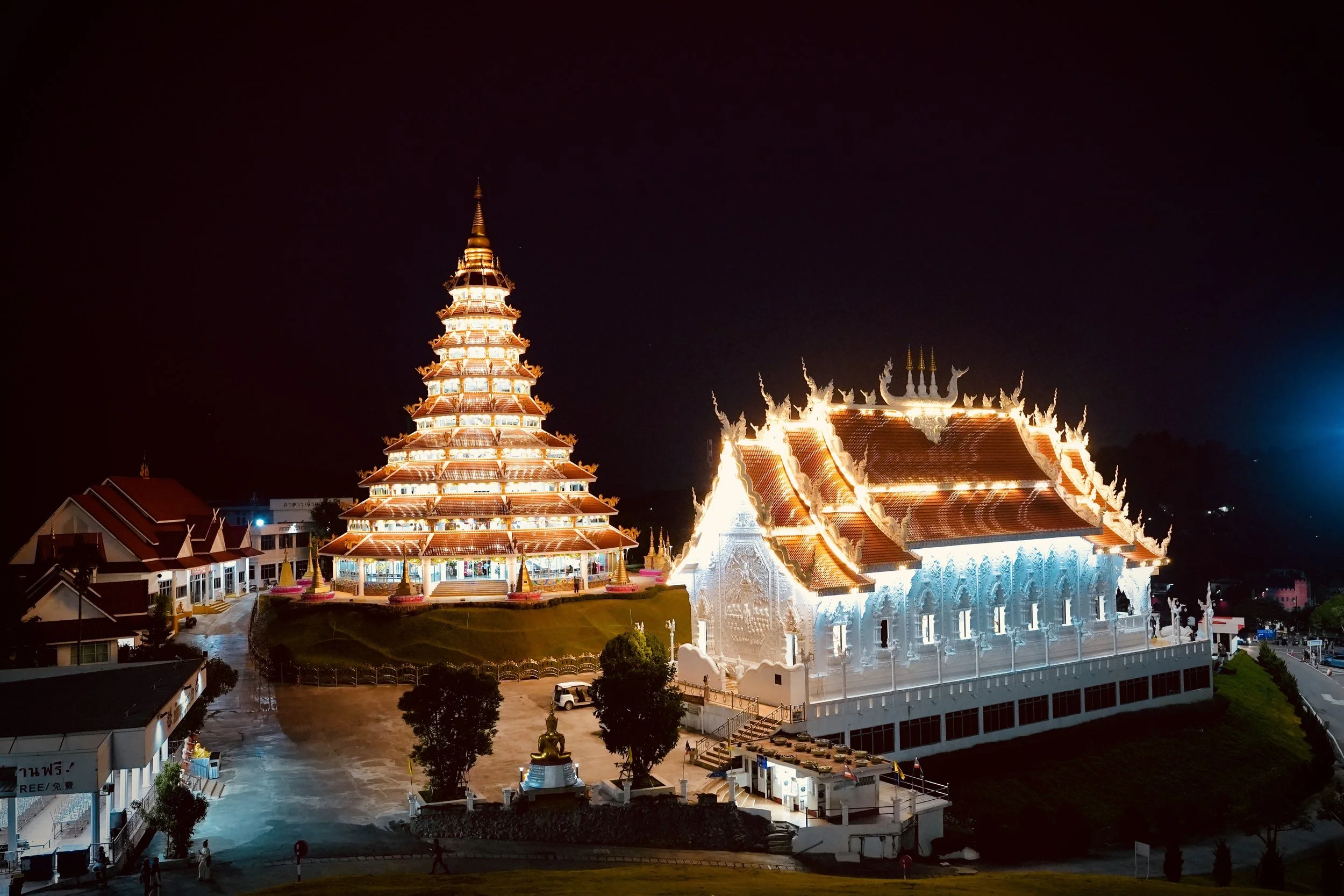
With a city population of roughly 77,000, Chiang Rai allows night to arrive fully
At night, temples emptied. Lights remained on, but people drifted away. The stillness didn’t feel abandoned — it felt complete. Darkness wasn’t crowded out by activity. It was given space.
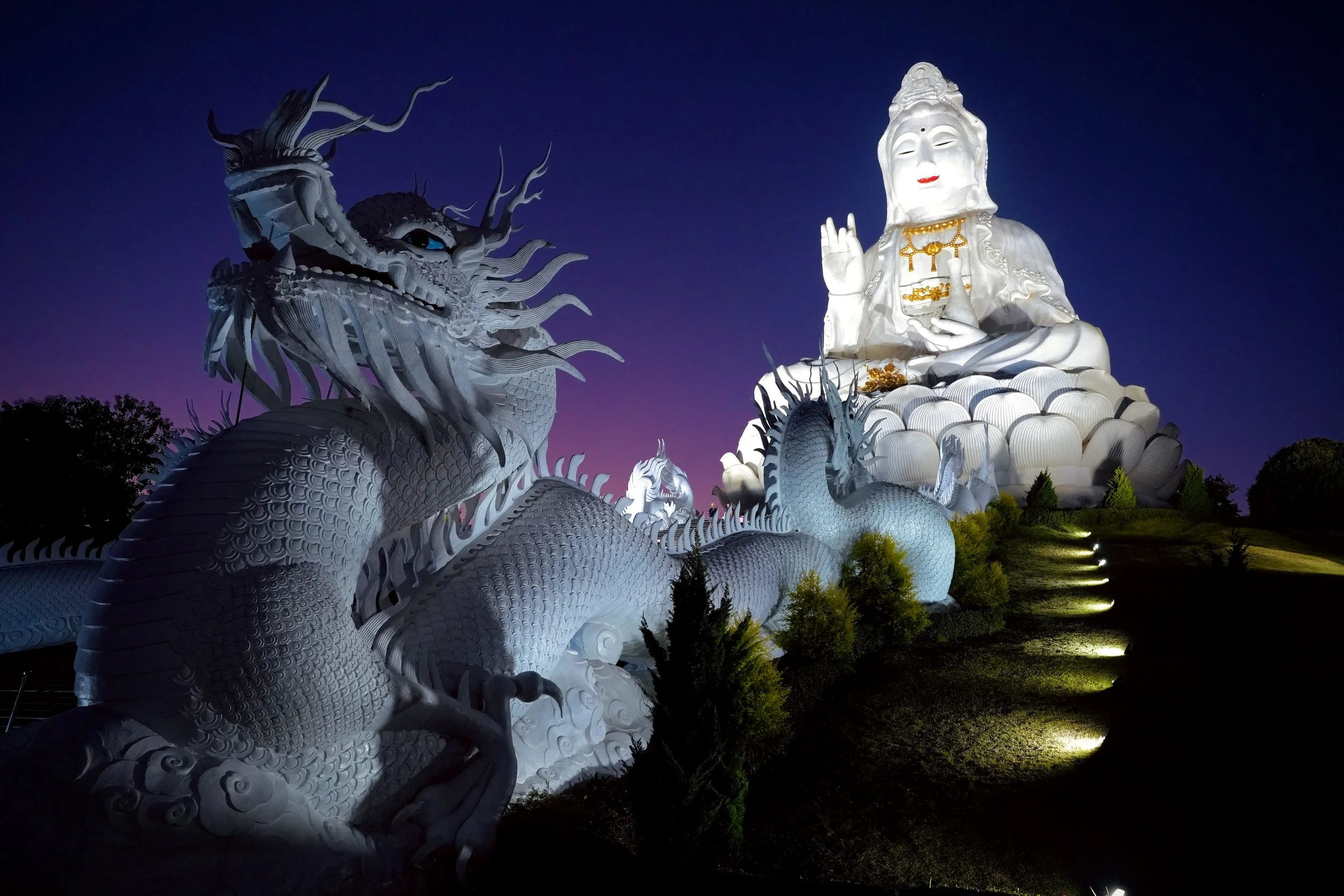
In Chiang Rai, temples don’t mark destinations — they mark time
Temples in Chiang Rai don’t demand attention. They offer it back to you. In their quiet repetition — morning, afternoon, night — they reflect the city itself. A place shaped less by movement than by presence. And in that presence, it becomes easier to slow down, to notice, and to stay awhile.
To see more photos & videos from my travels visit the links below
happy traveling,
~Sean
