Chiang Rai: First Impressions
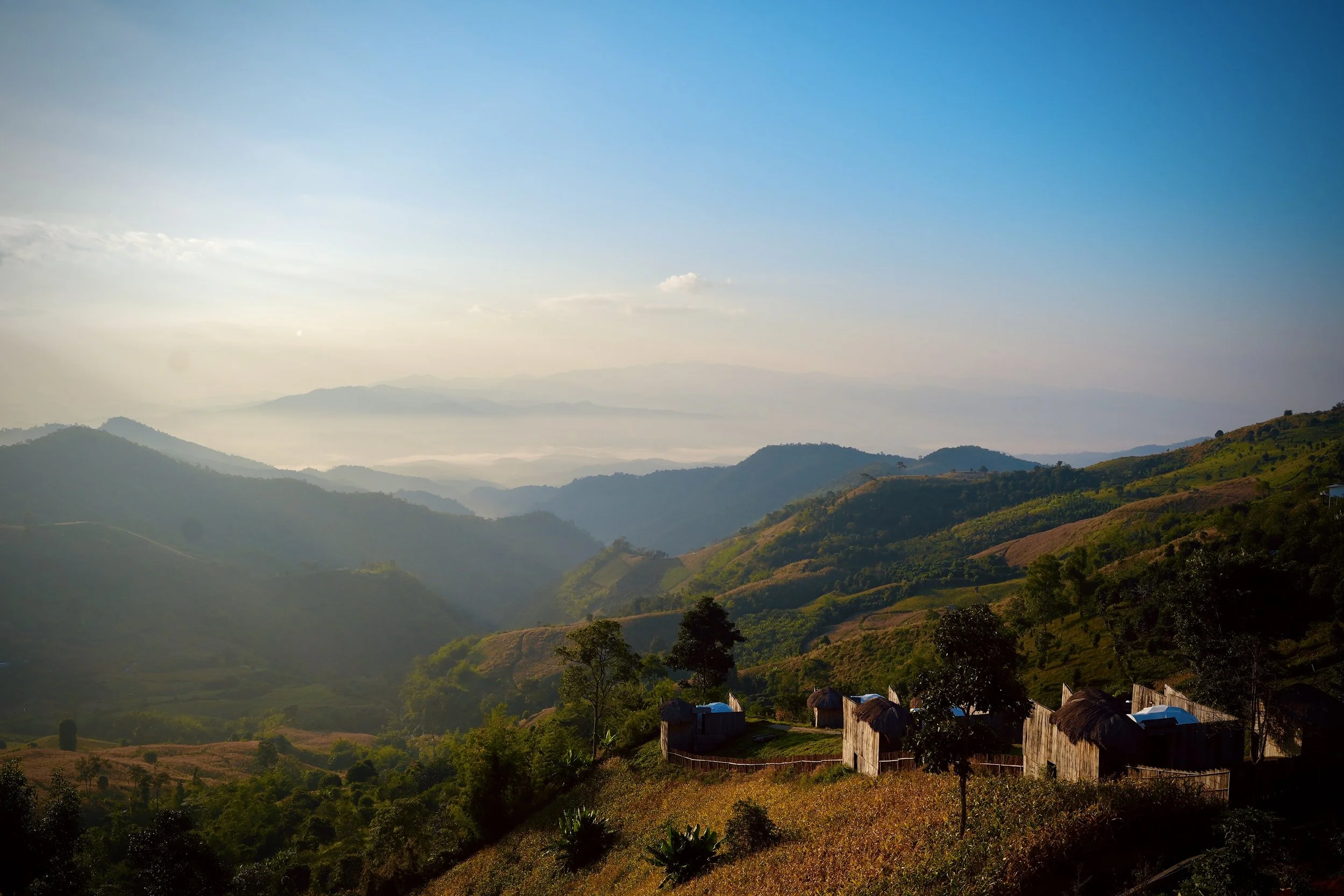
Chiang Rai sits nearly 800 kilometers north of Bangkok, where mountains begin to shape the pace of daily life.
Bangkok fades quickly once you head north. Distance does that. Nearly 800 kilometers separate Chiang Rai from the capital, and the change is felt long before it’s understood. The air softens. The pace loosens. The city seems less concerned with urgency and more comfortable with space.
This was my first time in Chiang Rai, and that unfamiliarity sharpened everything. Nothing announced itself. Instead, the city revealed itself slowly — through light, elevation, quiet streets, and a rhythm that felt closer to nature than to schedules.
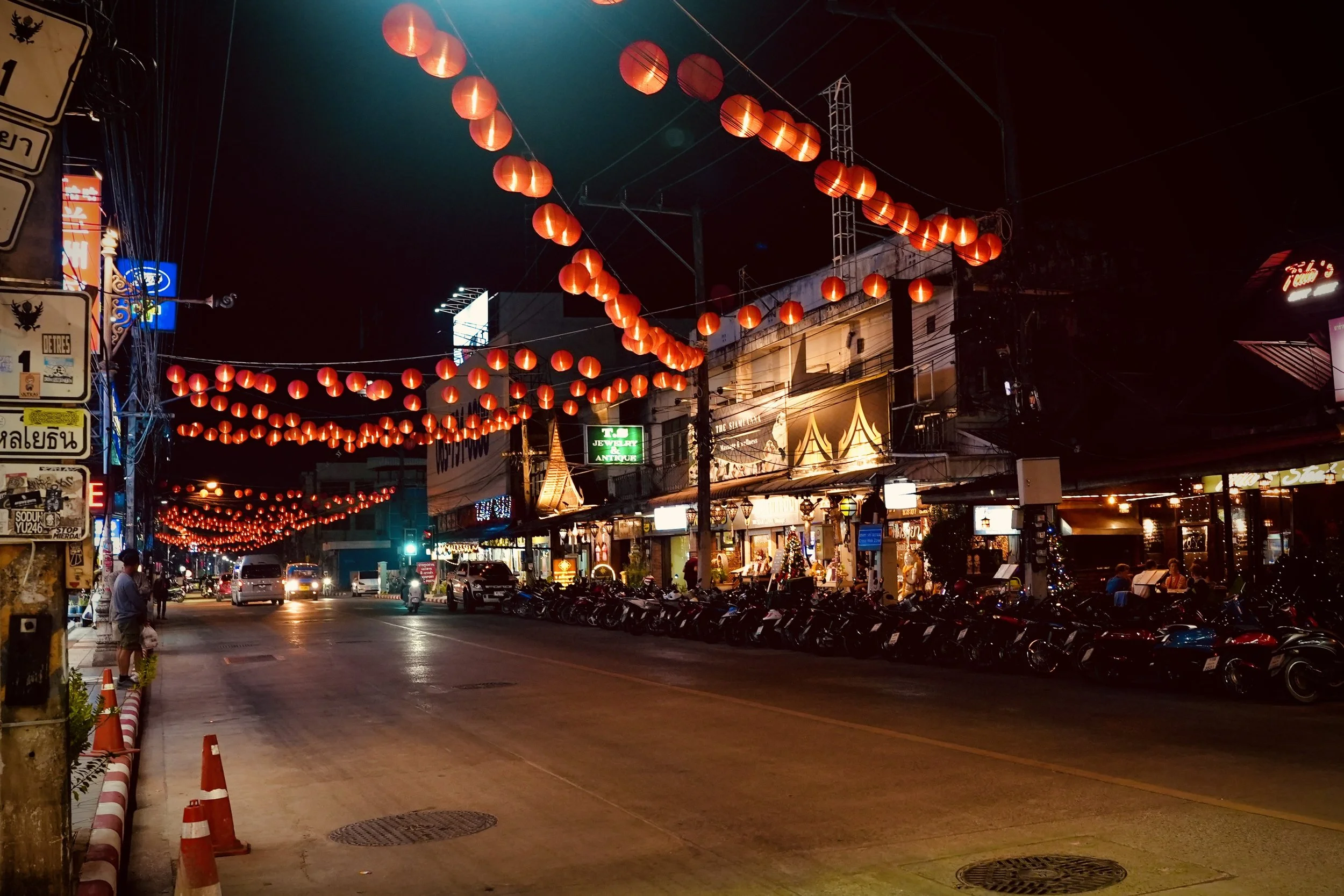
With a city population of roughly 77,000, Chiang Rai moves at a noticeably gentler rhythm than Thailand’s major cities.
Chiang Rai doesn’t compete for attention. With a population small enough to feel human-scaled, the city feels breathable. Streets stretch wider. Traffic thins. Even at busy hours, there’s a sense that nothing is pressing too hard. Compared to Bangkok’s density, this felt like a release.
At around 390 meters above sea level, Chiang Rai wakes gently — often before the city itself does.
Elevation changes everything. In late December, daytime temperatures hover around 20–25°C, a noticeable contrast to the heat farther south. Mornings feel calm and deliberate. Monks sweep courtyards while the city sleeps. You linger longer over coffee. Walking becomes a pleasure rather than a chore. Chiang Rai feels designed for noticing.

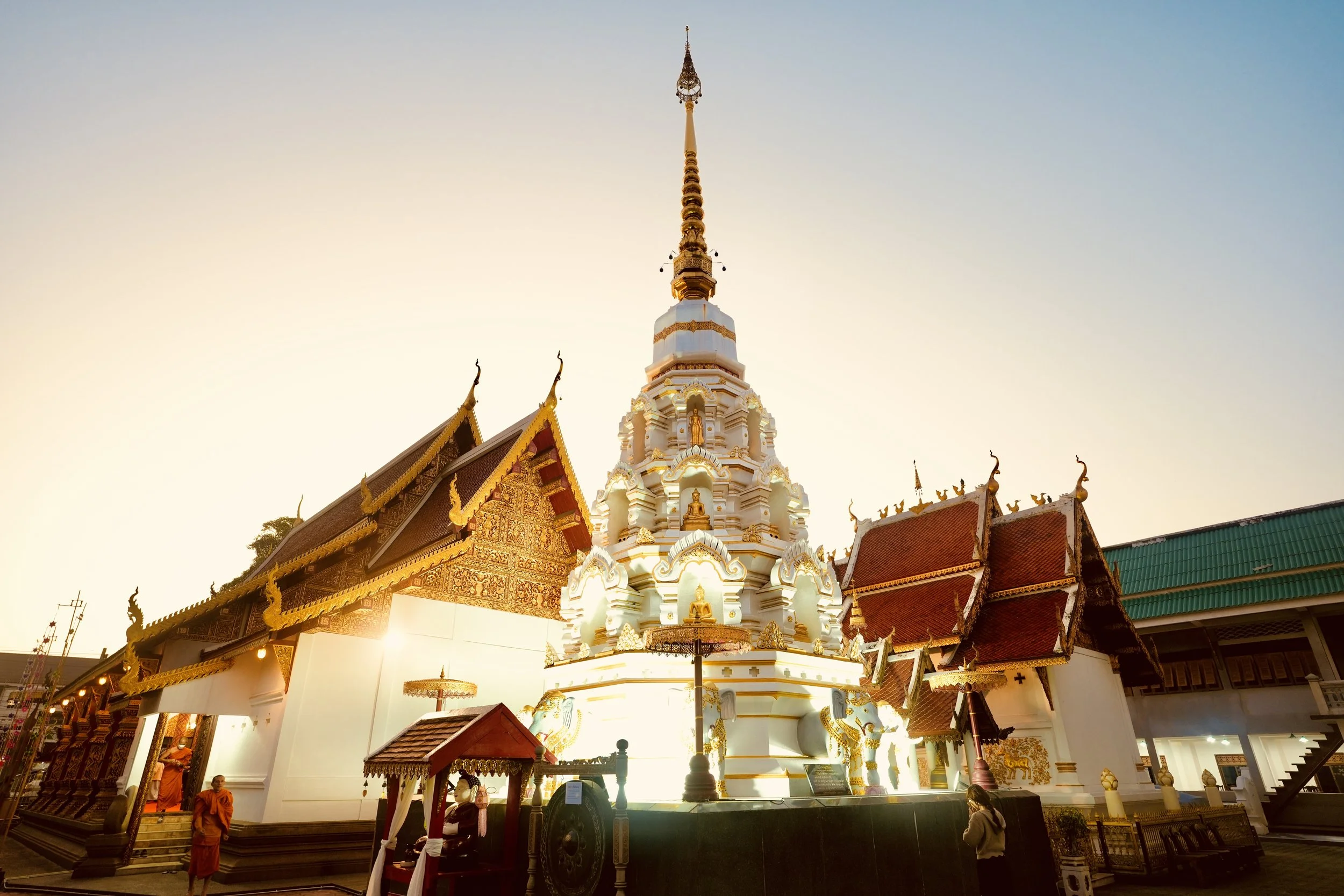
Northern Thai temples sit in generous space, shaped by geography and distance from the capital.
Temples became my first landmarks. They appear not wedged between buildings, but placed with intention — surrounded by air, trees, and light. Northern Thai architecture feels lighter and more restrained, less ornamental, more spacious. Even without seeing the mountains, you sense them.
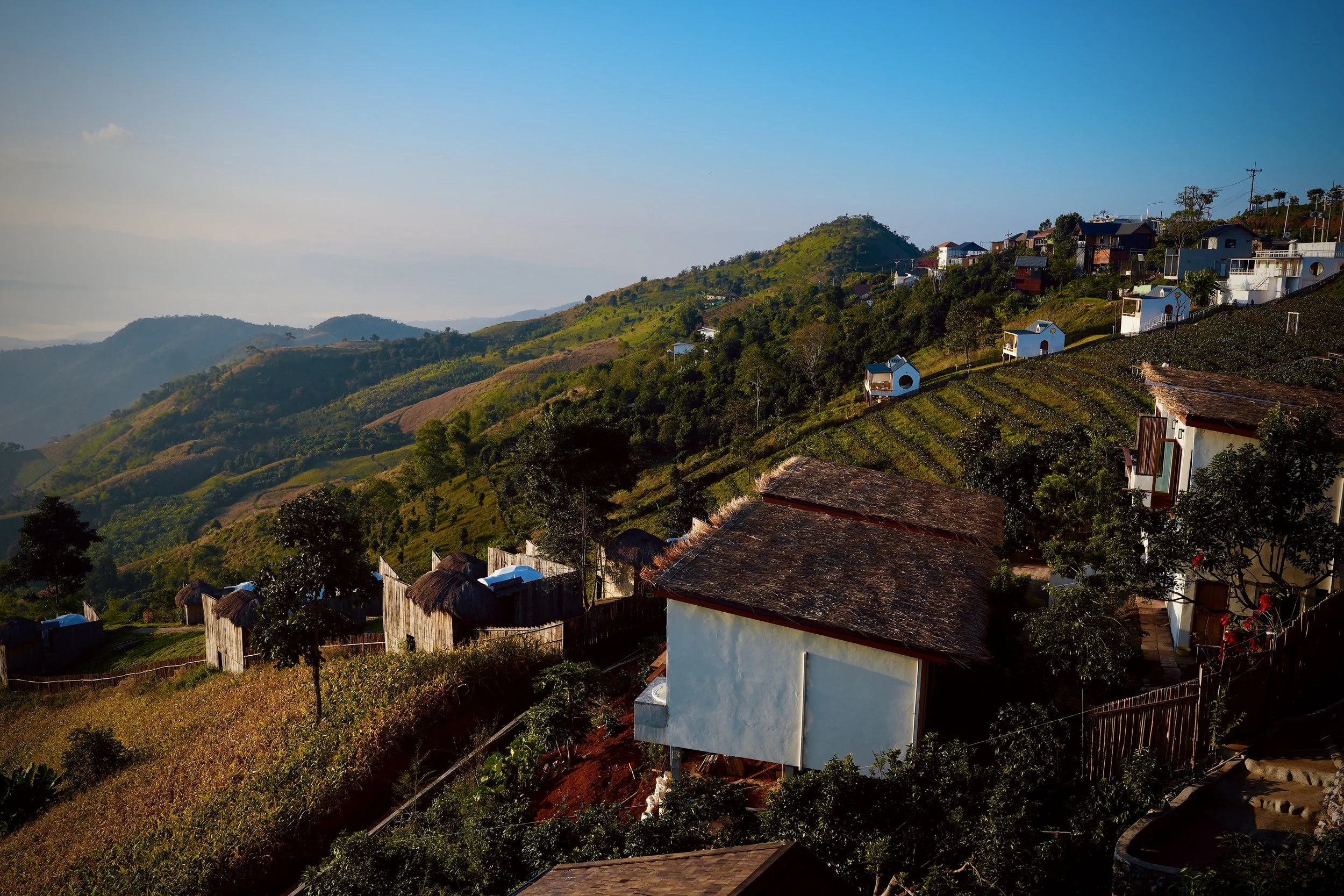
Chiang Rai Province is home to over 1.3 million people, spread across valleys, farms, and highlands.
The city feels like a quiet center holding a much larger geography together. Beyond the streets, Chiang Rai stretches toward Laos and Myanmar, part of the Golden Triangle region. Roads bend outward. Horizons widen. You’re constantly reminded that the city is only one small piece of a much larger landscape.
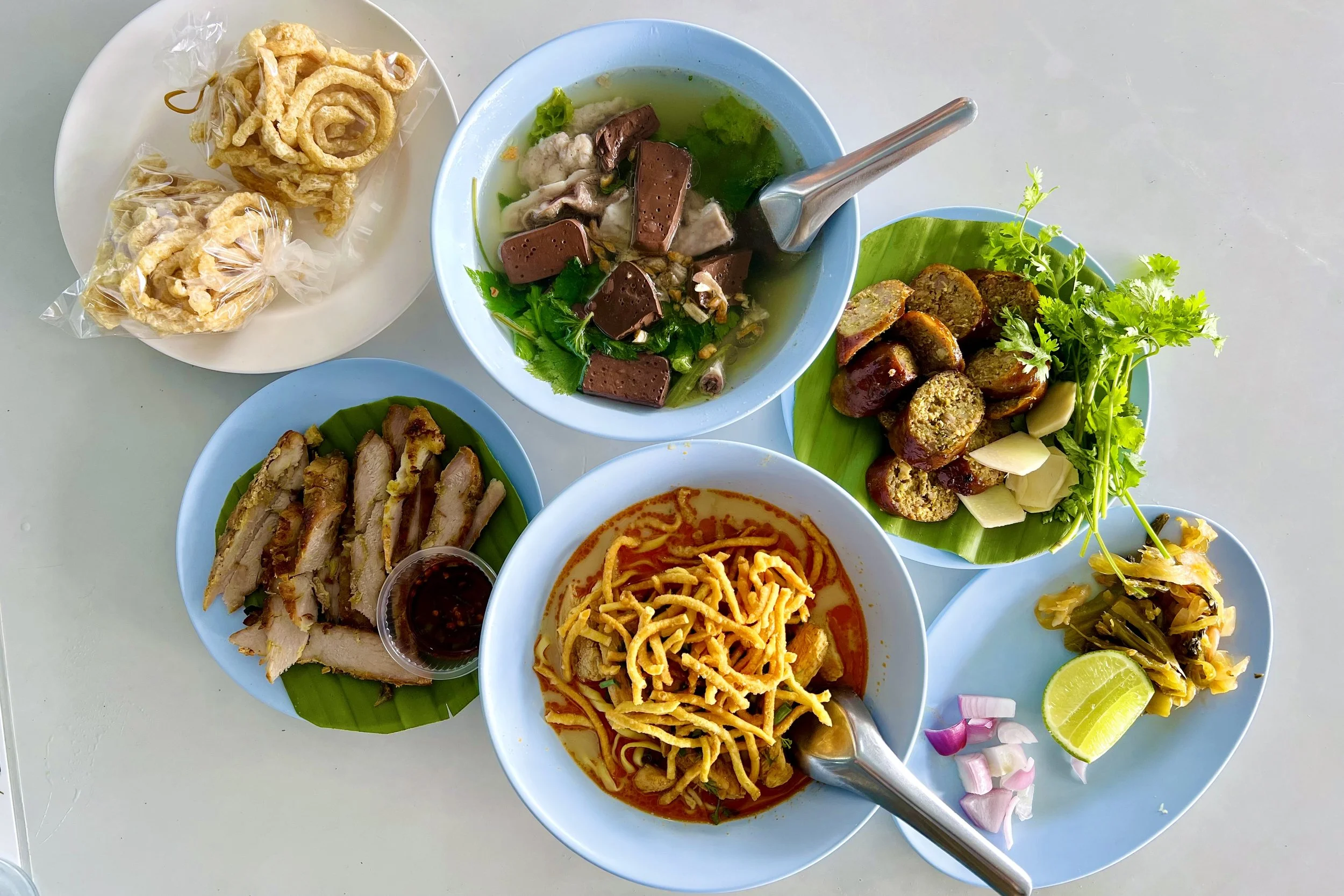
A typical meal in Chiang Rai costs 50–80 baht, generous and grounding rather than performative.
Food grounded me early. Northern Thai meals arrive warm and unassuming — herb-forward, earthy, restrained. Eating here feels less like consumption and more like participation in daily life. Nourishment, in the most literal sense.
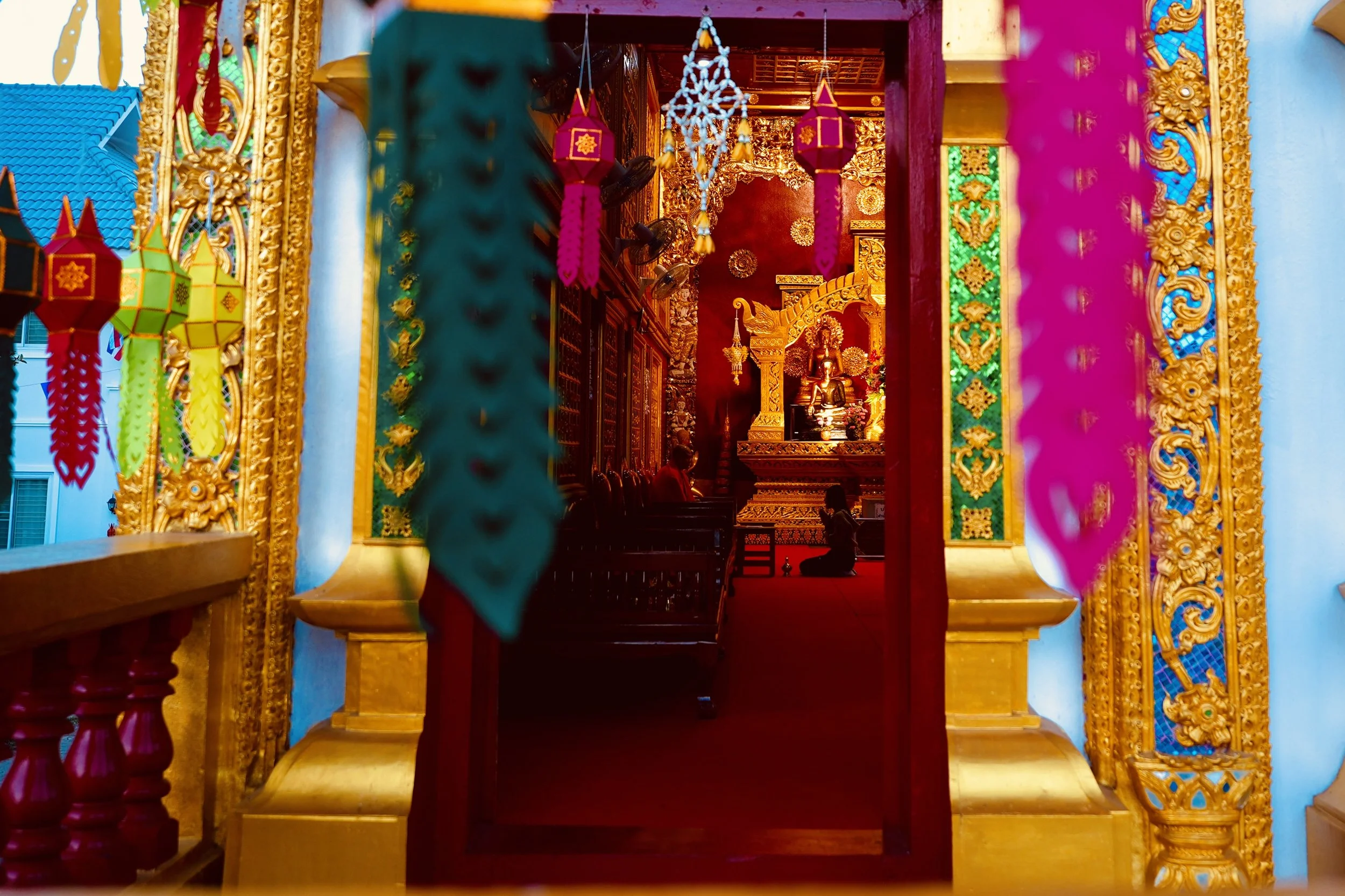
Daily life in Chiang Rai is shaped by quiet rituals rather than constant motion.
During the day, life in Chiang Rai unfolds inward as much as it does outward. Inside temple chambers, small moments of devotion pass without spectacle — a prayer offered, a blessing given, a pause taken. Movement here isn’t measured in speed, but in intention. Time stretches, and meaning settles into the ordinary.
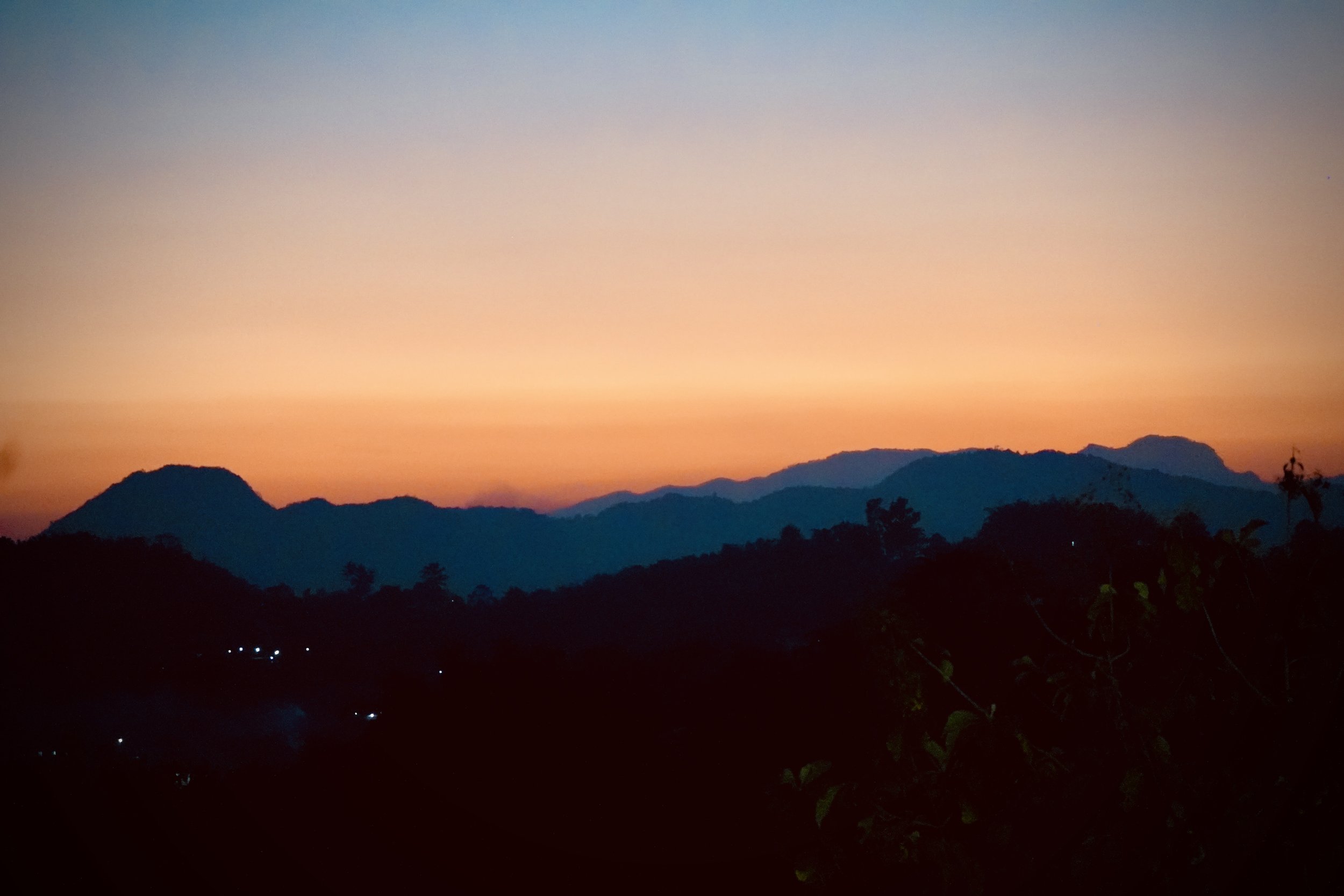
As daylight fades, Chiang Rai quiets earlier than Thailand’s larger cities.
Evenings arrive softly. Temperatures drop. Shadows stretch. Unlike Bangkok, where night brings intensity, Chiang Rai treats night as a winding down — a slow easing into stillness.
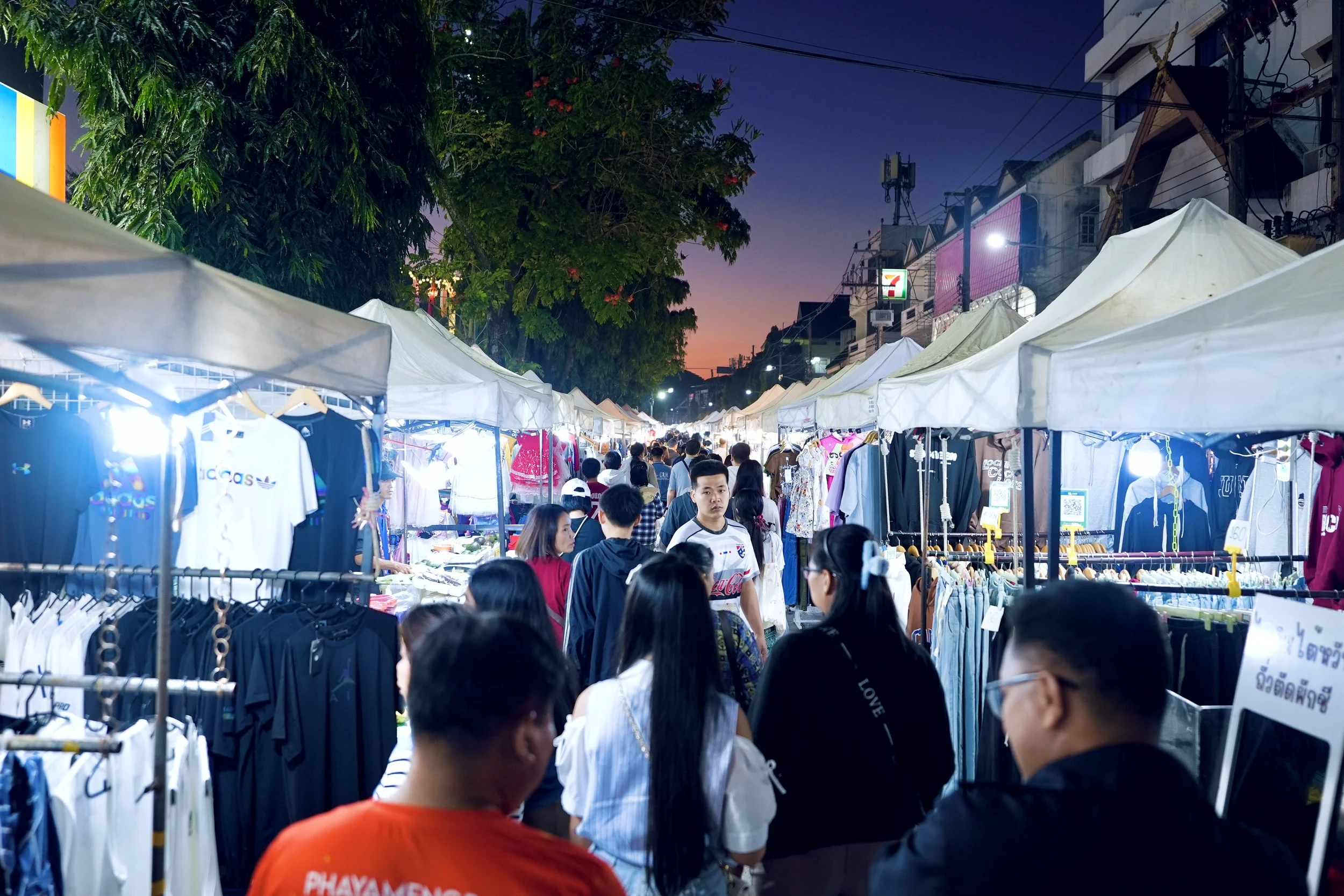
Even at night, Chiang Rai’s energy gathers inward — shared around food rather than spectacle.
At night, life in Chiang Rai doesn’t disappear — it concentrates. Markets glow softly as locals gather around plastic tables, sharing meals and conversation. The energy feels communal rather than hurried. Sound stays close. Laughter doesn’t echo far. When the stalls close, the city quiets quickly, returning to stillness without resistance.
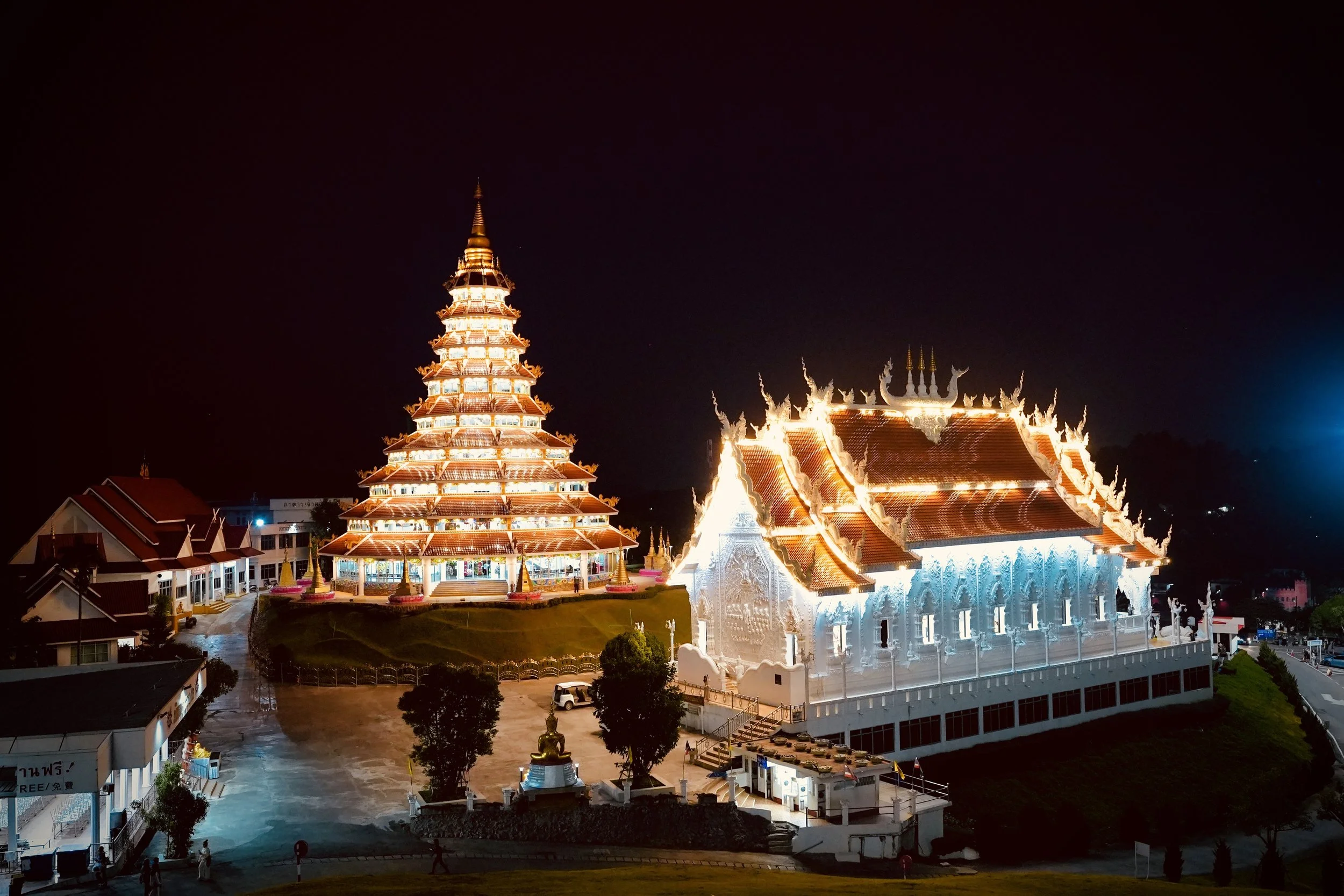
After dark, Chiang Rai returns to stillness.
Chiang Rai doesn’t overwhelm you with experiences. It gives you space to meet them fully. In that space, travel shifts from accumulation to presence. Time feels slower. Attention deepens. And for the first time in a while, simply arriving feels like enough.
To see more photos & videos from my travels visit the links below
happy traveling,
~Sean
