Chiang Rai: Above the City
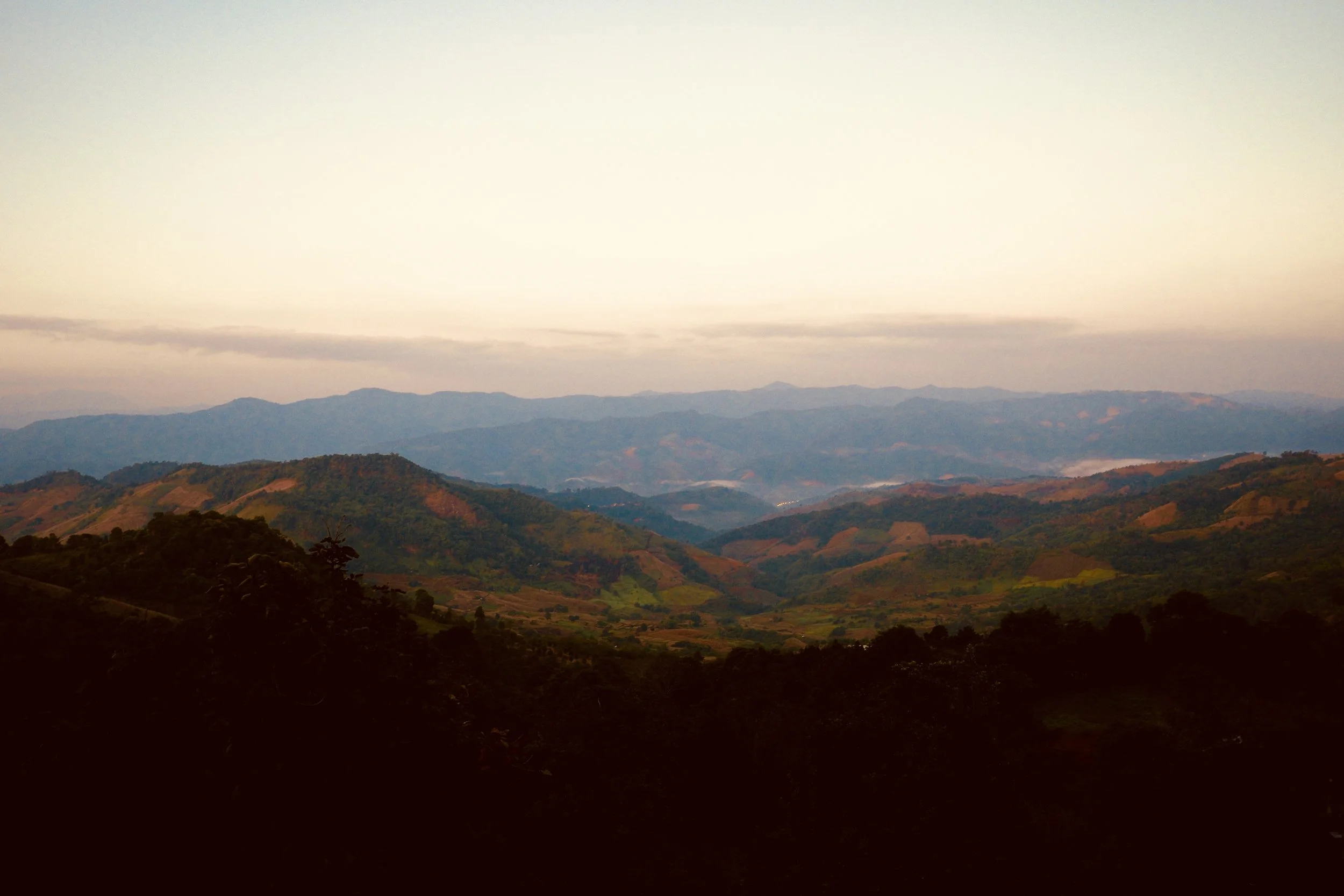
Morning breaks softly across the hills of northern Thailand, where layers of mountains fade into one another like brushstrokes
Chiang Rai reveals itself slowly. Beyond the temples and night markets, beyond the traffic circles and café-lined streets, the land begins to rise — gently at first, then with intention. Roads narrow. The air cools. Sound thins out. And suddenly, the city feels very far away.
Northern Thailand is shaped by elevation. Chiang Rai province sits at an average of 580 meters (1,900 feet) above sea level, with surrounding mountain ranges climbing well past 1,500 meters. That change in altitude is more than geography — it reshapes climate, agriculture, and pace. In late December, mornings hover in the low to mid-teens Celsius (50s–60s°F), cool enough for long sleeves, hot coffee, and silence.
Up here, distance is measured less in kilometers and more in quiet.
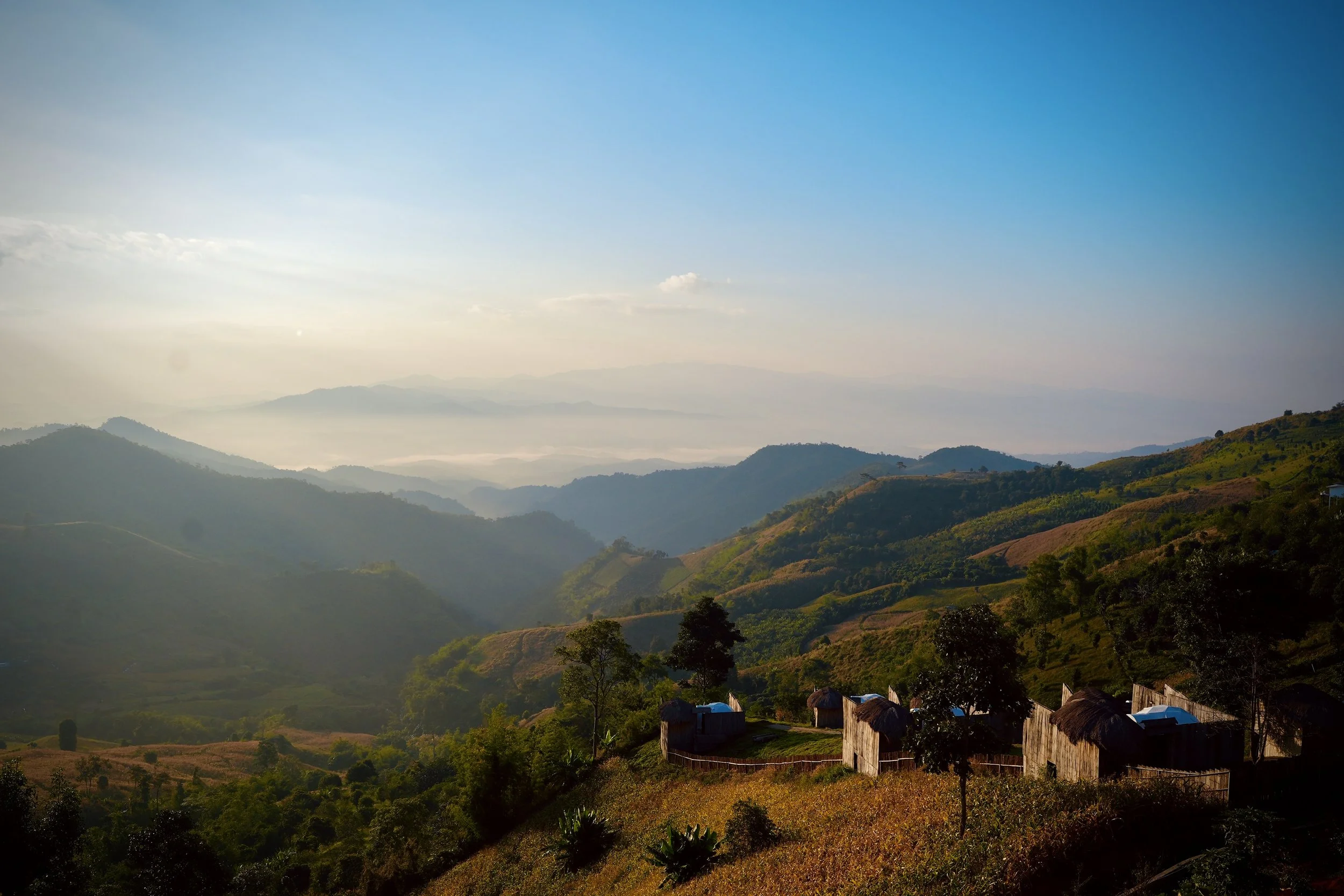
Small hillside settlements emerge as the mist lifts, revealing a patchwork of fields, homes, and winding dirt roads
From above, the mountains unfold in layers: terraced hillsides, narrow valleys, and villages tucked just out of sight. Agriculture dominates the landscape. Rice fields flatten the lowlands, while higher elevations give way to corn, tea, and coffee. Chiang Rai is one of Thailand’s fastest-growing coffee regions, producing beans at elevations ideal for slow maturation — a detail you can taste later, cup in hand.
More than 40% of Chiang Rai’s population lives outside urban centers, many in rural or semi-rural communities. Life here is quieter, slower, and dictated by daylight. Morning comes early. Evenings fade quickly.
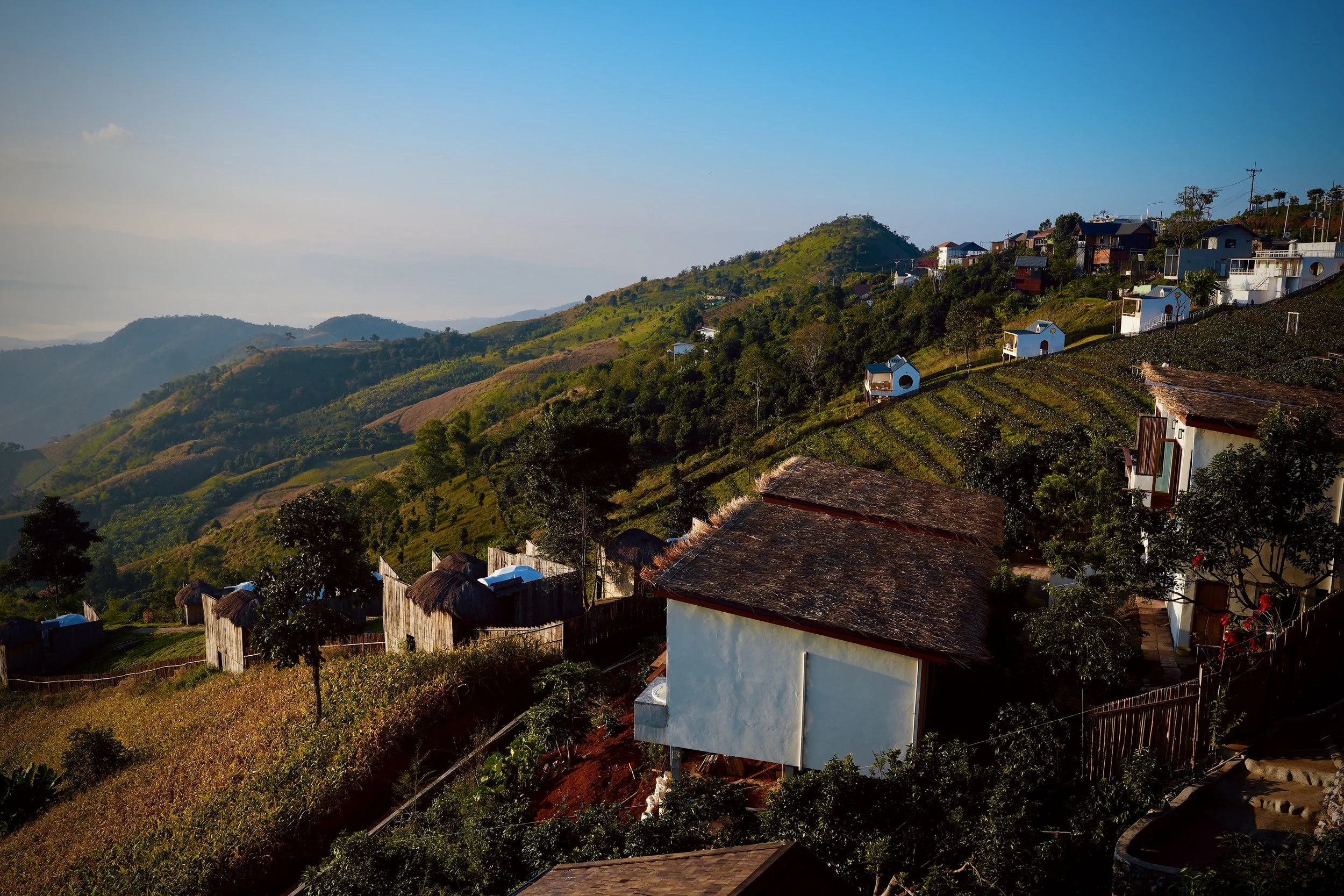
Simple huts line the slopes, built to face the view rather than the road
The structures scattered across the hills are modest — wood, thatch, tin roofs weighed down by stones. They’re positioned for practicality, not spectacle. Sunlight. Wind. Drainage. View. Everything serves a purpose.
Standing above them, it becomes clear how much of northern Thailand still lives close to the land. This region borders Laos and Myanmar, part of the larger Golden Triangle, historically shaped by trade routes and migration. The mountains are not barriers here — they are connective tissue.
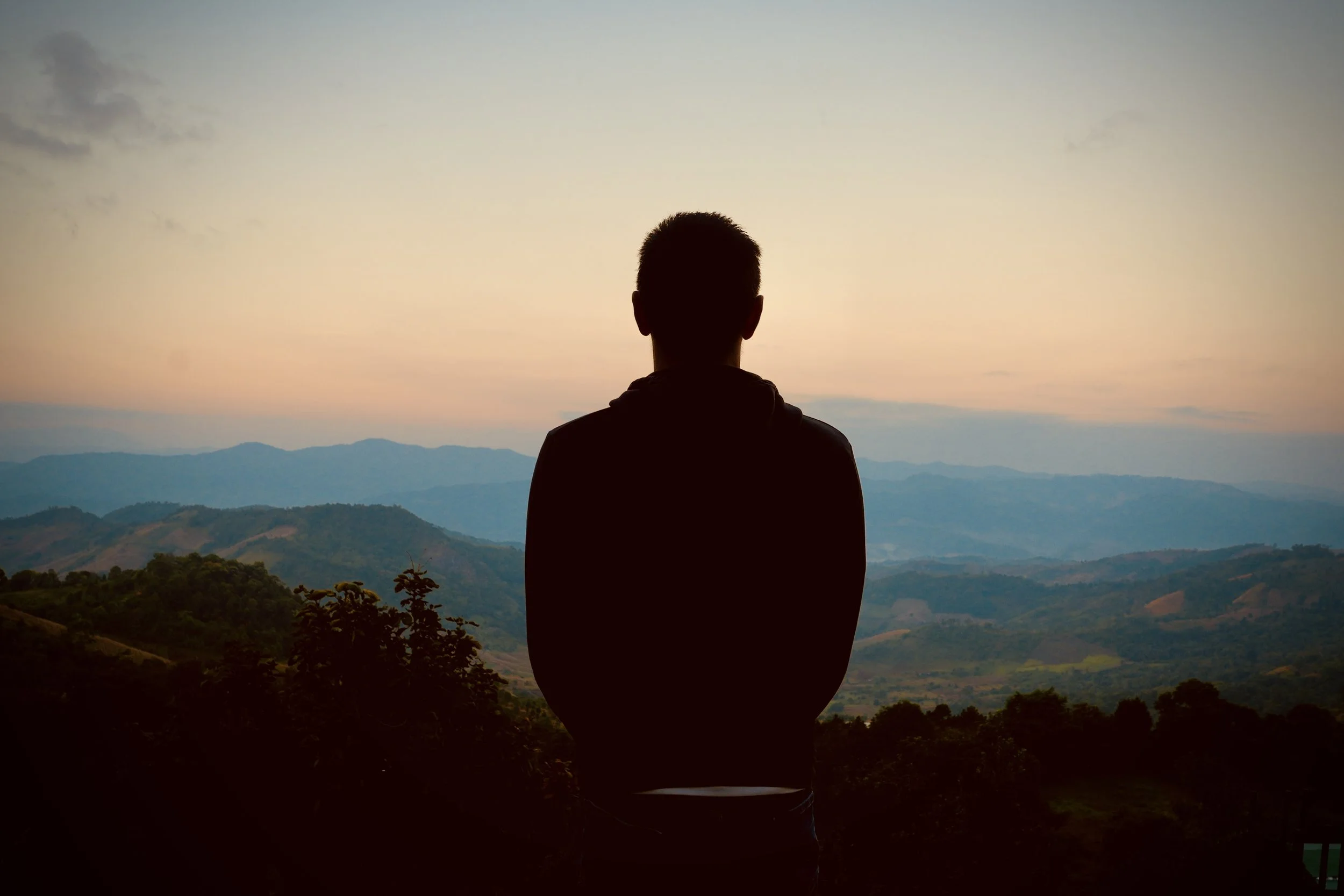
Pausing at the edge of the valley, where distance stretches and time loosens its grip
There’s a particular stillness that settles in when you stop moving uphill. A silence that isn’t empty, but full — layered with wind, distant birds, and the faint movement of leaves. The view demands patience. It doesn’t reveal everything at once.
This is a landscape that asks you to stand still.
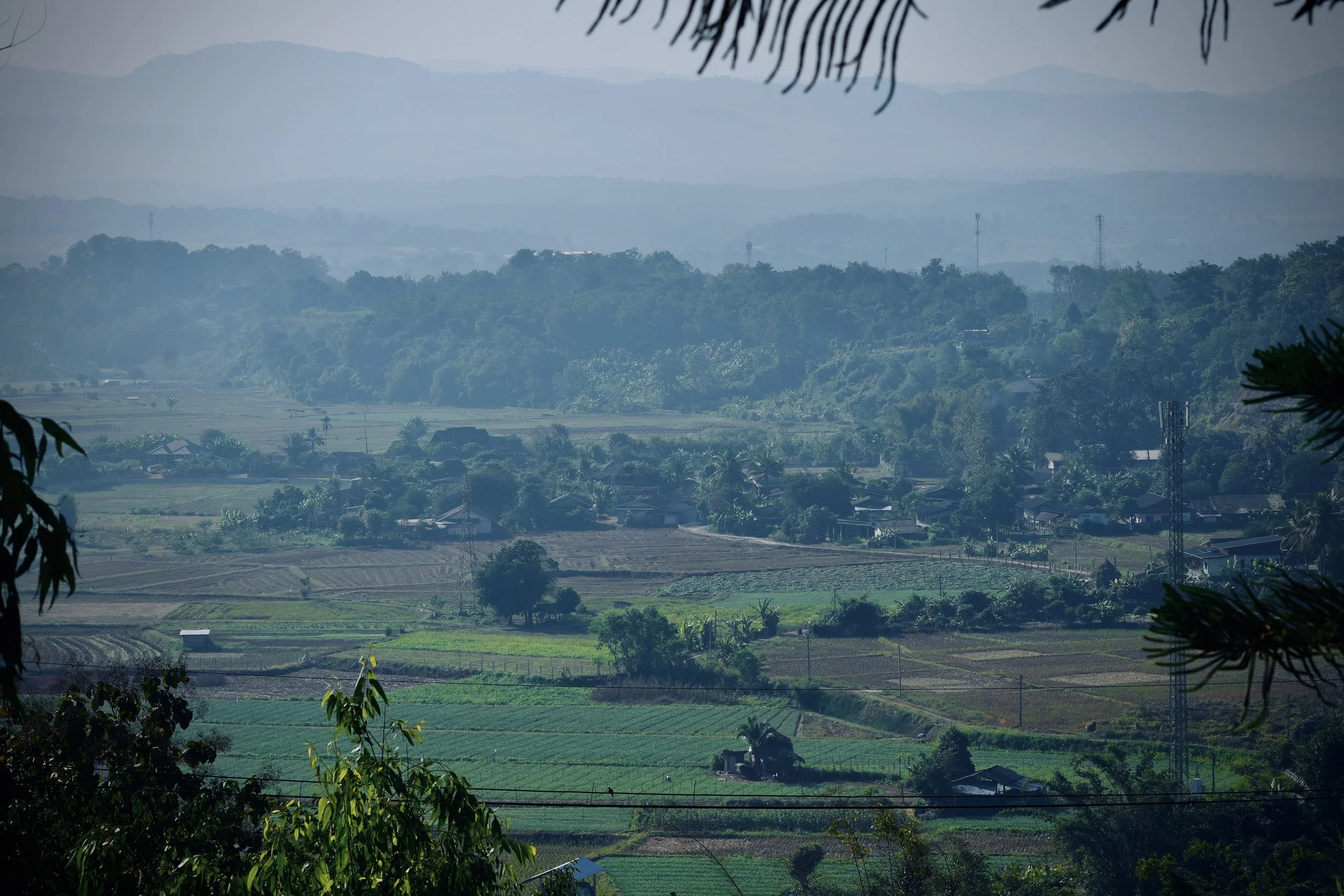
The lowlands spread out below, shaped by rivers, farms, and seasonal rhythms
From higher ground, the valley becomes legible. You can trace irrigation lines. Roads. Rivers bending gently through farmland. Chiang Rai’s economy depends heavily on agriculture, with rice remaining a staple crop. Seasonal cycles dictate everything — planting, harvest, movement.
In December, fields rest. The colors soften. Greens dull into golds and browns. The land exhales.
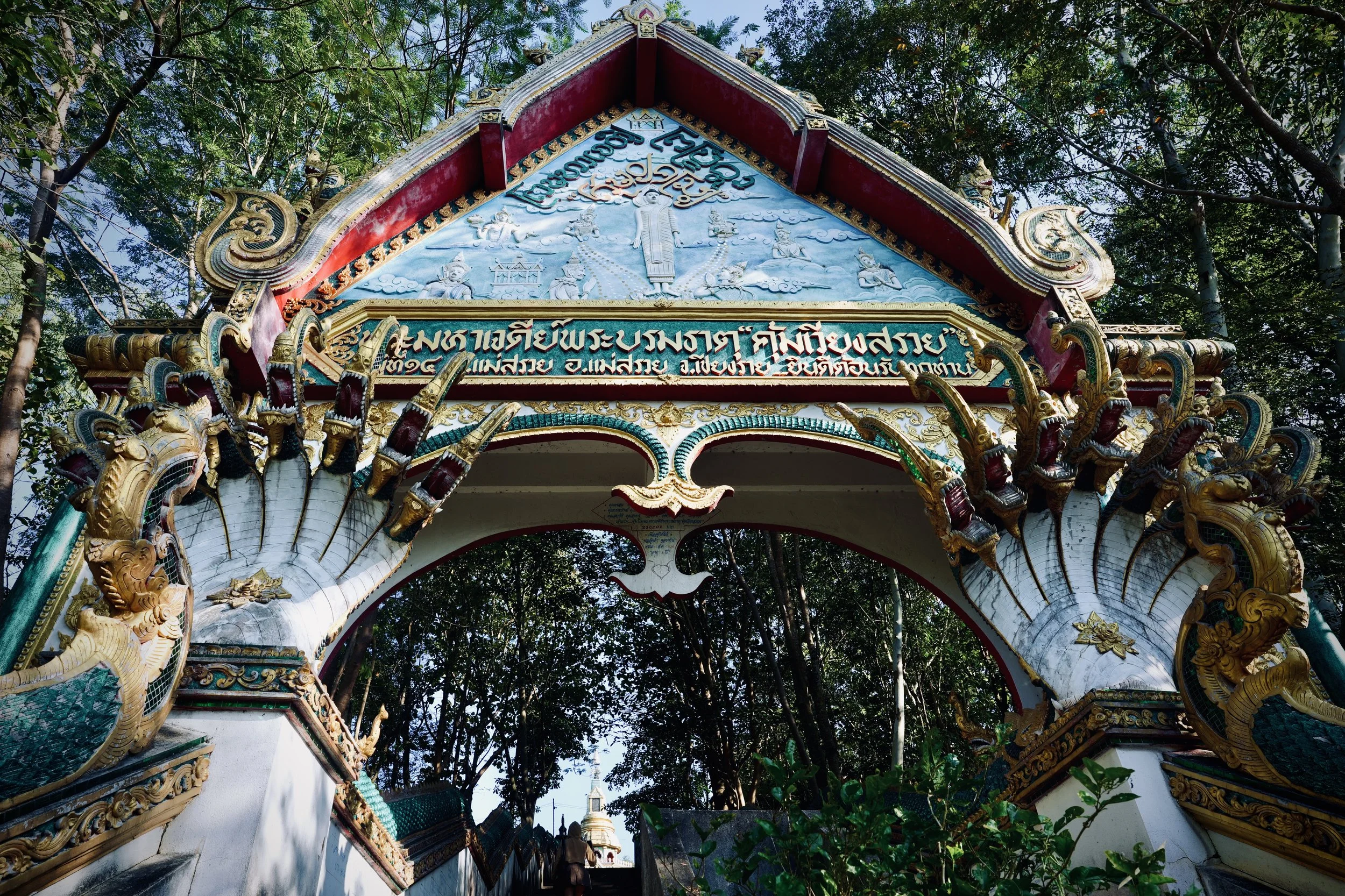
A mountain temple marks the transition from road to ritual
Temples appear unexpectedly in the mountains — not grand entrances, but gateways tucked beneath trees. Stepping through one feels less like arrival and more like permission.
These hillside temples are often quiet, serving local communities rather than visitors. They are places of pause. Places to sit. Places to look outward rather than inward.
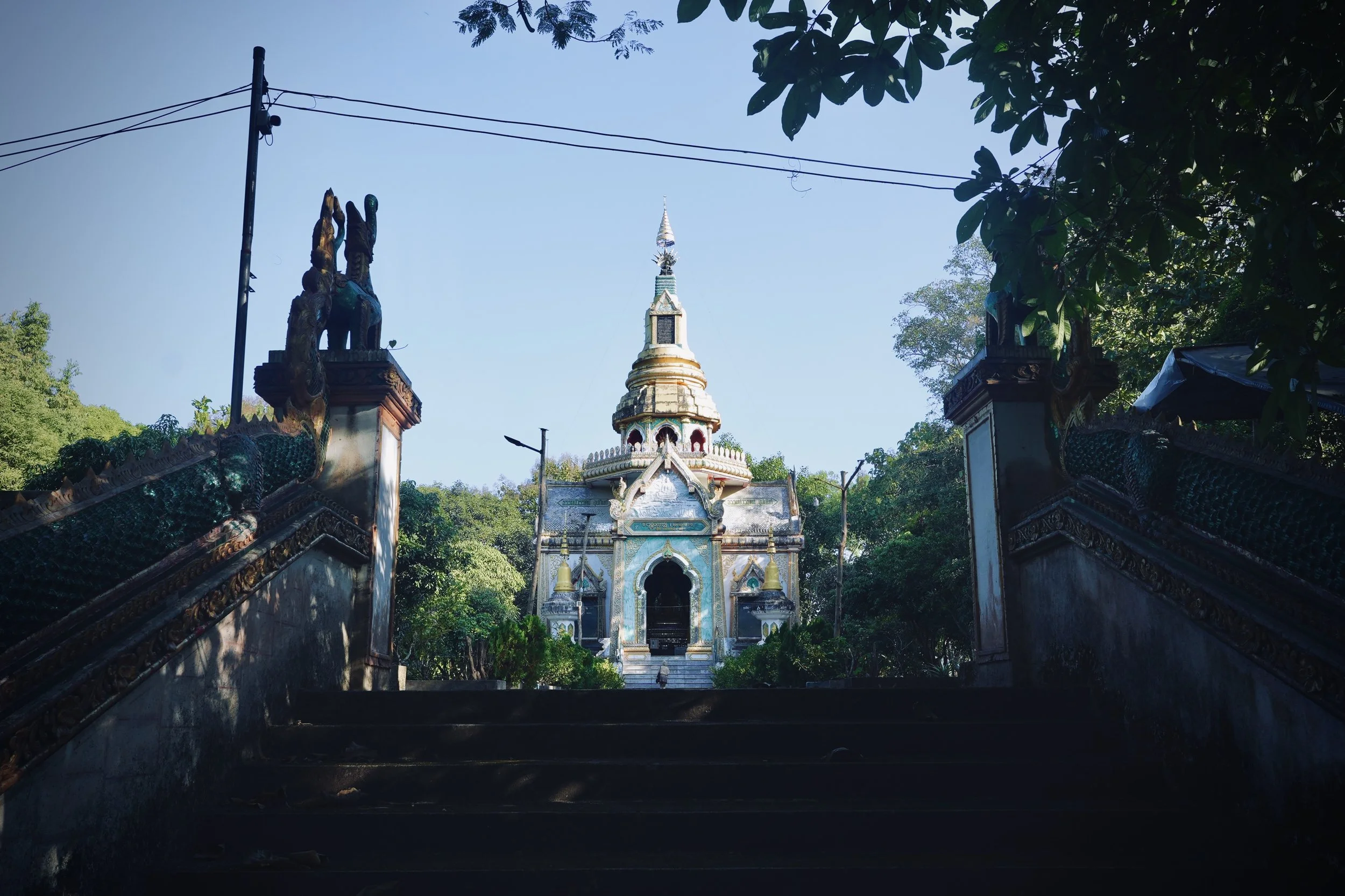
At the top of the climb, a small temple waits, patient and unhurried
Climbing temple steps at elevation is different. Breath shortens. Movement slows. The ritual becomes physical. And at the top, the reward isn’t grandeur — it’s perspective.
From here, the mountains stretch endlessly. No single peak dominates. Everything shares space.
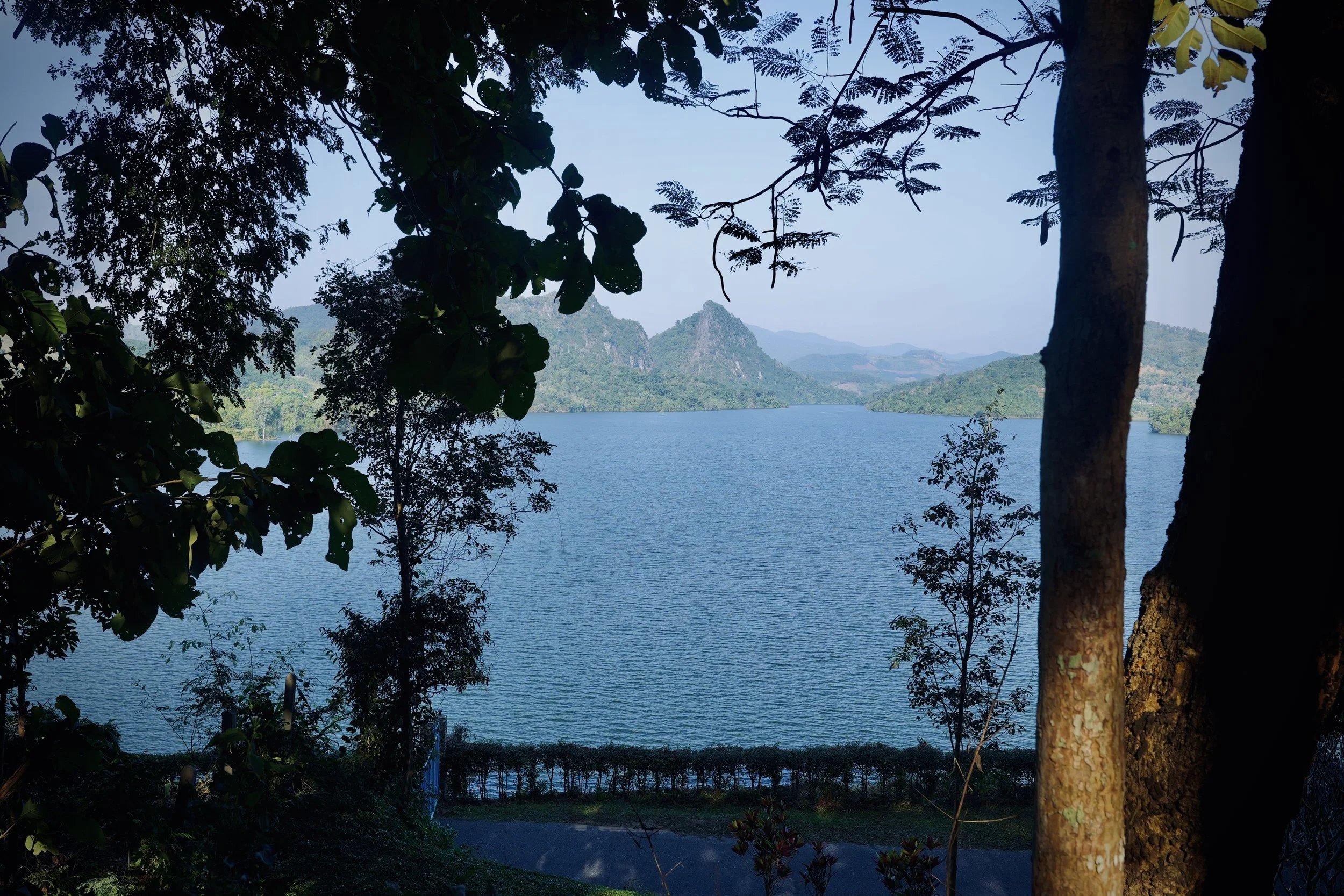
Water settles into the landscape, reflecting hills and holding the sky
Lakes and reservoirs punctuate the terrain, quiet and still. They collect runoff from higher elevations, feeding farms downstream. Standing near the water, the temperature drops slightly. Light changes. Sound softens.
The mountains don’t demand attention here. They allow it.
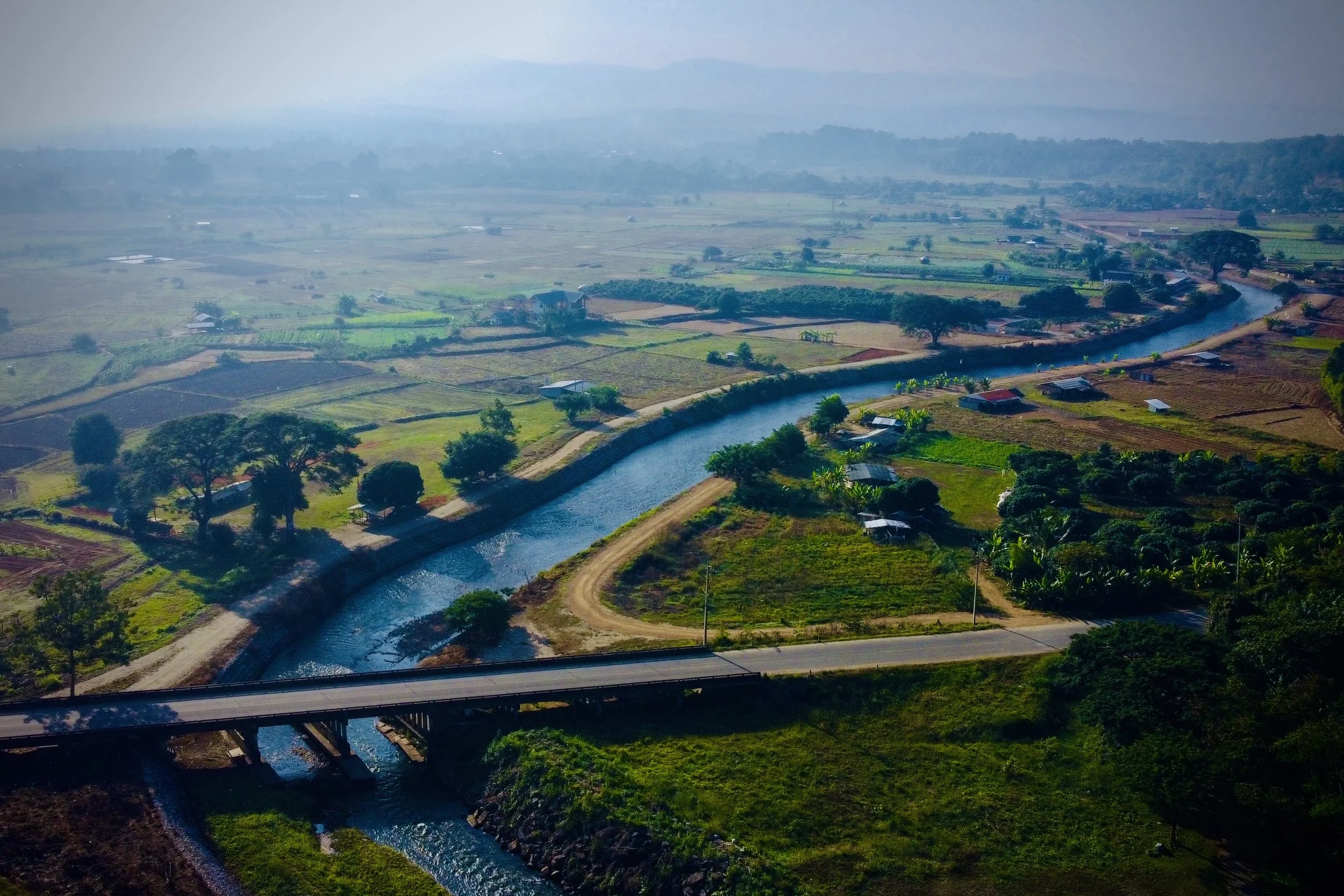
A narrow river threads through farmland, connecting high ground to low
Rivers carve Chiang Rai’s valleys gently, rarely dramatic, always essential. They link mountains to markets, farms to families. Roads cross them without ceremony. Life flows alongside.
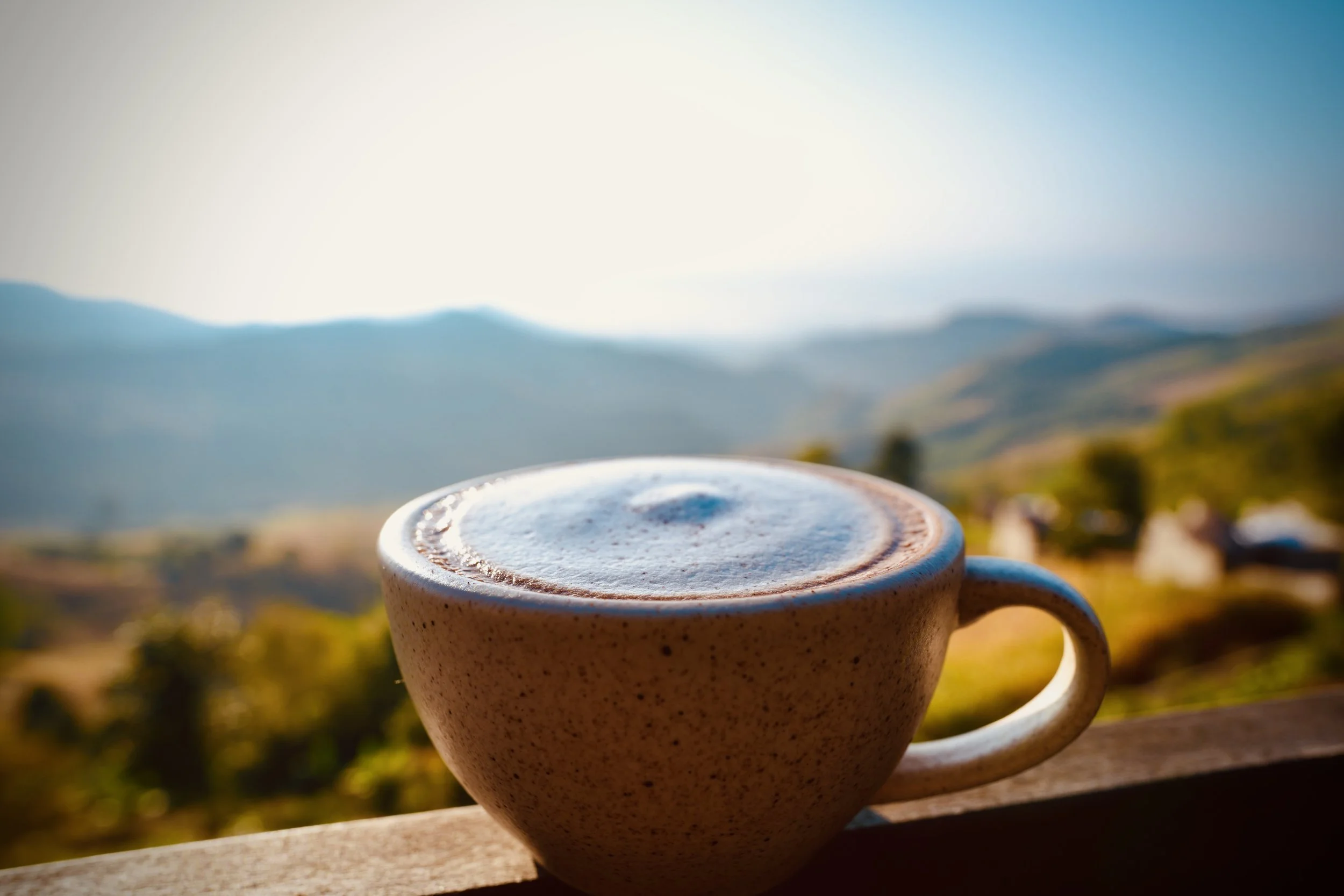
A warm cup of locally grown coffee, enjoyed at altitude
Coffee tastes different up here. Chiang Rai’s arabica beans thrive between 1,000–1,400 meters, where cooler nights slow growth and deepen flavor. Sipping a cup while overlooking the hills feels less like indulgence and more like alignment — landscape completing the ritual.
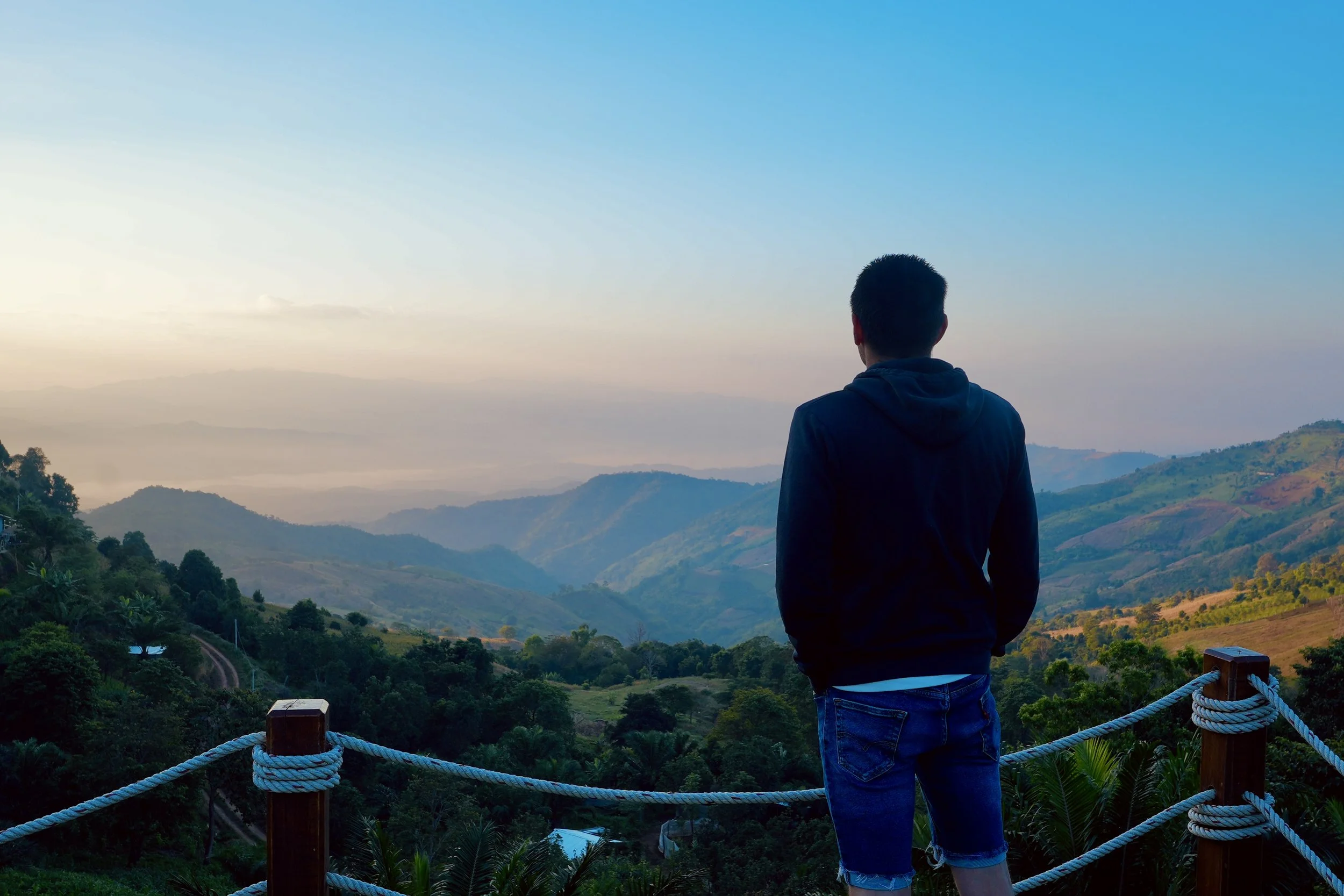
As light fades, the mountains hold their shape longer than the day
Sunset arrives quietly. Colors drain from the land. The valleys fill with shadow. Standing still, watching the light leave ridge by ridge, it’s impossible not to feel small — and comforted by it.
The mountains don’t overwhelm. They steady.
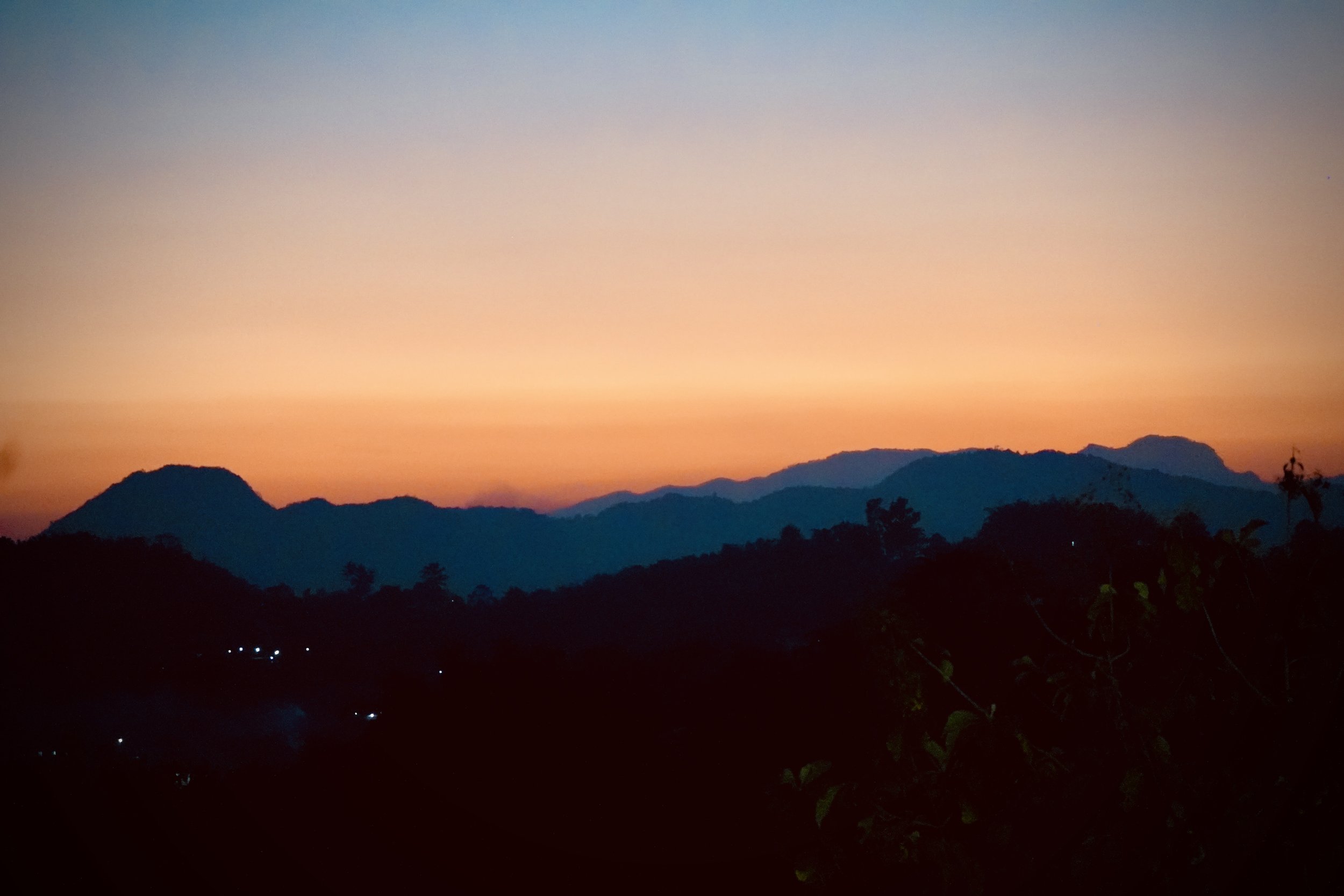
The last light settles into the hills, and the day releases its grip
Leaving the mountains feels like waking from a slow dream. The road descends. Noise returns. Signals reappear. But something stays behind — a recalibration.
Chiang Rai’s mountains don’t announce themselves. They don’t compete with temples or cities or food. They simply wait. And when you meet them on their terms — slowly, quietly — they give you space to breathe.
To see more photos & videos from my travels visit the links below
happy traveling,
~Sean
