Eating My Way Through Chiang Rai
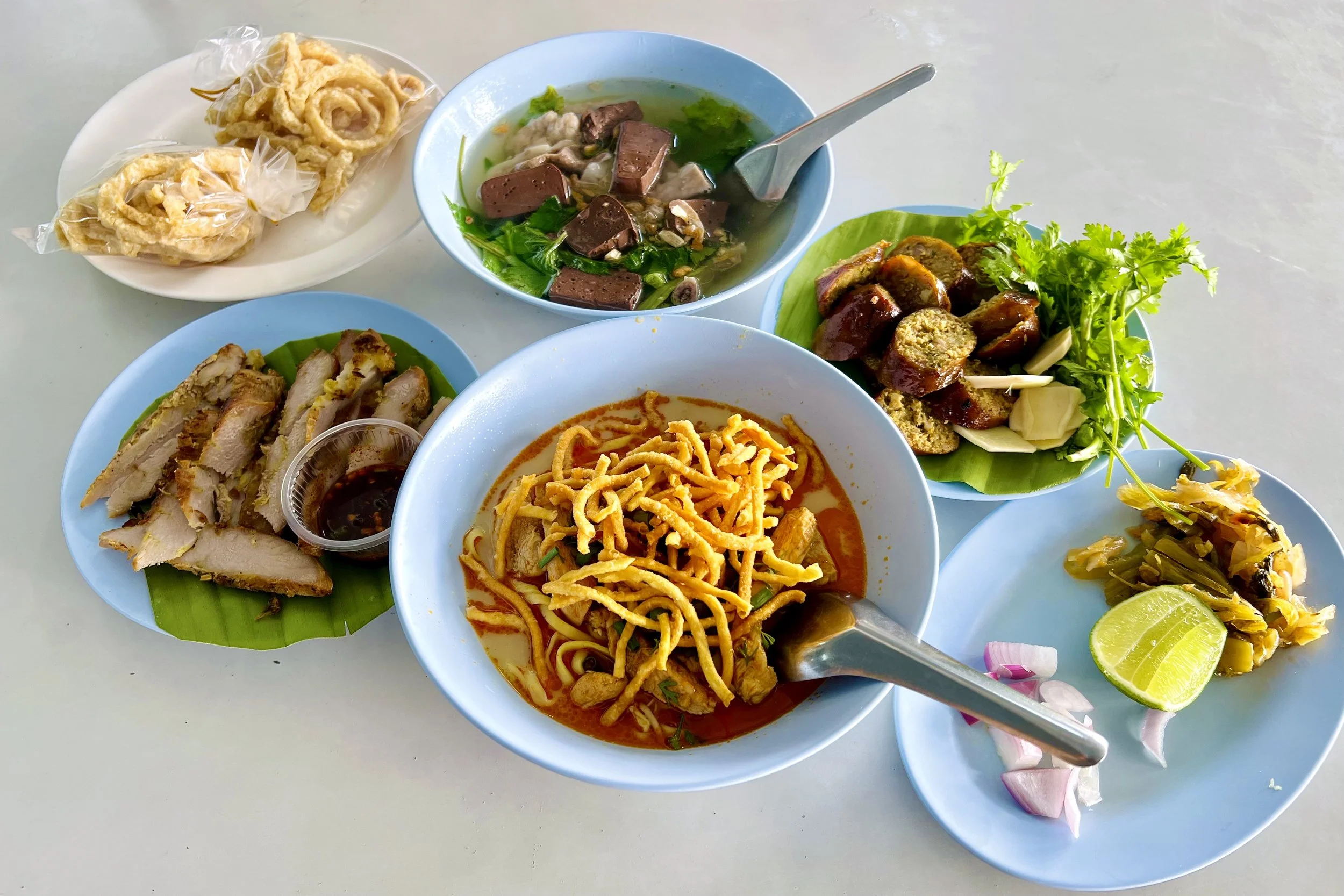
A bowl of northern Thai comfort — food here is meant to be eaten often, not admired once
Chiang Rai doesn’t announce its food.
There are no viral queues, no laminated “must-try” lists taped to walls. Meals happen quietly here — folded into routines, eaten before work or after errands, shared without commentary. Eating in Chiang Rai feels less like discovery and more like participation.
Over several days, my meals traced a map of the city — not by landmarks, but by tables.
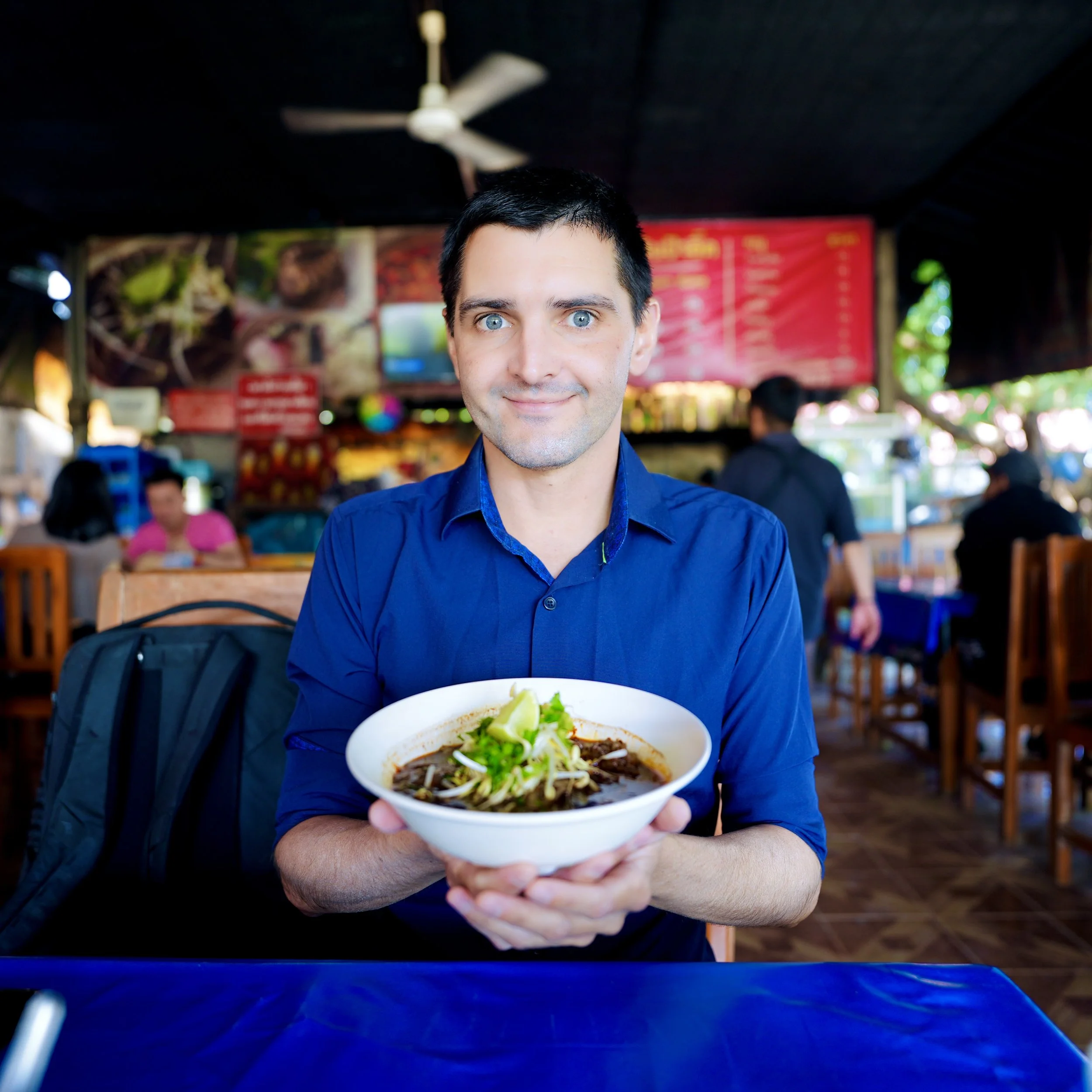
Nam ngiao arrives still breathing heat — deep red broth, pork bones, tomatoes, and fermented soybean
My introduction came with nam ngiao, served from a clay pot still holding heat and into my ceramic bowl.
The broth was opaque and earthy, built from pork bones, tomatoes, dried chilies, fermented soybean, and blood cubes — ingredients that don’t soften themselves for visitors. Rice noodles lay hidden beneath the surface, soaking up spice and fat. On top: cilantro, fried garlic, lime, pickled greens. Nothing optional.
Nam ngiao is a distinctly northern dish, historically tied to Tai Yai (Shan) communities, and remains common across Chiang Rai Province. It’s everyday food — the kind eaten quickly, without explanation.
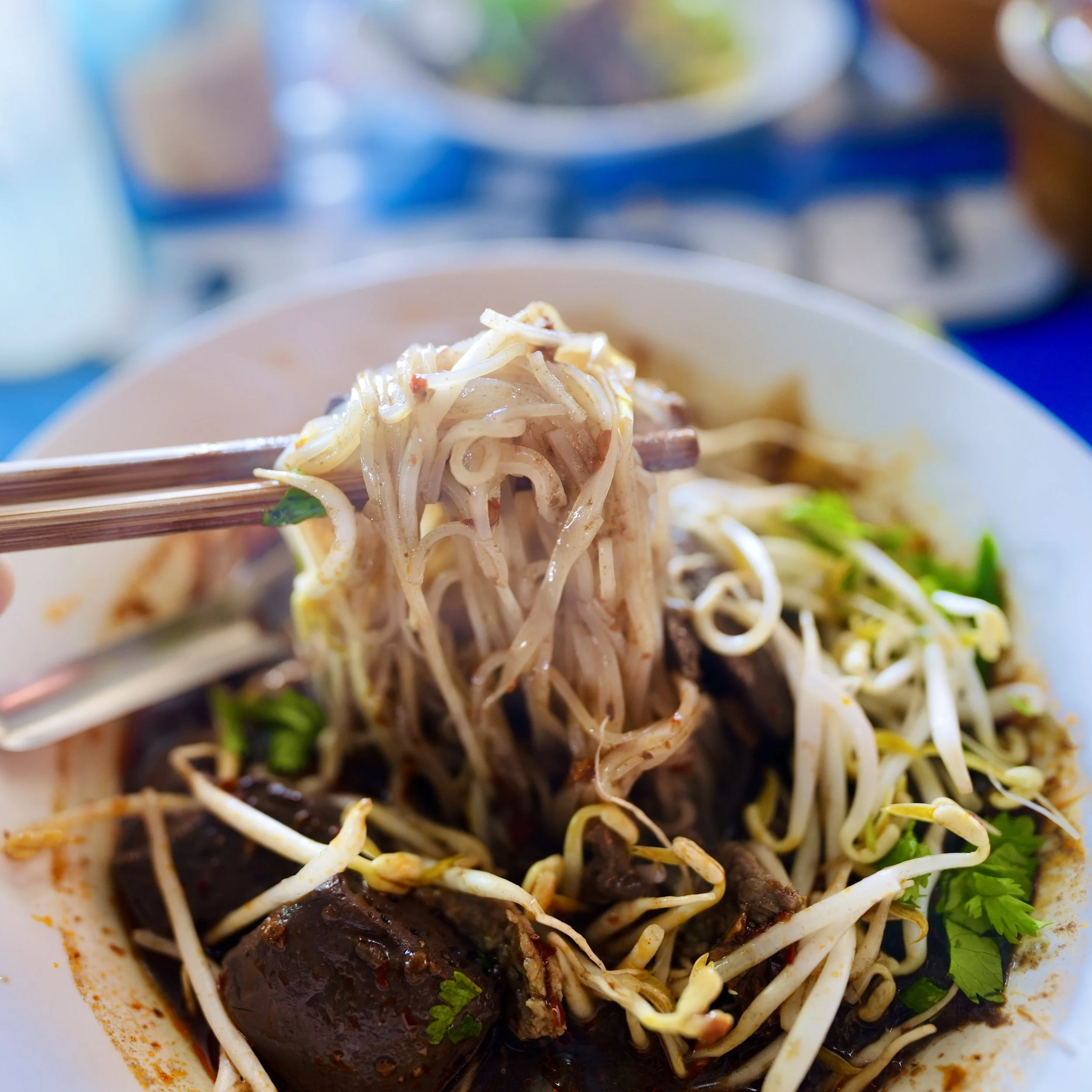
Rice noodles submerged beneath the broth, pulling in spice, acidity, and richness with every bite
This bowl didn’t try to impress. It demanded attention instead. Sour, savory, slightly metallic — unapologetically rich. The spice wasn’t there for impact; it was there for balance.
At roughly 40 baht (≈ $1.15 USD), it’s food meant to be eaten often, not documented once.
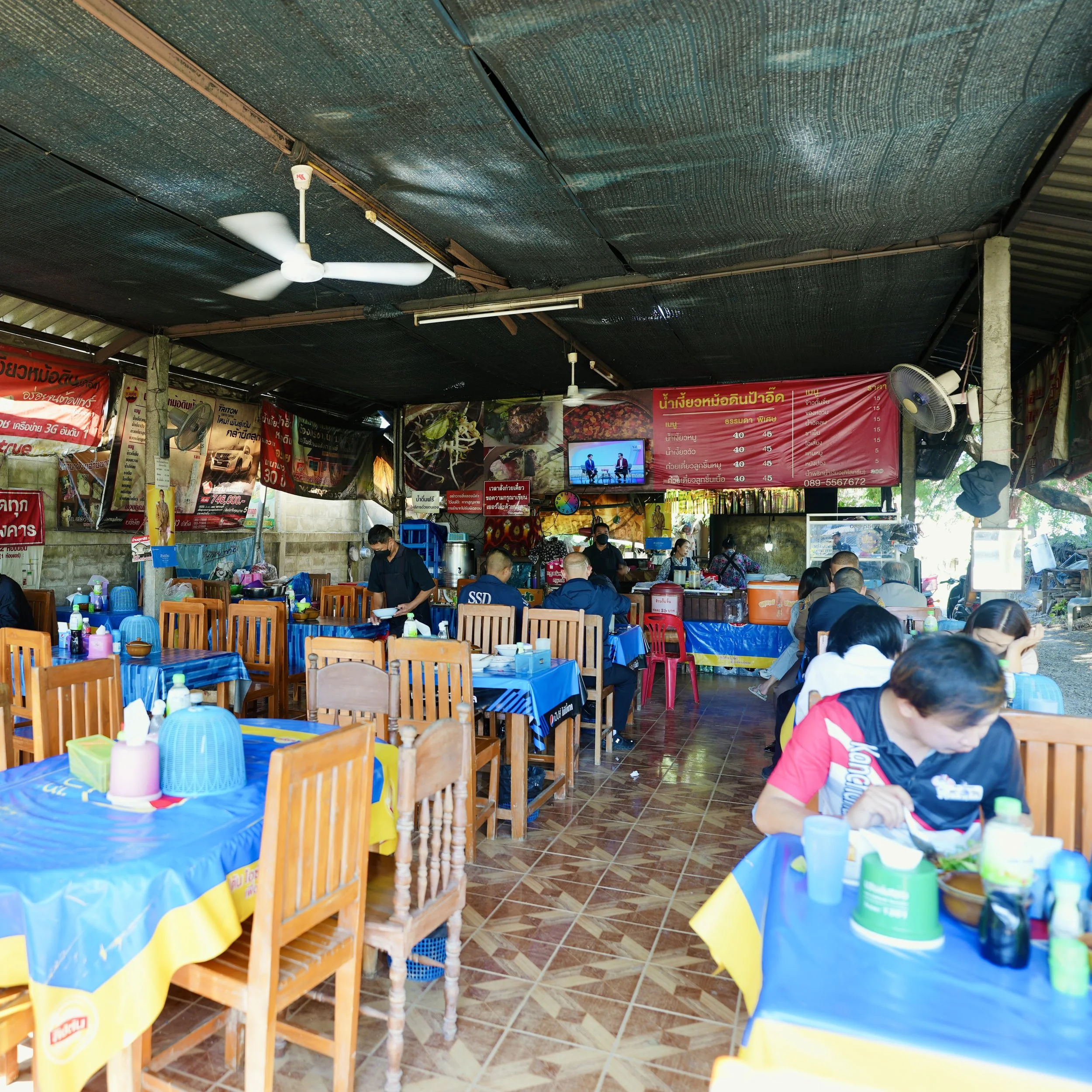
Fans turning slowly overhead. Conversations low. Lunch unfolding without ceremony
Places like this don’t rush turnover. People eat, talk, sit. In a country where nearly 50% of daily meals are eaten outside the home, this kind of restaurant feels less like dining out and more like checking in.
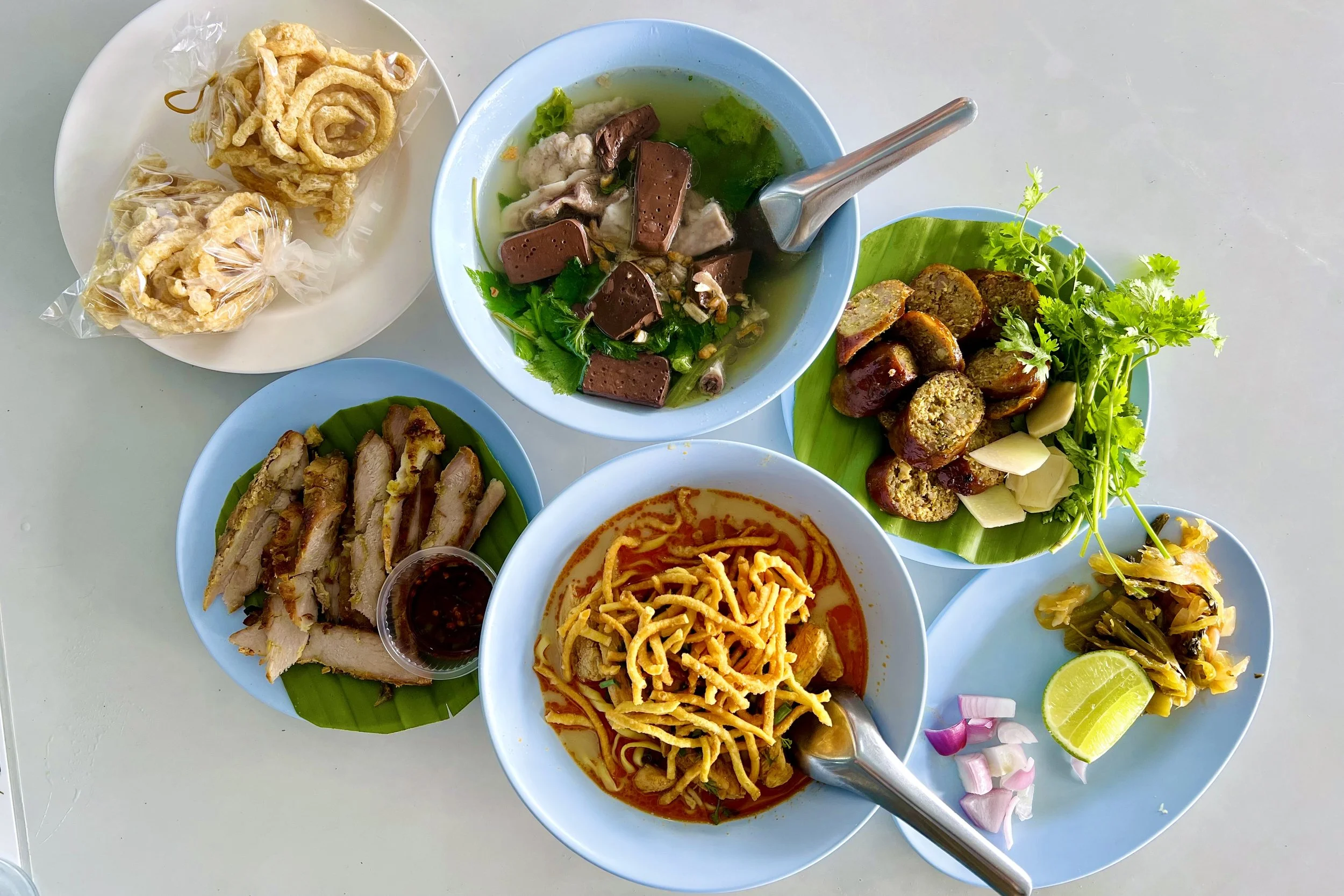
A northern Thai table — khao soi at the center, flanked by sai ua sausage and sliced roast pork
If nam ngiao felt like initiation, khao soi felt like familiarity — but here, it never arrived alone.
At ร้านพอใจ ข้าวซอยไก่, the curry noodle bowl shared the table with two quiet anchors of northern Thai cuisine: sai ua, the region’s signature herbal sausage, and thinly sliced roast pork, served simply with spicy sauce.
The khao soi itself arrived as expected — golden curry broth softened with coconut milk, soft egg noodles below, a small crown of crispy noodles on top. The chicken was braised until it gave up easily, absorbing the broth rather than sitting beside it.
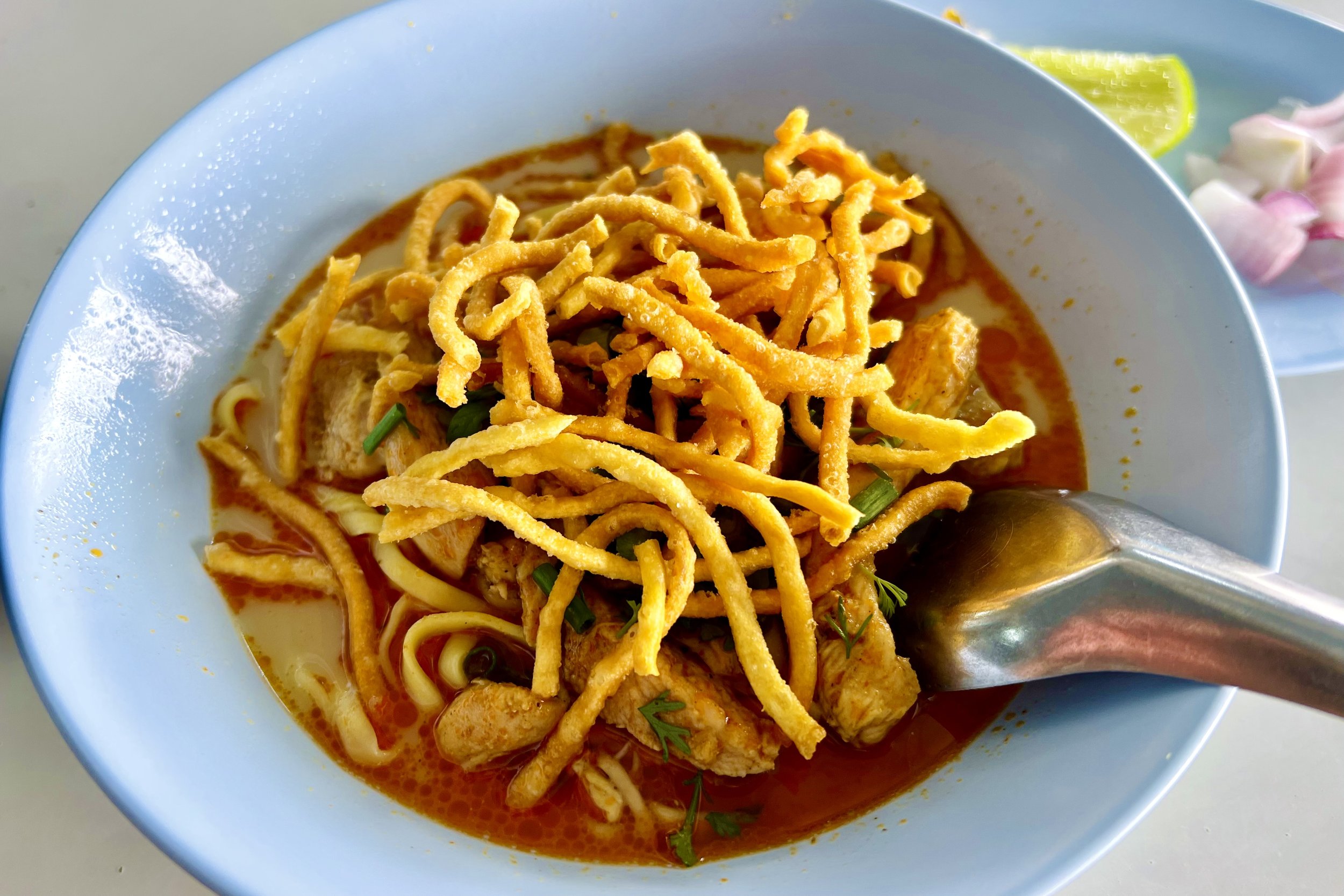
Golden curry broth and soft egg noodles — rich, familiar, and balanced
But the meal expanded beyond the bowl.
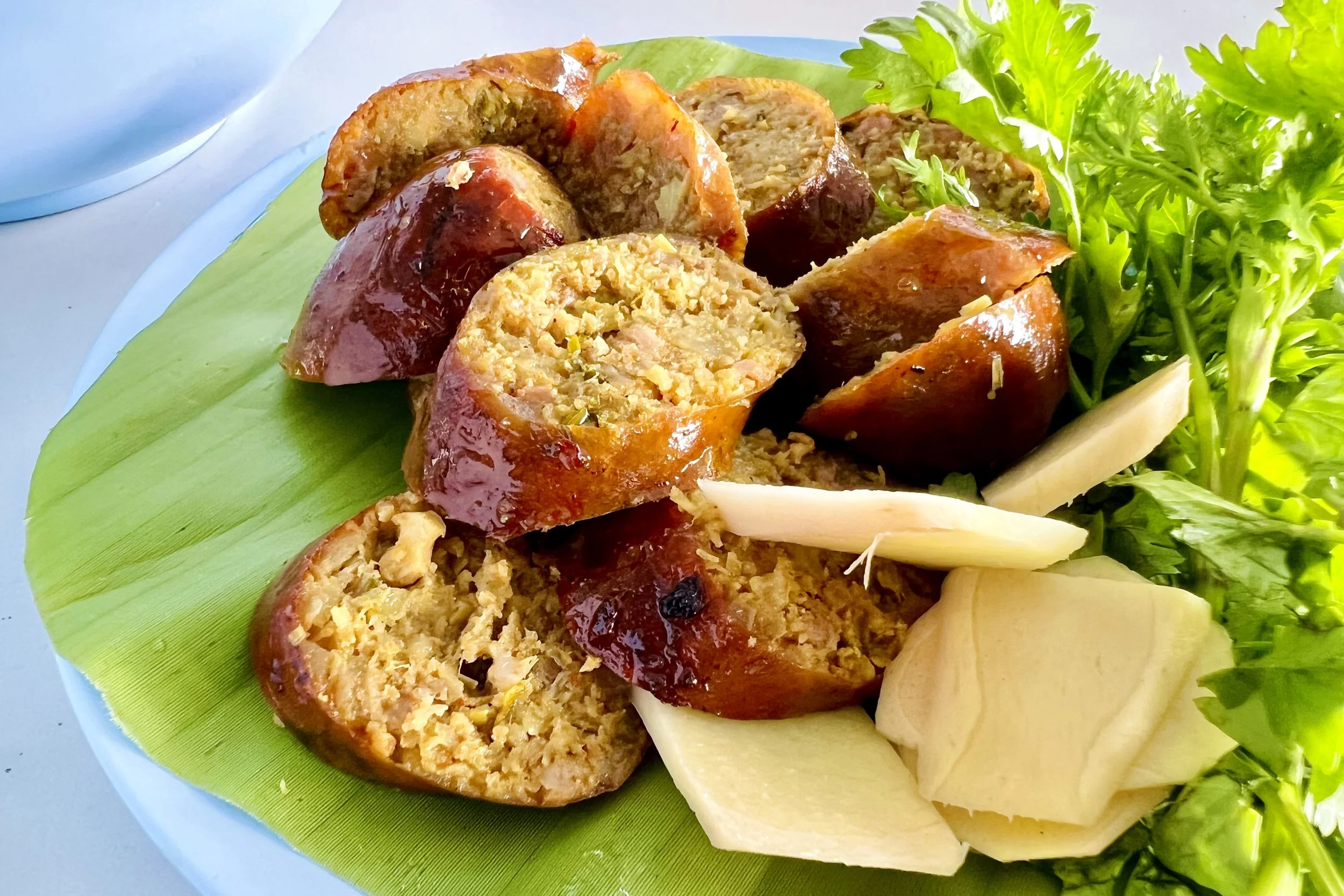
Sai ua — northern Thai sausage, fragrant with lemongrass, kaffir lime, and chili
The sai ua was dense and aromatic, packed with lemongrass, kaffir lime leaf, galangal, and chili. Grilled until lightly blistered, it carried a heat that built slowly, perfumed rather than sharp. This sausage is deeply tied to the Lanna region and remains one of northern Thailand’s most recognizable flavors.
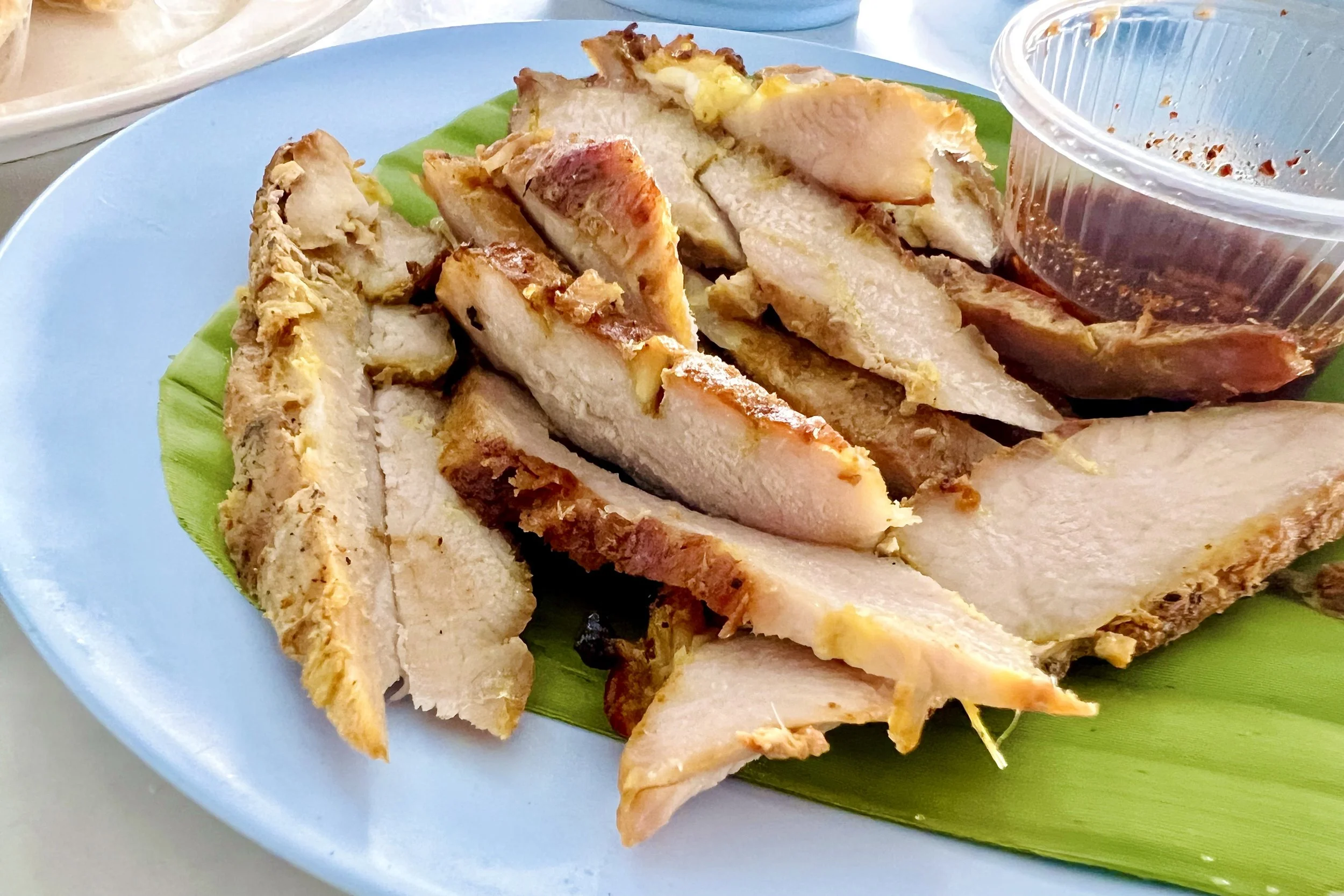
Beside it, the sliced roast pork was understated — lightly seasoned, fatty at the edges, crisp where it mattered. It didn’t compete with the curry or the sausage; it grounded them.
Meals like this explain how northern Thai food is meant to be eaten: not as a single hero dish, but as a conversation between flavors. Curry beside grilled meat. Richness offset by herbs. Heat balanced with restraint.
At roughly 50–60 baht per item, this kind of table remains firmly within Chiang Rai’s everyday food economy — food meant for repetition, not special occasions.
During Chiang Rai’s cooler season, when daytime temperatures hover around 20–25°C (68–77°F), khao soi becomes daily food. The sausage and pork aren’t extras — they’re part of the rhythm.
Nothing here felt calibrated for visitors. Condiments arrived quietly. No one lingered over presentation. People ate, talked, finished, and left.
And that’s exactly what made the meal memorable.
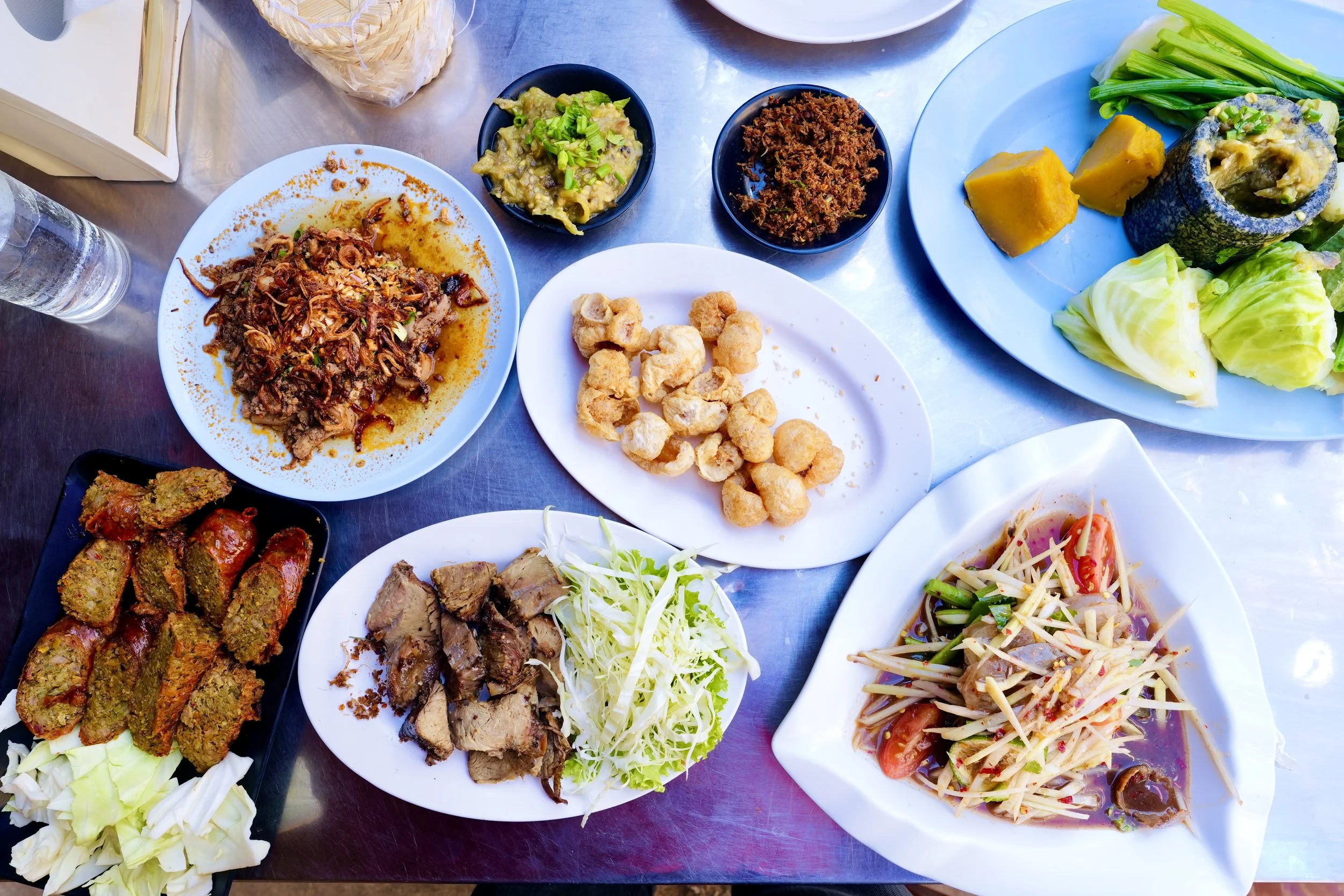
Meals here are built for sharing — no single plate is meant to stand alone
The most expansive meal came at a place designed for groups.
Tables filled quickly. Dishes arrived together. No one waited for everything to be placed before eating.
This was northern-style larb — darker, drier, and more bitter than its Isaan cousin. Minced meat tossed with toasted rice powder, chilies, herbs, and bile. A dish meant to challenge the palate rather than soothe it.
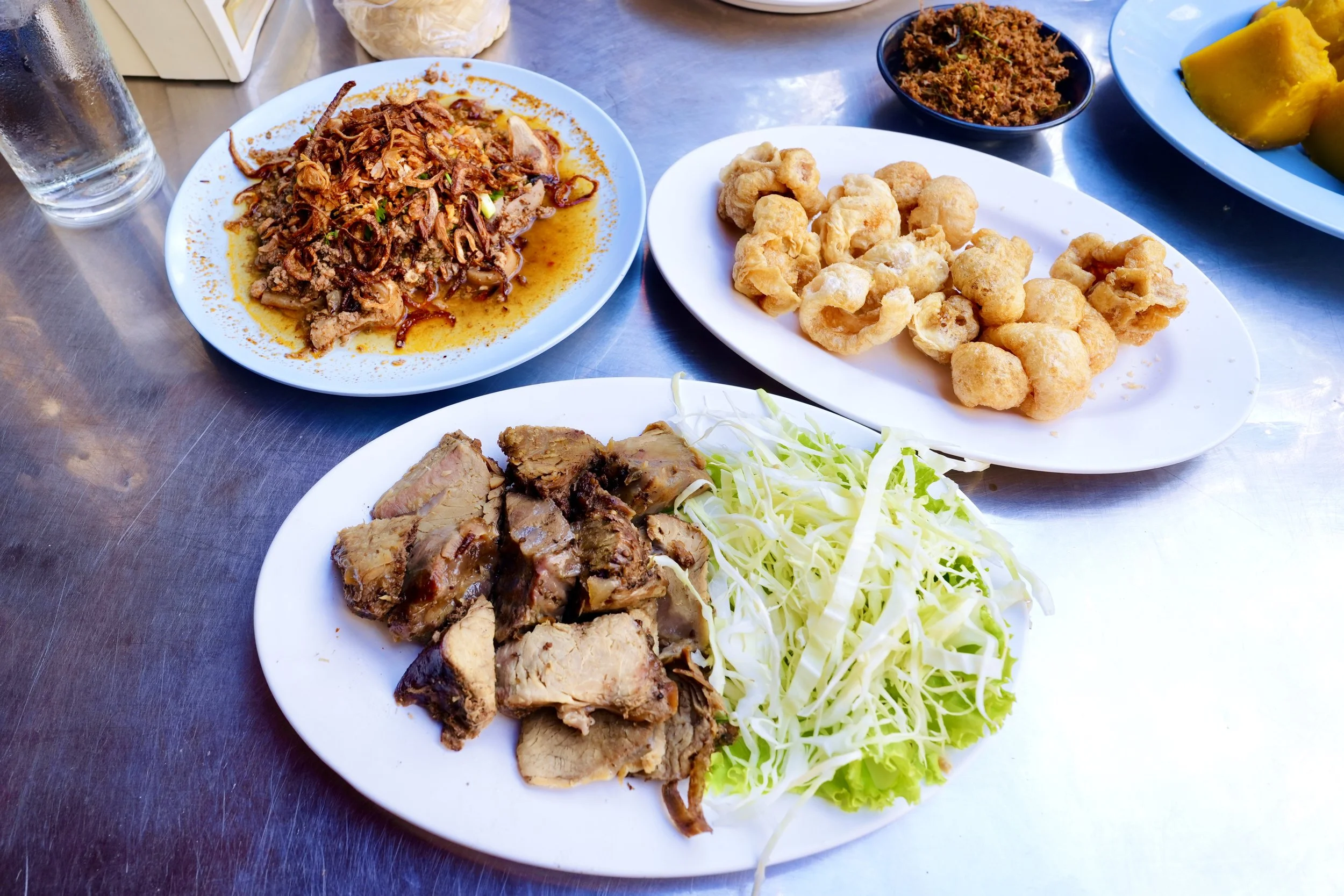
Northern larb — dry, bitter, herbal, and unapologetically bold
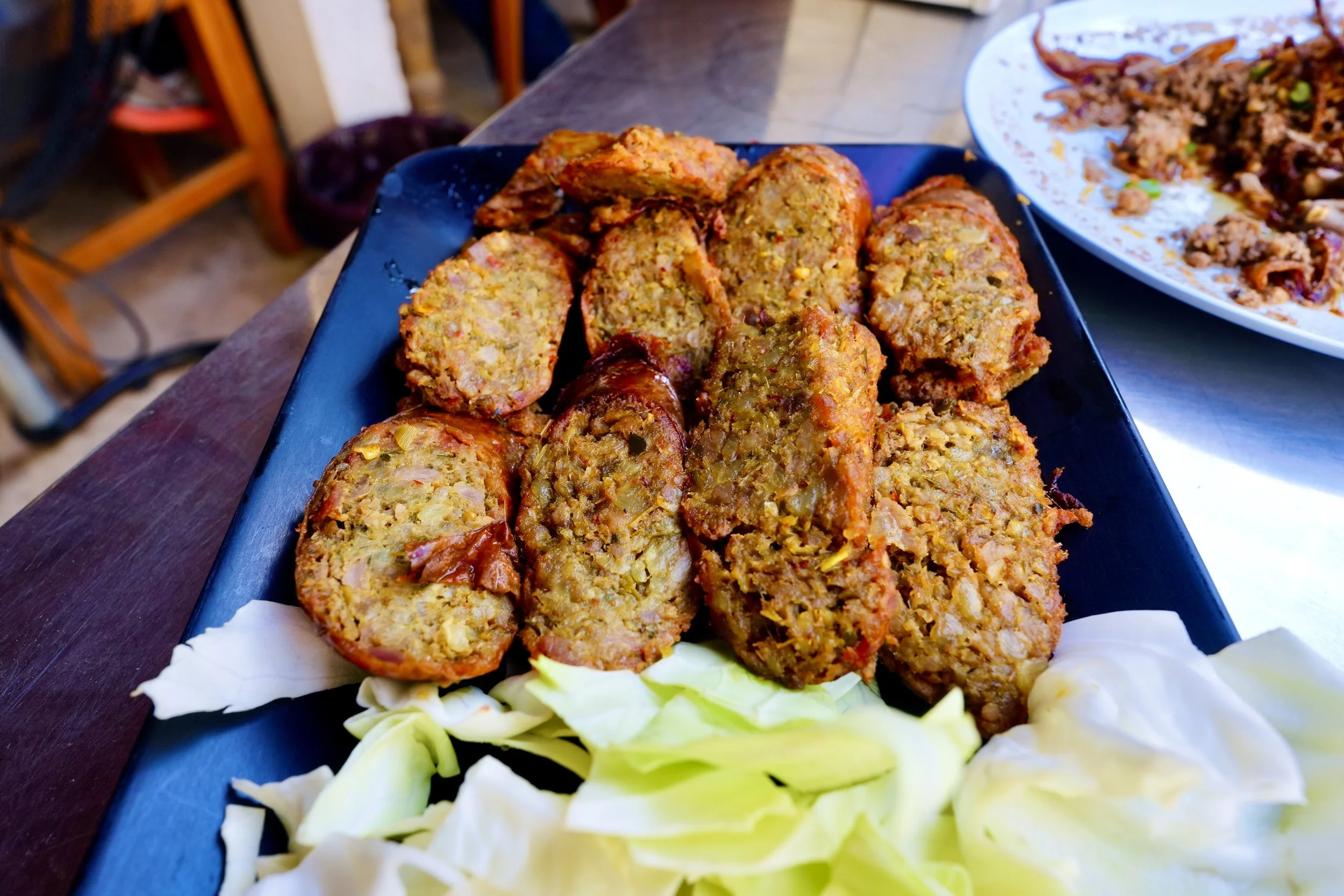
Alongside it came grilled pork sliced thick and smoky, crisp pork rinds for dipping, and coils of sai ua — northern sausage fragrant with lemongrass, kaffir lime leaf, and chili.
There was also nam prik noom, a roasted green chili dip served with blanched vegetables — cabbage, pumpkin, long beans, bitter gourd. One plate explaining northern Thai cuisine better than any description: heat balanced by freshness, bitterness embraced rather than avoided.
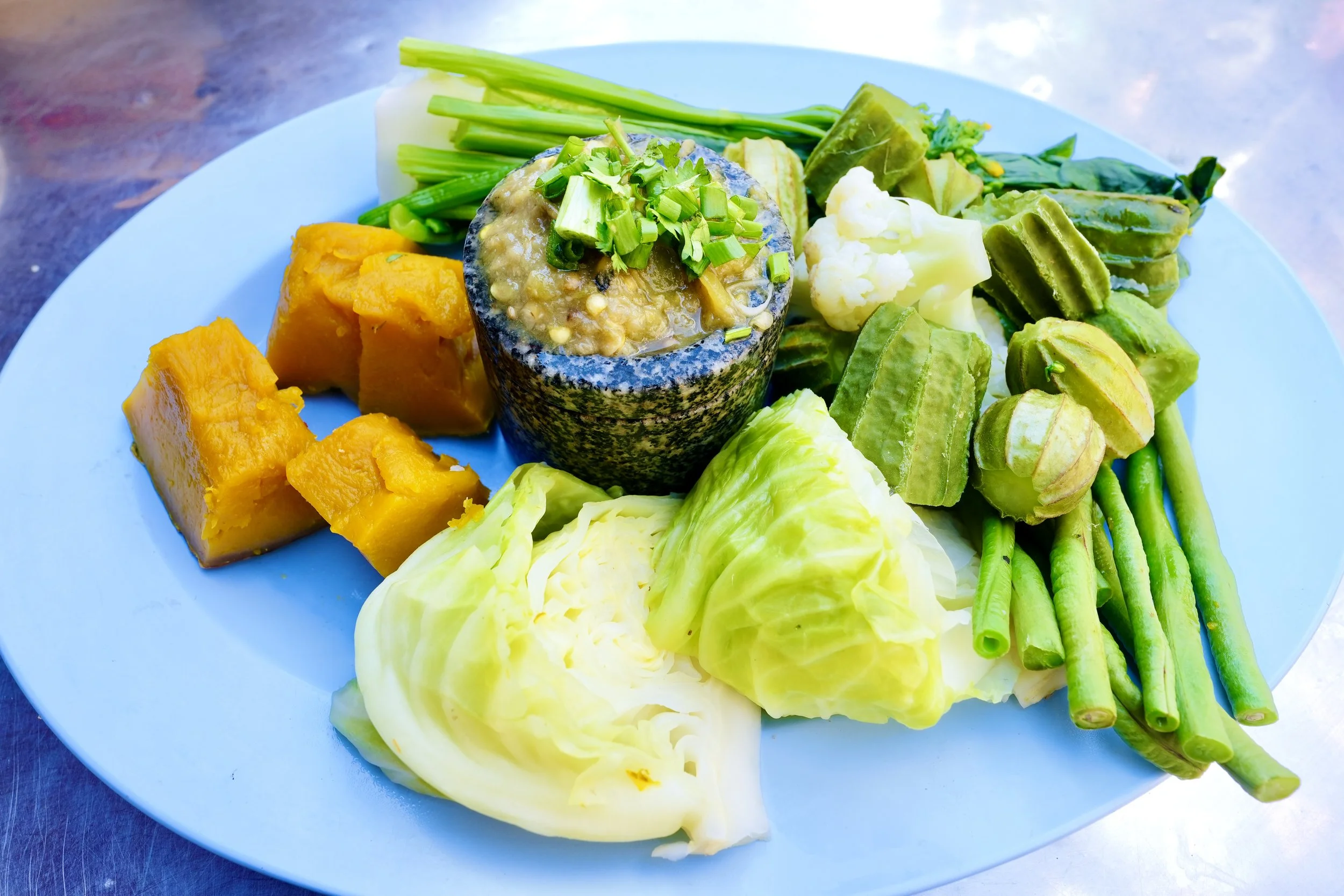
Nam prik noom with seasonal vegetables — balance through contrast, not restraint
Statistically, Chiang Rai remains one of Thailand’s more affordable food cities. A meal like this — multiple shared dishes — still lands comfortably below 200 baht per person, even when ordering generously.
But the value wasn’t financial. It was social.
People leaned in. Plates emptied unevenly. Conversation moved faster than the food.
None of these meals asked for documentation.
No one waited for photos before eating. Portions were practical. Flavors were assertive. Prices stayed grounded. Chiang Rai’s food culture doesn’t chase novelty — it relies on repetition, recipes refined through daily cooking rather than reinvention.
In a global food landscape increasingly shaped by visibility and trend, Chiang Rai remains refreshingly uninterested.
The meals exist whether you’re there or not. You’re invited to join — not to validate them.
And when you leave, what stays with you isn’t a single dish.
It’s the rhythm of eating itself.
To see more photos & videos from my travels visit the links below
happy traveling,
~Sean
