The Vertical Canvas
Days and Nights in the Alleys of Guanajuato
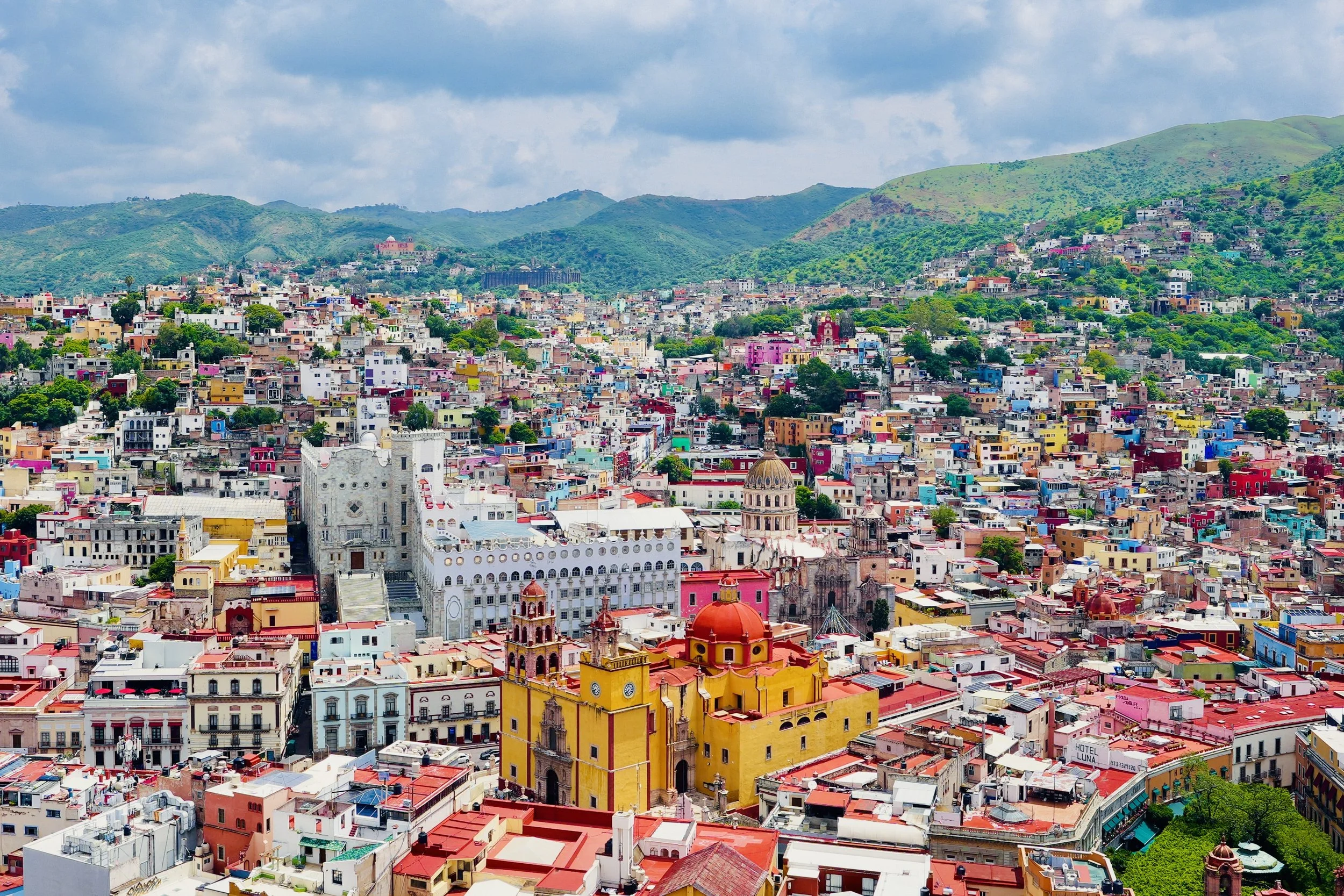
To enter Guanajuato is to step into an urban landscape that completely defies the flat horizon. Built over deep ravines and carved into the sharp folds of a high-altitude valley 2,000 above sea level, this historic silver city completely rejects predictable, linear geometry. Walking here is less of a standard commute and more of an intimate, physical act of exploration. What looks like a solid stone retaining wall from below transforms into a bustling pedestrian pathway as you climb, and what feels like a dark, subterranean traffic tunnel suddenly spits you out into a sun-drenched public square. It is a vertical labyrinth constructed from centuries of mineral wealth, Spanish colonial ambition, and an absolute masterpiece of living color.
I. Heights and Sacred Domes
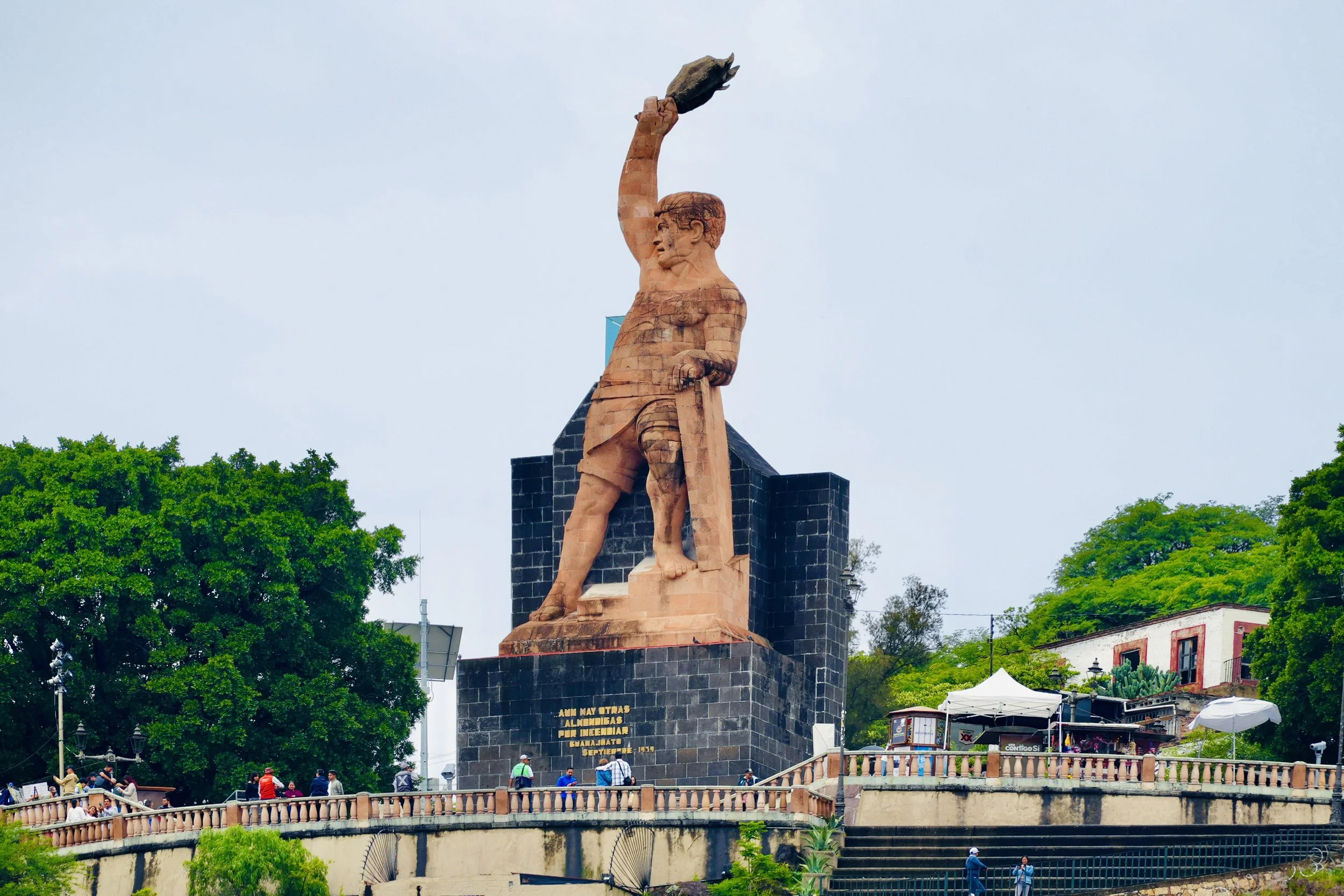
The ultimate way to comprehend the true geography of the valley is to stand at the base of the Monumento al Pípila. From this cliffside vantage point, the city unfolds like a densely patterned textile draped over the hills. A sea of terracotta roofs, winding alleys, and grand stone temples are tightly huddled together between the mountain peaks.
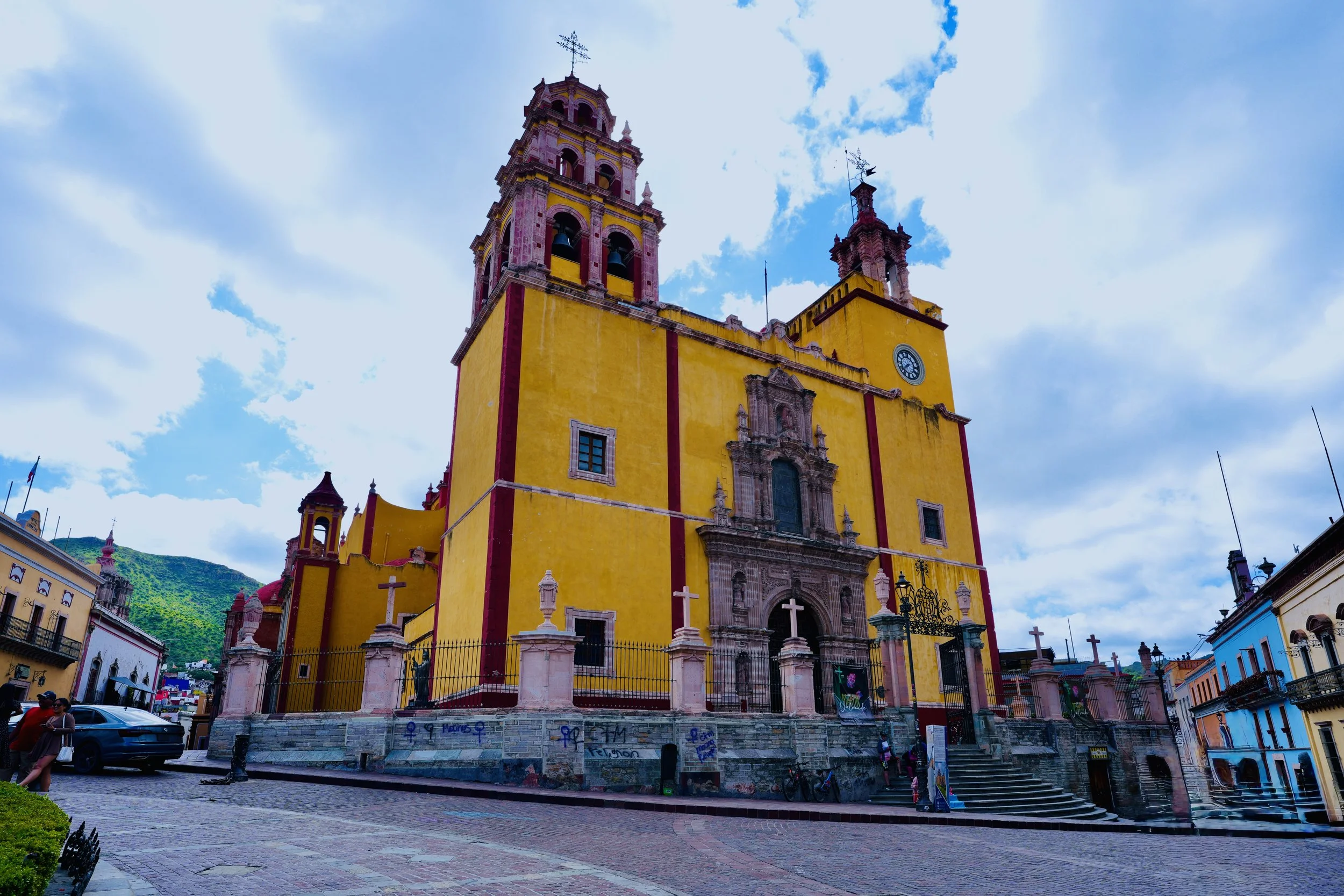
Descending from the monument into the historic core, you are immediately drawn to the vibrant expanse of Plaza de la Paz, where the magnificent Basílica Colegiata de Nuestra Señora de Guanajuato serves as the community's emotional and spiritual anchor. Its bold yellow-and-crimson walls absorb the intense Mexican sun, offering a striking sensory shift when you step off the busy pavement into its cool, quiet nave, where gold-trimmed altars have witnessed over two and a half centuries of quiet devotion.
Just a short walk through the stone corridors brings you face-to-face with the city's intellectual heart.
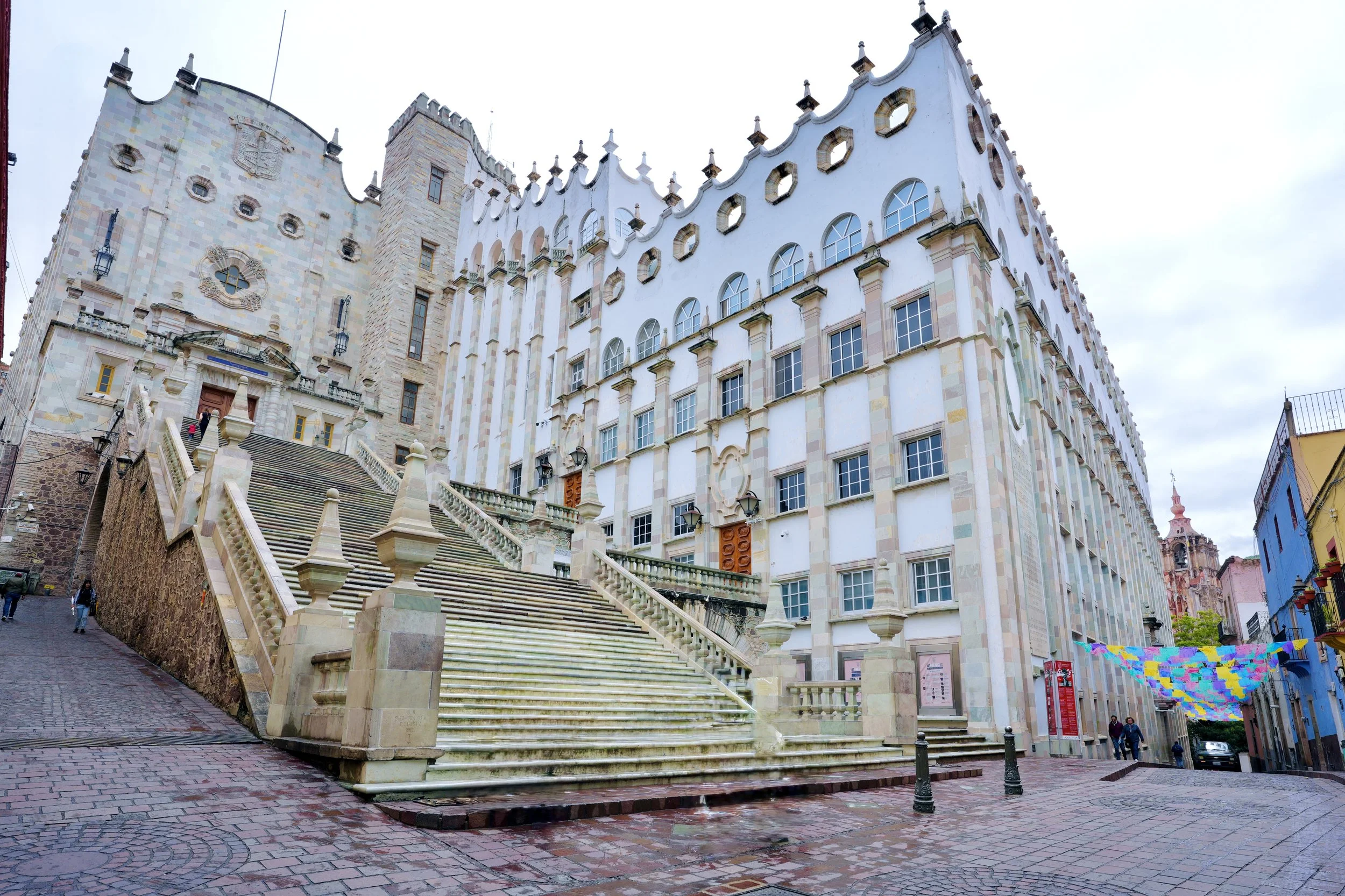
Rising sharply against the mountainside is the stunning, neoclassical white stone staircase of the Universidad de Guanajuato. This landmark infuses the historic town with a brilliant, youthful energy, bridging the gap between centuries of tradition and modern academic life.
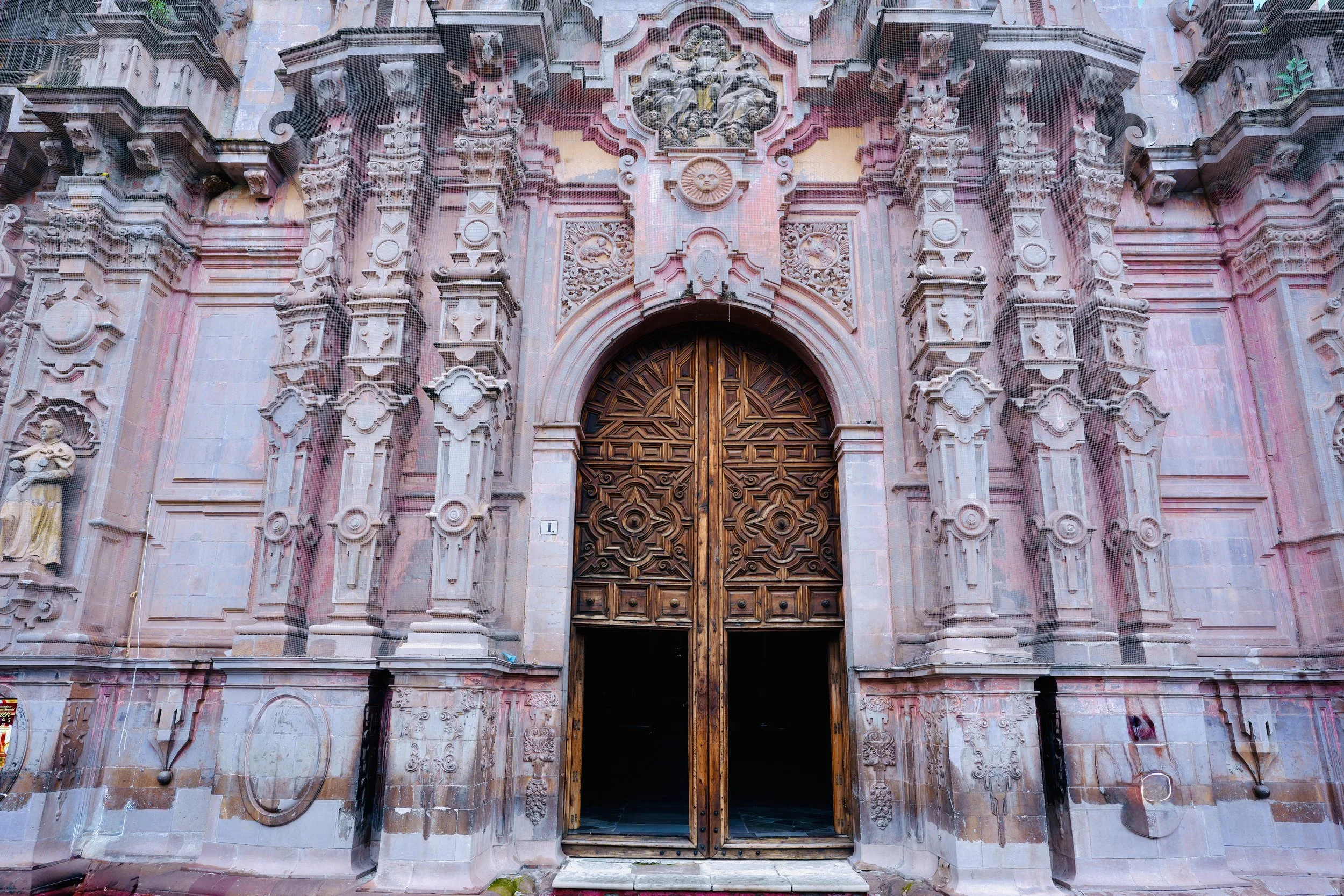
Directly adjacent to the university sits the monumental Templo de la Compañía de Jesús Oratorio de San Felipe Neri, an absolute masterclass in churrigueresque baroque design. Its incredibly detailed, lace-like carved stone facade stands as a physical monument to the astronomical silver wealth of the 18th century, when local mines like La Valenciana produced a staggering 20% of the world’s silver supply.
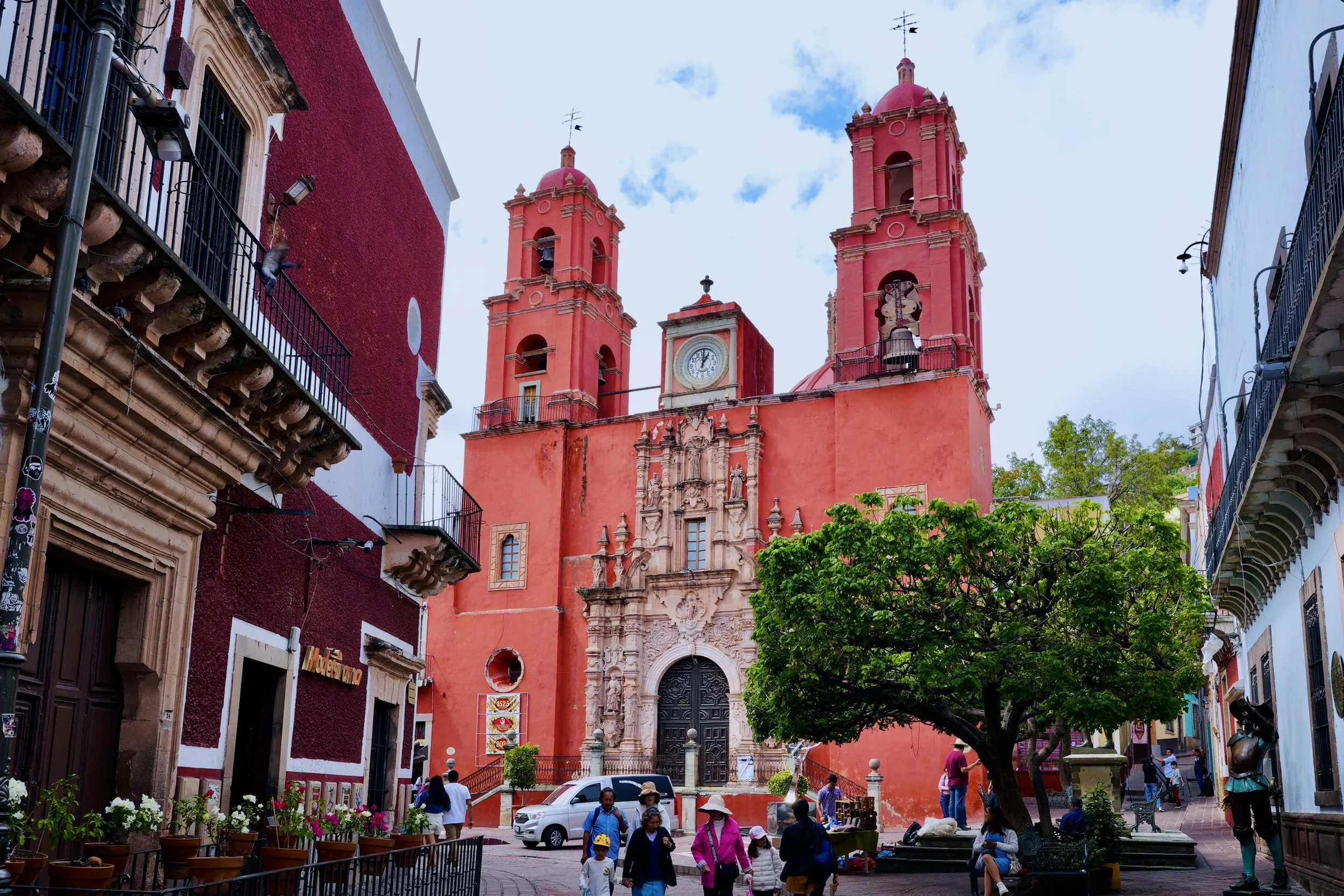
Nearby, the Templo de San Francisco offers another beautiful moment of cultural pause. Less imposing than the grand Compañía but deeply elegant, its refined historic facade and shaded courtyard provide a peaceful sanctuary from the energetic flow of the surrounding streets. Sitting beneath the laurel trees, one can observe how the local residents effortlessly navigate the tight spaces, stone thresholds, and vertical transitions of their ancestral neighborhood.
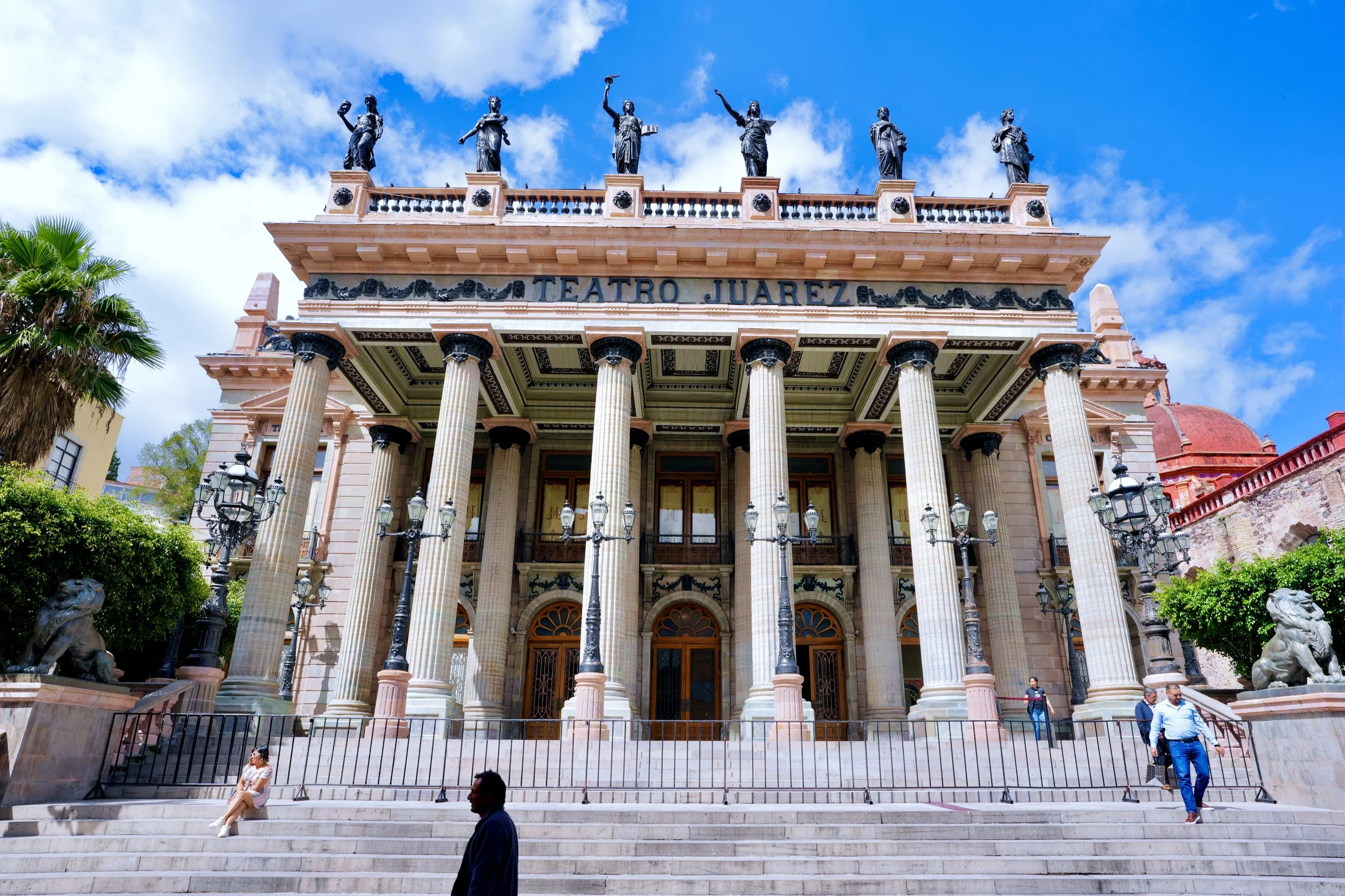
Stepping away from the ecclesiastical monuments, the city reveals its deep reverence for the performing arts at the magnificent Teatro Juárez. Opened in 1903 by President Porfirio Díaz, this grand neoclassical theater commands the center of local civic life. Its facade features massive, fluted columns and a sweeping stone staircase where locals and travelers gather to rest. Atop the roofline, majestic bronze statues of the Greek Muses stand against the moving clouds, looking down over the bustling promenade. Beneath the portico, intricate, vibrant painted patterns line the ceiling, showcasing a spectacular meeting of European architectural elegance and traditional Mexican craftsmanship that cements Guanajuato’s reputation as a global cultural stage.
II. Labyrinths of the Upper Alleys and Sanctuaries
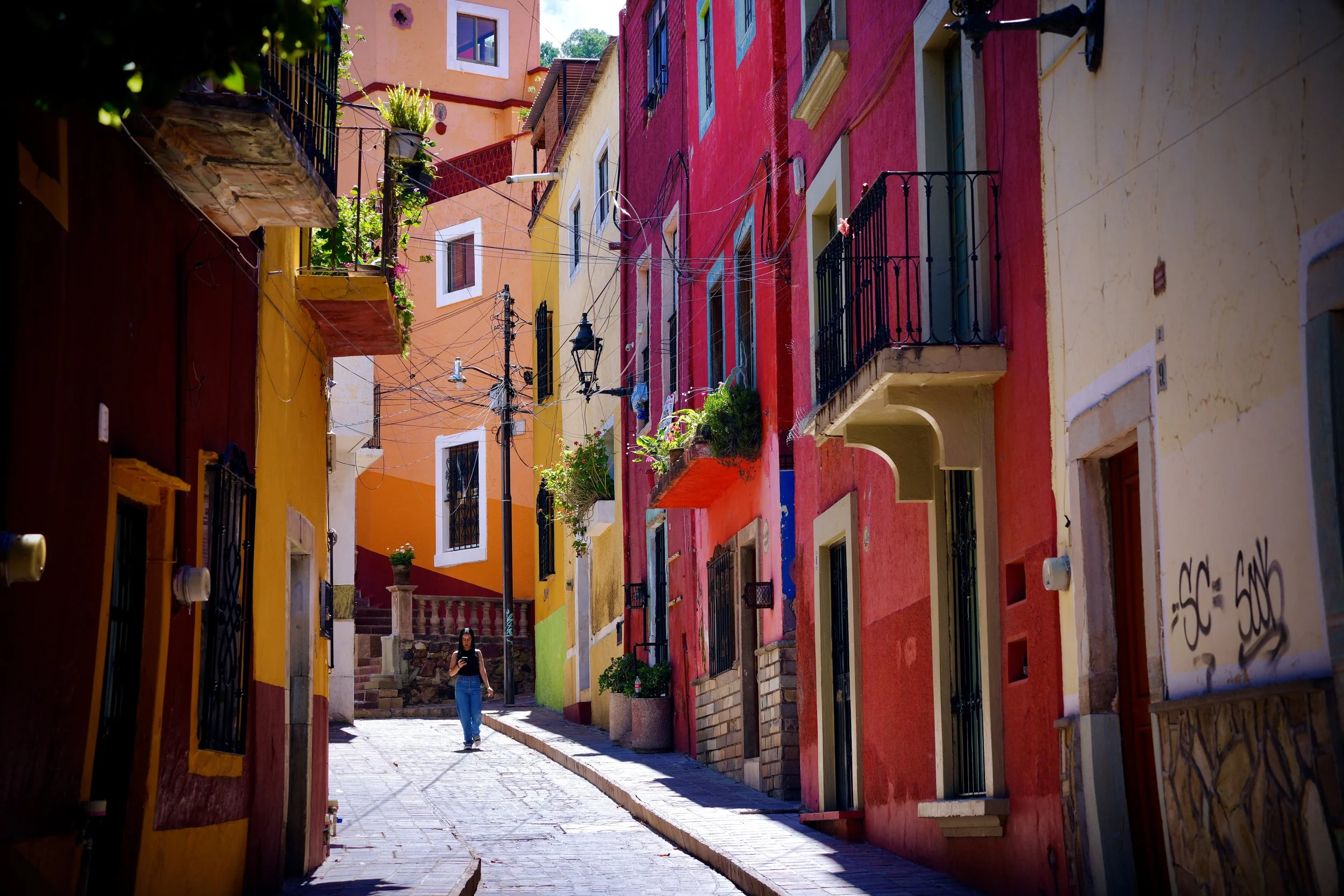
The true soul of the city thrives far away from the grand civic plazas, deep within the callejones—the narrow, gravity-defying alleyways that climb steeply up the mountainsides into the upper barrios. To navigate them is to experience an intimate, high-walled world where homes are stacked tightly on top of one another.
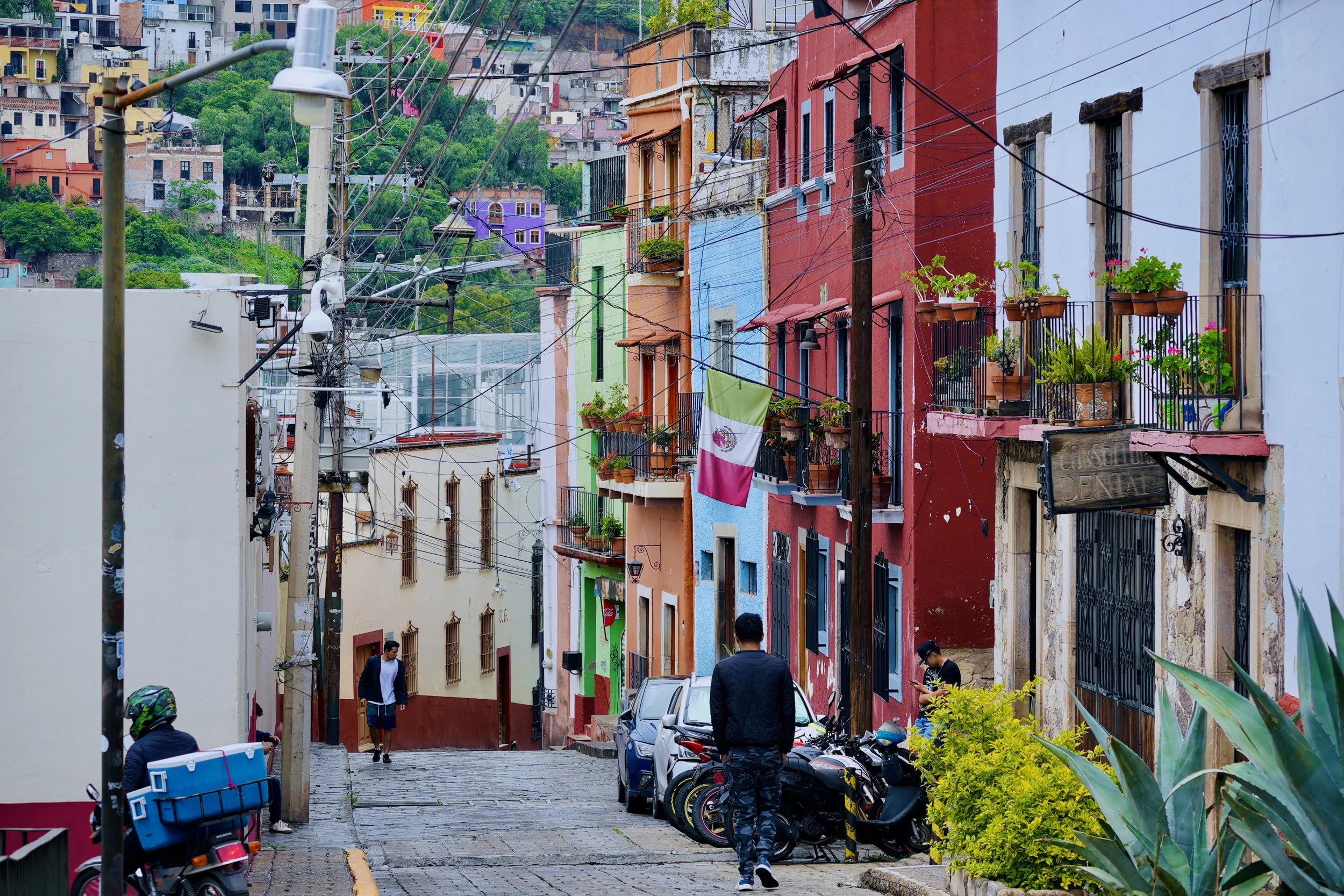
As you make the vertical climb, the cobblestones slant sharply beneath your feet, and overhead, a complex web of utility wires cuts through the sky like lines of sheet music. The color choices here are brilliantly unapologetic; because the alleys are so tight, the intense sun striking a hot pink facade reflects a warm, glowing purple twilight onto the orange stucco across the path, turning the simple act of walking into a moving visual exhibit.
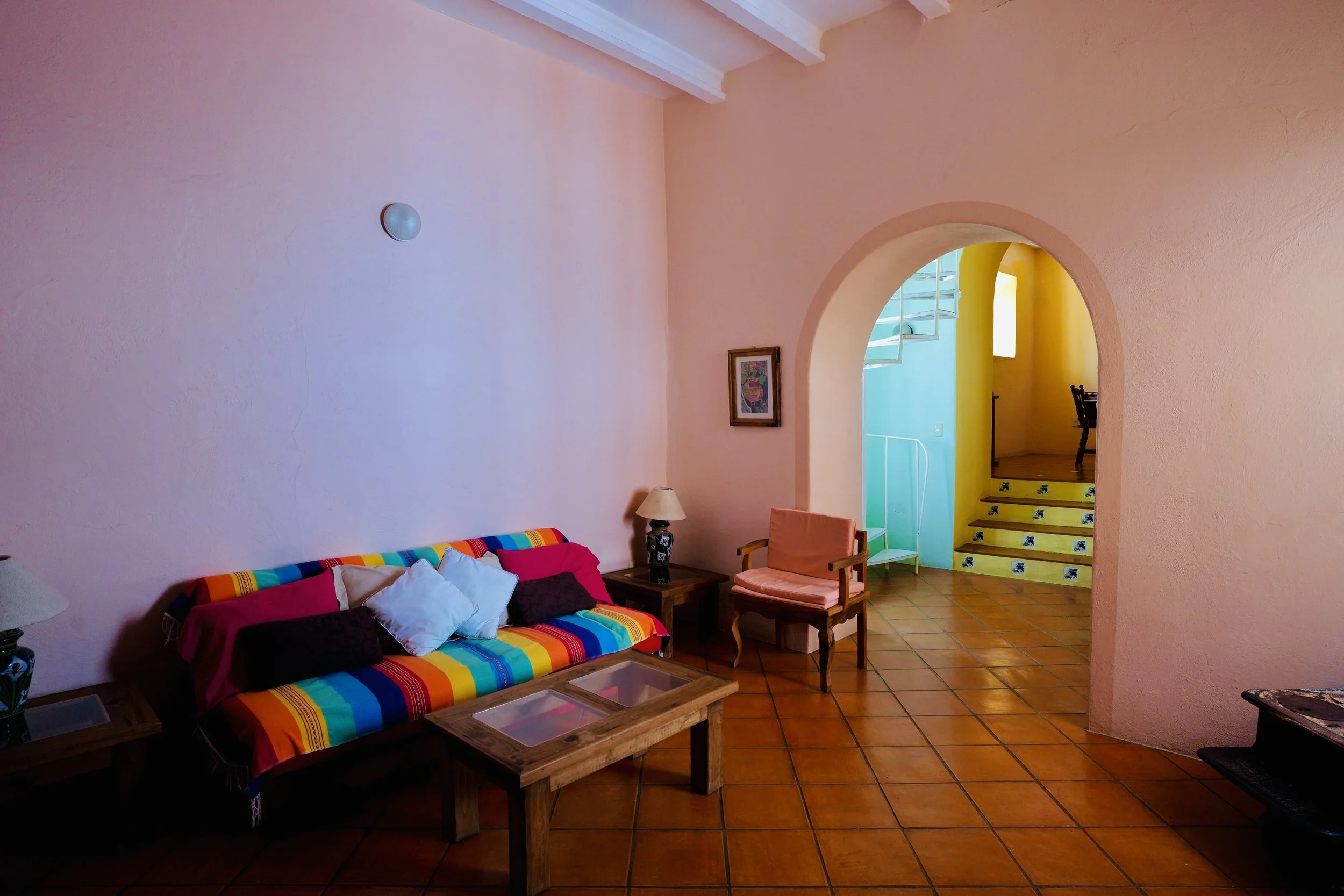
To truly understand the rhythm of local life, one has to step off the cobblestones and into a traditional Guanajuato home. These residences are masters of hidden depth, utilizing split-level floors and internal courtyards to maximize space on the steep terrain. Inside, the interiors play beautifully with the city's love for unexpected color blocking, balancing cool mint greens against warm, sun-drenched oranges and soft pinks. Terracotta floor tiles anchor the rooms, while heavy wooden dining tables are dressed in multi-colored woven textile runners.
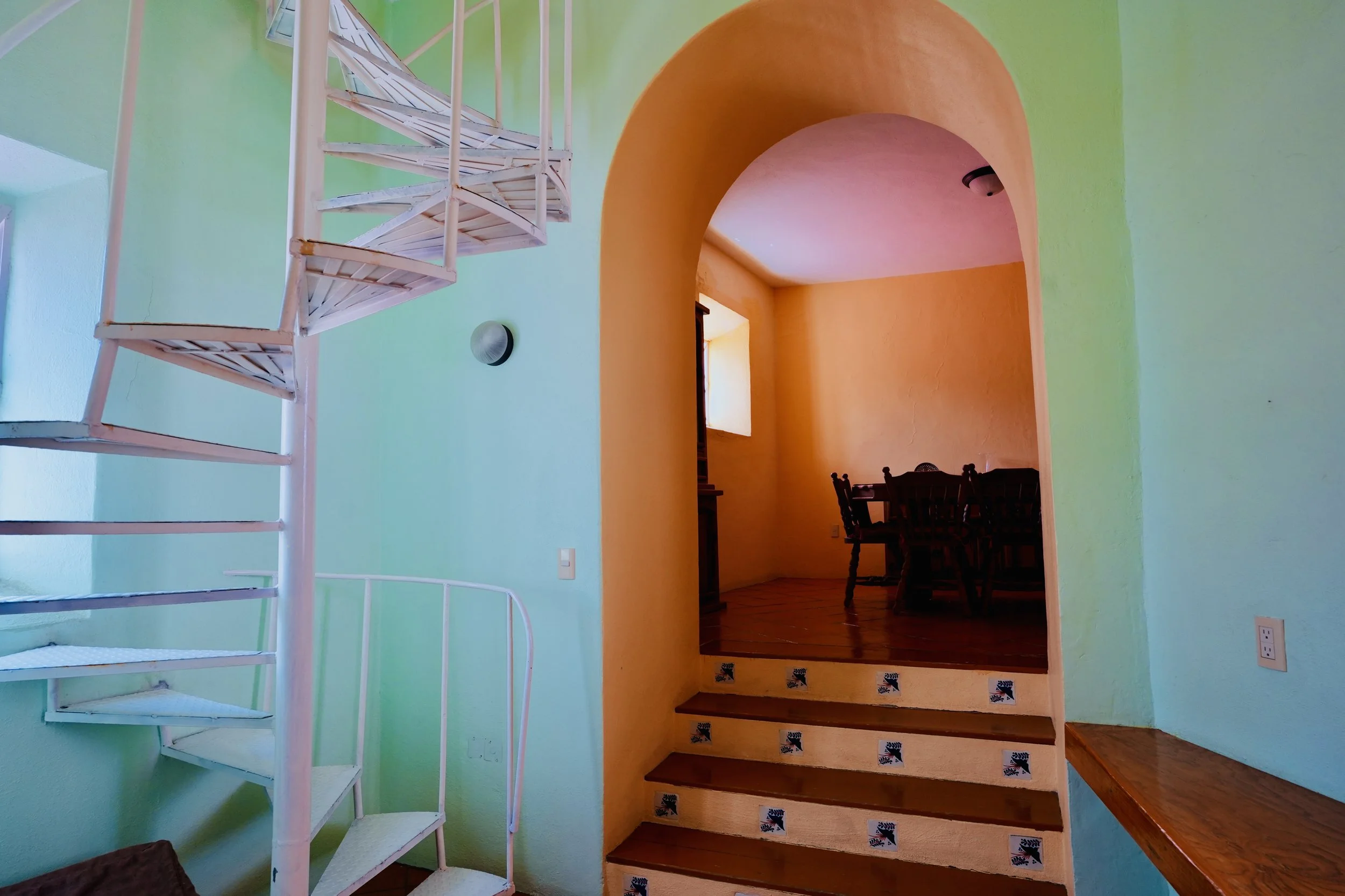
Looking through a series of wide, soft internal archways reveals the home's vertical layout, often centering around a sculptural, white iron spiral staircase that loops upward toward a rustic bóveda (exposed brick barrel-vault) kitchen ceiling.
III. Fueling the Line: Markets and Traditional Plates
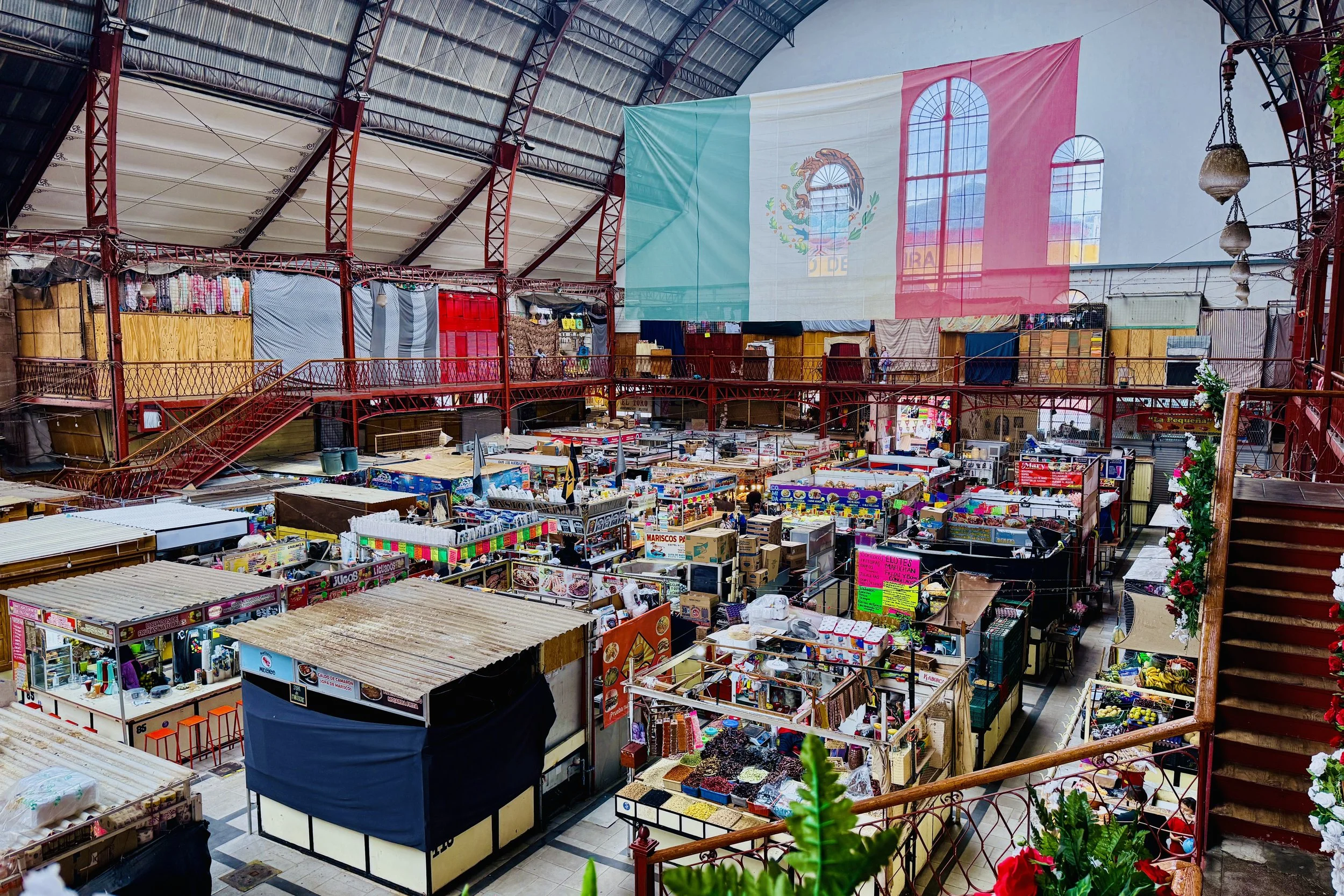
A morning spent exploring the high-altitude steps requires a proper culinary anchor, which leads naturally to the bustling aisles of the historic Mercado Hidalgo. Designed originally as a grand iron train station during the Porfiriato era, this massive, vaulted indoor market functions as the living culinary heart of the city. The air is thick with the aromas of fresh produce, spices, and sizzling grills.
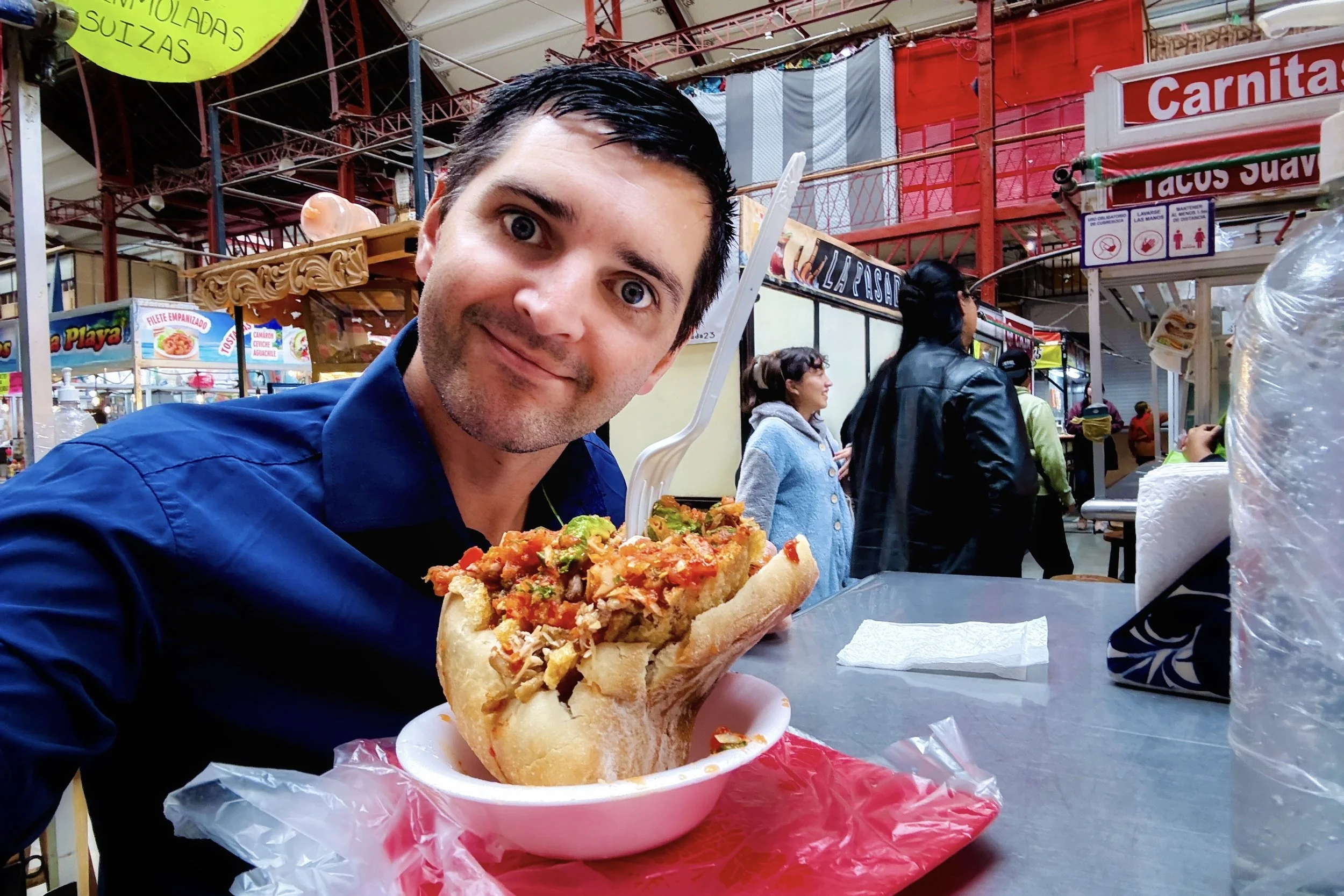
Amidst the lively chatter of vendors, you seek out the ultimate local street food fuel: the legendary guacamaya sandwich. It is a magnificent, textural creation consisting of a crisp bolillo roll stuffed with crunchy pork chicharrón, rich avocado, a squeeze of fresh lime, and a drenching of incredibly hot, vibrant red salsa. Eating one while standing at a busy market counter is a true rite of passage.
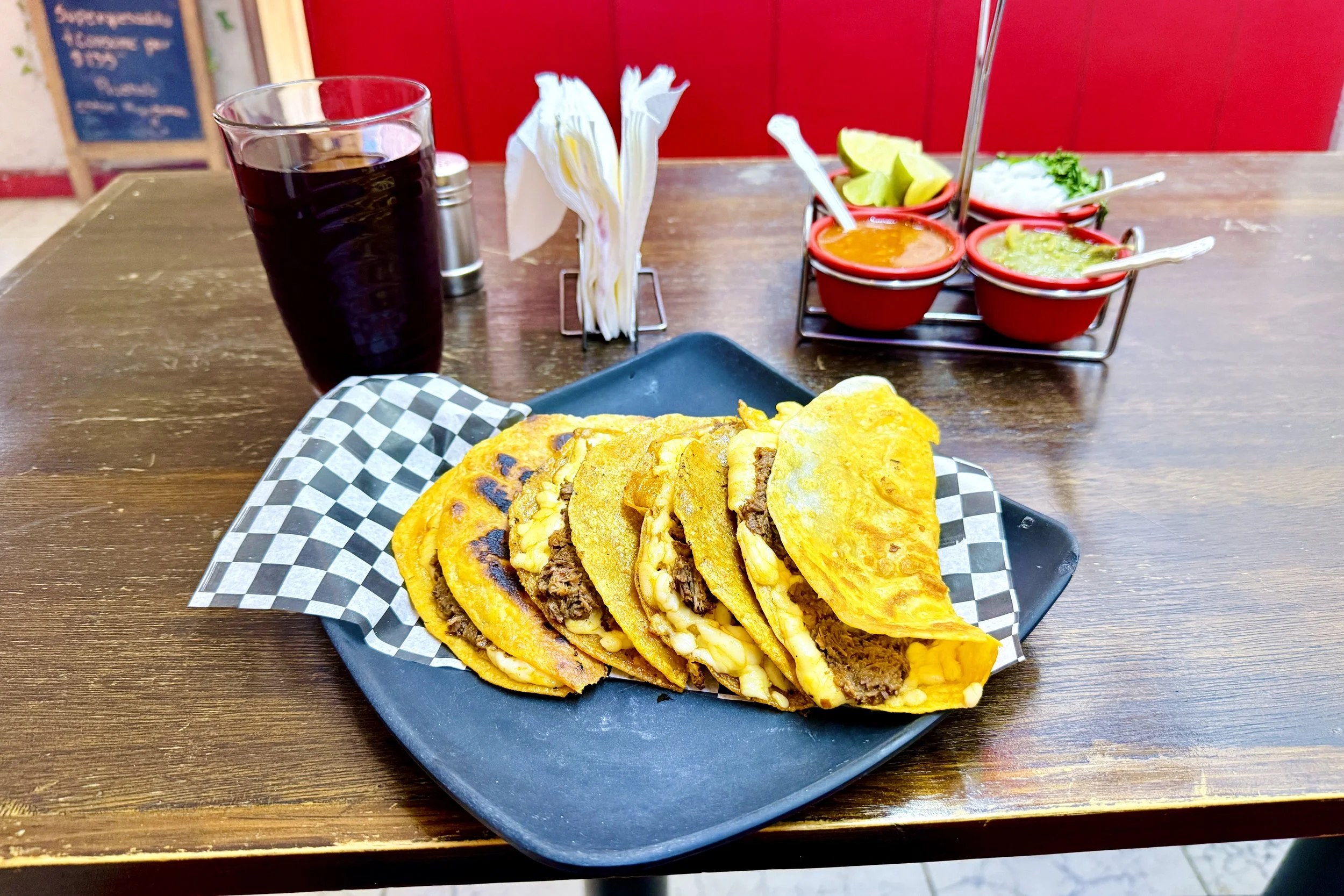
As daylight fades and the city transitions into night, the golden streetlamps illuminate the stone facades, and the food scene shifts toward savory, slow-simmered comfort. Ducking into the lively, modern energy of Birria Club, the focus turns entirely to perfectly crisped birria tacos. Prepared with tender, deeply spiced stewed meat tucked into corn tortillas that have been dipped in fat and seared on a hot flattop, these tacos are served alongside a rich, steaming bowl of savory consommé for dipping. The contrast between the crunchy tortilla, the tender filling, and the deeply spiced broth provides the perfect, high-flavor fuel after an afternoon spent climbing the steep mountain slopes.
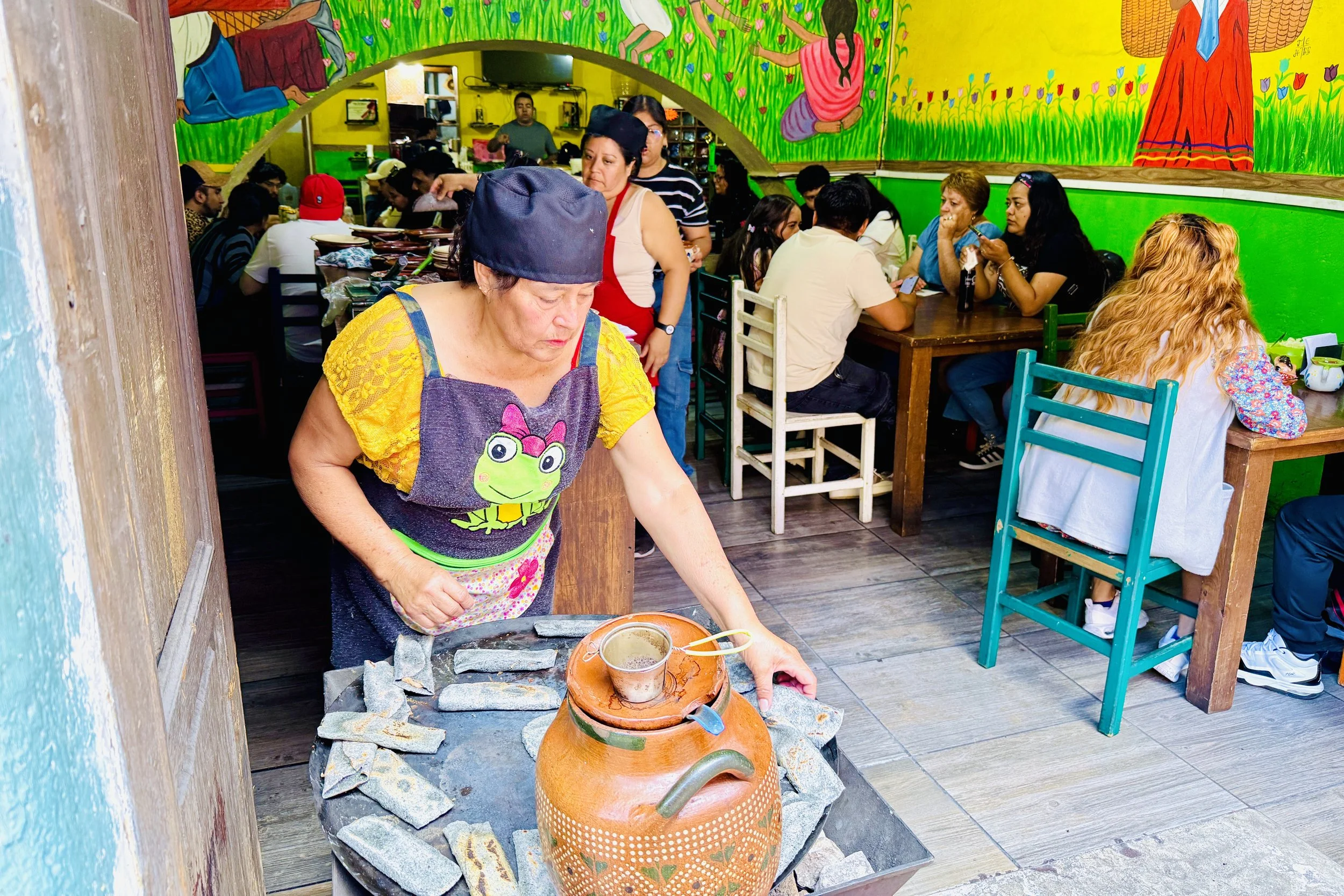
For a deep dive into the city's historic mining heritage, you find yourself at a bright, mural-covered neighborhood staple like An’ca Carmen. Here, the traditional preparation of enchiladas mineras—the hearty meal originally made to sustain the silver miners—is raised to an art form right at the entrance counter. The cooks utilize gorgeous, earthy blue corn (maíz azul) tortillas, folding them expertly on a massive flat metal comal. Sitting right on the heat is a classic Mexican clay pot (olla de barro), steaming hot with the rich, red guajillo chili sauce that gives the dish its signature depth. It is a captivating performance of heat, smoke, and hospitality as plates are piled high with tender tortillas, potatoes, carrots, and cotija cheese.
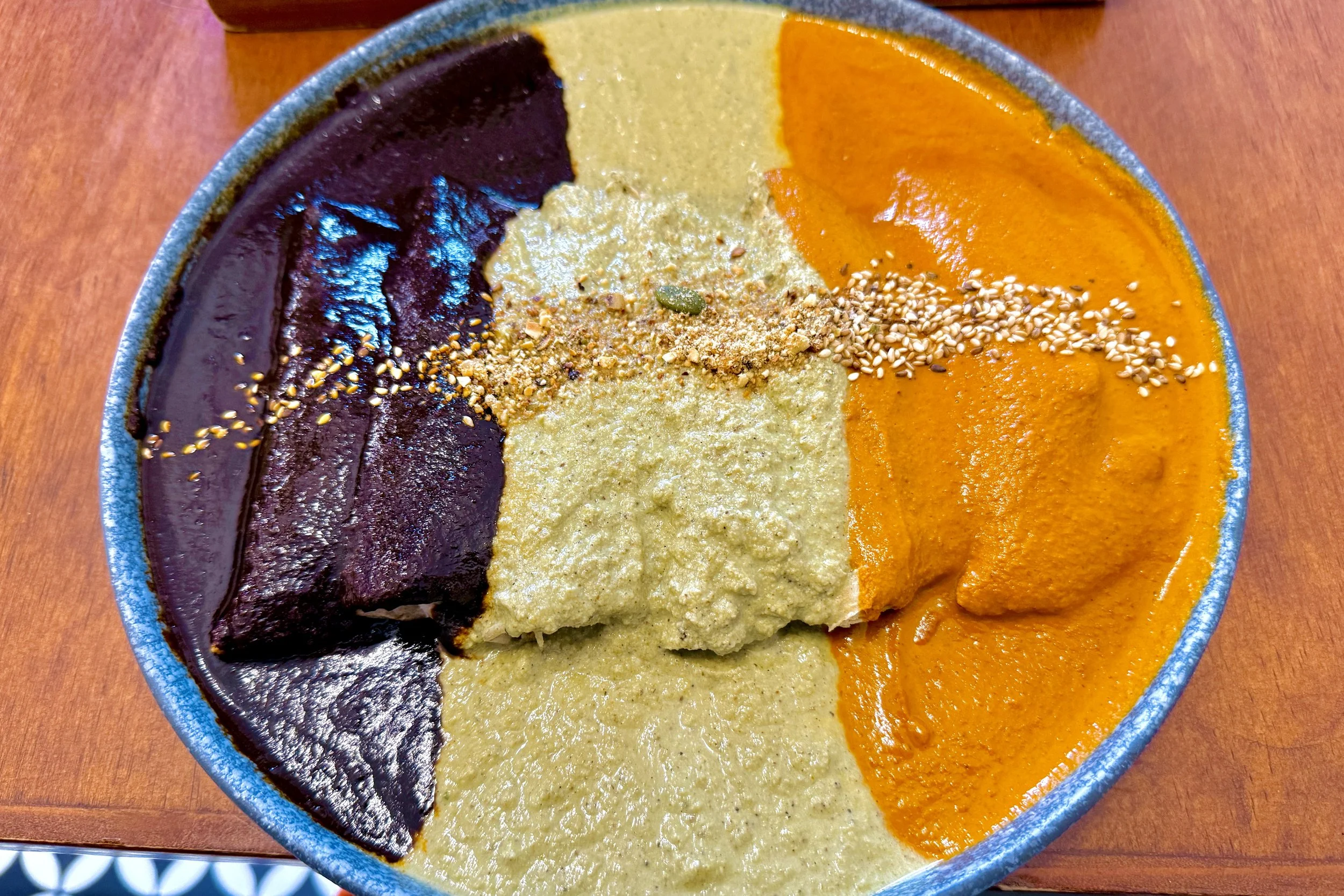
The ultimate celebration of regional culinary craftsmanship comes together at Los Huacales, a kitchen renowned for its dedication to traditional flavors. Here, the standout dish is a stunning plate of three-colored mole enchiladas. Each folded tortilla is draped in a different, meticulously crafted artisan sauce—typically a rich, dark mole poblano, a vibrant green mole verde, and a fiery, warm pipián or red mole. The plate acts as a delicious mirror to the city itself: bold, layered, and steeped in centuries of complex history. Sitting down to slice through the rich sauces on a traditional ceramic plate brings your journey full circle, summarizing the art, the color, and the unforgettable vertical character of Guanajuato into one final, perfect bite.
IV. The Nocturnal Amphitheater
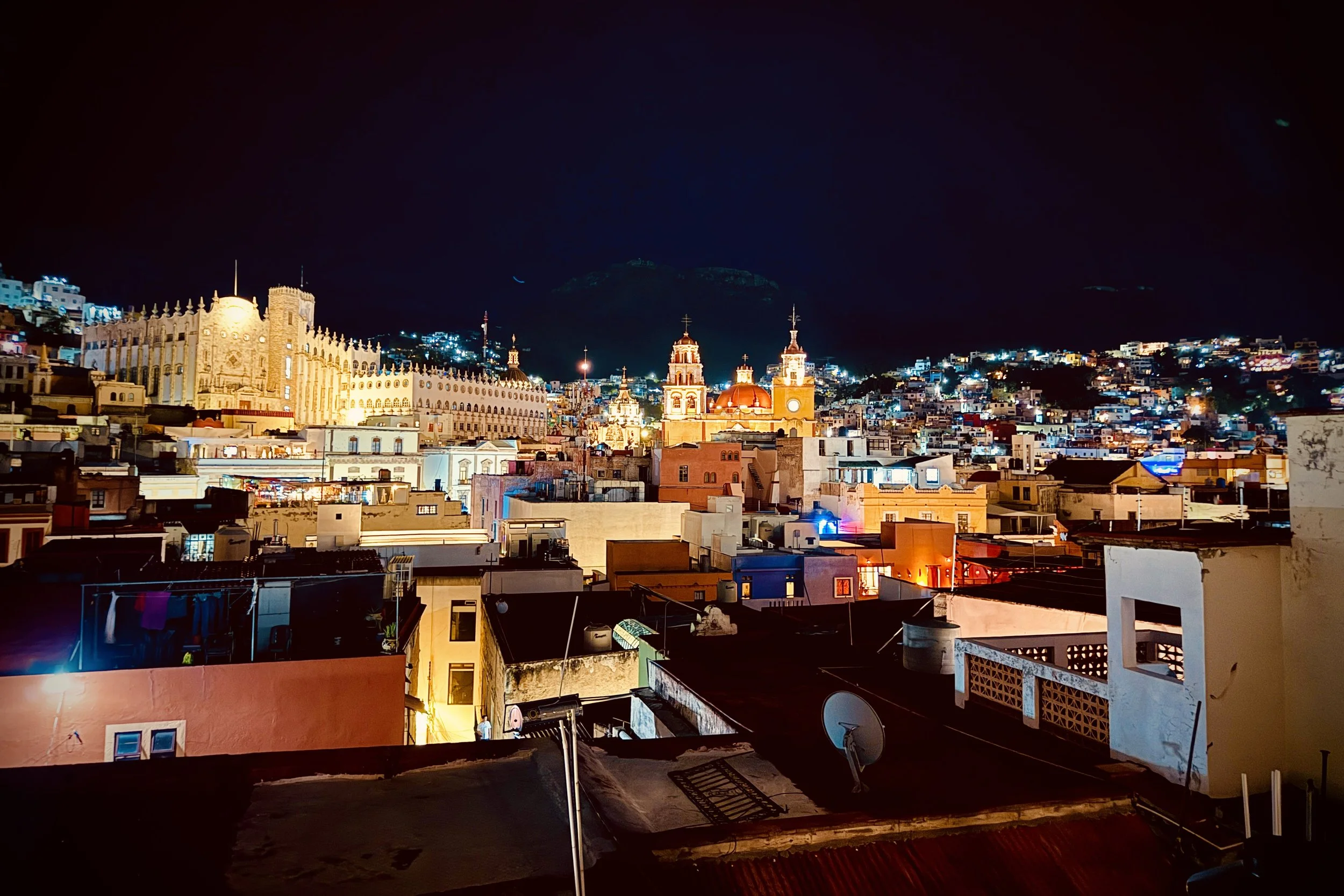
When night finally claims the valley, Guanajuato transforms from a brilliant canvas of daylight stucco into a shimmering, nocturnal amphitheater. Viewed from a quiet balcony high above the streets, the true magic of the city’s geography takes on a second life. The energetic chaos of the day softens as the deep shadows of the surrounding mountains frame a dense grid of golden streetlamps and glowing windows.
Embedded within this sea of illuminated homes, the landmarks stand out like beacons. The soaring white facade of the university glows with an ethereal, crisp light, while the deep yellow and crimson structure of the Basilica radiates a warm, historic amber. Together, they anchor the cityscape, proving that even in the dark, Guanajuato remains completely dedicated to its architectural heritage—a city gracefully suspended between the ancient earth and a starlit sky.
To see more photos & videos from my travels visit the links below
happy traveling,
~Sean
