The Architecture of Sentiment
Puerto Vallarta, A City of Altitudes
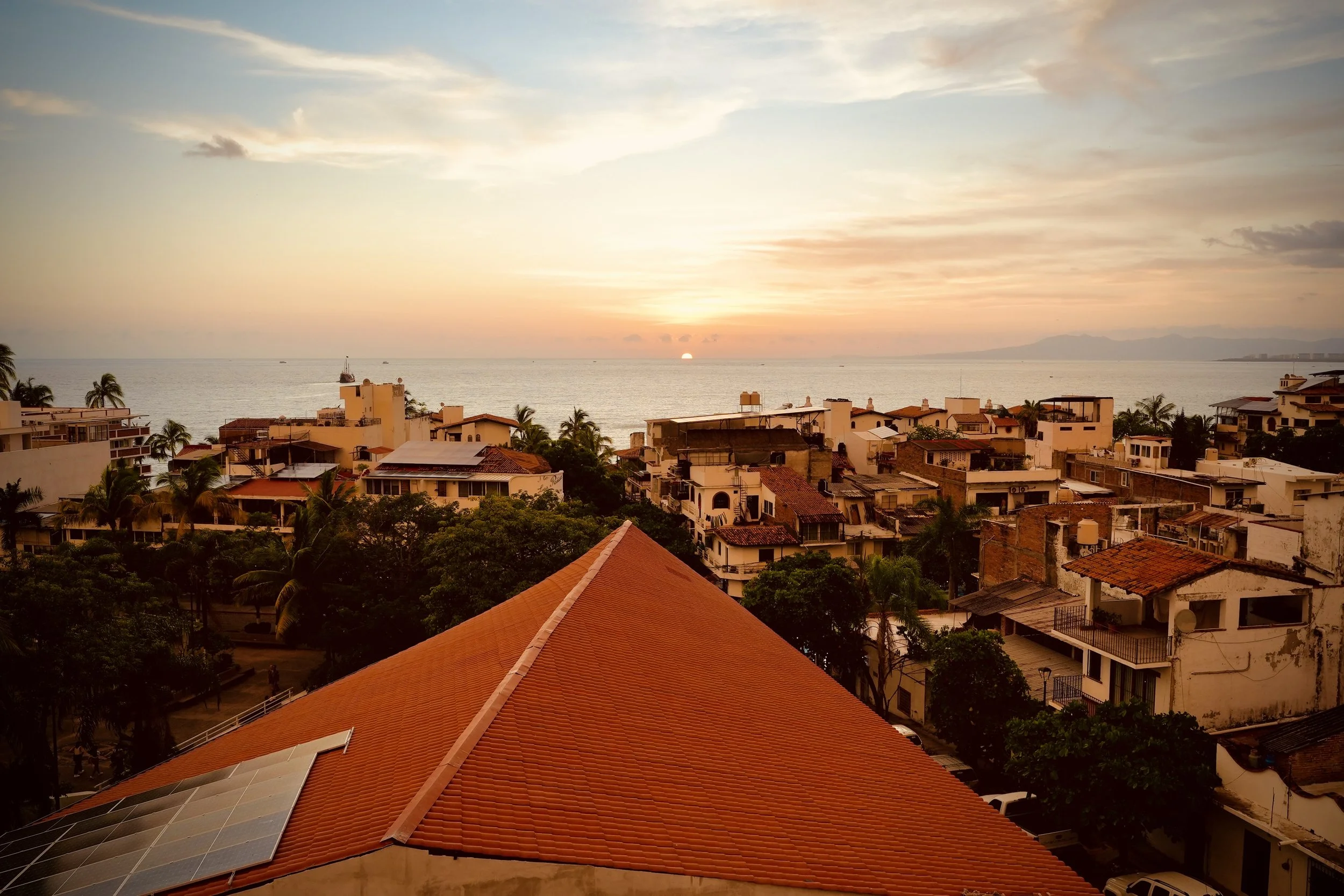
The daily benediction: A view over the terracotta city as it surrenders to the golden hour, and the Pacific horizon dissolves into a seamless wash of amber and lavender.
There is a specific suspension of time that occurs above the rooftops of Puerto Vallarta, a quiet interval where the world seems to hold its breath. As the sun begins its slow, deliberate descent into the Banderas Bay, the city undergoes a chromatic shift that defies simple description. It is not merely the end of a day, but a total transformation of the physical world into something fluid and ethereal. The air, which held the heavy, humid weight of the afternoon, begins to cool, carrying the faint, briny scent of the Pacific upward. From the vantage point of a quiet balcony, the frantic energy of the streets below fades into a rhythmic, distant hum—a symphony of life heard from a distance.
To stand here is to witness the architecture itself—the whitewashed walls and the weathered brick—begin to glow with an amber intensity, as if the buildings have been hoarding the sunlight all afternoon and are finally choosing to release it. One does not "watch" the sunset here; one witnesses a daily ritual of light. In these minutes, the distinction between the traveler and the destination blurs. You are no longer a visitor navigating a map; you are a silent participant in a timeless transition. It is a reminder that the most profound travel experiences aren't found in the ticking off of landmarks, but in the quiet surrender to a single, golden hour.
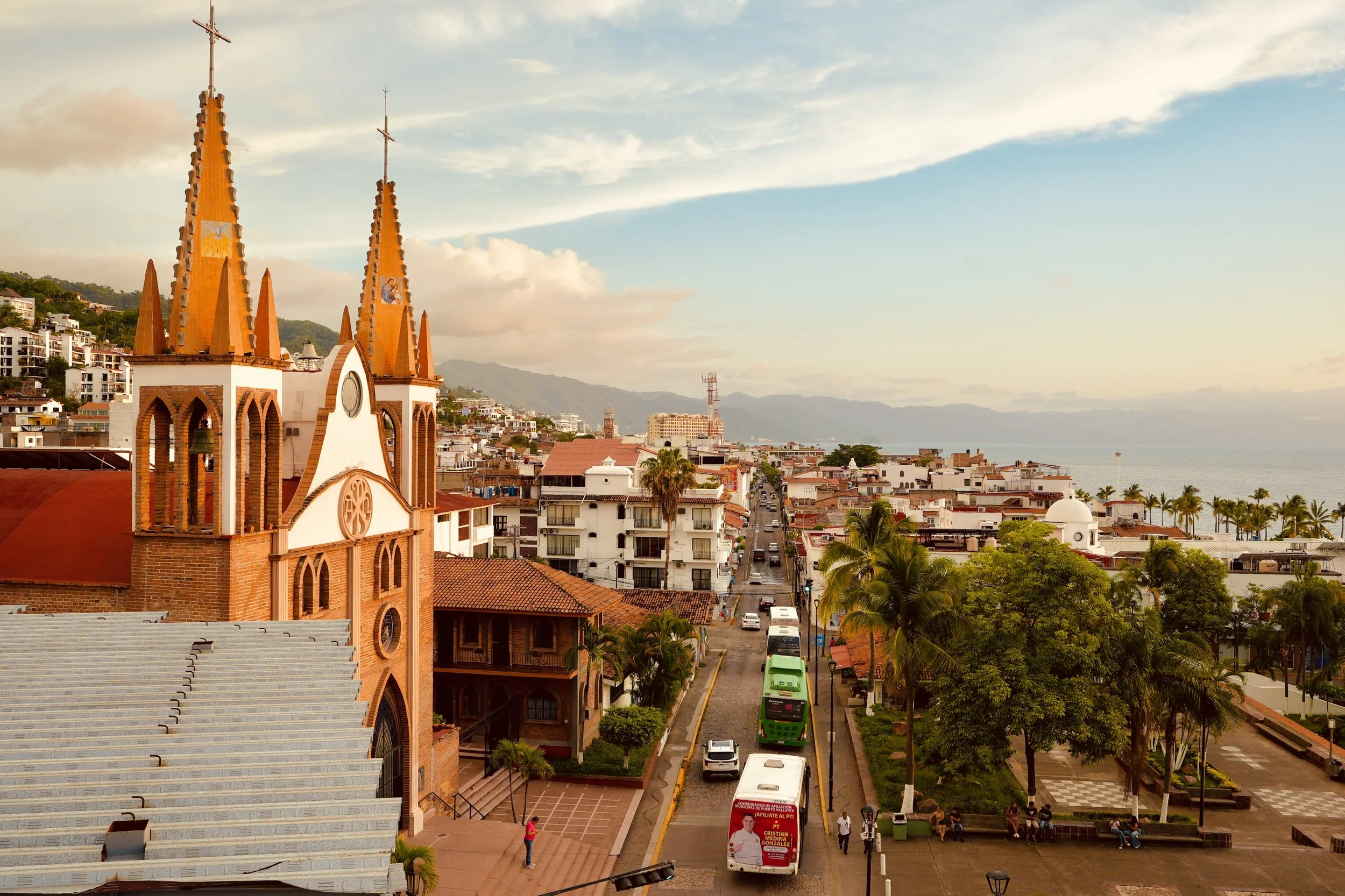
Spiritual anchors: The crown-topped spires of Our Lady of Guadalupe stand watch over the evening commute, bridging the gap between the cobbled earth and the cooling sky.
Down below, the city reclaims its visceral, complicated textures. The Parish of Our Lady of Guadalupe, with its singular crown-topped spire, serves as a spiritual and visual anchor for the entire bay. From the street, the bells provide a heartbeat, ringing out over the movement of buses and the chatter of the evening crowds. But as you ascend to the heights, the church becomes an intimate companion. You see the intricate craftsmanship of its crown against the sky—a symbol of a city that looks upward even as its roots are buried deep in the coastal soil. The transition from the shared rhythm of the streets to the personal sanctuary of a high vantage point is the true narrative of the city.
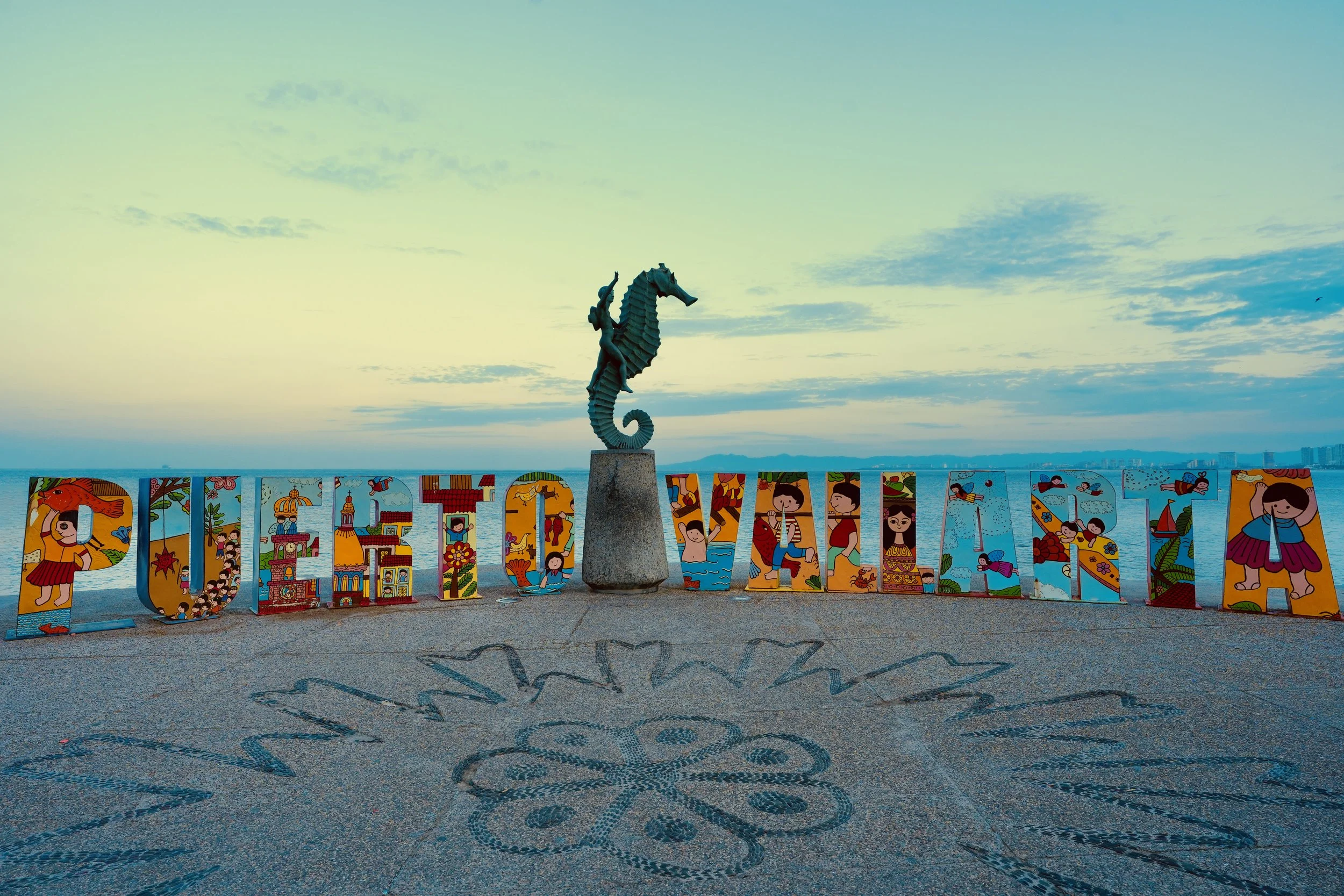
A language of stone: The intricate, swirling mosaics of the Malecón promenade read like a map of the tides, grounding the traveler in the city’s ancient maritime rhythm.
To understand Puerto Vallarta, one must walk it with a sense of deliberate observation. The Malecón is not just a promenade; it is a form of tactile storytelling. The patterned stones, swirling in pre-Columbian designs, feel like a form of braille beneath the soles of your feet. Each stone seems placed with an awareness of the tides, a celebration of the intersection between human artifice and the raw power of the sea.
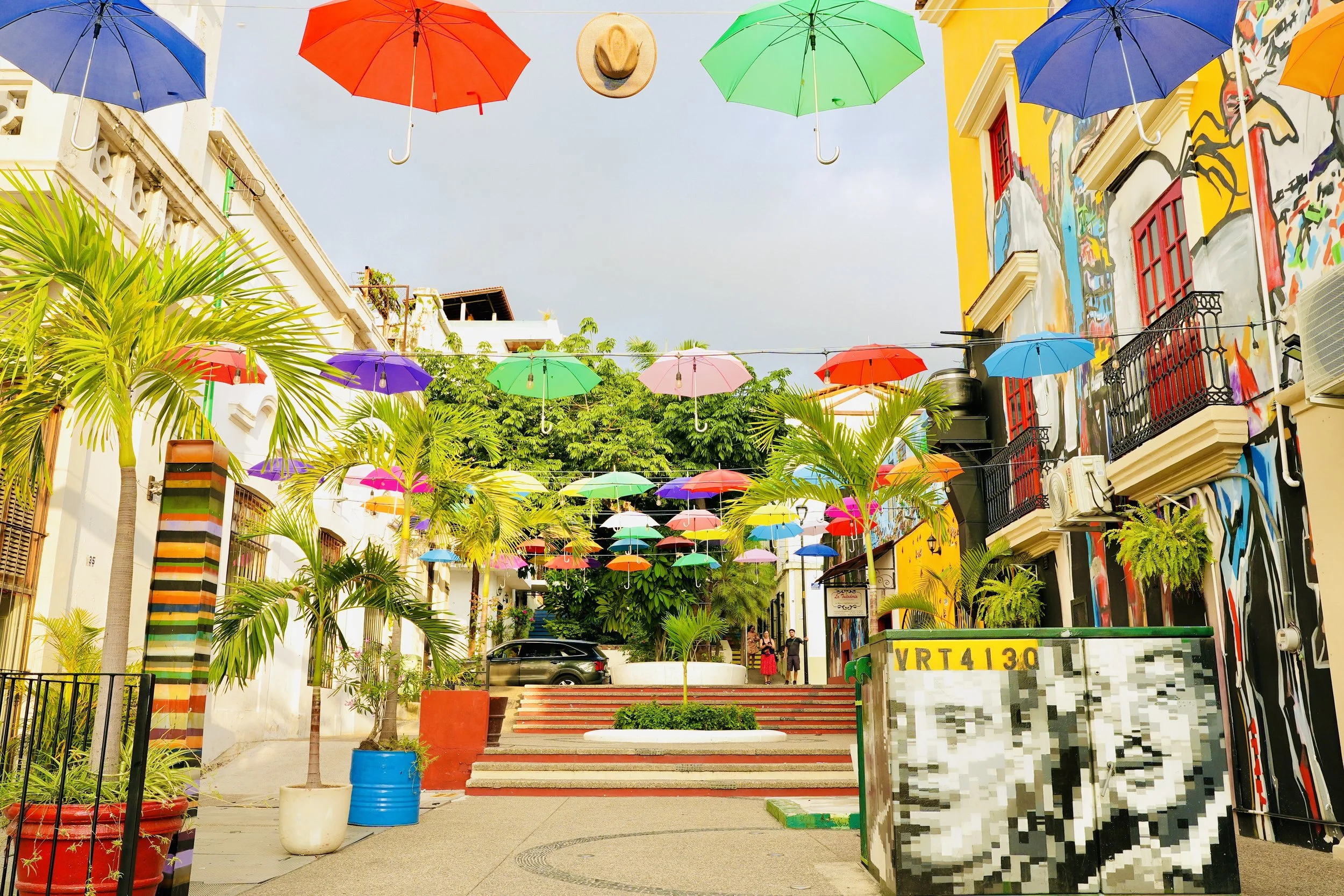
Fragmented skies: A suspended canopy of violet and emerald umbrellas creates a sanctuary of dapples, redefining a simple passage into a celebration of chromatic light.
As you move away from the water and into the heart of the Zona Romántica, the city becomes an intentional canvas. There is a specific joy in discovering the narrow passages where the architecture gives way to art. In one particular alley, a suspension of dozens of umbrellas creates a fragmented sky of violet, crimson, and emerald. This canopy dapples the worn pavement with a kaleidoscope of light, turning a simple transit point into a sanctuary of color. It is a reminder that in Puerto Vallarta, beauty is rarely hidden; it is simply waiting to be noticed by those who slow their pace.
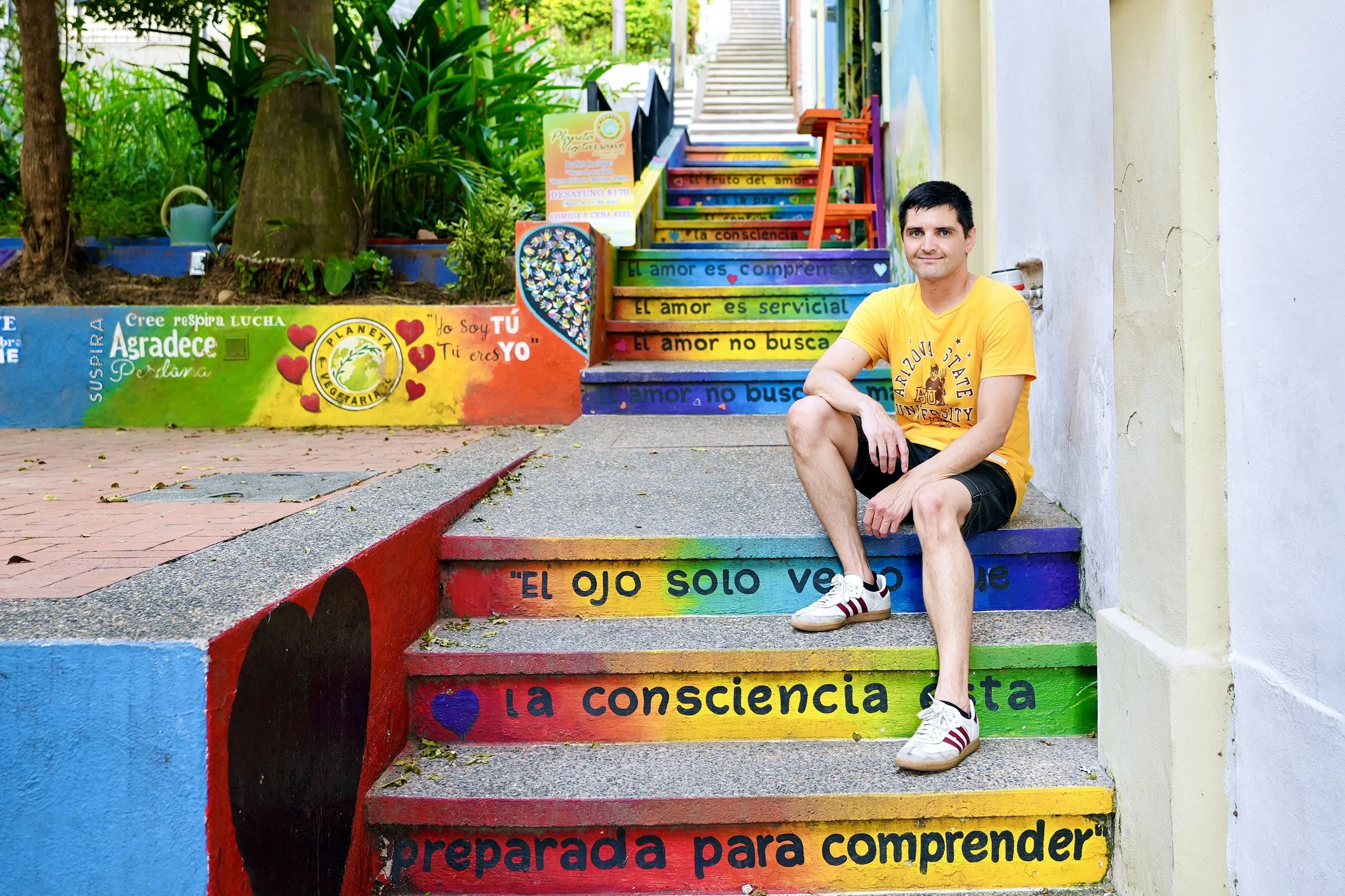
Stairways of thought: In the steeper corridors of the city, even the steps become a canvas for introspection, painted in vibrant stripes that demand a slower, more deliberate ascent.
Even the inclines of the city refuse to be utilitarian. The staircases that lead toward the steeper neighborhoods are often adorned with vibrant stripes and silent, painted phrases. These "stairways of thought" turn the physical exertion of the climb into an act of meditation. Each step is a word, each landing a breath. You are reminded that the effort of the ascent is precisely what gives the eventual view its value. The city does not give up its secrets easily; it requires a climb.
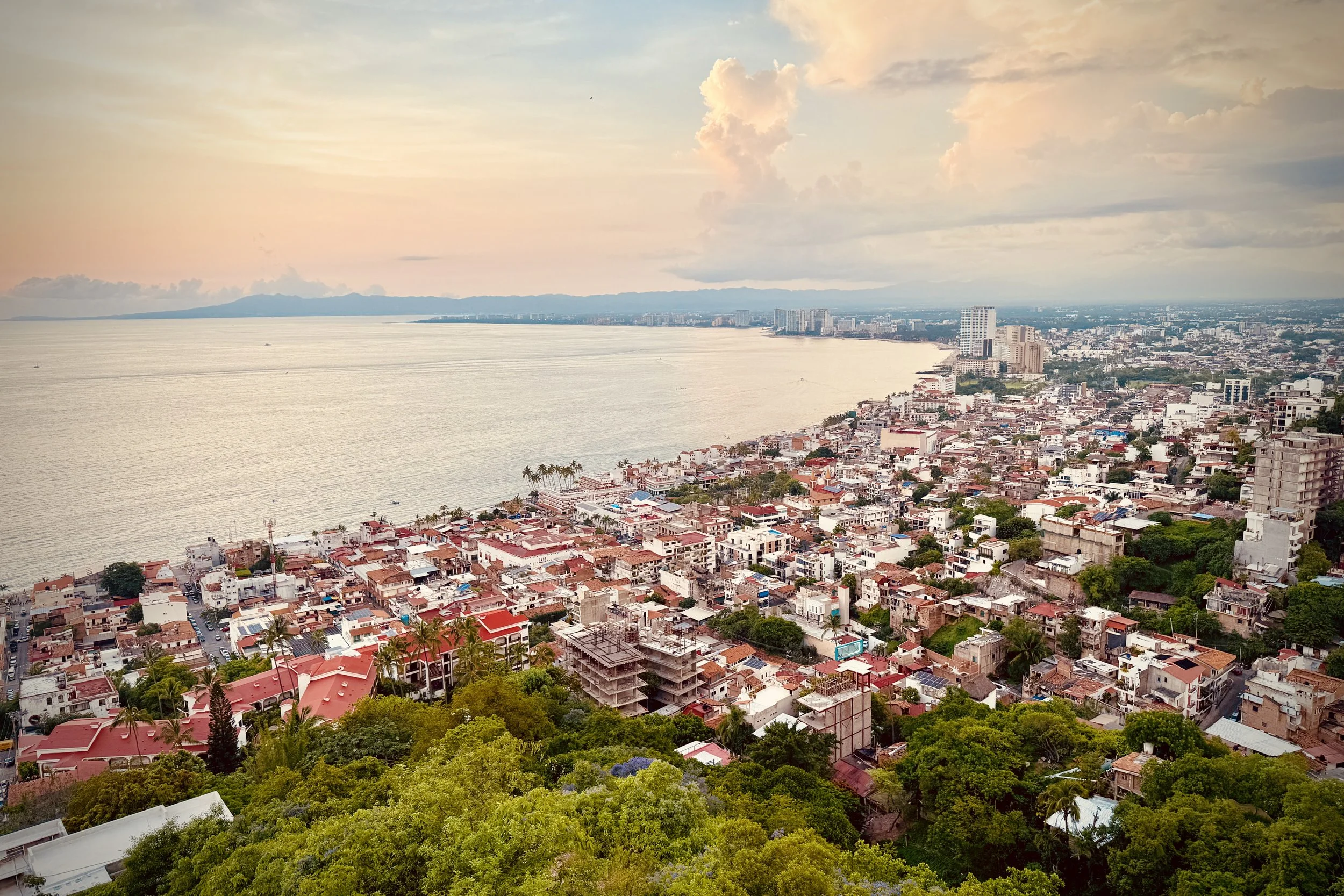
The summit of perspective: From the height of the Mirador, the city’s dense, textured grid finally confronts the vast, panoramic silence of the Banderas Bay.
The dialogue between the traveler and the landscape reaches its peak at the Mirador el Cerro de la Cruz. The climb is a physical challenge, a sharp incline that tests your resolve, but the reward is a total recalibration of perspective. From the summit, the city’s complexity is revealed as a delicate harmony. You see the grid of cobblestones finally meeting the curves of the shore, and the vast Pacific stretching toward a horizon that feels infinite. It is here that the traveler’s internal noise finally quietens. In the presence of such scale, the sentimental feelings you carry aren't heavy; they are clarified.
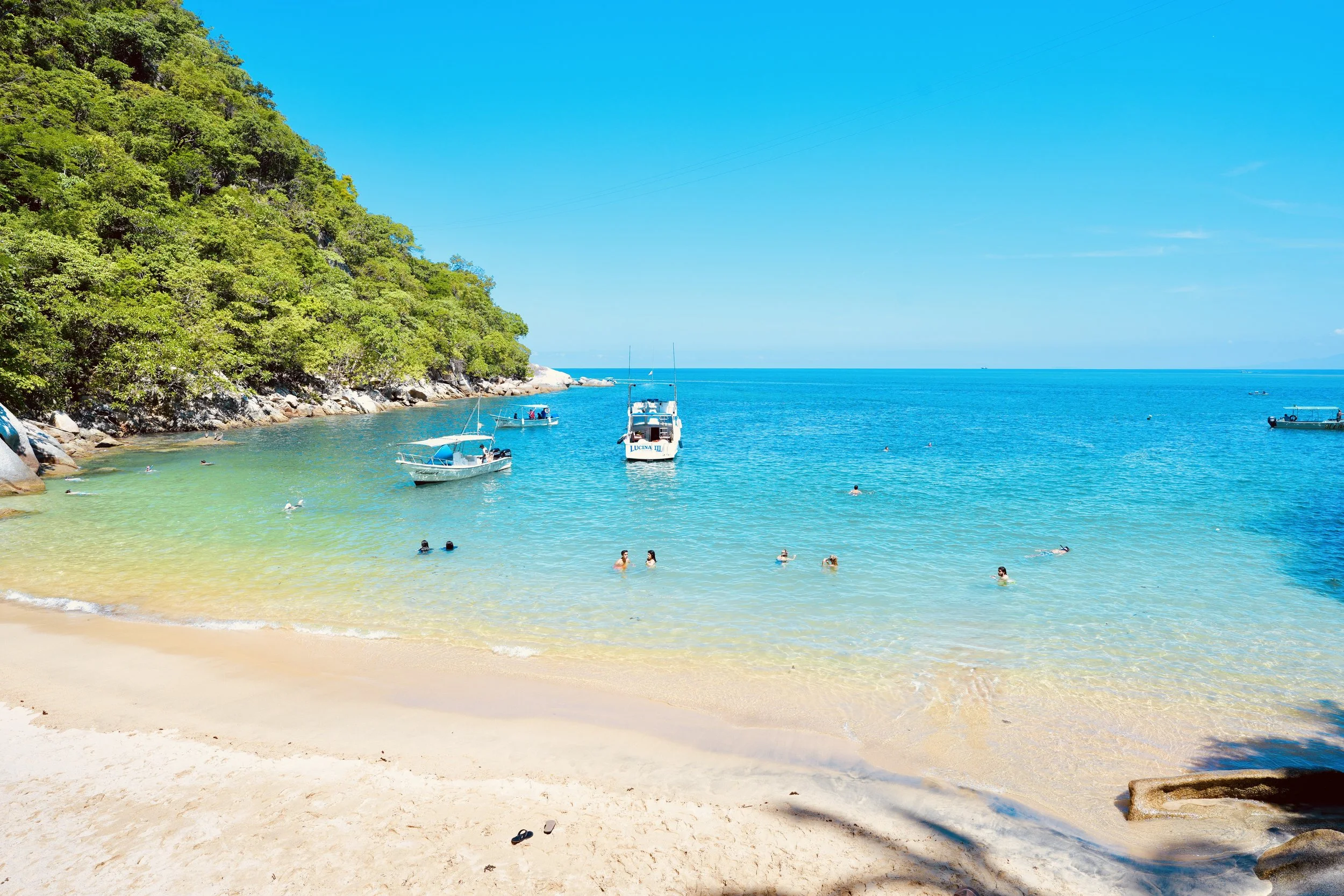
Nature’s minimalism: Tucked within a cradle of granite and jungle vine, the turquoise clarity of Colomitos offers a rare, unadorned quiet far from the structured city.
Yet, the soul of this place is not just found in the panoramic view, but also in its untamed edges. A journey by boat or a hike through the coastal forest leads to Playa Colomitos. Here, the "architecture" of the city is replaced by the minimalism of nature. The Pacific is no longer a vast horizon, but a clear, emerald mirror held within a cradle of granite and jungle vine. At Colomitos, the sentimentality of the trip takes on a different texture—found in the weight of the sand and the sound of the tide retreating over smoothed stones. It is a place of profound, unadorned silence, a reminder that the most expansive views are sometimes the ones that are the most contained.
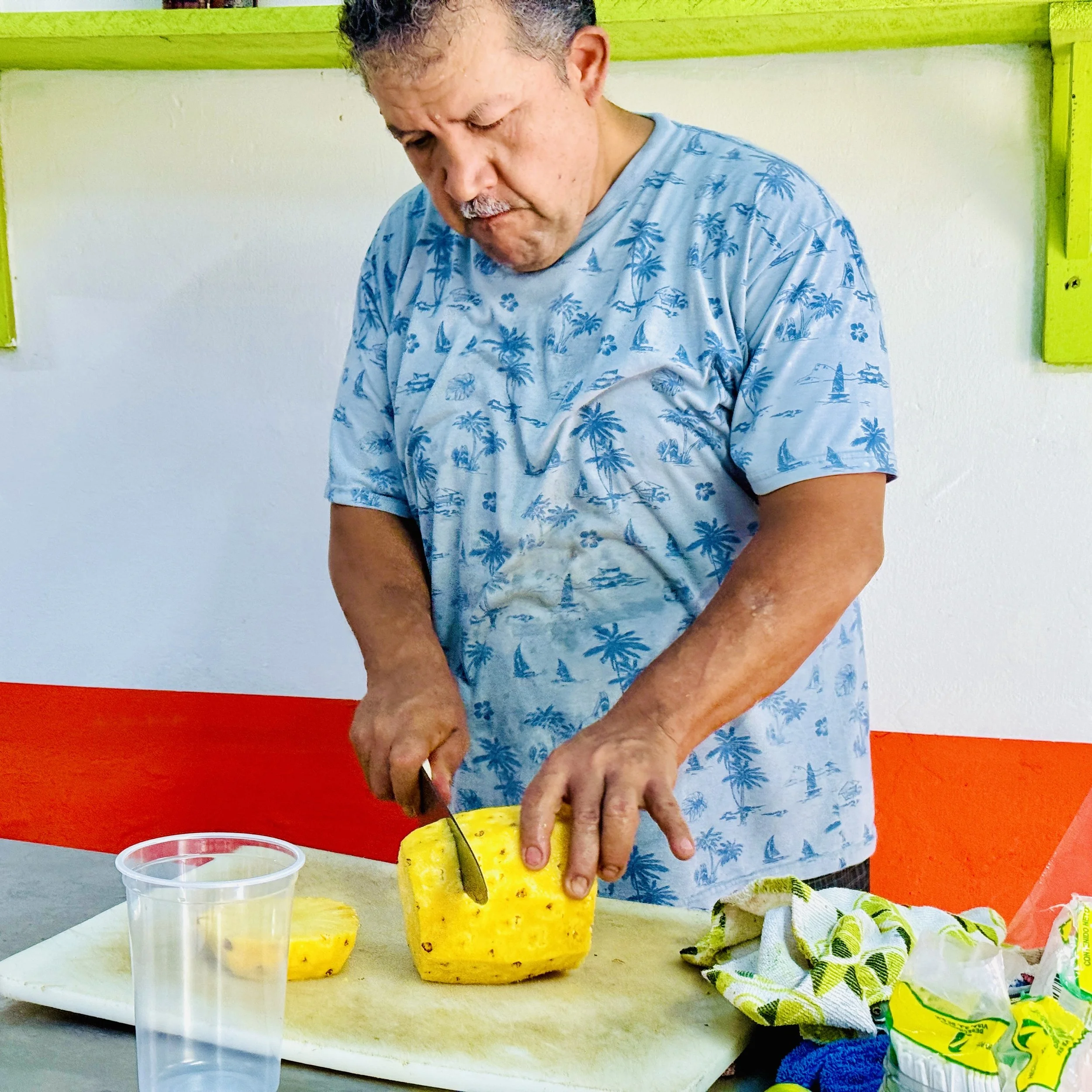
The geometry of refreshment: A local merchant transforms a golden pineapple into a precise kinetic sculpture, a testament to the quiet art found in daily commerce.
Sentiment is also tasted. In Puerto Vallarta, food is a form of cultural poetry. To observe a local fruit merchant at work is to witness a masterclass in the geometry of refreshment. With a practiced hand, he transforms a golden pineapple into a precise, bright kinetic sculpture. This is not just commerce; it is a testament to the quiet art found in the daily rhythm of market life. The scent of fresh lime, the vibrant yellow of the fruit, and the sound of the blade are as much a part of the city’s identity as the sunset itself.

The steam of tradition: More than a meal, the rich, aromatic depth of local birria serves as a visceral connection to the heritage and heartbeat of the Zona Romántica.
The true flavor of the city, however, is found in the steam rising from a bowl of birria at a local stand or the crisp perfection of a fried fish taco. At Birrieria Liz or Marisma, the meal is a visceral connection to the heritage of the region. There is a profound honesty in this food—it is prepared with a focus on craft that mirrors the stonework of the Malecón. As you sit at a small table in the Zona Romántica, the flavors of marlin and spice become a sensory anchor, grounding you in the present moment even as the city’s energy swirls around you.
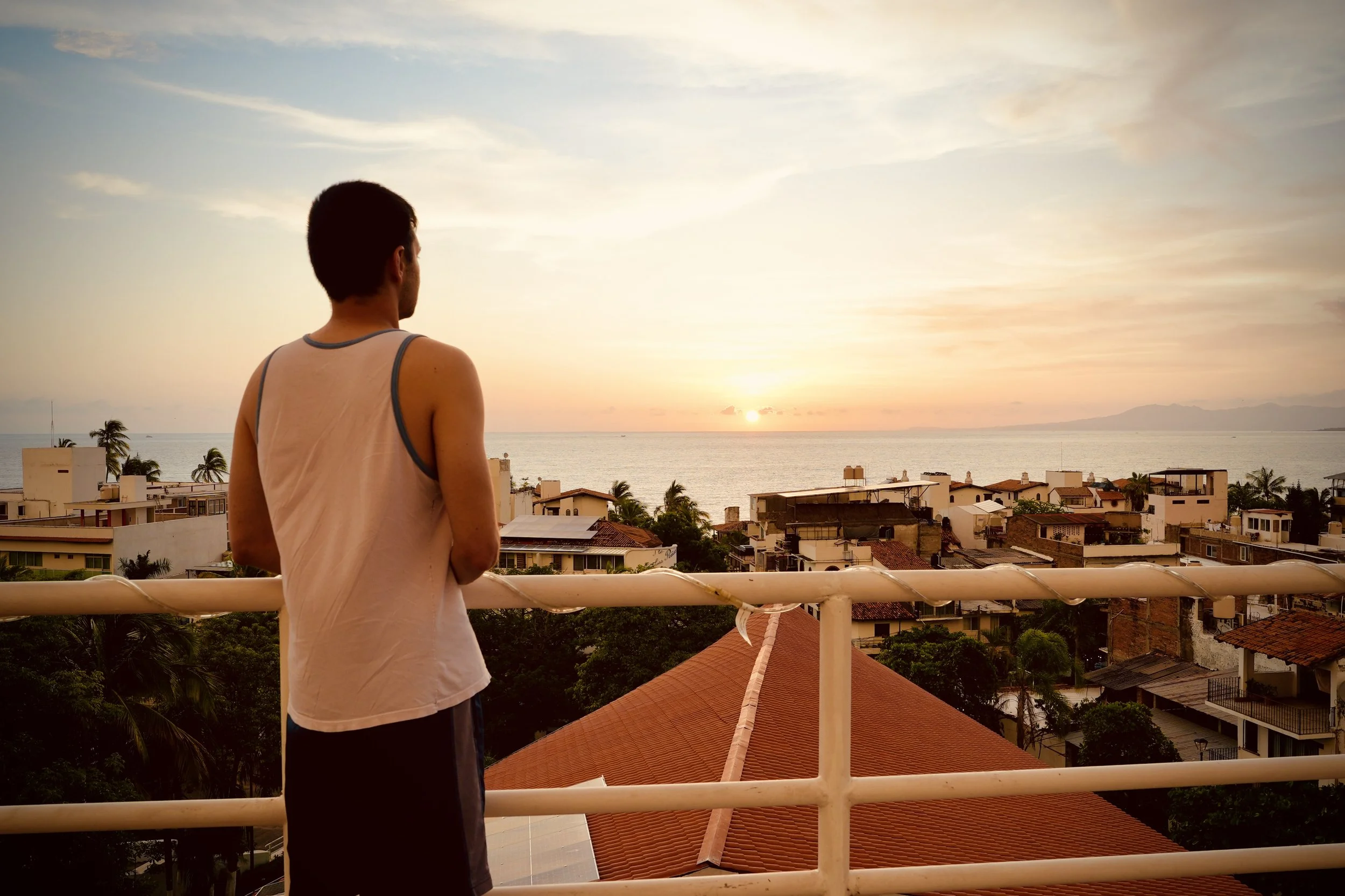
The quiet observer: A final surrender to the horizon. In the stillness of the height, the traveler finds equilibrium, tethered to the city’s glow while existing entirely within the moment.
We return, inevitably, to the rooftop. As the final light of the day begins to fade, the sentimental feeling that has been building throughout the journey finally crystallizes into an established truth. To be a traveler here is to exist in a state of constant, beautiful transition. You have felt the rough stones of the street, the cool humidity of the jungle, and the sharp clarity of the mountain air.
As you look out one last time, your silhouette cast against the darkening Pacific, you realize that you have found a rare equilibrium. You are entirely alone in your thoughts, yet you remain deeply tethered to the heartbeat of the city glowing just a few stories below. This stillness is not an end, but a beginning—a foundation for the pilgrimage ahead into the high colonial complexities of Guanajuato and Guadalajara. The light may be fading, but the perspective remains.
To see more photos & videos from my travels visit the links below
happy traveling,
~Sean
