Tokyo, Measured in Meals
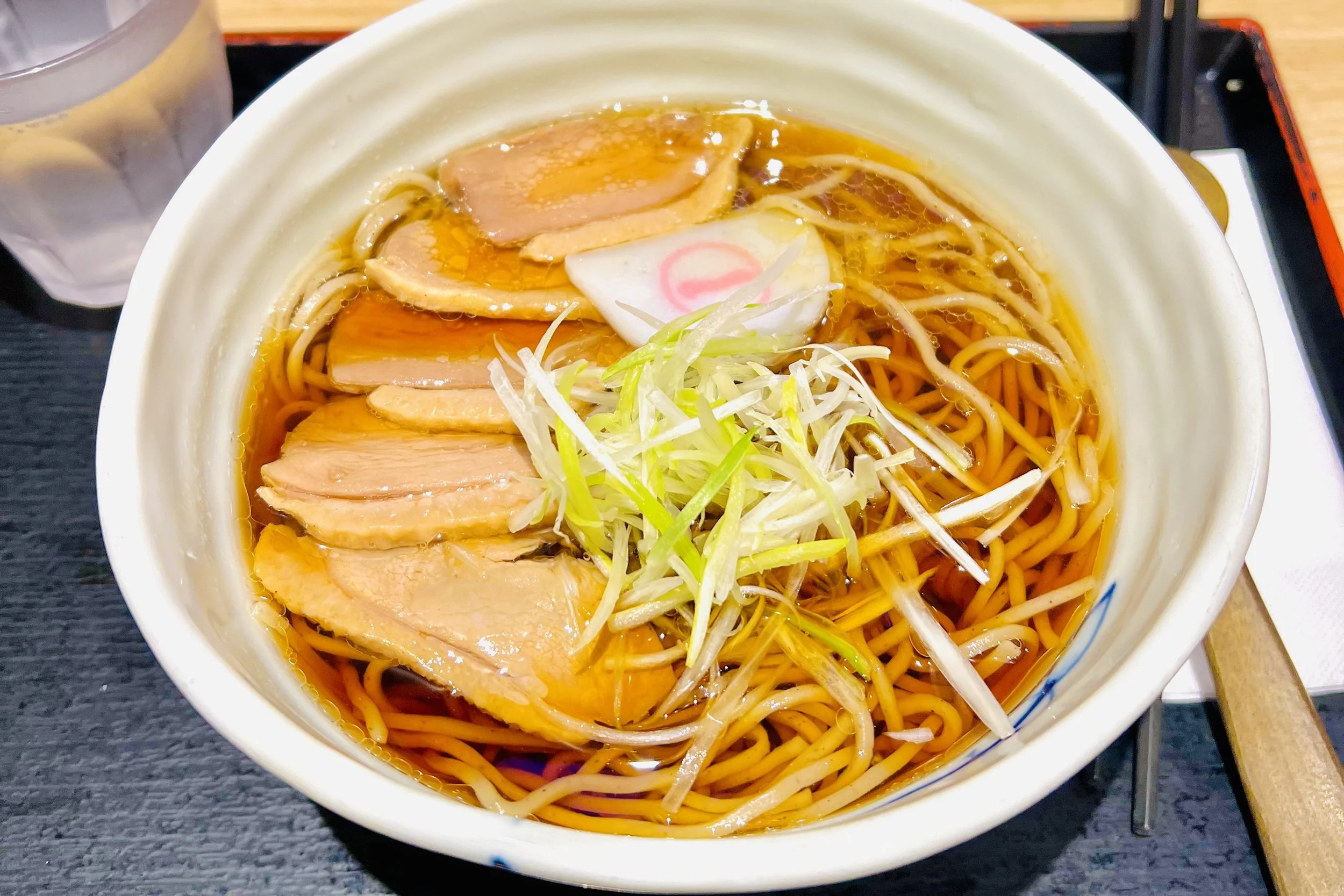
Japan is often described through neon, rail maps, and population density charts.
But I experienced it in bowls, trays, cones, jars, and counters.
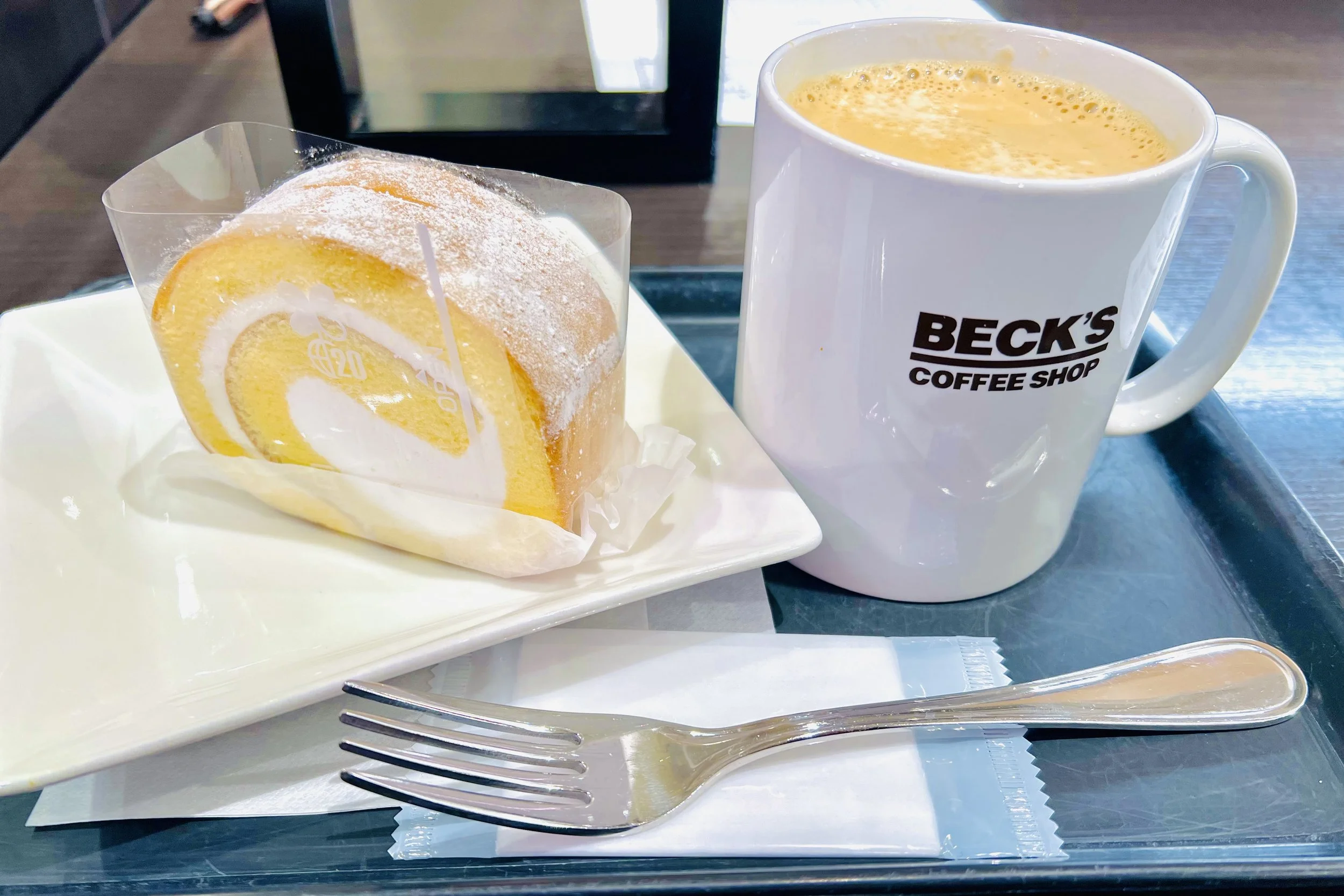
For two weeks in January 2025, I moved through Tokyo and its outskirts eating deliberately. Tokyo’s metro area holds nearly 37 million people, making it the largest urban agglomeration on Earth. It also contains more Michelin-starred restaurants than any other city — over 200 — yet some of the most defining meals of my trip cost less than $10.
This is not a ranking.
It’s a ledger of flavor.
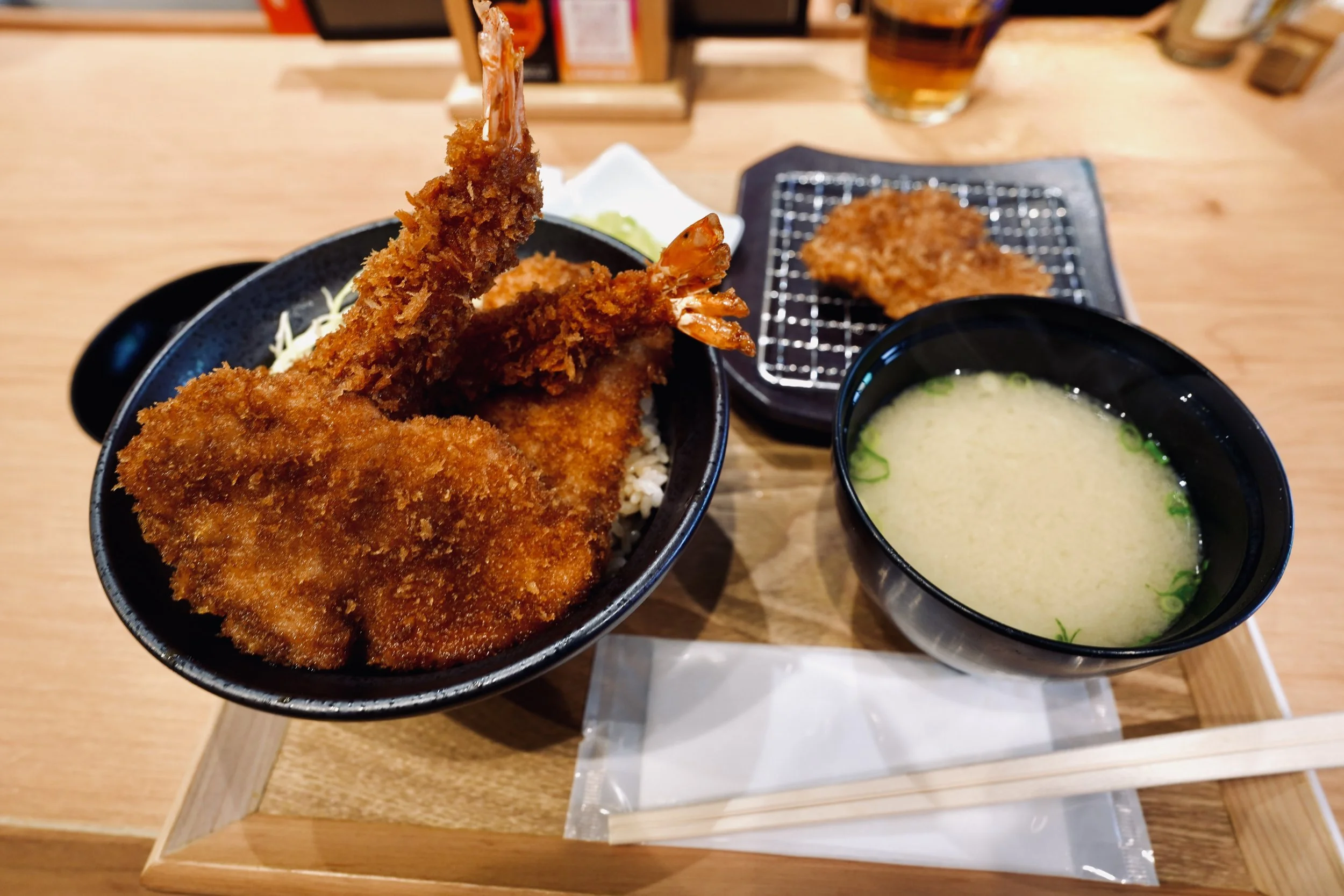
Tonkatsu bowl with miso soup and counter seating
My first serious meal was fried.
Golden panko, audibly crisp. Pork cut thick. Rice steamed to textbook gloss. A bowl of miso at precisely the right temperature — hot enough to bloom, not scald.
Japan consumes roughly 1.2 million tons of pork annually, and tonkatsu — introduced in the late 19th century — has become one of its most enduring Western imports turned domestic icon. At a counter with fewer than ten seats, I ate what felt like an edible equation:
Fat + starch + salt + steam = contentment.
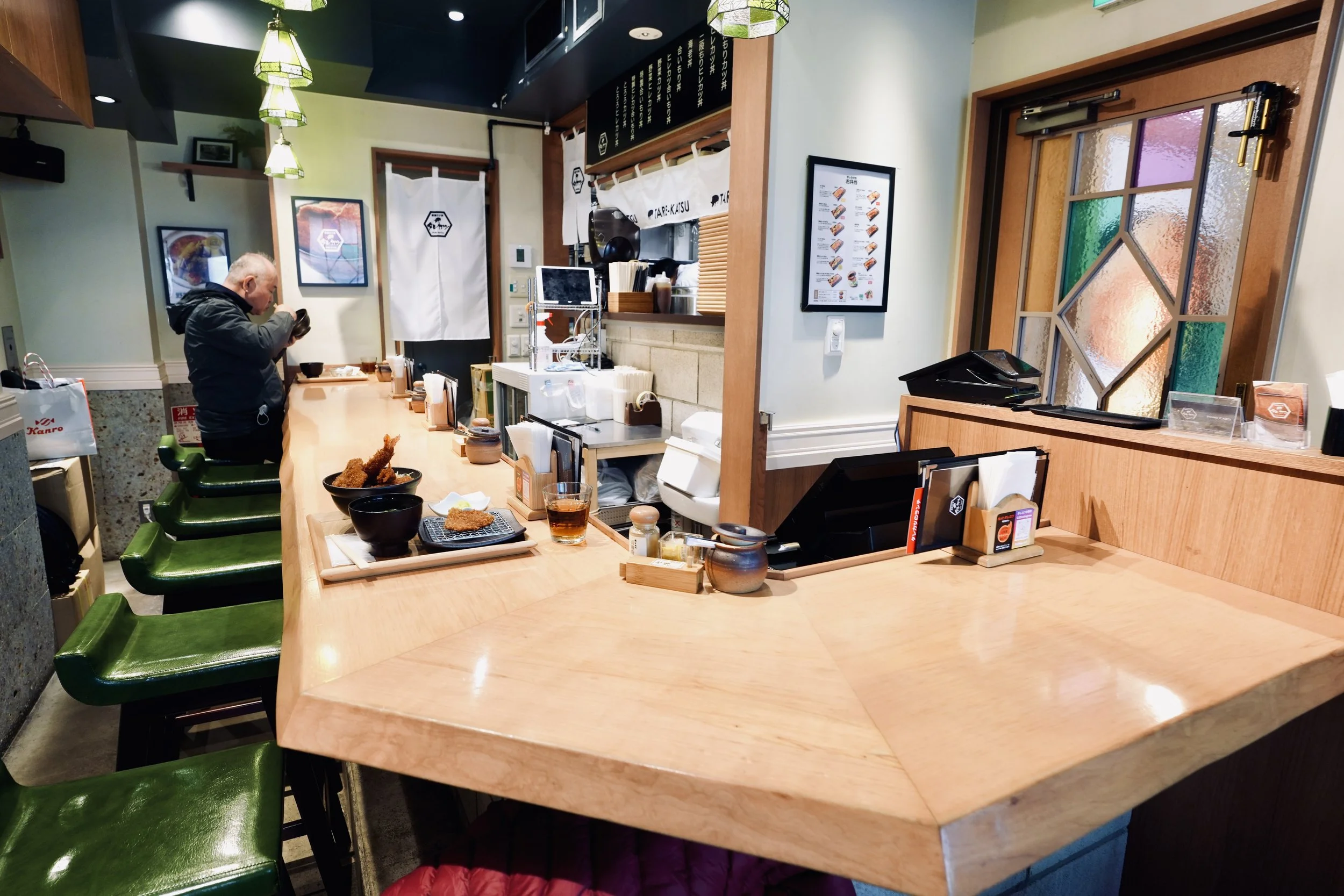
Behind the counter, production was choreographed. No wasted motion. No raised voices. Just throughput and care.
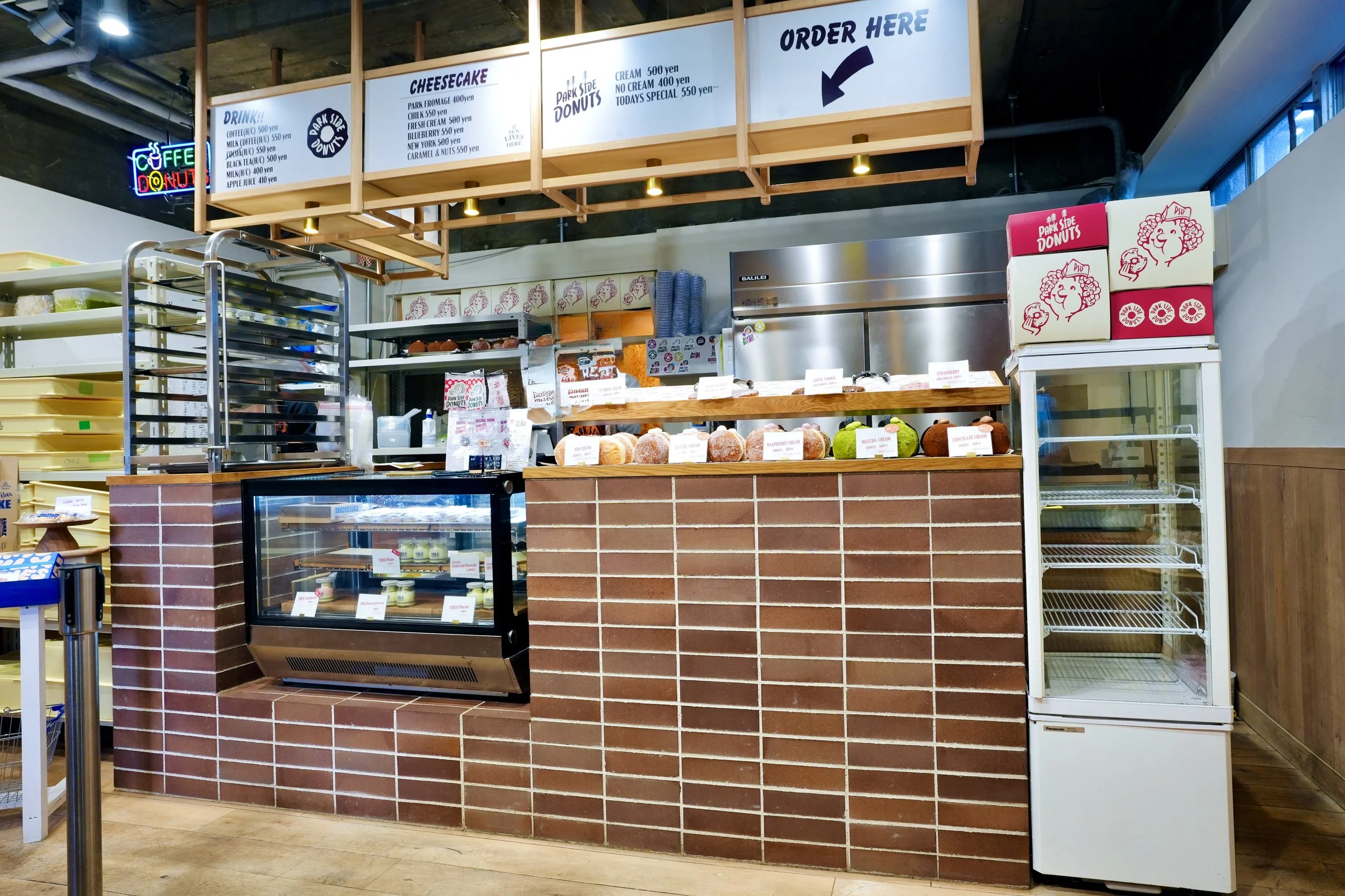
Tokyo has over 160,000 restaurants within the metro area. Competition produces excellence at every level — including donuts.
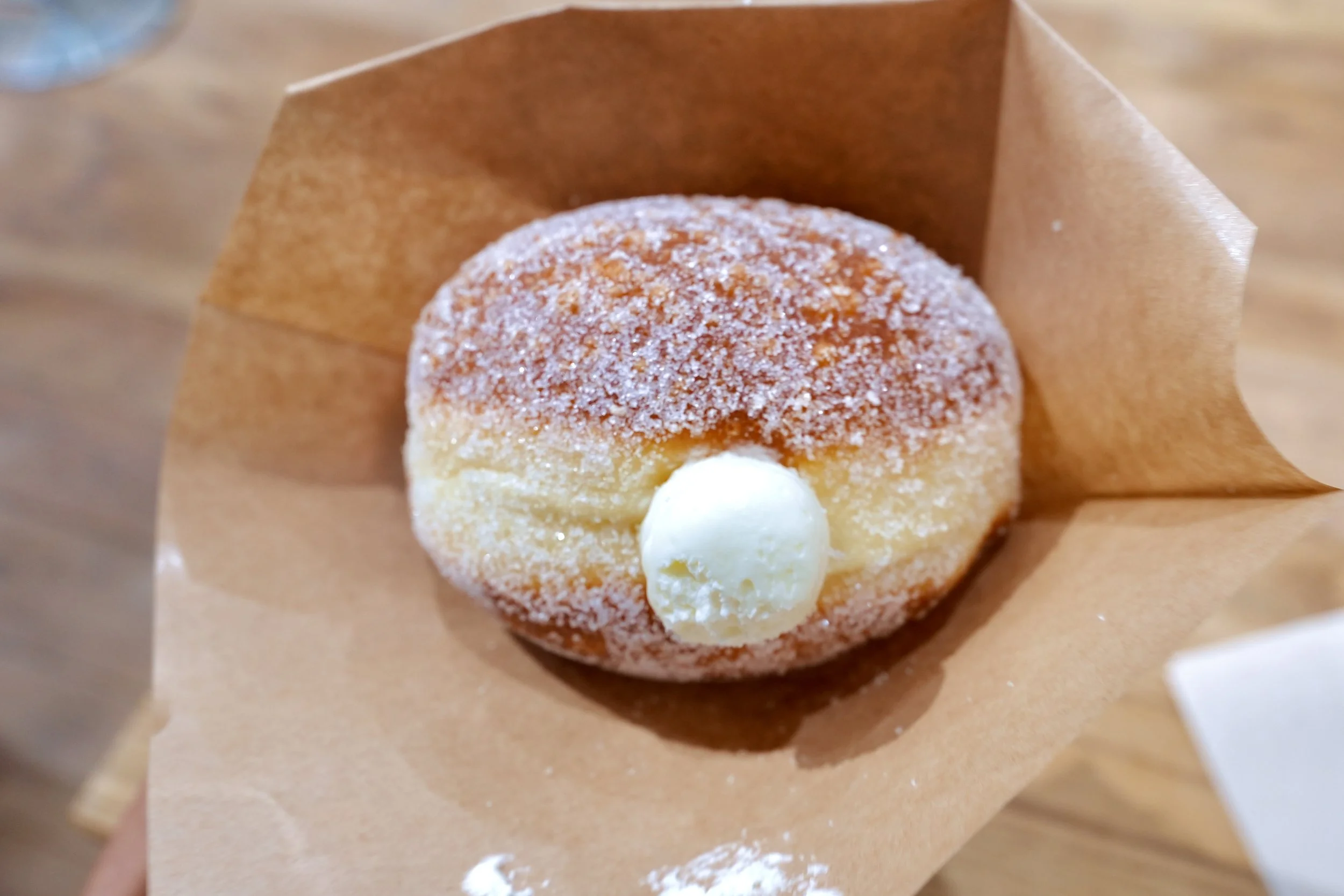
Cream cheese donut, sugared exterior, soft interior
This one was dense but airy, sugared but restrained, filled with cream cheese that leaned savory rather than sweet. It cost about the same as a coffee in Los Angeles. It delivered more satisfaction.
Precision, again. Texture management. Temperature control.
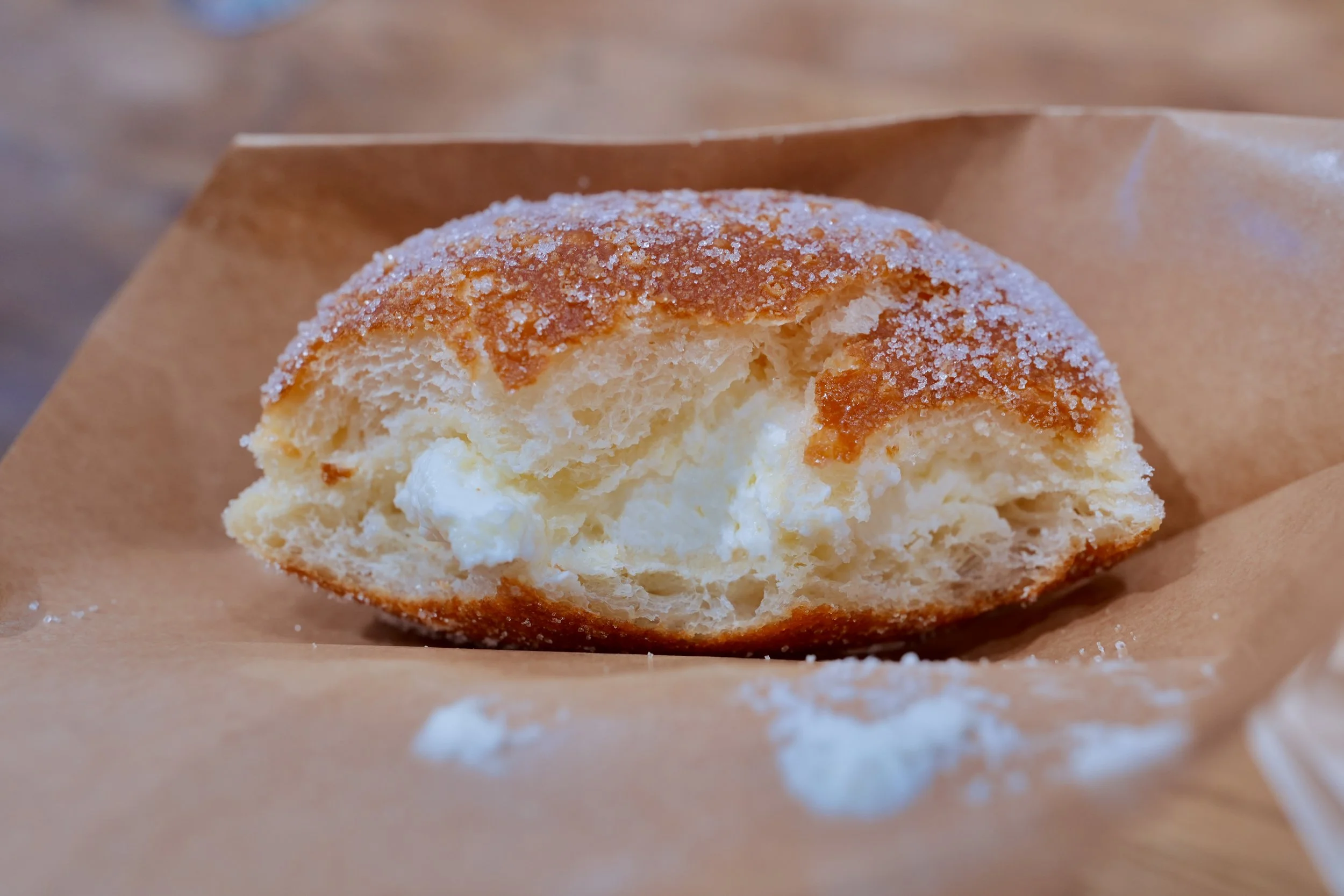
Japan doesn’t half-do pastries.
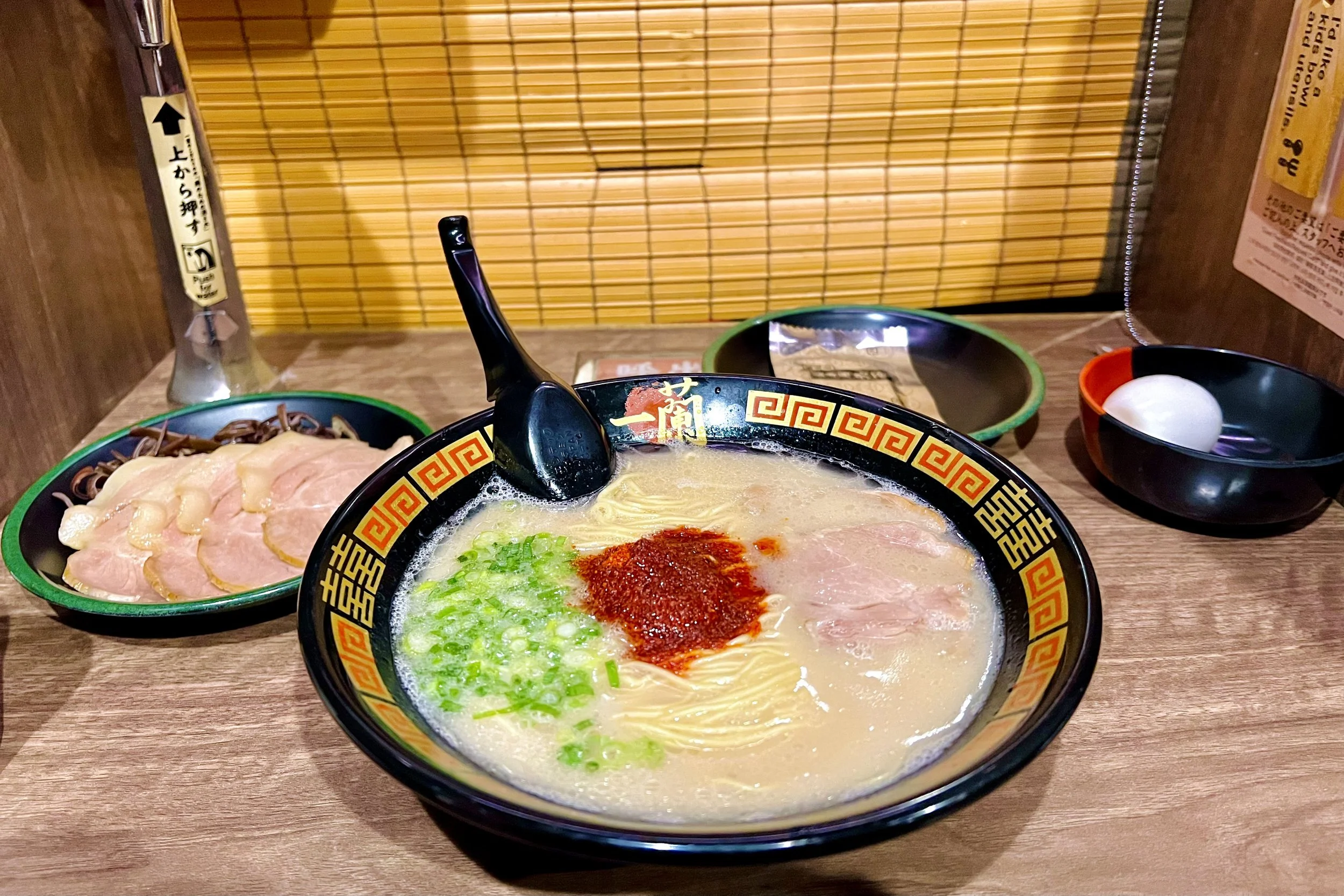
Ichiran serves thousands daily. A single branch can move customers through individual booths with startling efficiency. Nationwide, ramen shops number over 24,000.
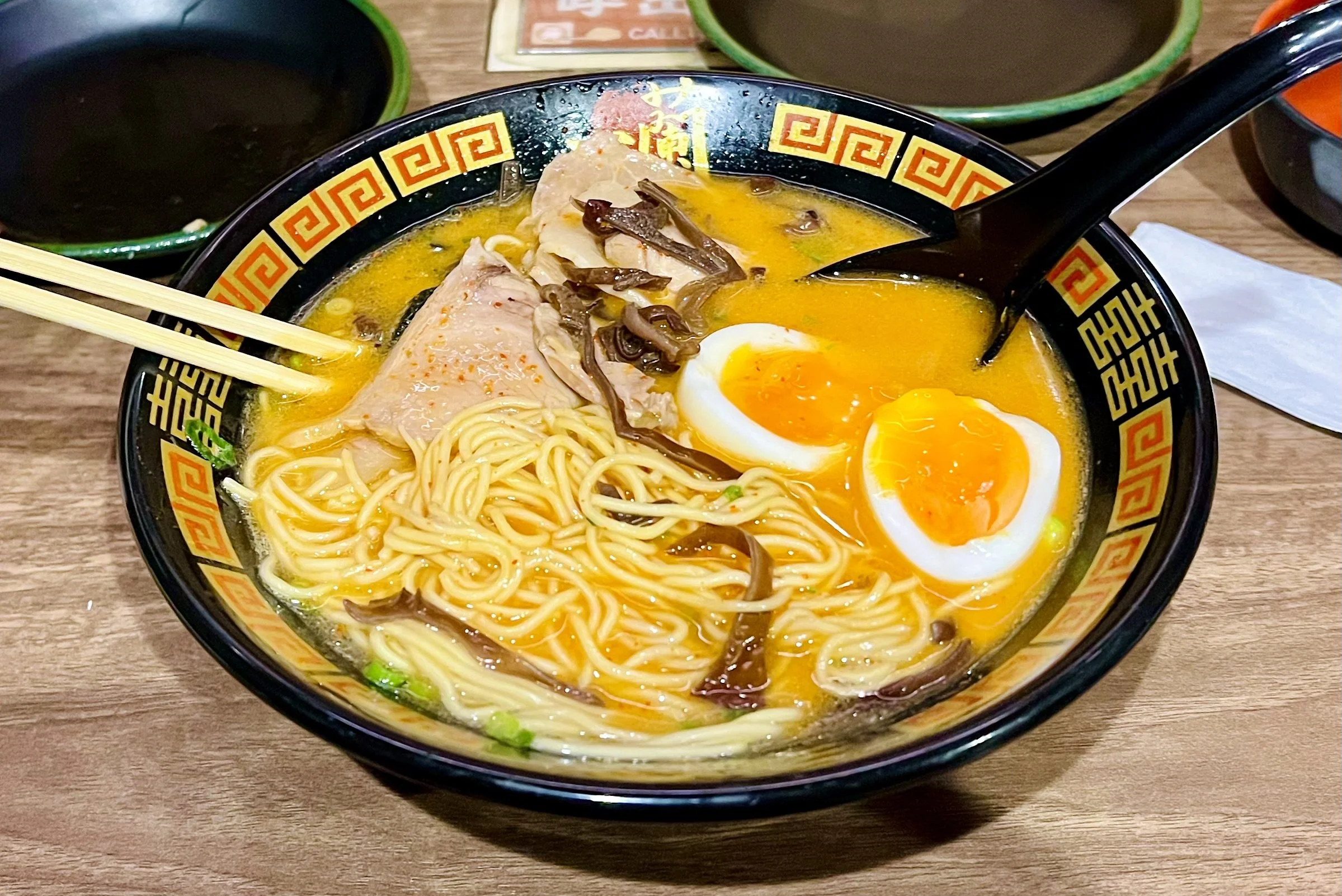
Tonkotsu ramen with spice mound and soft-boiled egg
The broth was collagen-heavy, opaque, engineered for comfort. The red chili paste dissolved slowly, tinting the surface in gradients.
Dining in isolation booths, conversation reduced, attention sharpened.
Consumption became private. Focused.
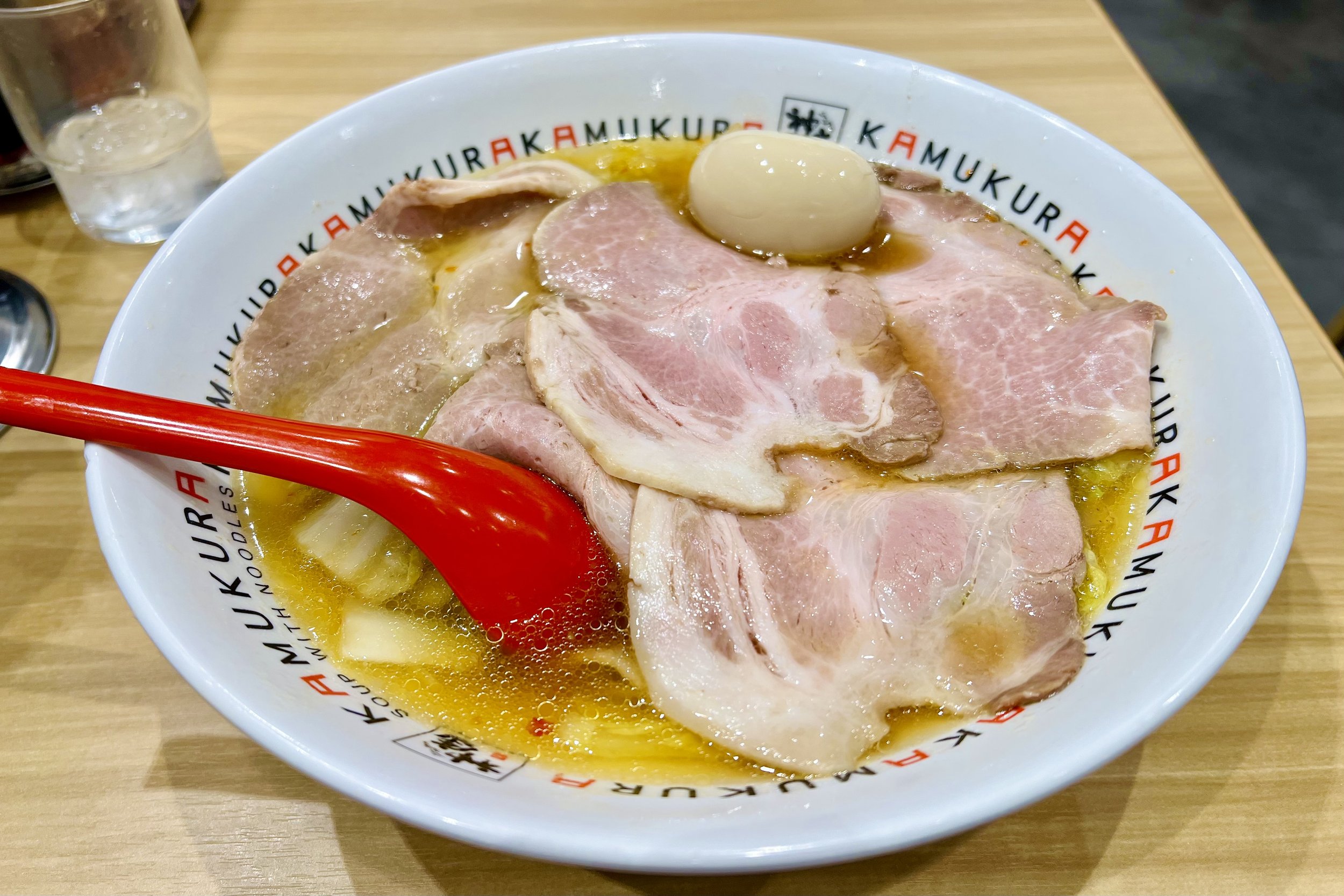
Kamukura’s lighter broth contrasted Ichiran’s depth. Tokyo’s ramen ecosystem is vast — tonkotsu, shoyu, miso, shio — and regional variation is fierce. Even chains differentiate through micro-adjustments in salt ratio, noodle hydration, or broth clarity.
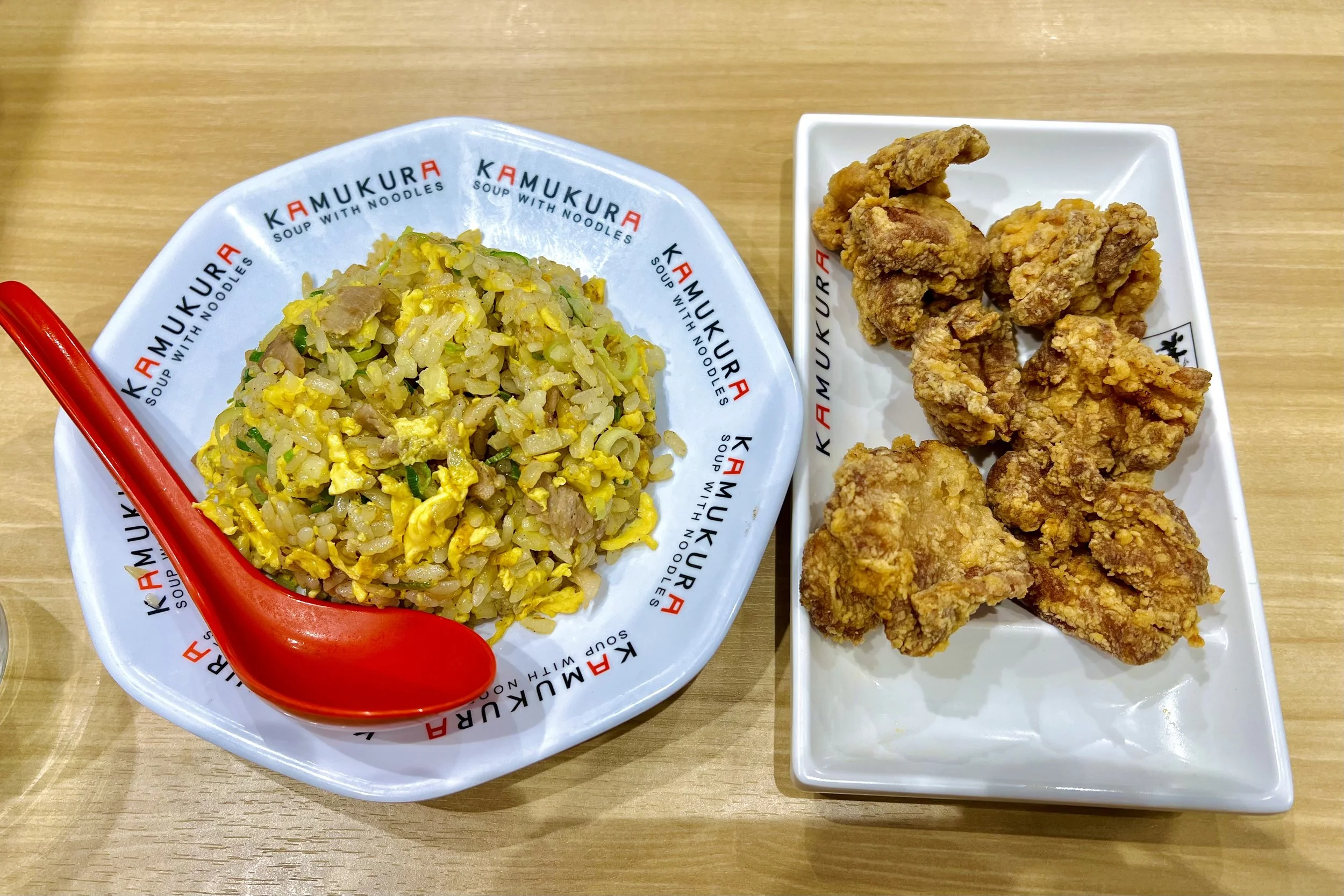
The fried rice was textbook: separated grains, egg distributed evenly, pork restrained. Karaage crisped at the edges.
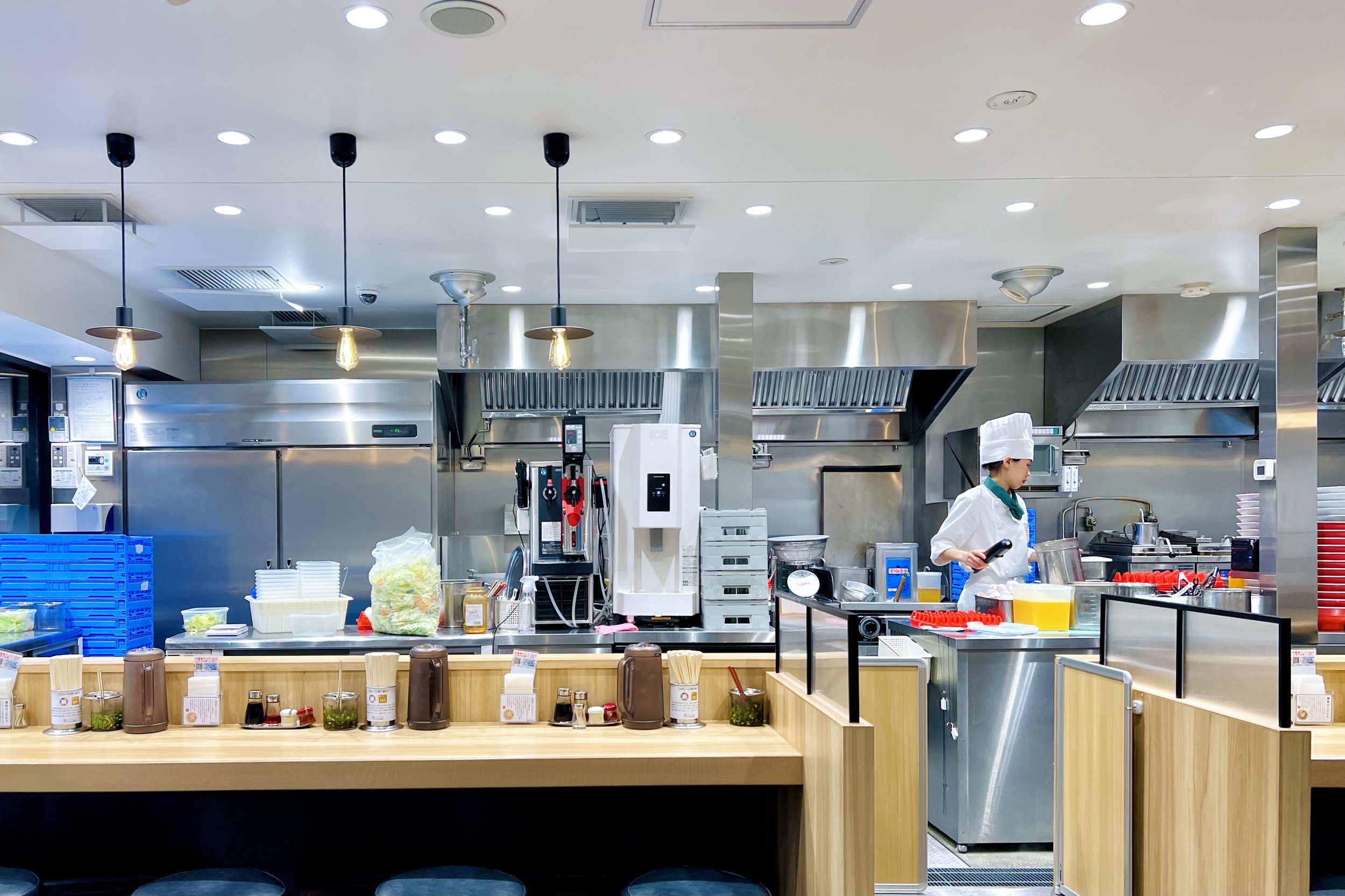
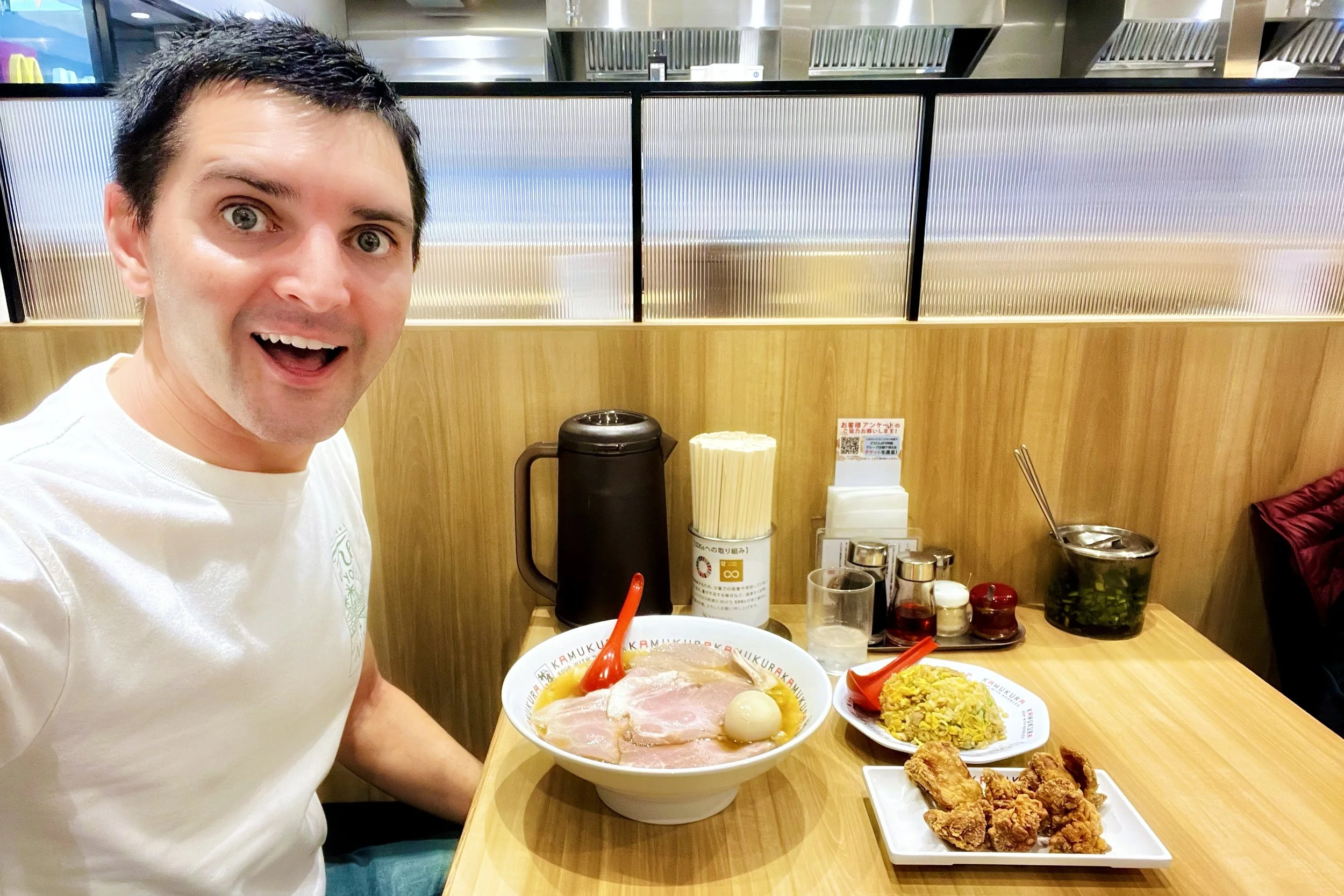
Ramen, fried rice, karaage, open kitchen behind
Consistency is the unspoken currency of Japan.
Japan produces roughly 80,000 tons of green tea annually, much of it from Shizuoka and Uji. Matcha, once ceremonial, is now commercial — but quality still shows.
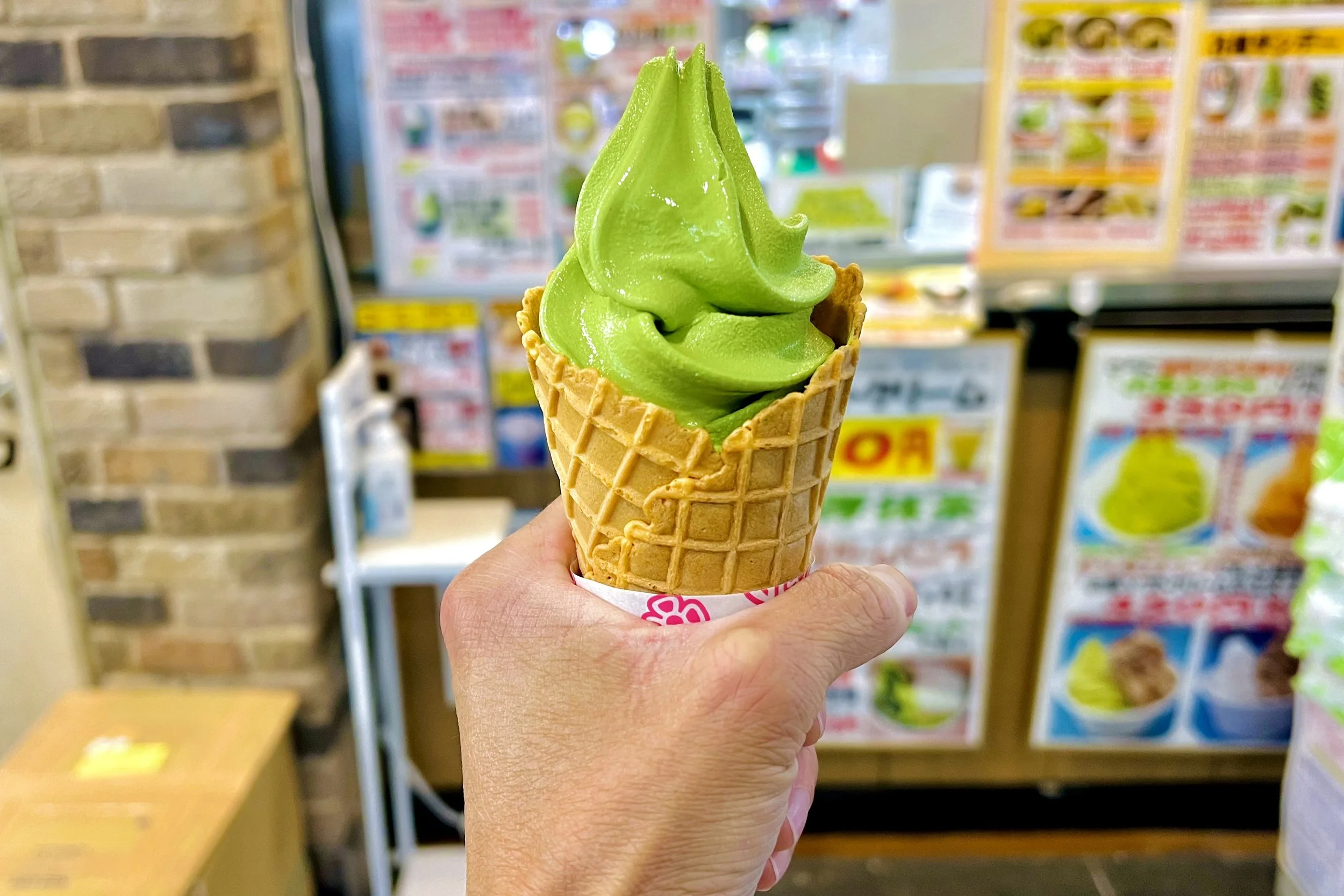
Matcha cone, vivid green
The bitterness was clean. Not grassy. Not sweetened into submission.
In winter air, the cone held its structure longer than expected. Even ice cream here behaves with discipline.
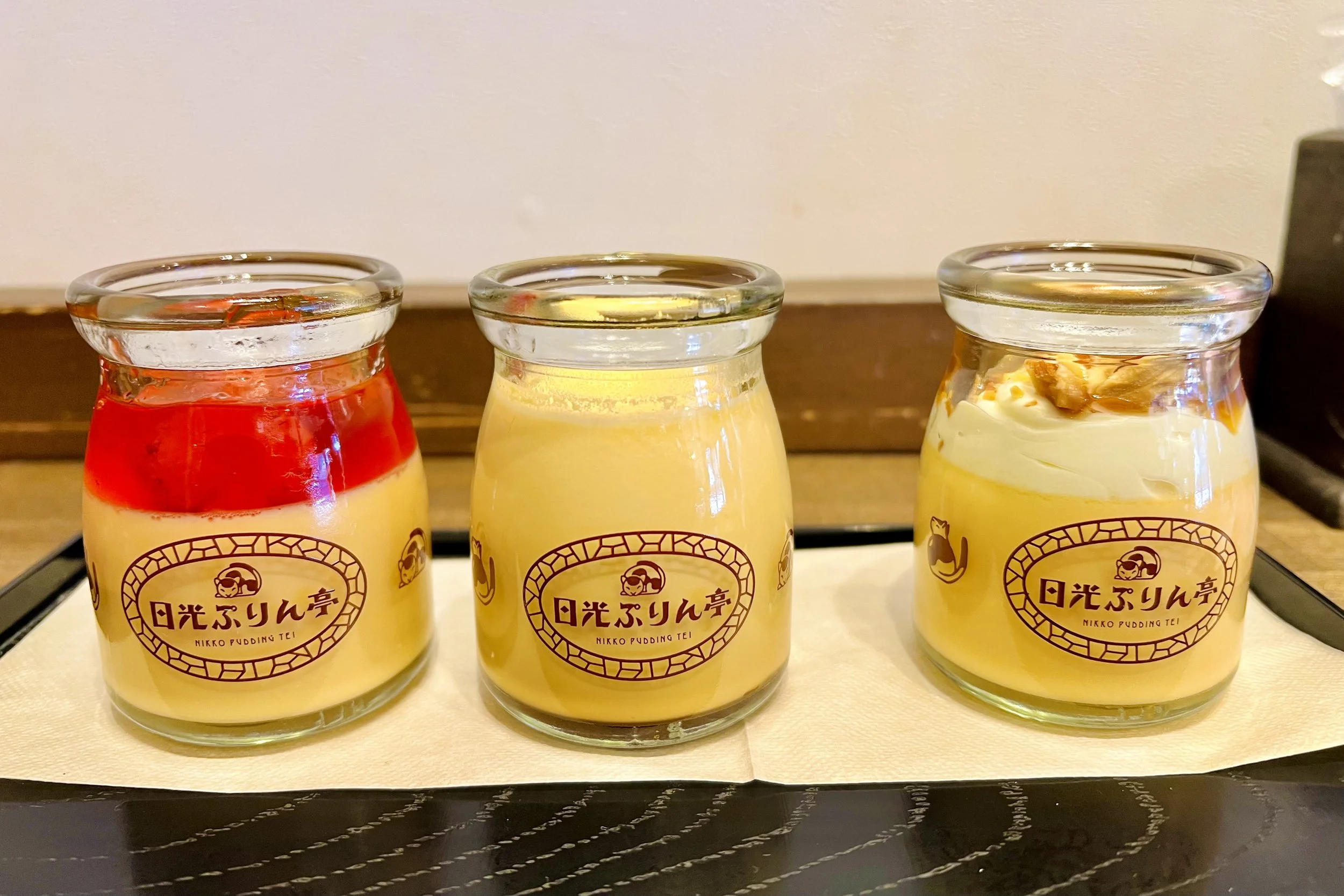
Custard trio in glass jars
Dairy desserts in Japan often lean toward texture obsession: silken, spoonable, nearly trembling.
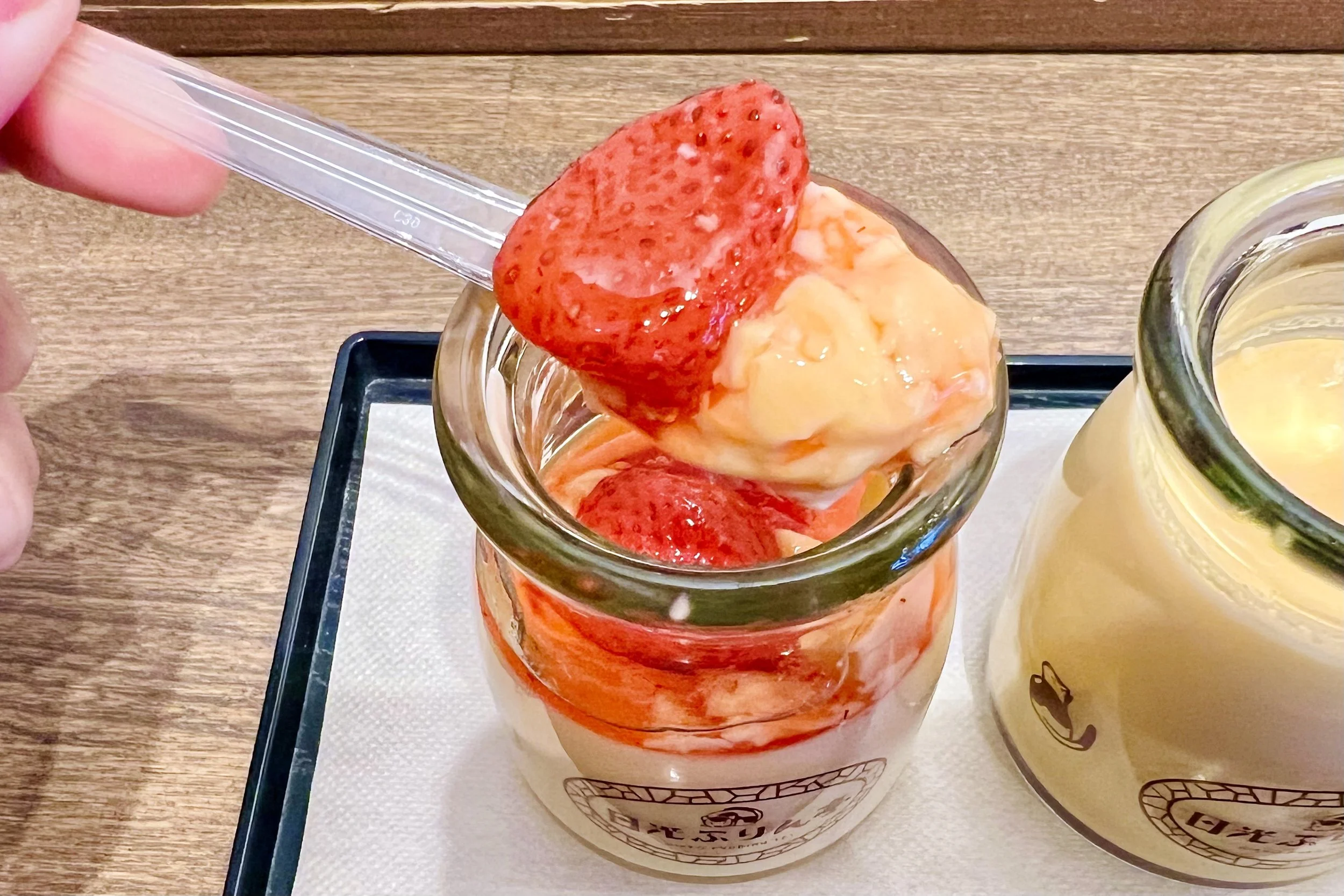
Custard with strawberry
Each jar was calibrated. One with caramel and nuts, one classic, one layered with strawberry. Japan imports a significant portion of its dairy feed but maintains high product uniformity. Even pudding feels engineered.
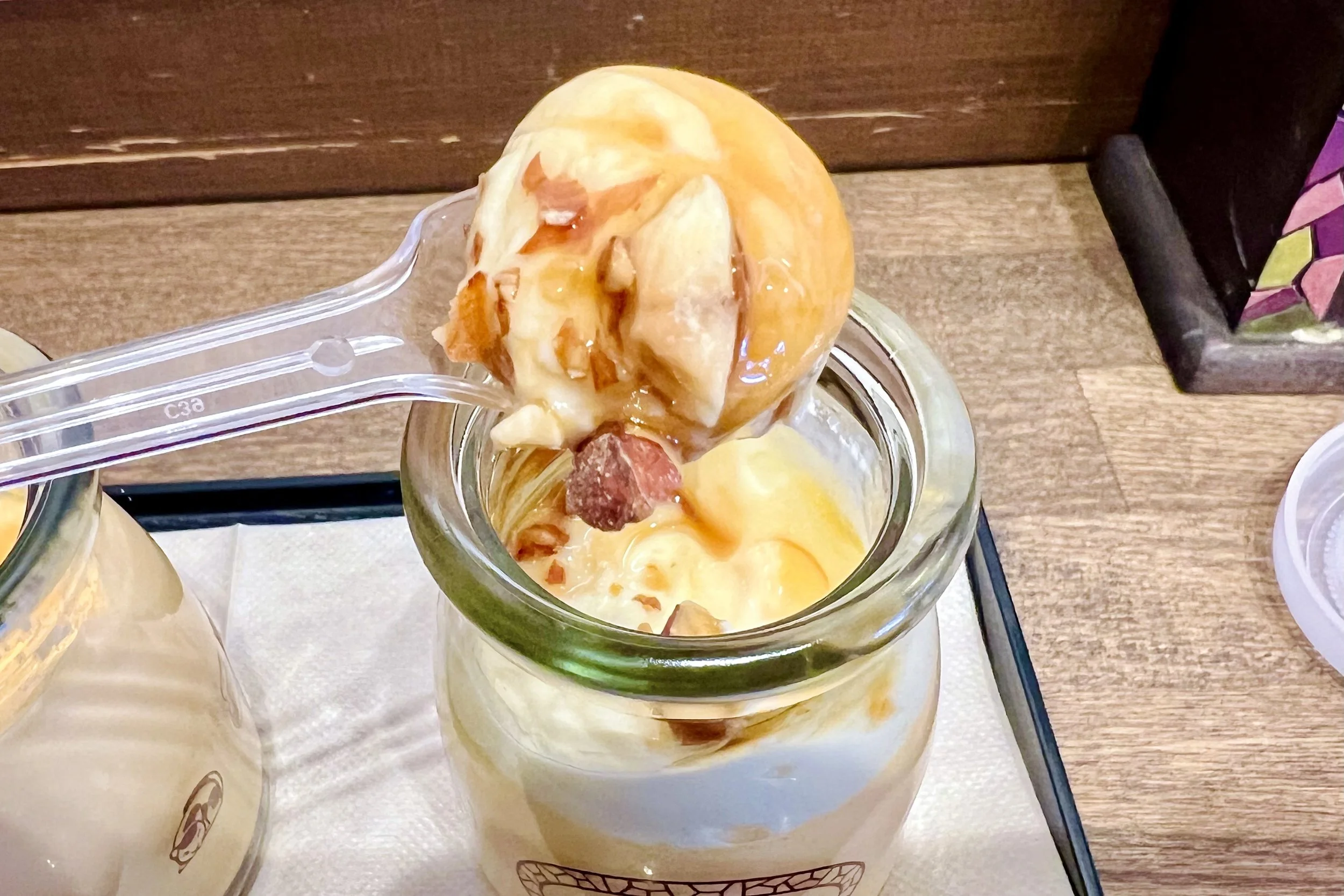
Custard with caramel
Sweetness never overwhelmed. It hovered.
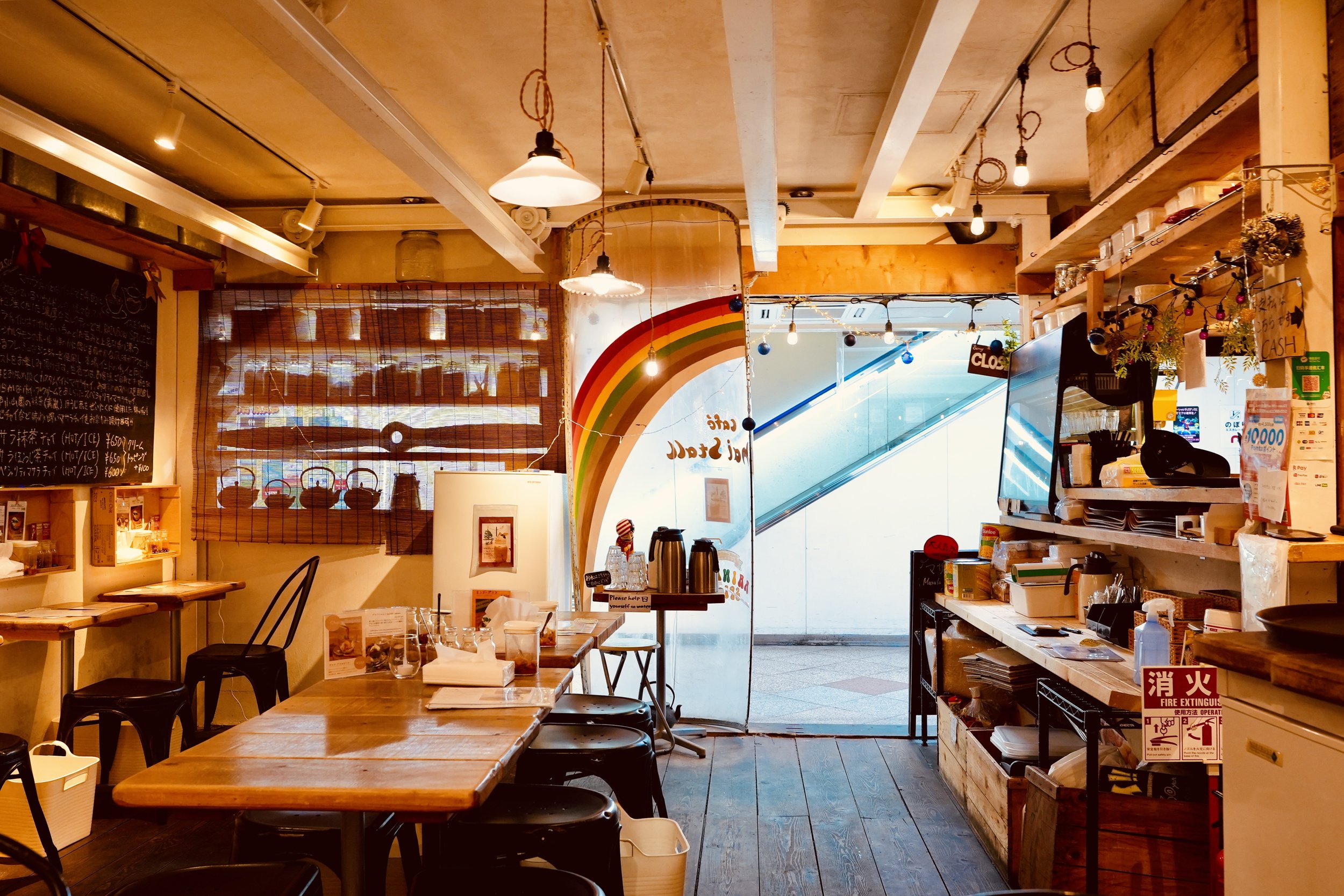
Tokyo’s foreign population exceeds 600,000, and food reflects it. Indian curry in Nakano, under warm café lighting, tasted adapted but not diluted.
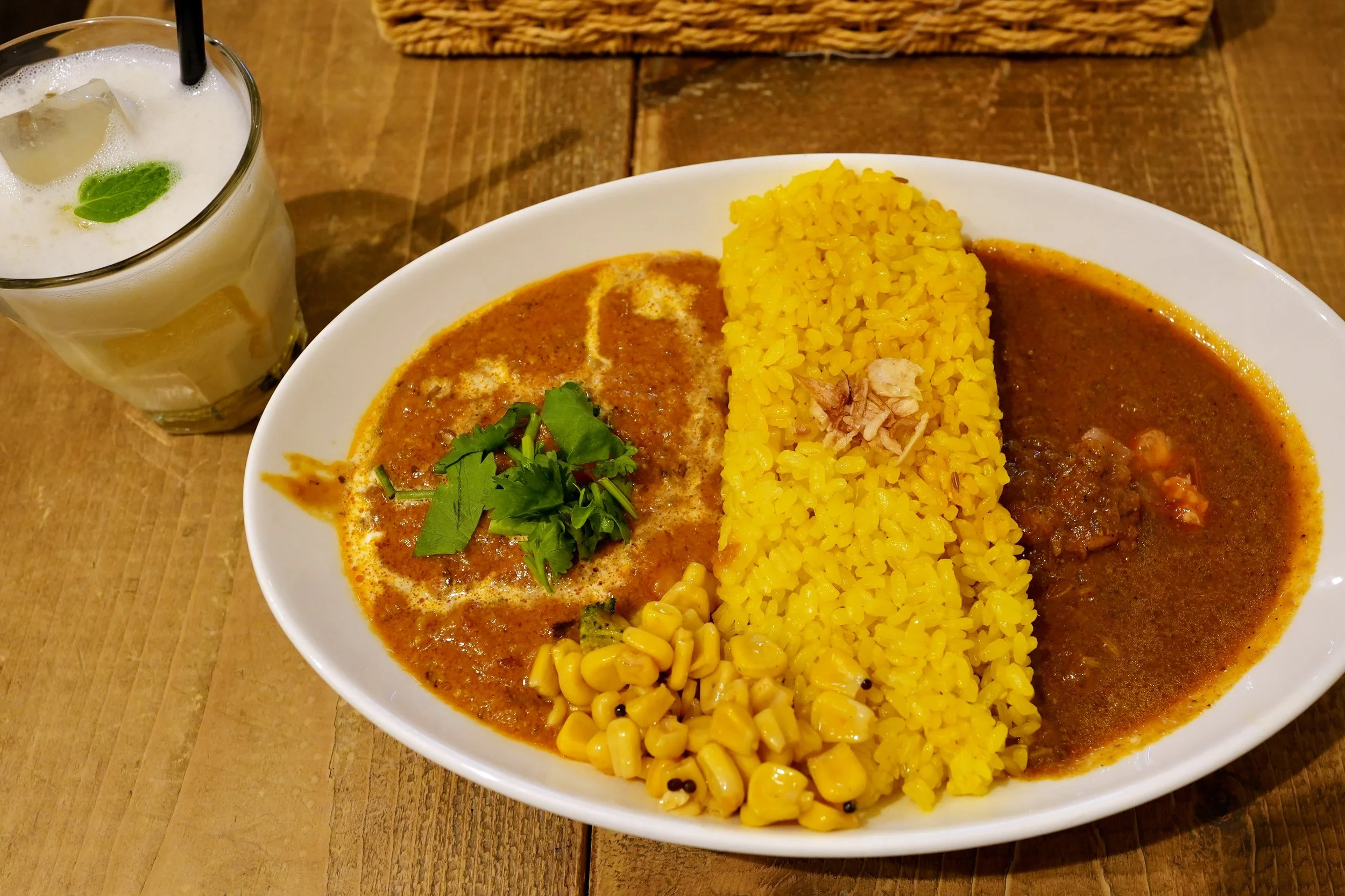
Indian curry with turmeric rice
Rice molded neatly. Corn placed deliberately. Cream swirled with intention.
Global cuisine here does not erase origin — it integrates.
Tsukiji Outer Market still draws tens of thousands daily, even after the wholesale market relocated.
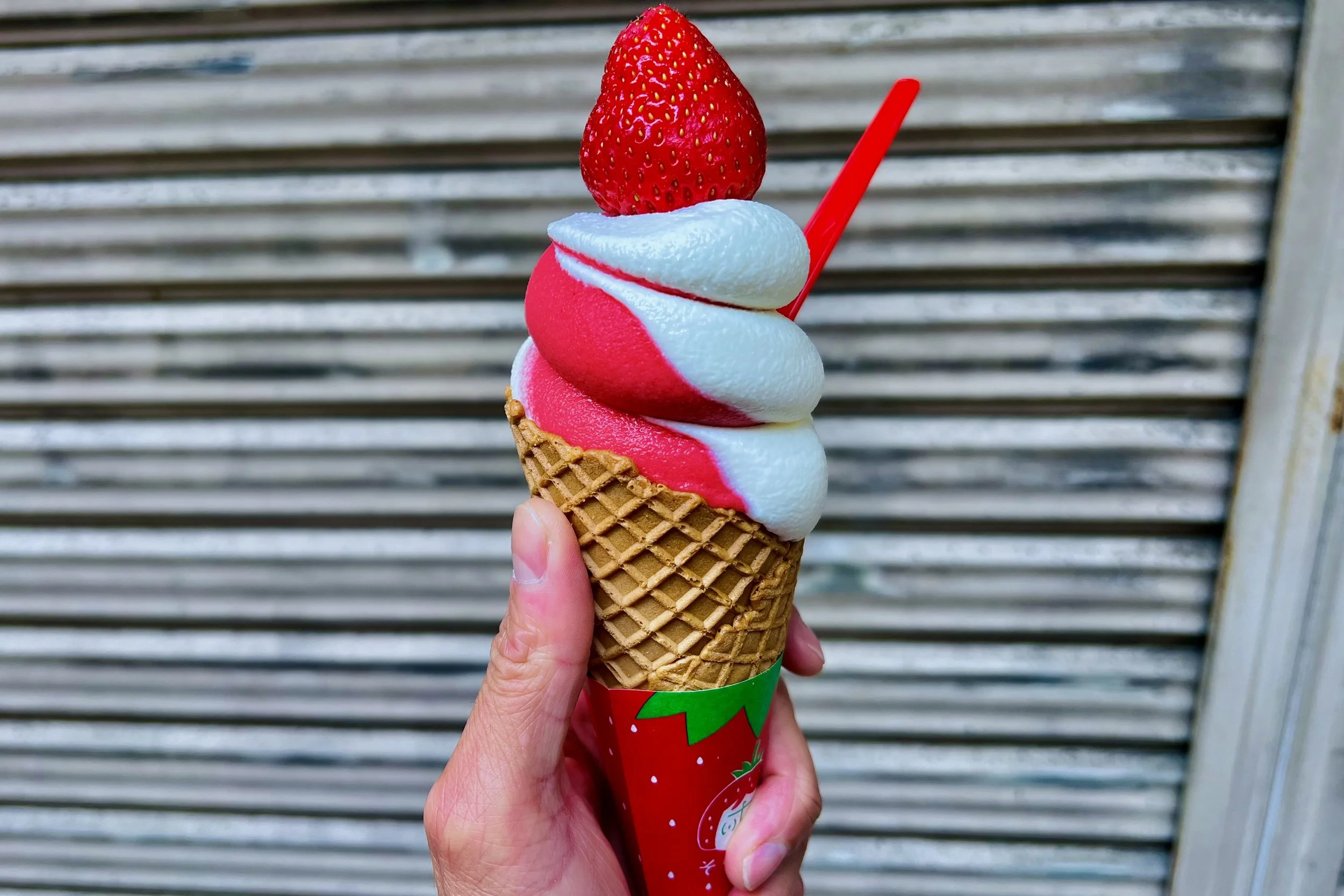
Strawberry swirl ice cream topped with whole berry
Street food there is photogenic but also precise. The swirl ratio was symmetrical. The strawberry real, not decorative.
In a city where vending machines number over 4 million nationwide, impulse consumption is infrastructure.
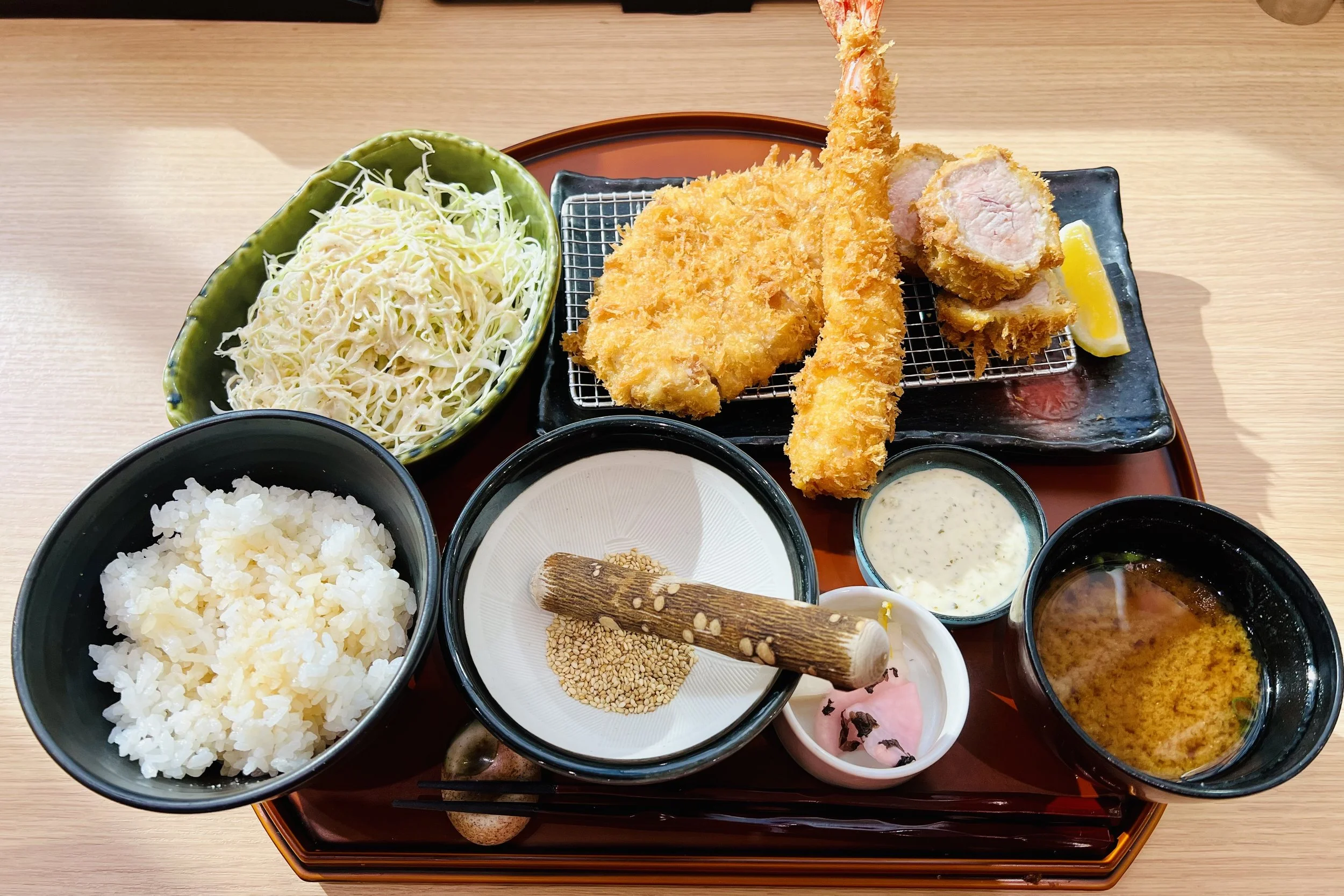
Tonkatsu set before departure
Airports are usually places of compromise.
Narita did not feel like one.
Even departure is structured. Japan’s airport punctuality rate exceeds 85% on-time departure within 15 minutes.
My last meal in Japan was another tonkatsu set. Rice, shredded cabbage, sesame to grind by hand, miso, lemon wedge placed at exact angle.
Grinding sesame in the bowl, I thought about throughput — of trains, of people, of bowls of ramen moving across counters. Japan is a nation of 125 million people, aging rapidly, urbanizing intensely, yet maintaining extraordinary food quality at scale.
Nothing felt rushed.
Nothing felt sloppy.
The final bite was crisp.
To see more photos & videos from my travels visit the links below
happy traveling,
~Sean
