Ushiku Daibutsu: Stillness at 120 Meters
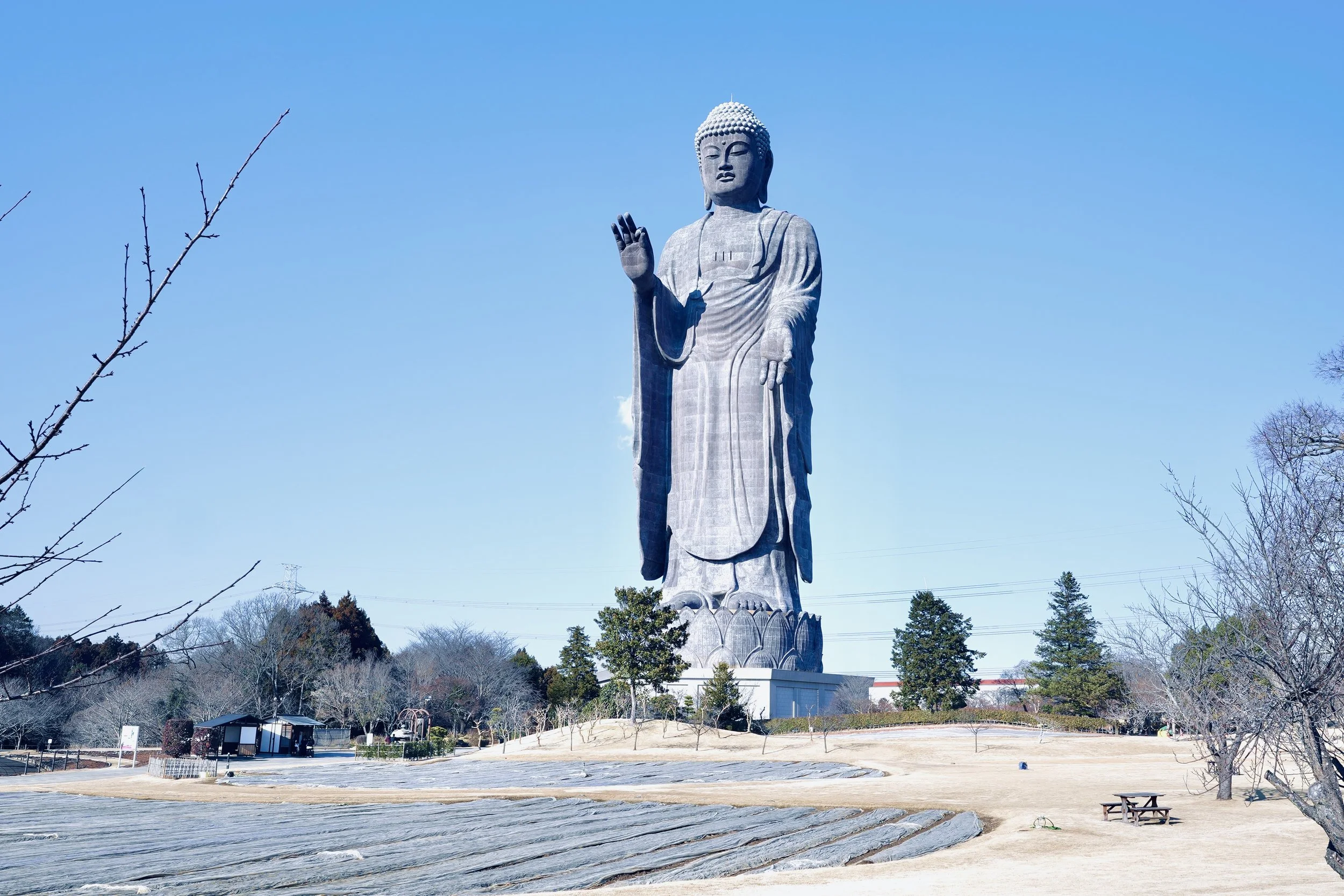
Ushiku Daibutsu rises 120 meters (394 feet) tall, making it one of the tallest bronze statues in the world
Tokyo moves horizontally.
Ushiku rises vertically.
About an hour outside the capital, the skyline disappears and the land flattens into fields and low structures. And then, suddenly, it appears — a figure that does not belong to the scale around it.
At 120 meters tall, Ushiku Daibutsu is nearly twice the height of the Statue of Liberty (including pedestal). Completed in 1993, the bronze figure weighs over 4,000 tons and was constructed in sections before being assembled piece by piece.
But numbers don’t prepare you for proportion.
From the parking lot, it feels distant. From the path approaching the base, it begins to dominate the sky.
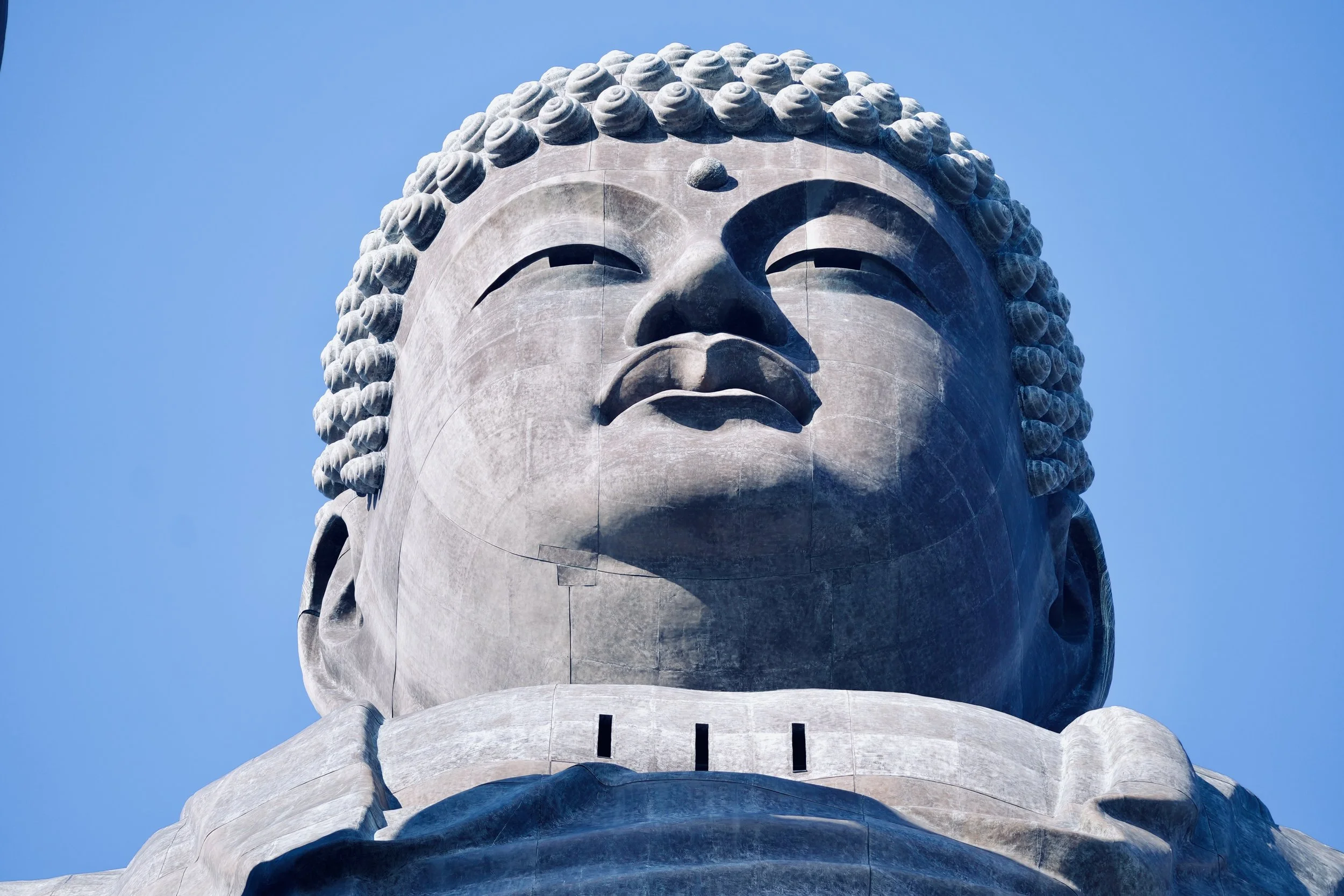
The Buddha’s face alone measures over 20 meters in height
Standing at its base, perspective collapses.
The hem of the robe becomes architectural. The folds resemble terrain. The face — serene, impassive — sits higher than most buildings in central Tokyo.
Japan’s population density exceeds 340 people per square kilometer nationally, and far more within Tokyo’s wards. Yet here, space expands. The statue absorbs attention, compressing the world around it into quiet.
Scale, again — but this time not engineered for efficiency.
Engineered for awe.
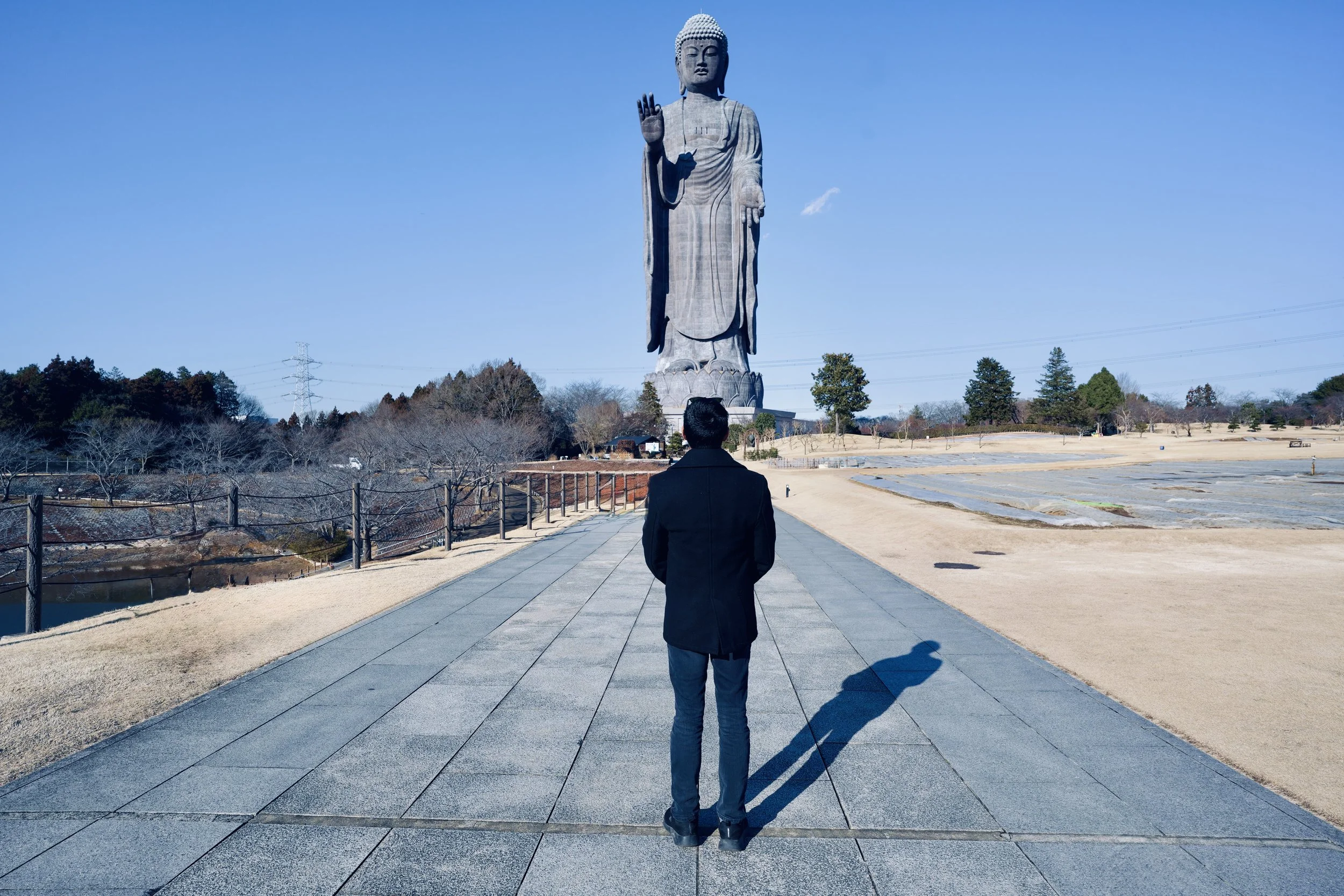
Human scale becomes almost abstract at 120 meters
In Tokyo, buildings rise to maximize land value. In Ushiku, height serves symbolism.
The statue represents Amitābha Buddha, associated with infinite light and boundless compassion. Visitors walk slowly along the perimeter, some pausing, some photographing, some standing still without explanation.
In a country of 125 million people, where trains move with second-level punctuality and urban systems operate under constant pressure, this monument offers the opposite: immobility.
It does not perform. It remains.
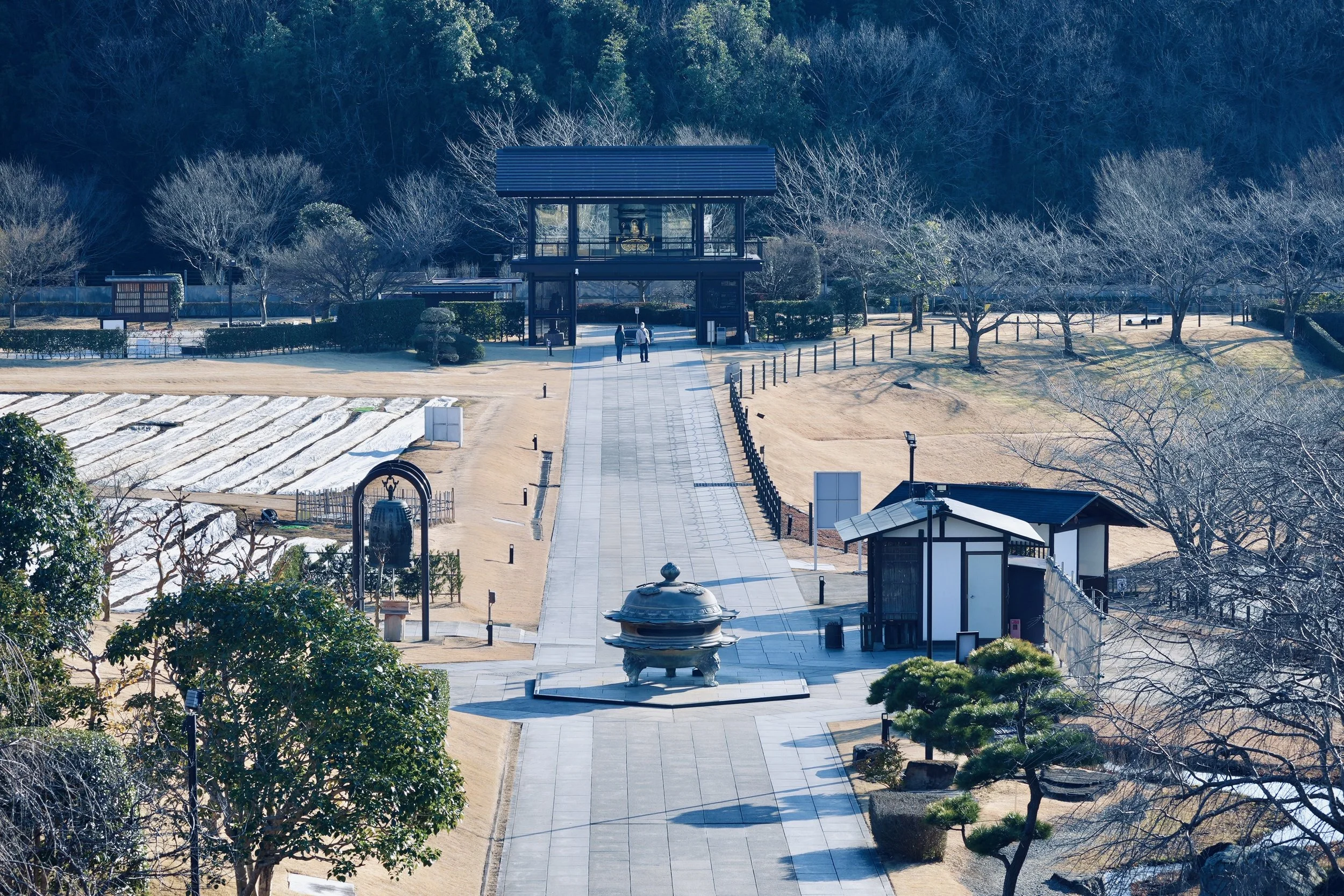
Inside, the experience shifts from external spectacle to contained verticality.
The interior includes meditation spaces and walls lined with thousands of small golden Buddha figures. Elevators carry visitors upward through the body of the statue. The ascent feels mechanical at first — structured, timed — then contemplative.
Height becomes internalized.
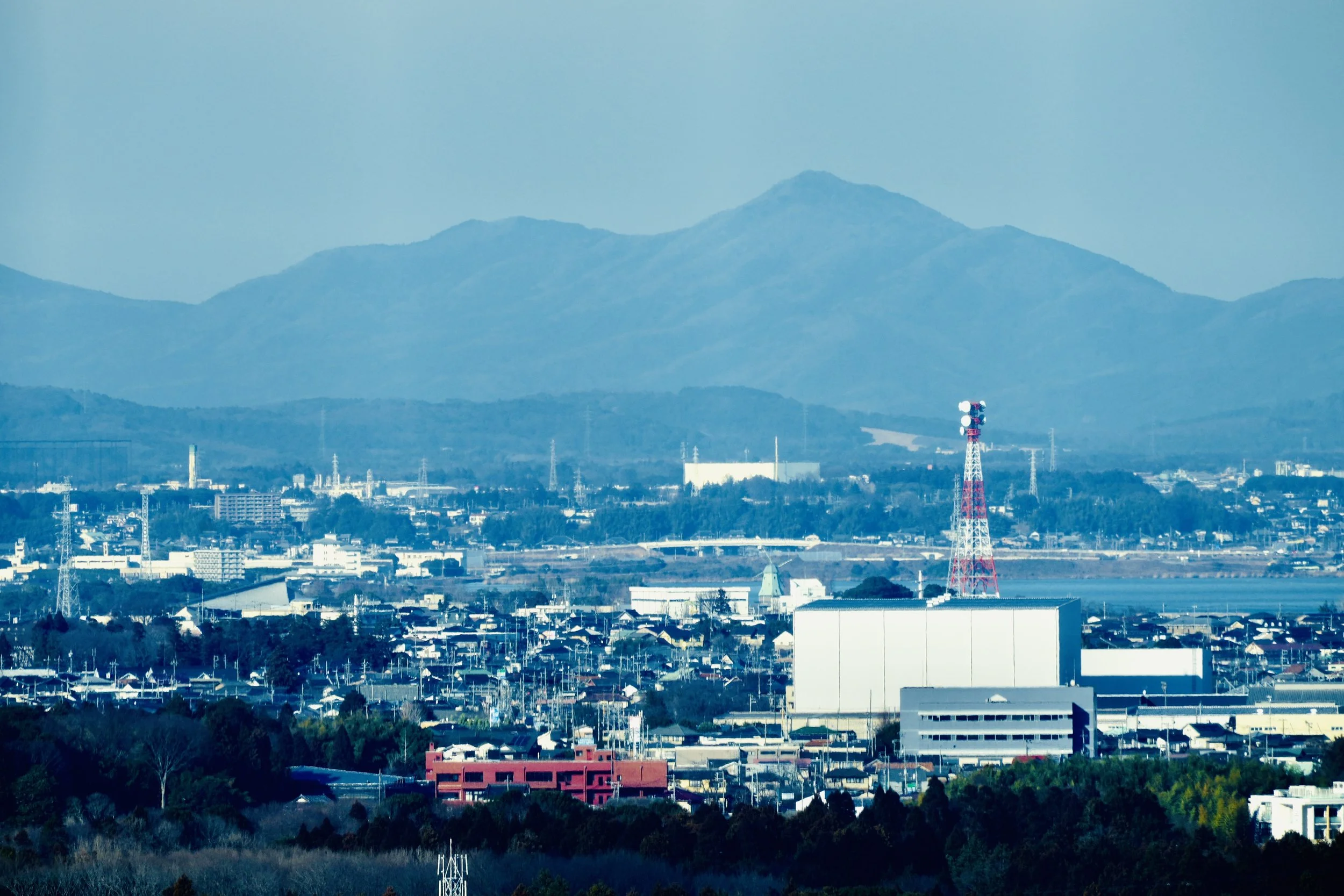
From the observation level, the countryside spreads outward in measured quiet
The observation level offers a distant view of the surrounding countryside. No skyscrapers. No density. Just fields and low-rise development stretching outward.
Tokyo feels engineered.
Ushiku feels symbolic.
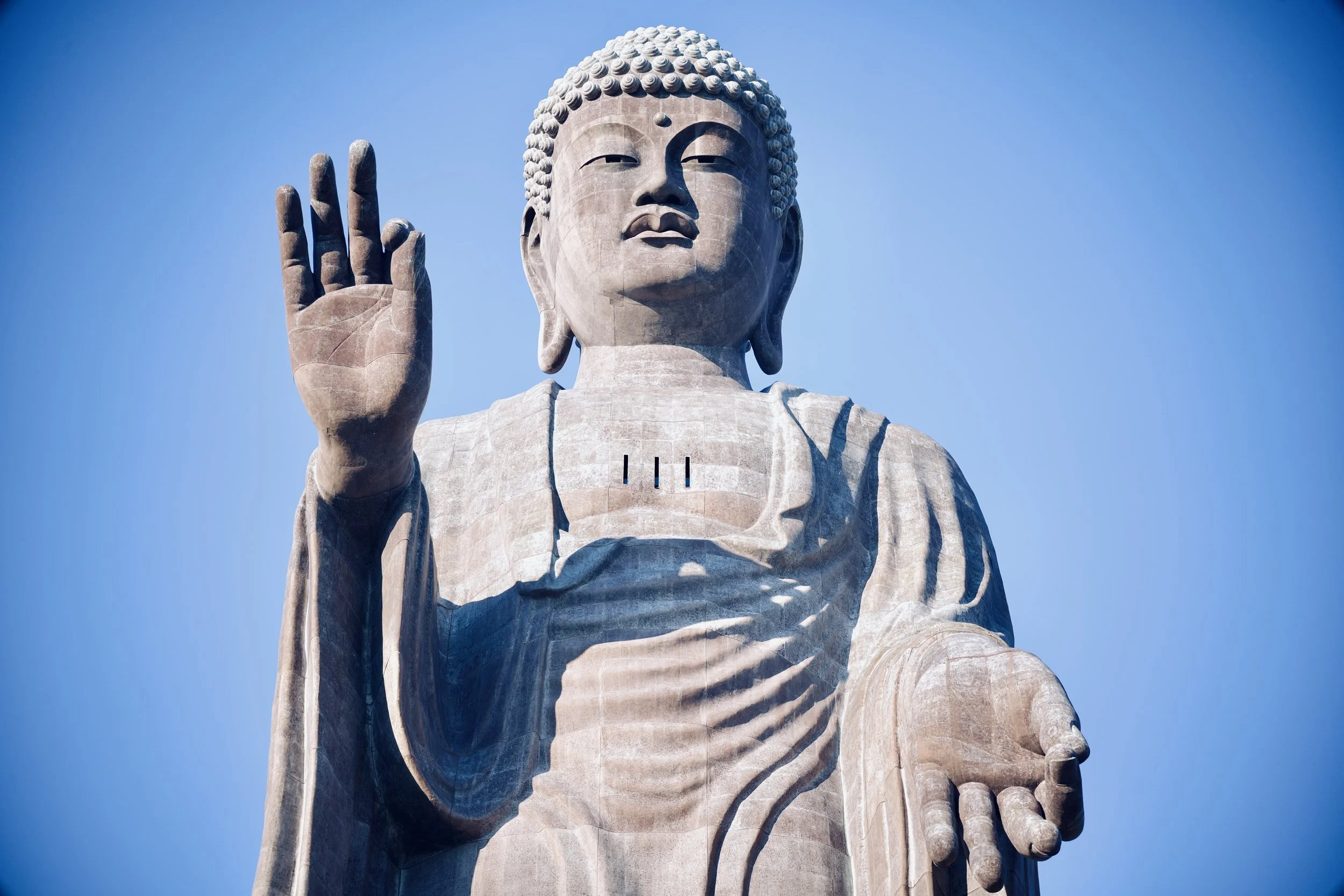
Japan contains thousands of temples and monuments, but few operate at this scale. Monumentality here is not common; it is intentional.
At over 4,000 tons of bronze, Ushiku Daibutsu stands as both religious symbol and engineering achievement. The structure had to withstand seismic activity — a constant reality in Japan — adding another layer of calculation beneath the serenity.
Stillness here is not fragile. It is reinforced.
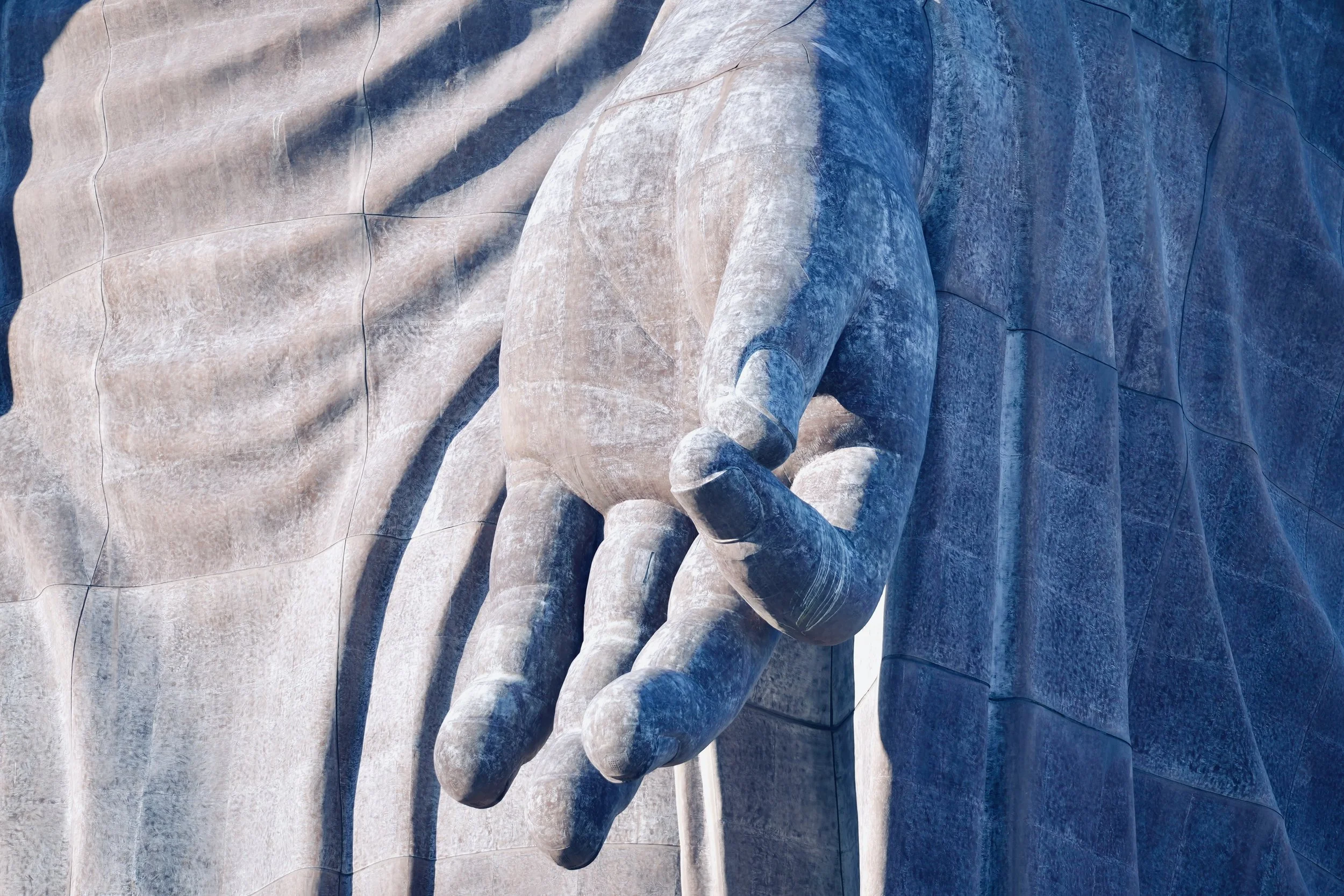
Precision at monumental scale
After time spent circling the base, photographing angles, and looking upward longer than expected, the return journey to Tokyo felt compressed.
The city would resume its horizontal choreography. Trains would align. People would flow.
But Ushiku lingered differently.
Tokyo teaches adaptation at scale.
Ushiku teaches humility within it.
One moves millions.
The other moves almost nothing at all.
And somehow, both feel necessary.
To see more photos & videos from my travels visit the links below
happy traveling,
~Sean
