Lake Kawaguchi: Where the Data Falls Silent
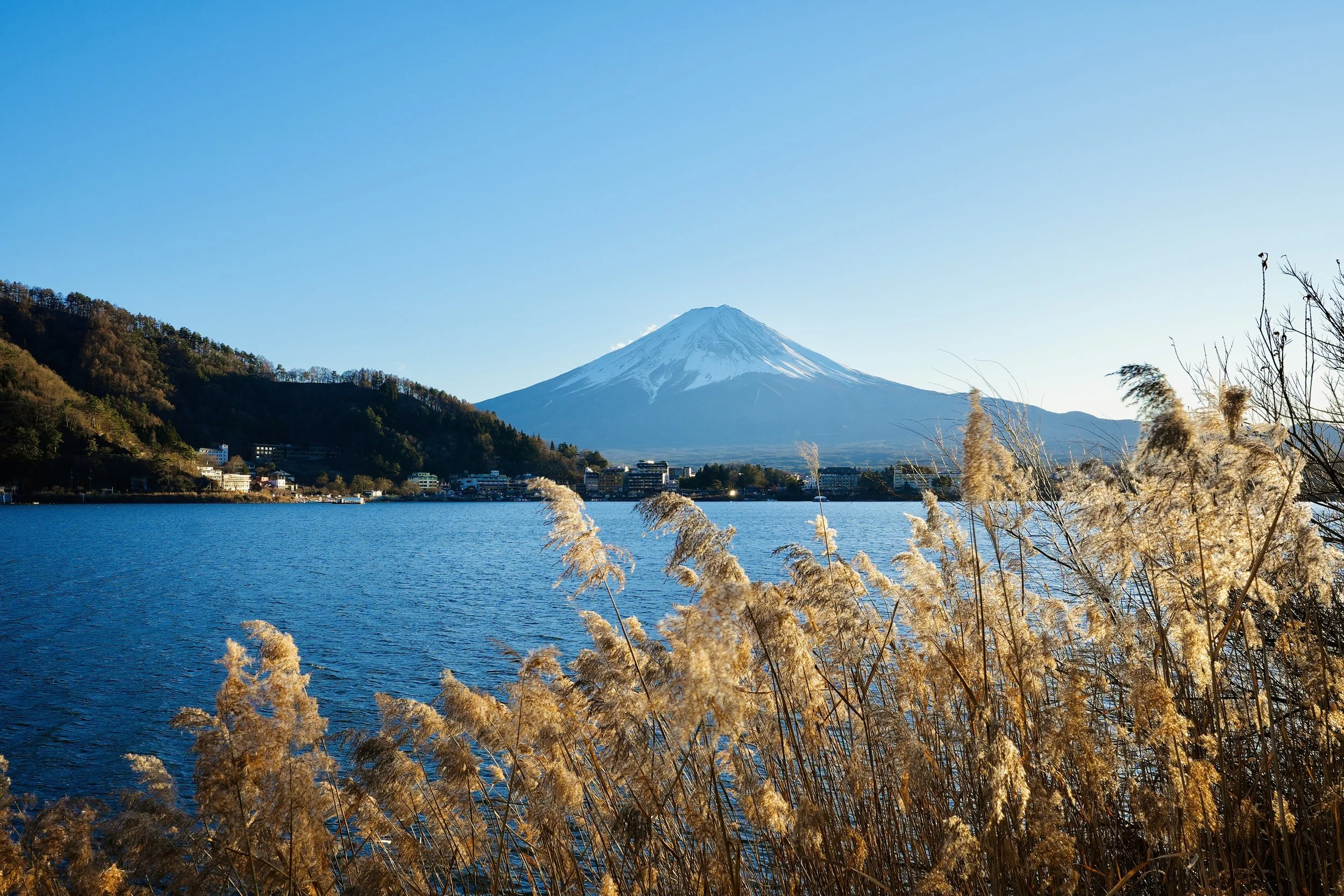
Lake Kawaguchi, elevation 830 meters. Mount Fuji behind me at 3,776 meters. A difference of 2,946 meters — and an even larger difference in scale
There are places in the world so photographed that they begin to feel theoretical. Mount Fuji is one of them.
At 3,776 meters (12,389 feet), it is Japan’s tallest peak. Roughly 300,000 people climb it each year during its short July–September season. It has been dormant since 1707. It appears on currency, corporate logos, woodblock prints, and in millions of social media posts annually.
Statistically, it is not rare.
And yet.
Standing at the edge of Lake Kawaguchi, at approximately 830 meters above sea level, watching wind ripple across the water toward a snow-covered cone that has defined this country’s skyline for centuries, none of the numbers matter.
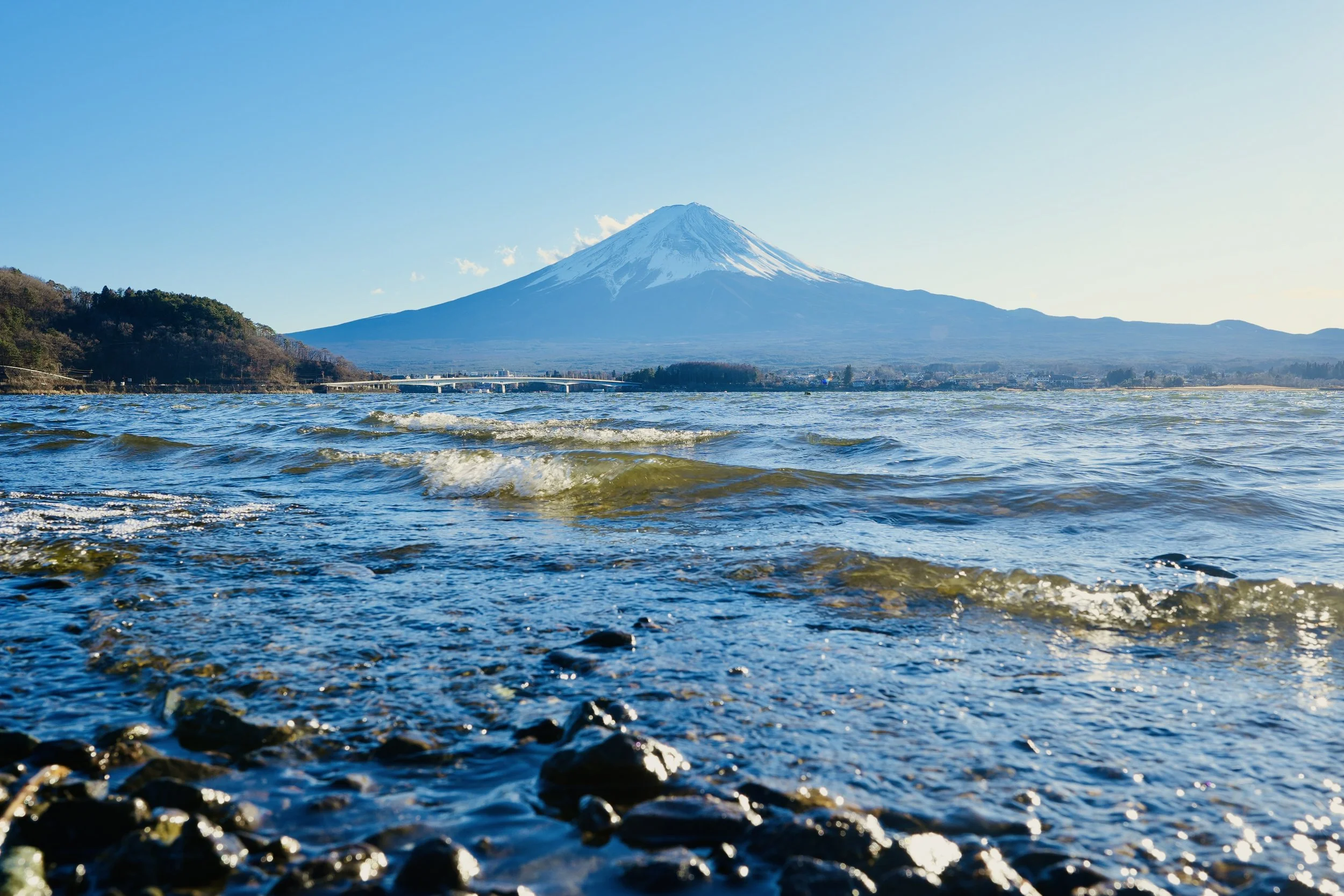
Lake Kawaguchi — surface area 5.7 km², shoreline stretching roughly 19 kilometers
Lake Kawaguchi is one of the Fuji Five Lakes, formed by ancient lava flows from earlier eruptions. It spans just 5.7 square kilometers. By comparison, Lake Tahoe in California is over 490 square kilometers — nearly 86 times larger.
And yet the smaller scale sharpens everything.
The wind pushes short, muscular waves toward the rocky shoreline. The surface fractures light into silver streaks. Fuji rises from the opposite side of the basin, occupying nearly half the visible horizon. The lake does not compete with the mountain — it frames it.
The geometry is almost too clean. A near-perfect cone rising from a horizontal plane. A symmetry that feels algorithmic.
And yet it is volcanic.
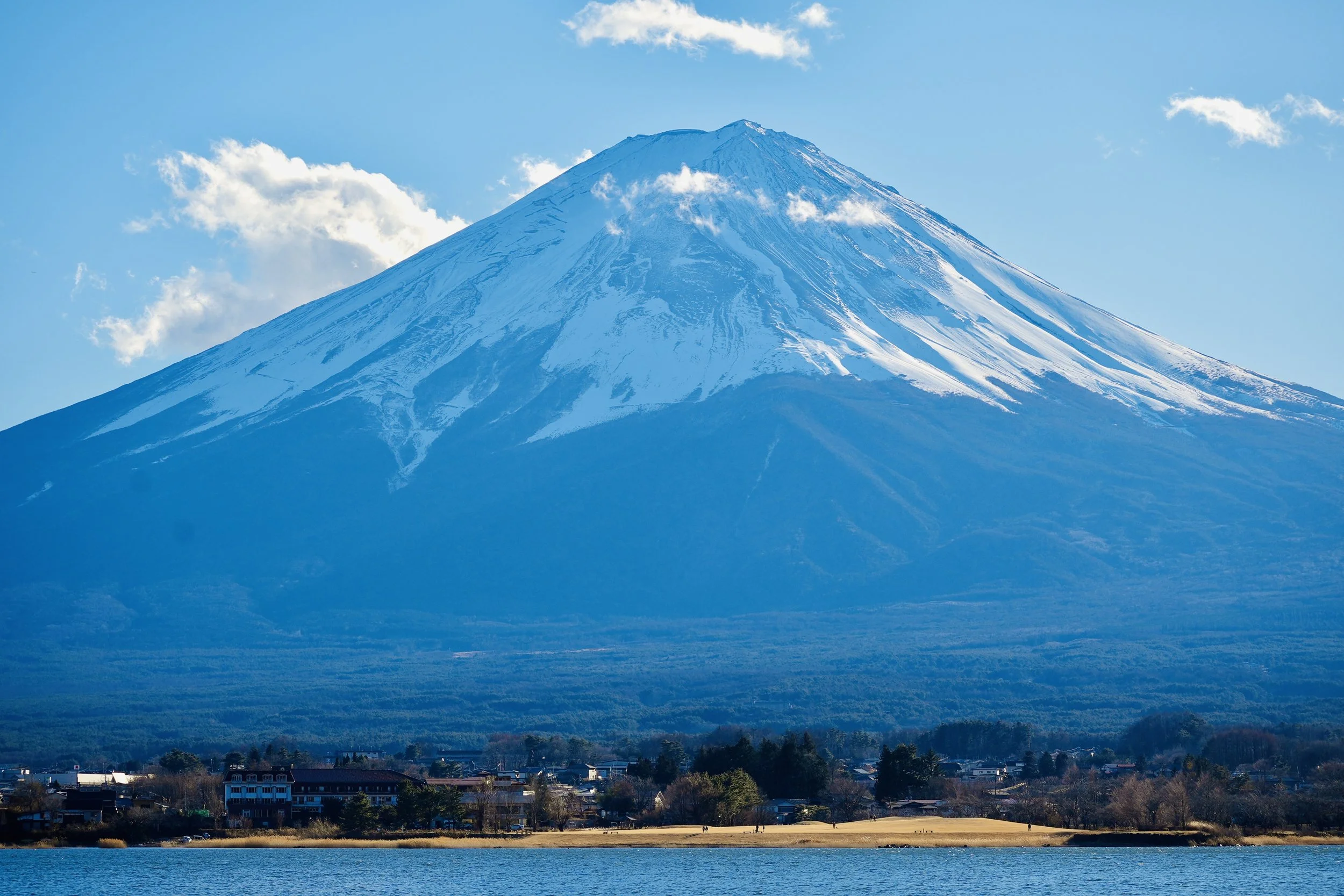
Stratovolcano. Last eruption: 1707. Snow depth fluctuates seasonally but often persists near the summit through spring
From Tokyo, Fuji feels distant — roughly 100 kilometers southwest of the capital. But here, distance compresses.
The mountain dominates the visual field. Snow traces long vertical scars down its flanks. The summit appears close enough to touch, though it would take a trained climber five to ten hours to ascend from the fifth station during climbing season.
This is what scale distortion does to the human mind.
We see something enormous. We assume proximity.
We see something calm. We assume permanence.
But Fuji is still an active volcano.
And Lake Kawaguchi exists because of it.
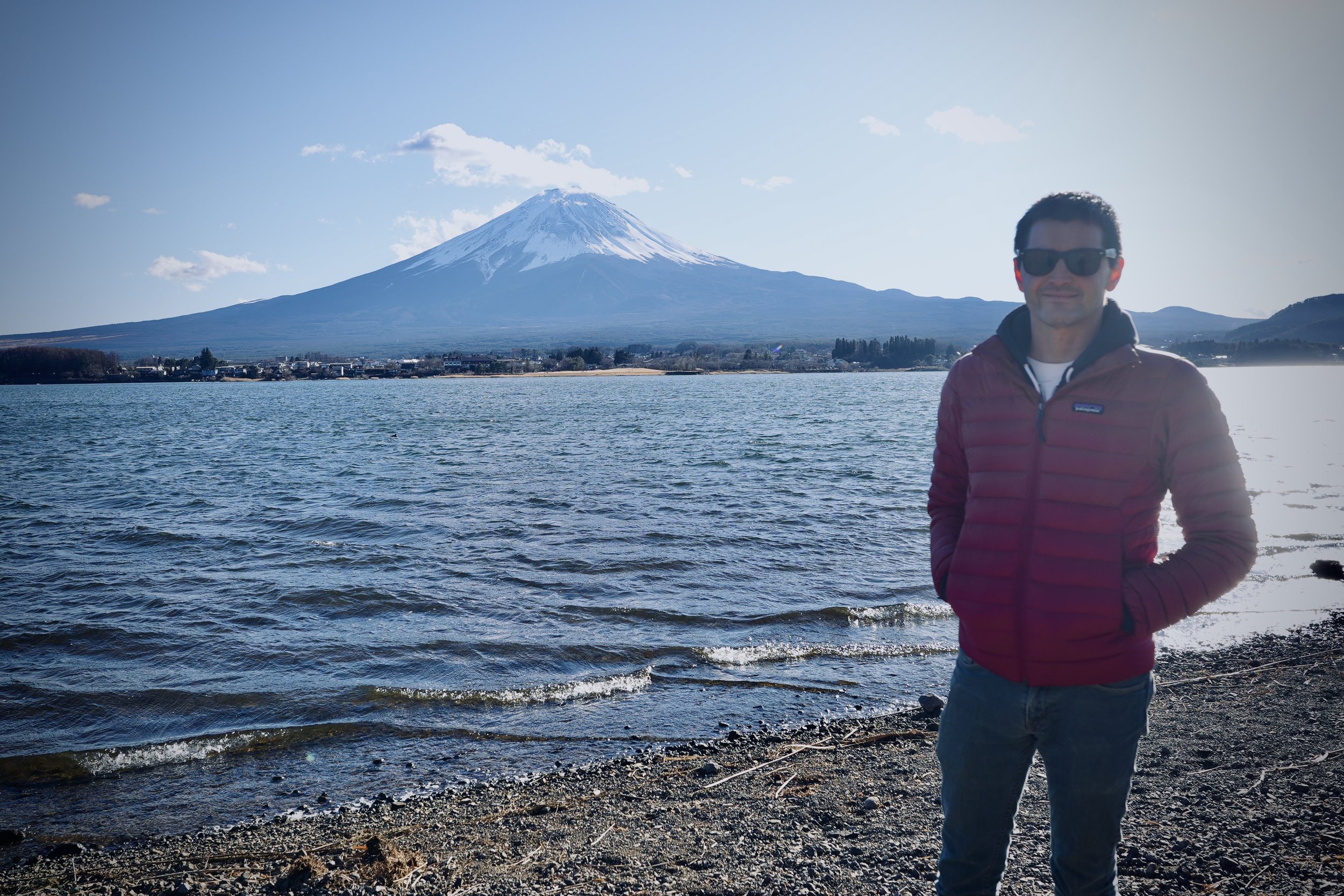
Human scale against geological scale
In data science, context is everything. A number alone means nothing without a frame of reference.
Standing on the pebbled shore, hands in pockets against the January air, I become the unit of measurement. Roughly 1.7 meters tall. A temporary organism on a volcanic island chain formed by tectonic convergence.
Japan sits on the Pacific Ring of Fire. Approximately 10% of the world’s active volcanoes are located here. The archipelago experiences around 1,500 measurable earthquakes per year.
And yet this afternoon is still.
The wind moves. The lake responds. The mountain watches.
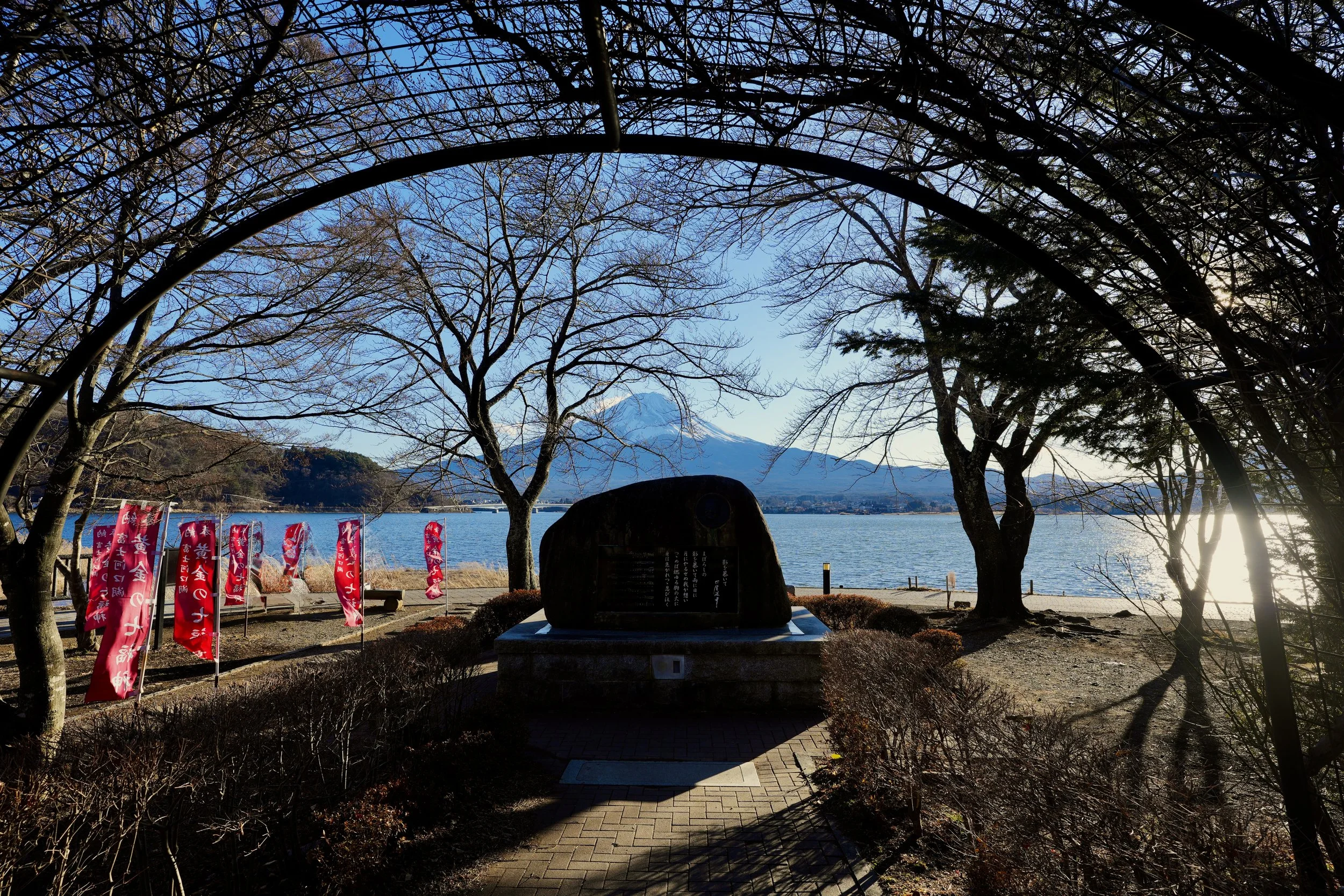
Framed symmetry — natural geometry shaped by human hands
An iron arch covered in dormant vines frames Fuji like a deliberate composition. Red banners ripple along the lakeside path. The scene feels curated, but the mountain remains indifferent.
Over 30 million international tourists visited Japan in 2019. The Fuji area is one of the most photographed landscapes in the country. Infrastructure has grown around that fact — viewing platforms, buses, signage, seasonal festivals.
But in winter, in the quiet off-season air, the statistics dissolve.
Tourism becomes footsteps on gravel.
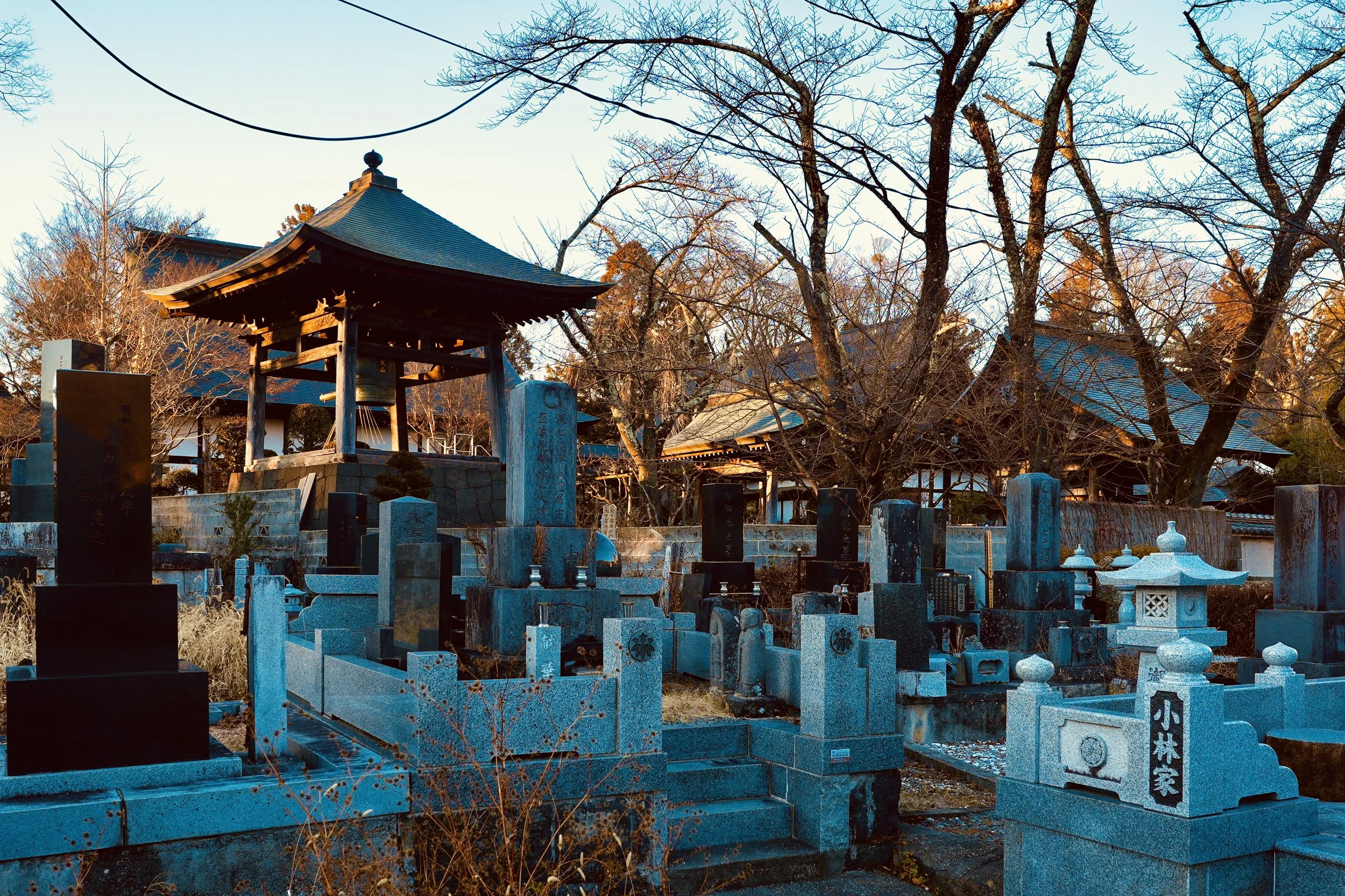
A lakeside cemetery — permanence measured differently
On the walk around the lake, I pass a cemetery. Stone markers rise in neat rows. A temple roof glows in late afternoon light.
Japan’s median age is approximately 49 years — one of the highest in the world. Nearly 29% of the population is over 65. Demographics are often discussed in terms of economic pressure, labor shortages, sustainability.
But here, the numbers feel smaller.
Gravestones face the same mountain that the living photograph. Generations measured in decades. Volcanoes measured in millennia.
Fuji does not move.
We do.
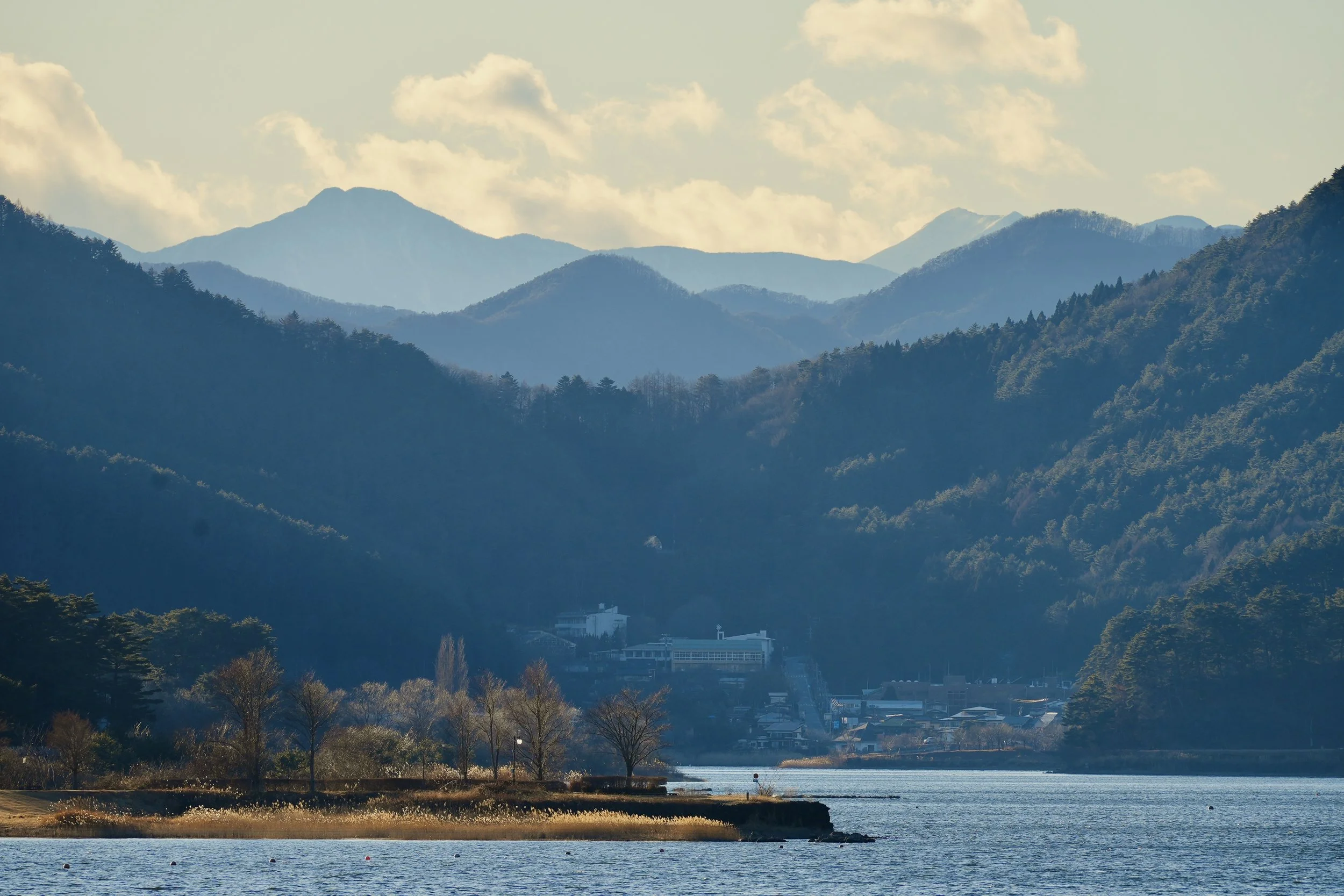
Atmospheric compression — ridgelines stacking into soft gradients
Beyond the lake, mountain ridges stack in increasingly faint silhouettes. Light scatters through winter air. The visual depth becomes mathematical — foreground, midground, background, receding in soft ratios of contrast.
The human eye reads depth through contrast decay. The farther something is, the less saturated, the softer its edges.
Distance as a data gradient.
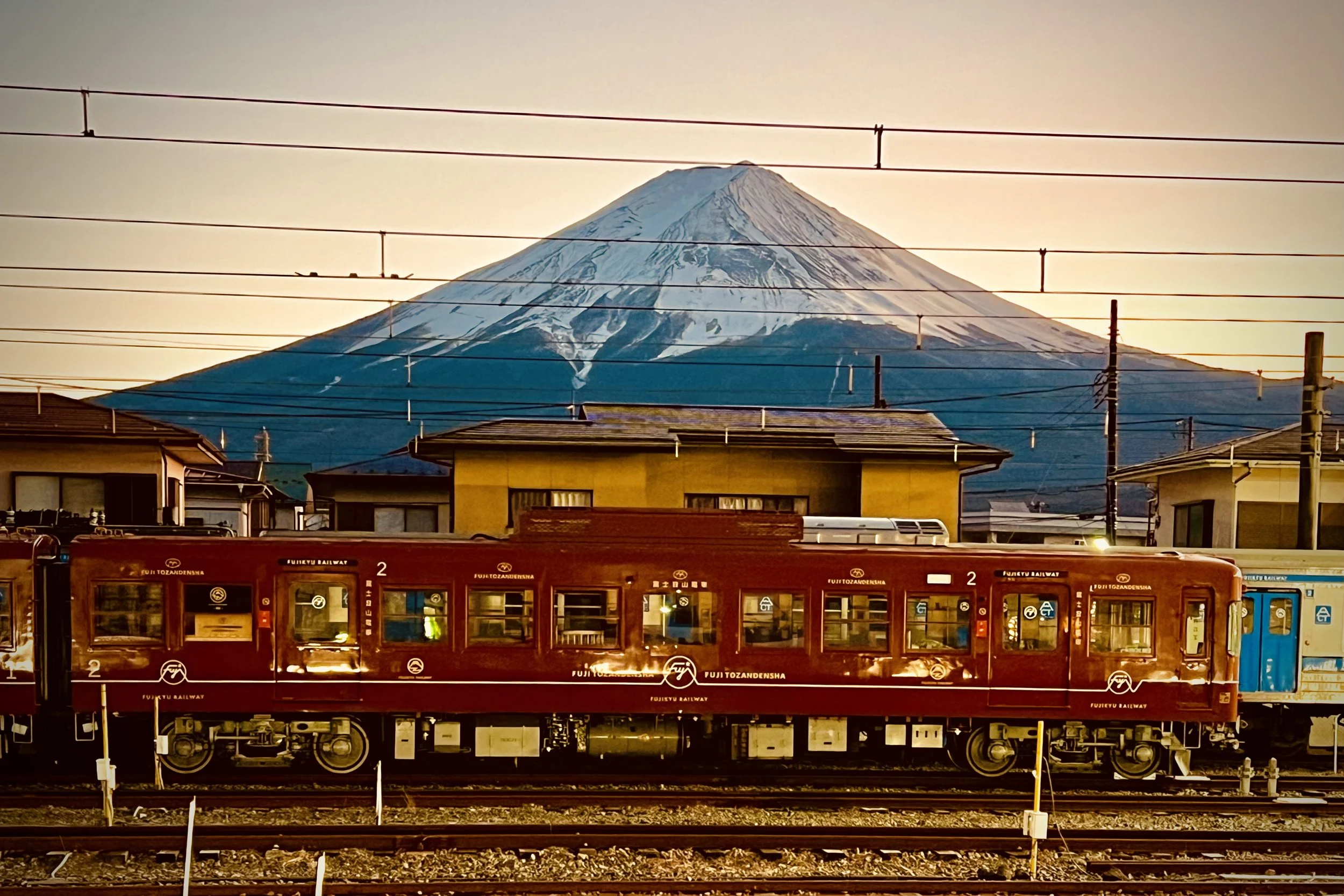
Fujikyu Railway — linking Kawaguchiko to the greater Tokyo network
Eventually, departure reenters the system.
The Fujikyu Railway line connects Kawaguchiko to Otsuki, linking to the broader JR network. The journey back to Tokyo takes roughly two hours.
The train sits still in the station. Fuji towers behind it, cut by overhead wires — a reminder that modern infrastructure threads directly across ancient geology.
Japan’s rail system carries billions of passengers annually. It is among the most punctual in the world, with average delays measured in seconds.
Precision moving beneath permanence.
To see more photos & videos from my travels visit the links below
happy traveling,
~Sean
