Between Tides and Towers
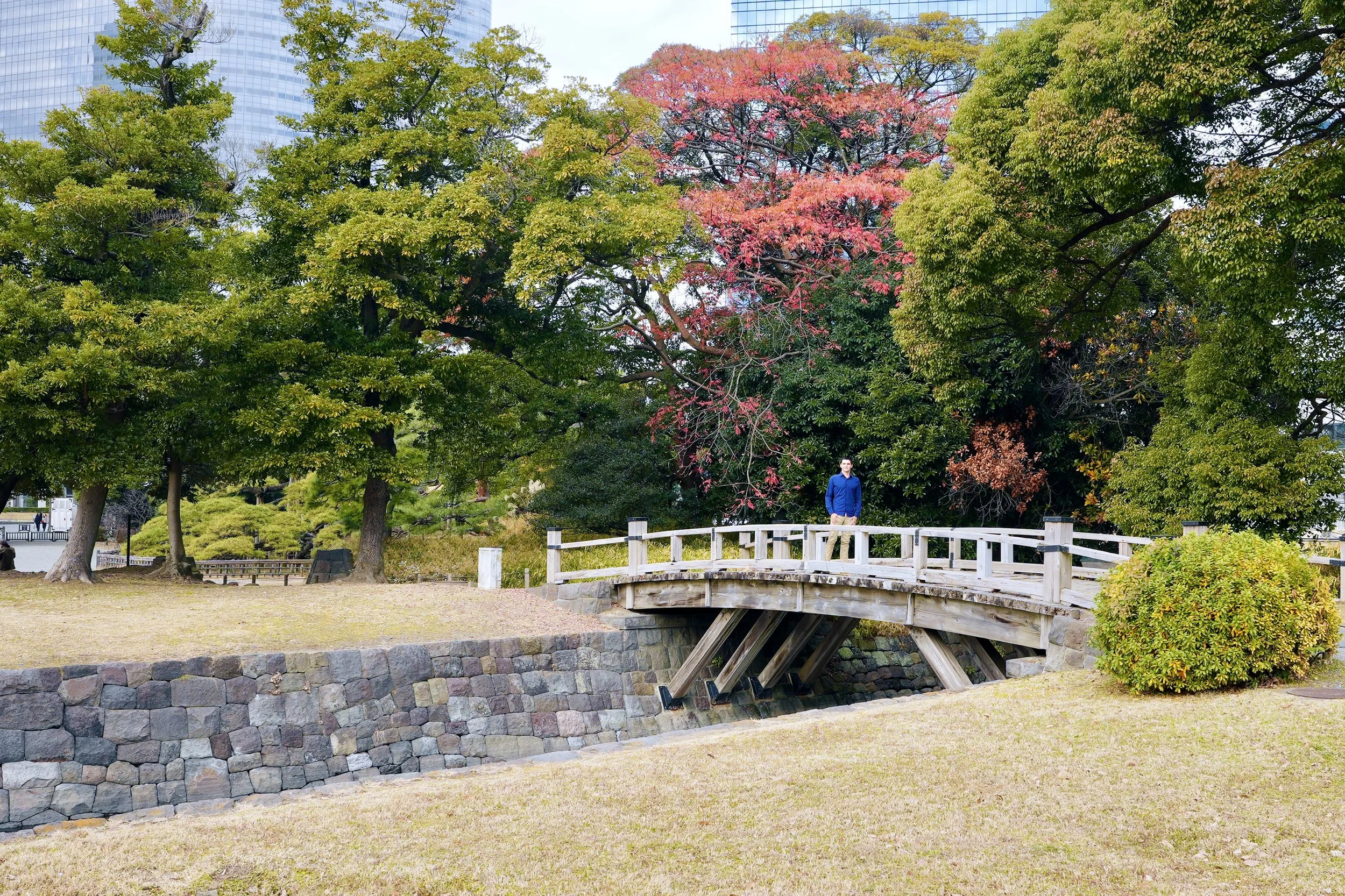
Crossing into a slower dataset
The first wooden bridge does not feel dramatic, but it feels deliberate. The boards are worn smooth from decades of quiet footsteps, and beneath them the water barely moves. In the distance, glass towers rise above the treeline, reminding you that this garden exists inside one of the most economically powerful urban regions on earth. And yet the bridge narrows your field of vision. It compresses the skyline. It slows your stride.
Hamarikyu Gardens spans roughly 25 hectares (about 62 acres) along Tokyo Bay. It was originally constructed during the Edo period as a feudal lord’s residence before later becoming an imperial garden. Today, it sits within a metropolitan area of nearly 37 million people, the largest urban population on the planet. The contrast is not subtle. The bridge functions like a threshold variable — once crossed, the noise of the city drops significantly.
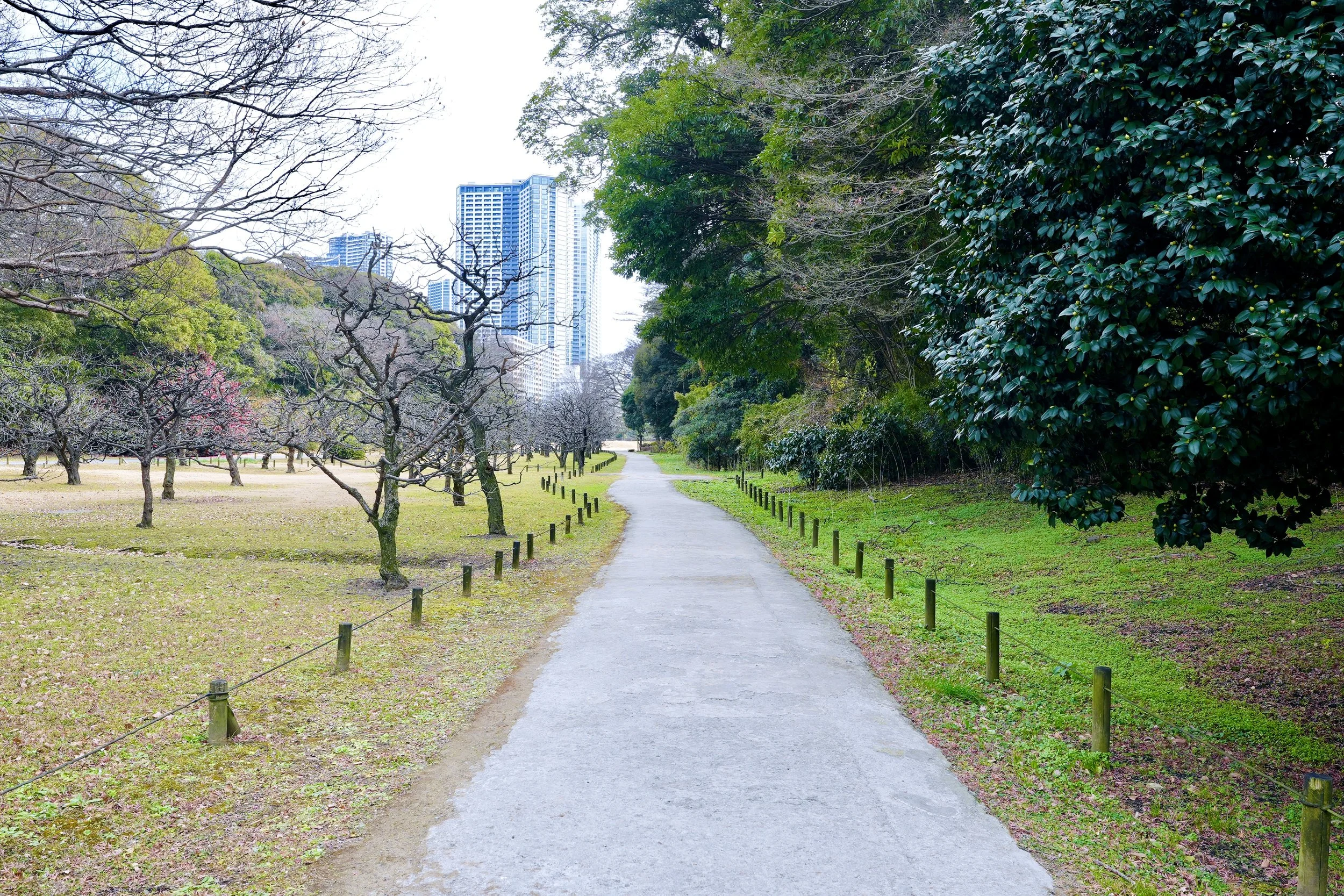
A straight line through controlled space
A wide path stretches forward between rows of trees. Beyond them, high-rise buildings frame the horizon. The geometry feels almost engineered — clean edges, even spacing, disciplined landscaping. Tokyo is a city obsessed with optimization: rail lines calibrated to the minute, zoning structured for efficiency, vertical development layered tightly.
Inside the garden, the optimization is psychological. The path gives you visual clarity. In data science, we reduce dimensionality to understand complexity. Here, the path performs that function. It simplifies the scene into a linear progression: tree, sky, skyline. The rest fades into manageable abstraction.
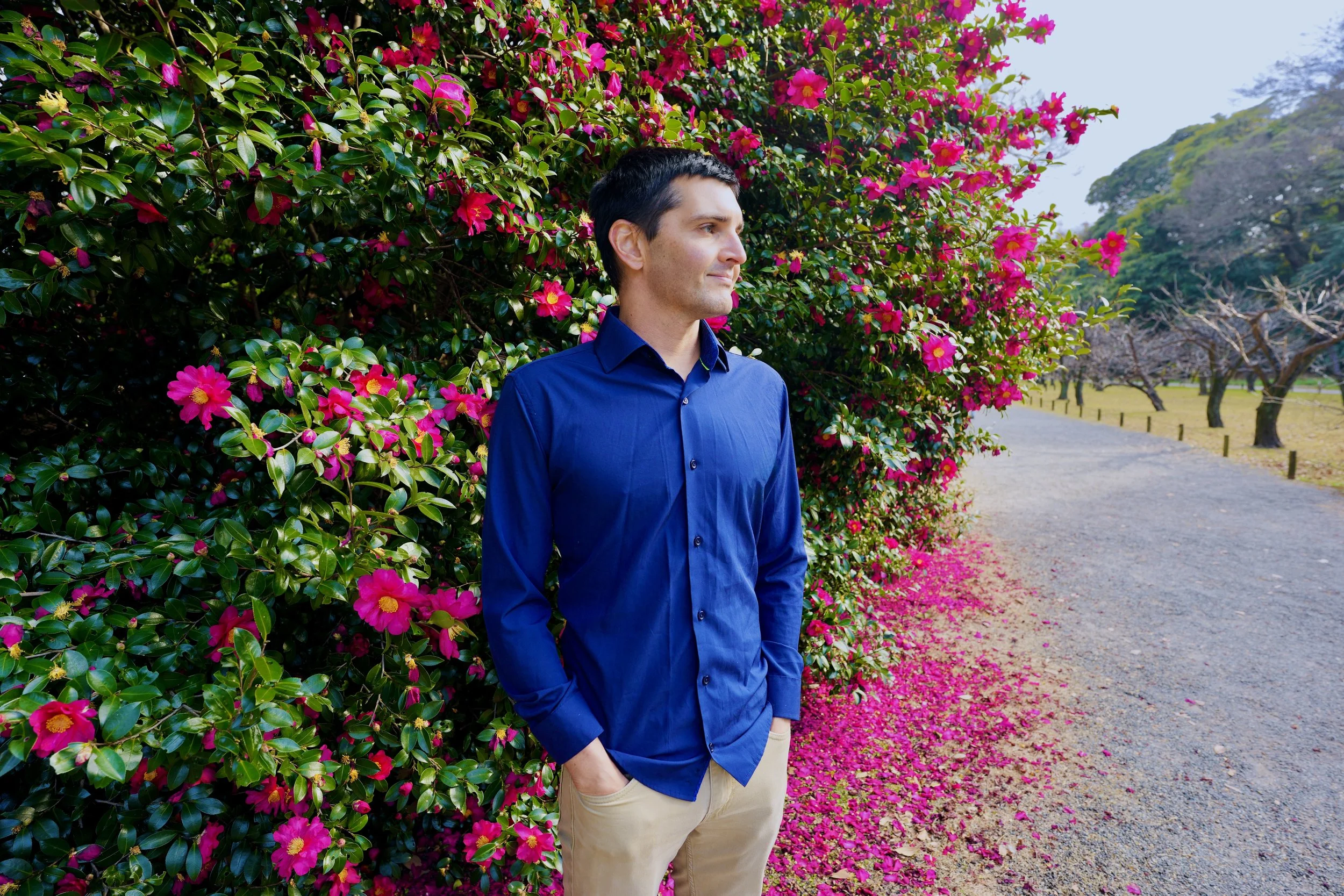
Winter refuses to be monochrome
Clusters of camellias burn bright pink against deep green leaves. Fallen petals scatter across gravel like small data points that slipped out of formation. Even in January, the garden refuses stillness.
Tokyo’s seasonal cycles operate almost like a perfectly structured time series. Cherry blossoms dominate Q2. Hydrangeas appear in early summer. Ginkgo trees turn the city gold in late autumn. Camellias hold winter’s place. If you mapped tourism spikes against bloom cycles, you would likely see correlation. Nature in Tokyo is not random. It is anticipated.

Precision at the micro level
Up close, the camellia reveals symmetry — layered petals radiating outward, yellow stamens clustered at the center like a dense scatter plot. The design feels both spontaneous and mathematically precise.
It is easy to think of Tokyo as engineered and nature as organic, but standing here, the distinction blurs. Patterns repeat at every scale. The skyline follows structural logic. The flower follows biological logic. Both rely on repetition and constraint.
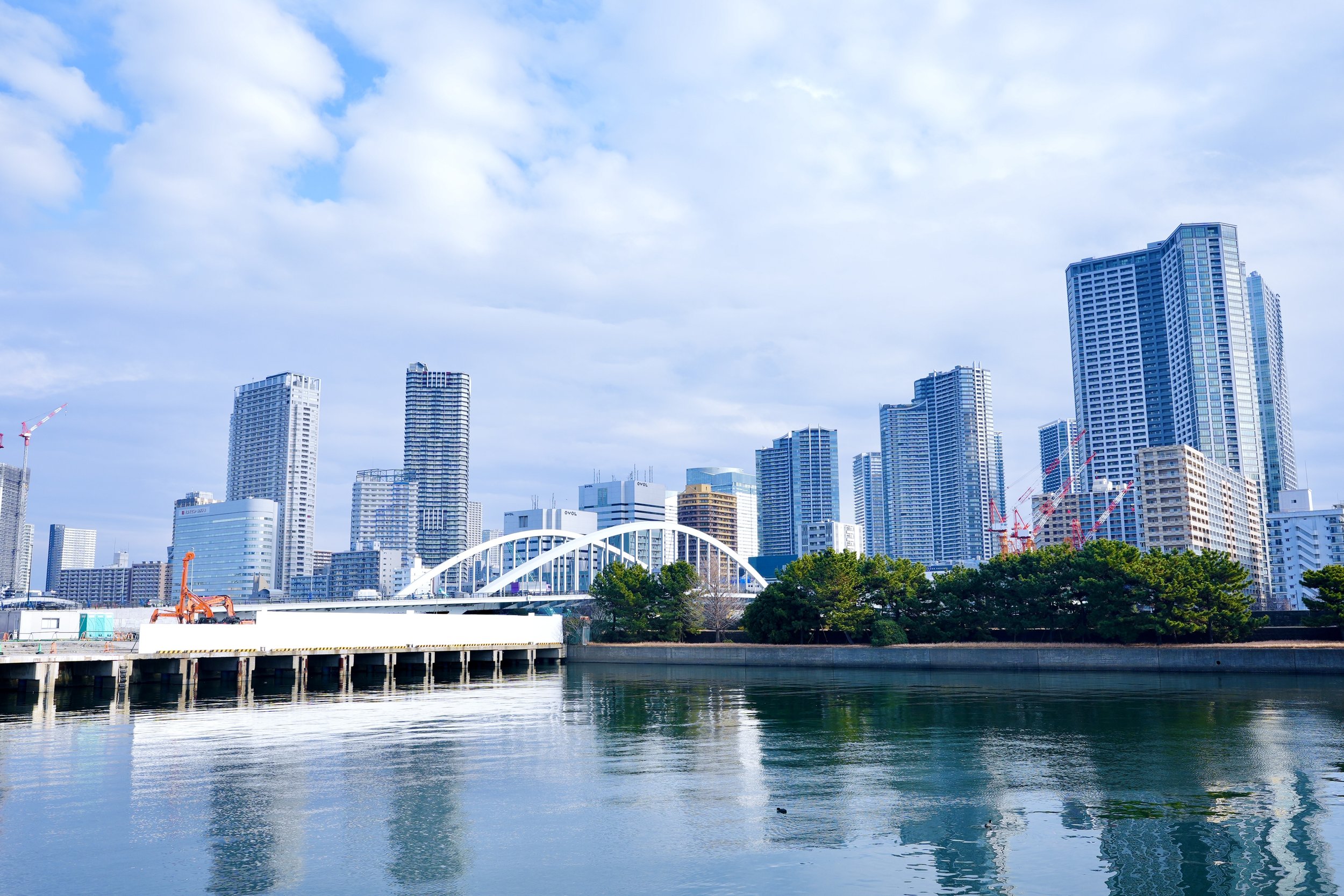
Capital reflected in water
Glass towers line the edge of Tokyo Bay. Their reflections ripple across the pond in distorted symmetry. Greater Tokyo’s economy approaches $1.5–2 trillion USD in annual GDP, rivaling entire nations. From a macroeconomic perspective, the skyline represents density, capital, throughput.
From the garden, it appears almost fragile.
Water flattens hierarchy. It reduces glass towers to shimmering shapes.
Infrastructure at maximum scale
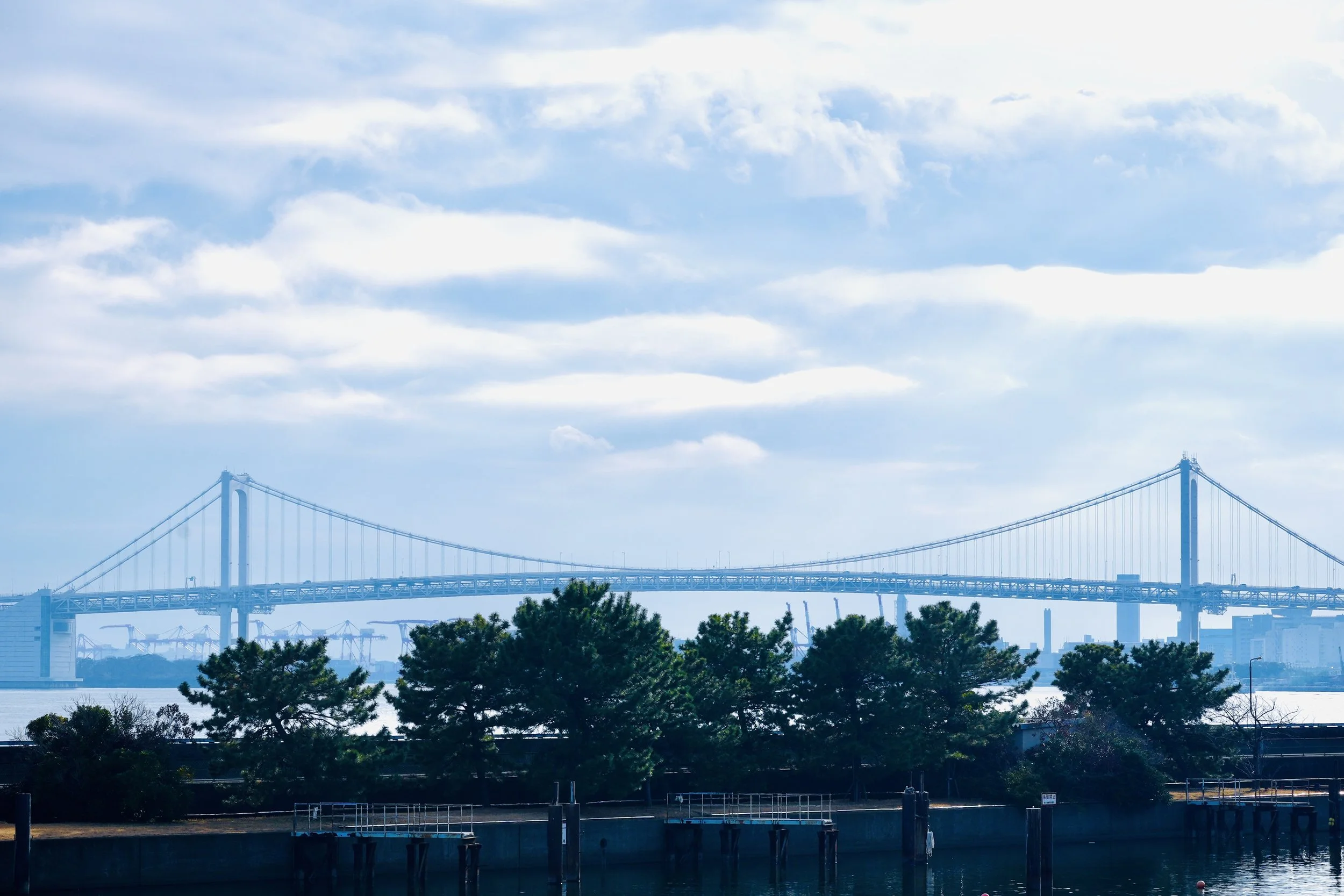
Far in the distance, a massive suspension bridge stretches across the water, nearly dissolving into mist. It is built for volume — for container ships, for logistics, for global supply chains.
Compare that to the wooden bridges inside the garden. One is optimized for throughput. The other for stillness. Both are solutions. They simply optimize for different objectives.
Tokyo’s rail system alone moves millions daily across more than 13 subway lines and dozens of commuter routes. The bridge is part of that larger algorithm. The garden is the pause between calculations.
Symmetry as reset
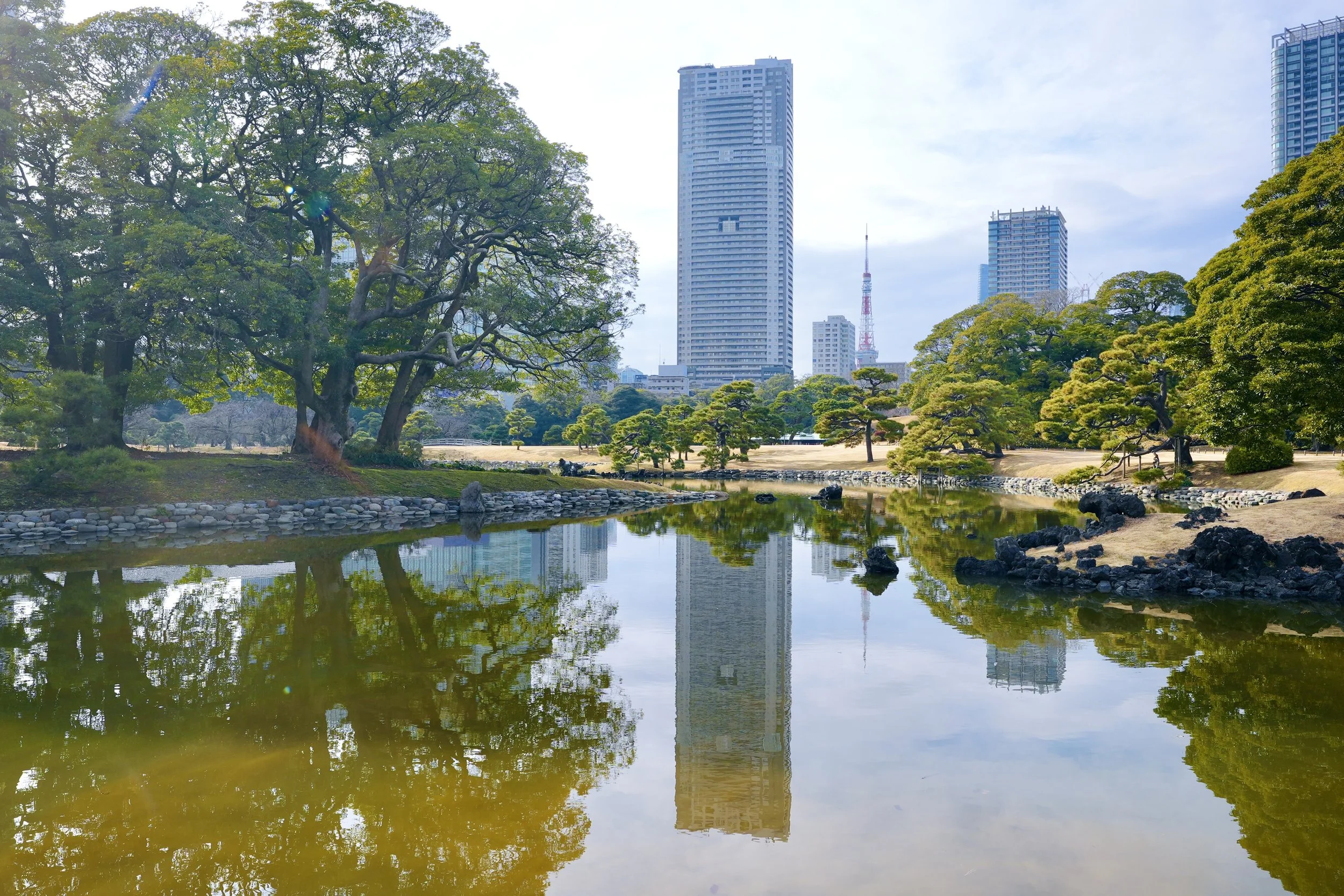
The pond doubles everything. Trees, sky, buildings — all inverted and softened. Reflection smooths edges. It reduces variance.
In a metropolis where even pedestrian crossings can process thousands per cycle, still water feels radical. It is unproductive in the best possible way.
Edo meets modern finance
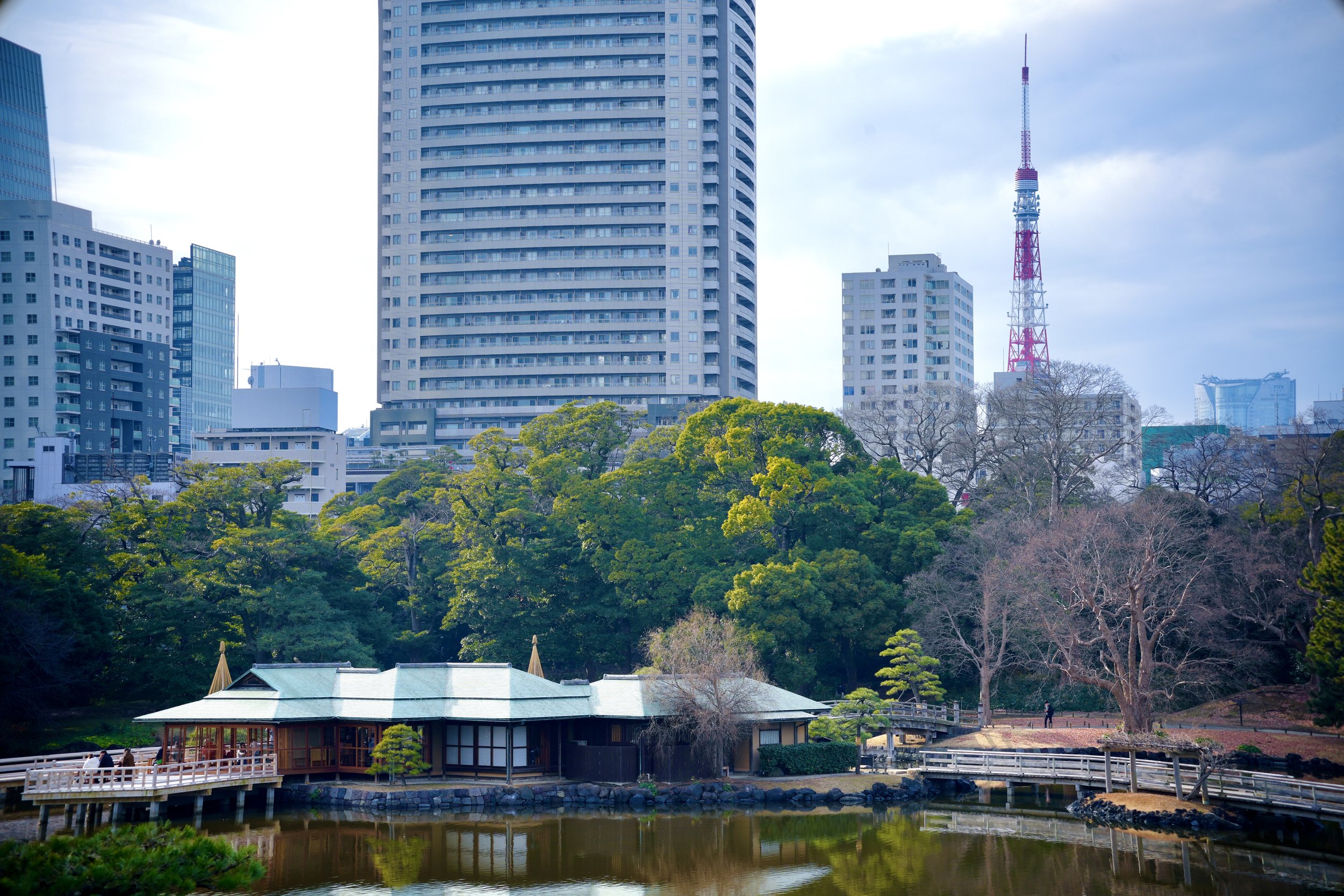
A traditional tea house rests low against the pond. Behind it, skyscrapers tower. The composition reads like a timeline collapsed into one frame.
Tokyo Tower, completed in 1958 at 333 meters tall, symbolized postwar acceleration. The tea house represents centuries prior. The skyline is the exponential curve. The tea house is the baseline.
Together, they create equilibrium.
Architecture of subtraction
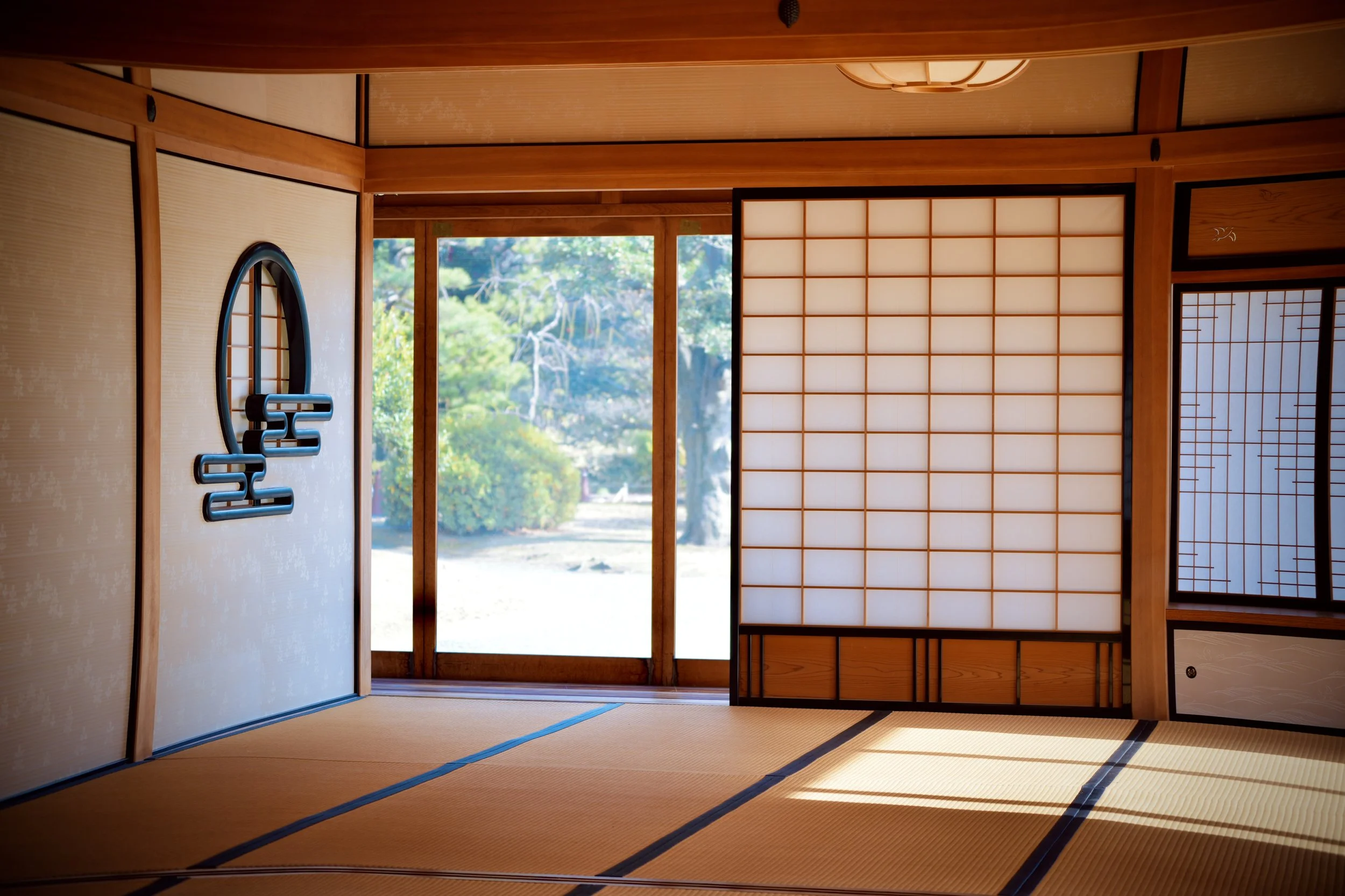
Shoji screens diffuse winter light across tatami mats. Every line is intentional. Every material natural. Traditional Japanese design embraces constraint. In many ways, it mirrors clean code — no excess, no ornamental noise.
Tokyo outside operates at high velocity. Inside this room, the standard deviation drops dramatically.
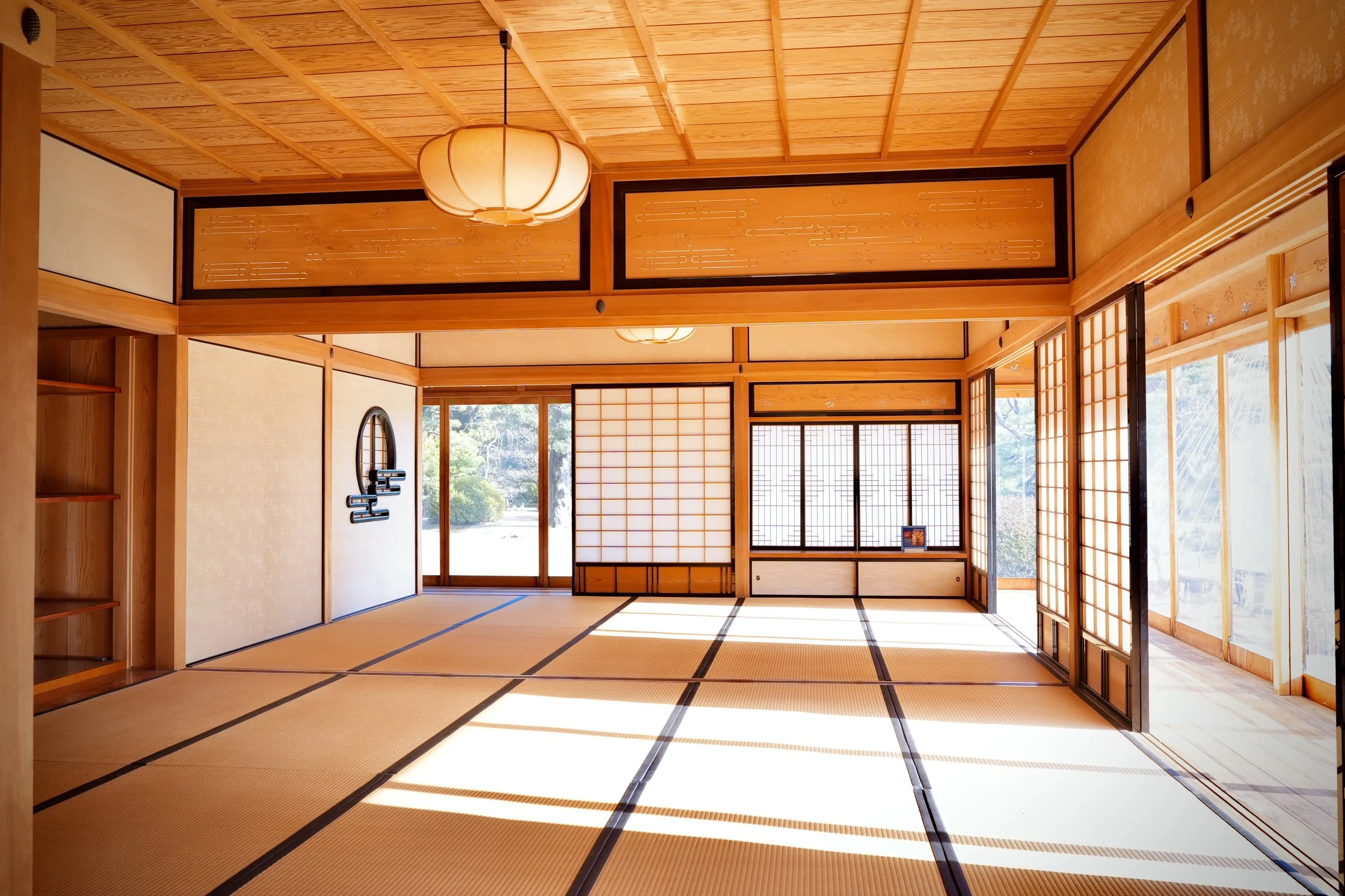
Low variance living
The repetition of wooden beams and woven mats creates visual rhythm. Stability emerges from symmetry. Even the light feels measured.
It becomes clear that calm is not accidental here. It is structured.
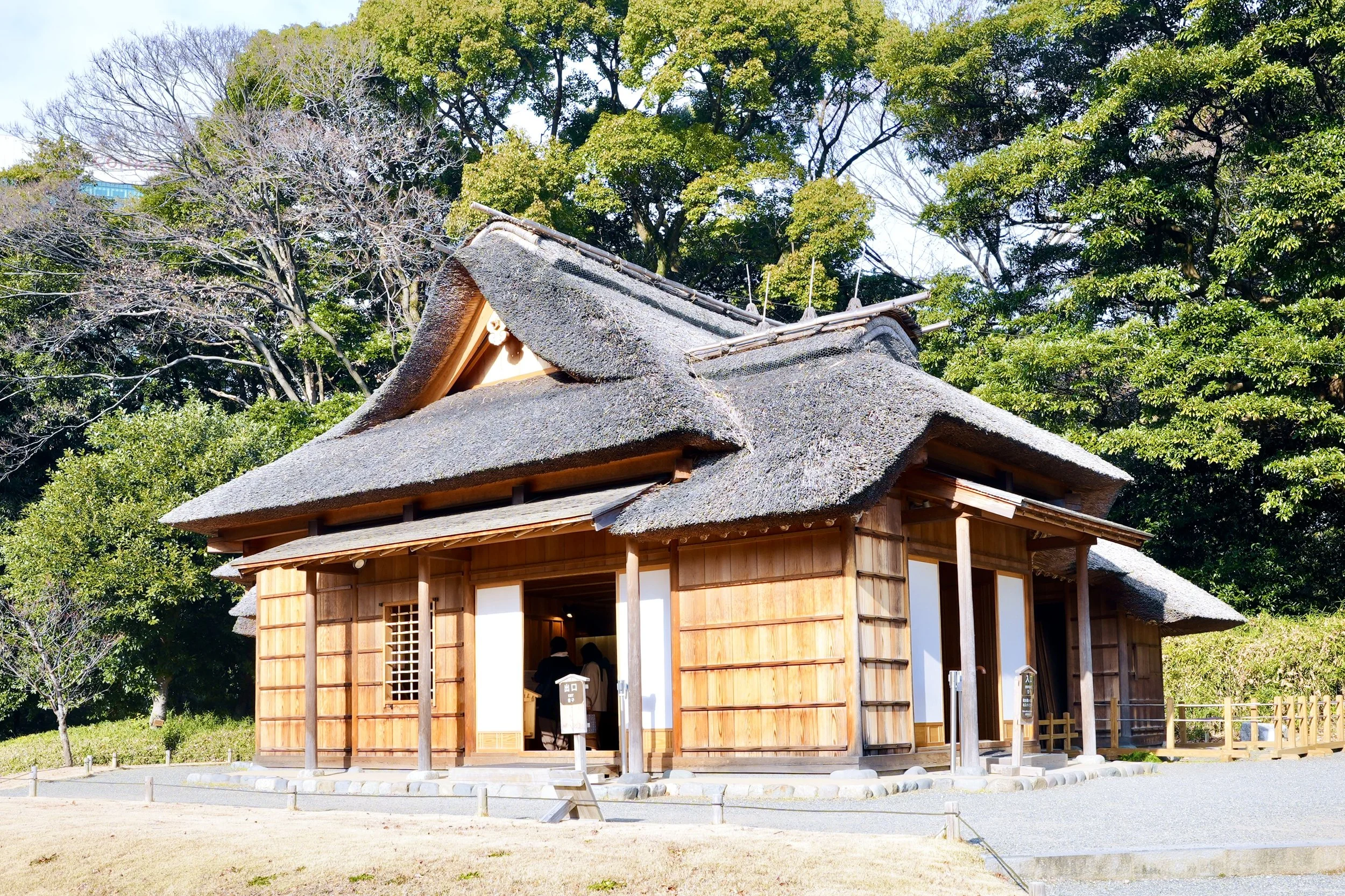
Material memory
The thatched roof absorbs the light differently than steel or glass ever could. It speaks of climate, of resource limitations, of centuries before reinforced concrete defined the skyline.
Data preserves figures. Architecture preserves memory.
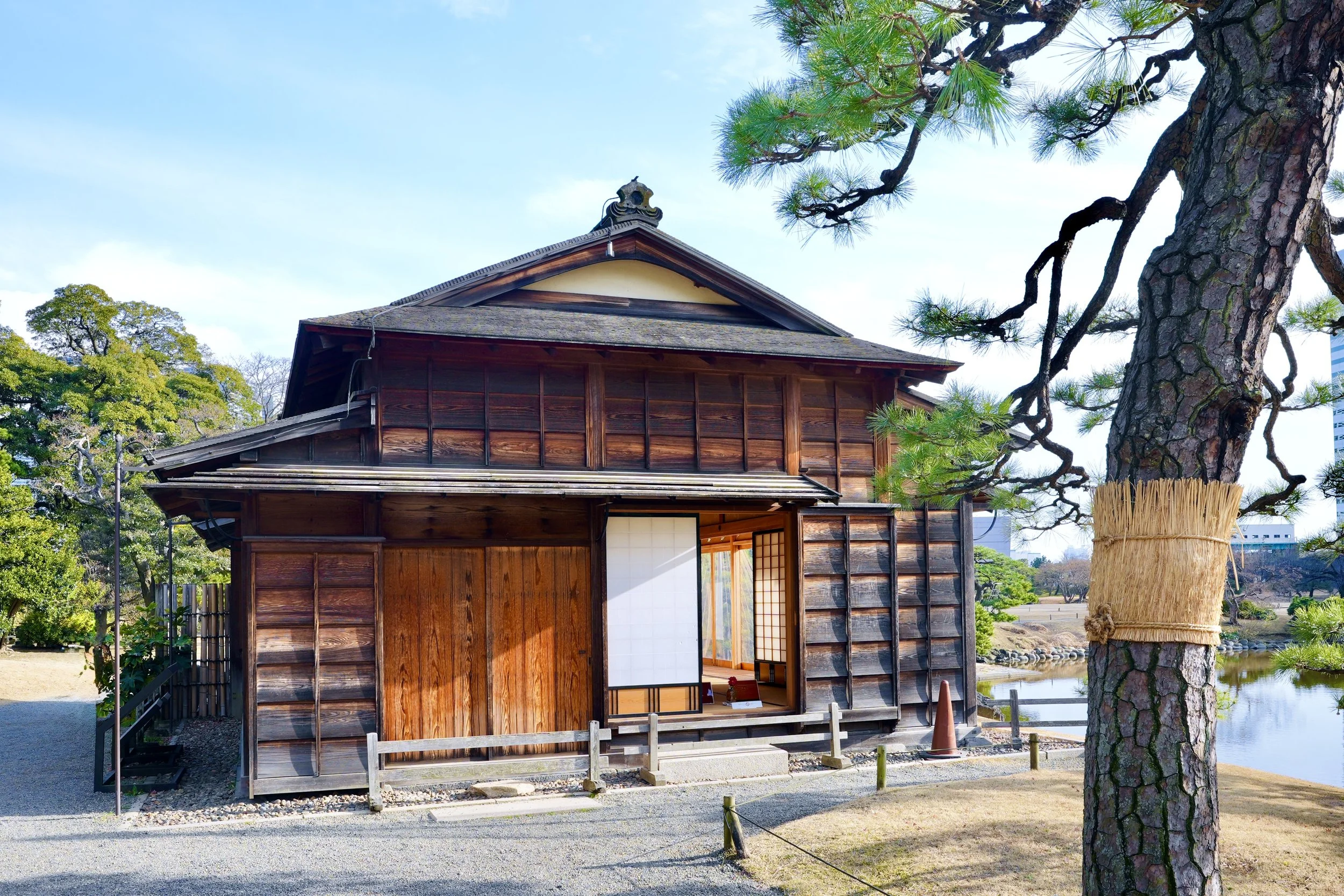
Balance through restraint
The house sits quietly beside the pond, framed by pine. There is nothing excessive in the composition. No overextension. No unnecessary complexity.
It resembles a well-regularized model — controlled, stable, resilient.
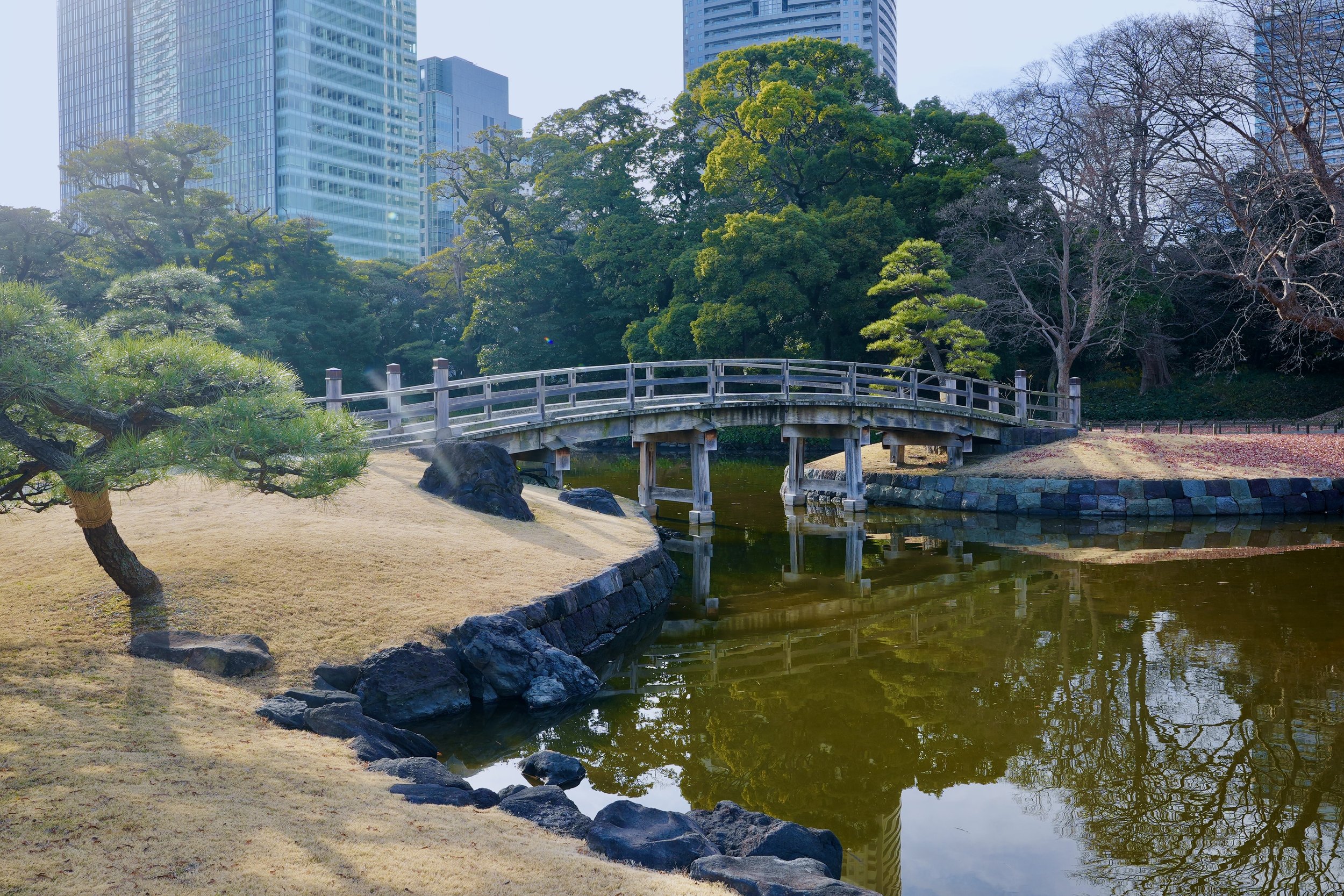
Crossing without urgency
Another wooden bridge arcs gently across the water. No rush. No crowd. Just slow foot traffic. In a city where trains depart with near-perfect punctuality, this bridge operates on a different schedule.
It answers to seasons, not seconds.
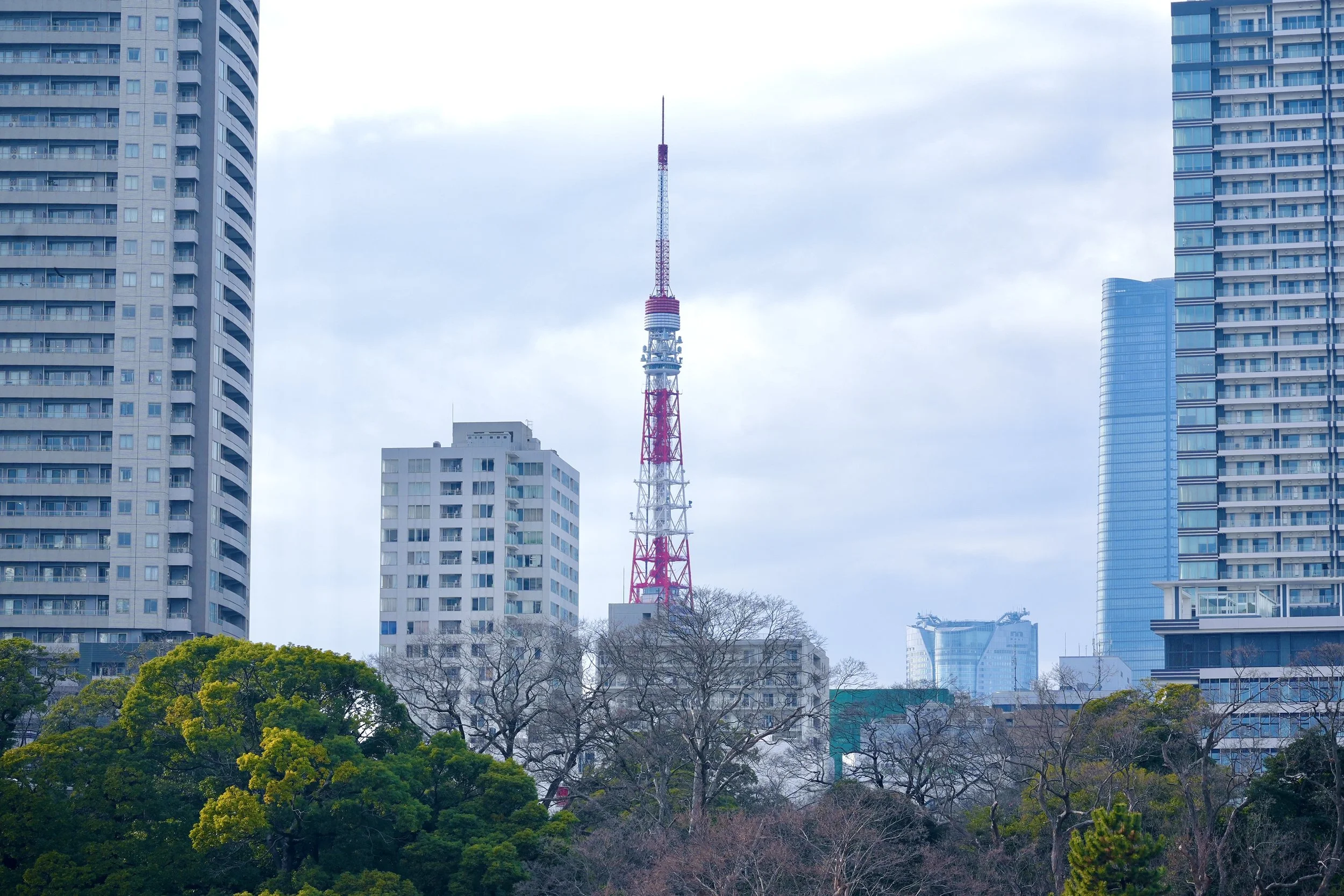
Perspective alters dominance
Tokyo Tower rises between branches and apartment blocks. Built at 333 meters, it once represented the pinnacle of height in the city. Today, it is dwarfed by newer skyscrapers.
From inside the garden, even it feels small.
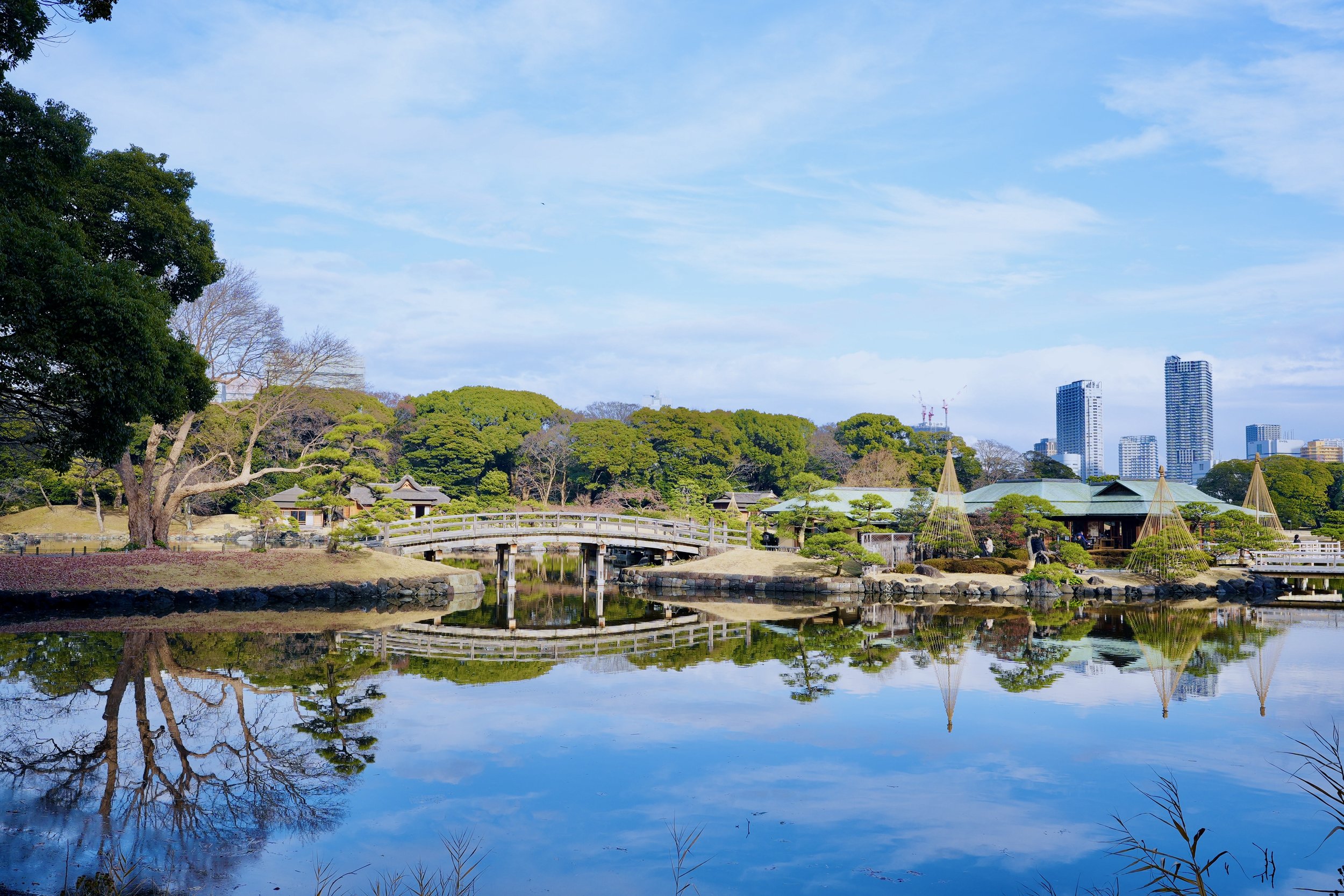
Parallel worlds
The tea house and its reflection create two versions of the same reality. Above water and below. Past and present. Nature and city.
Tokyo often feels like acceleration layered upon acceleration. Here, layers coexist without competition.
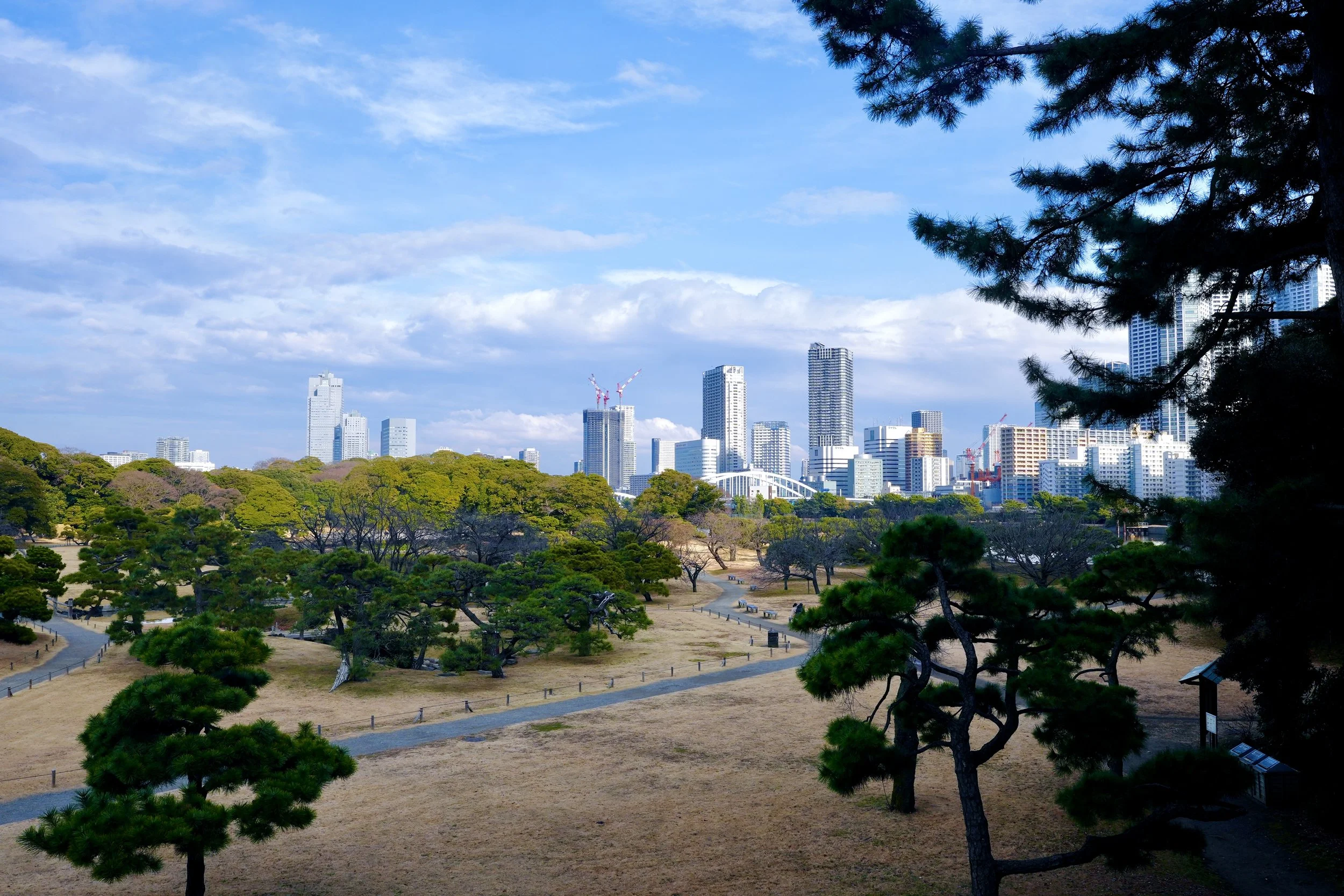
Green space as counterweight
The manicured pines spread outward like deliberate brush strokes. In a city where land value is among the highest in the world, allocating 25 hectares to preservation is not accidental. It is a strategic decision about livability.
Green space functions as infrastructure, even if it does not generate revenue per square meter.
From above, the relationship becomes clearer. The city encircles the garden. The garden softens the city. They are not opposites. They are interdependent systems.
Tokyo thrives because of density. It remains livable because of pockets like this.
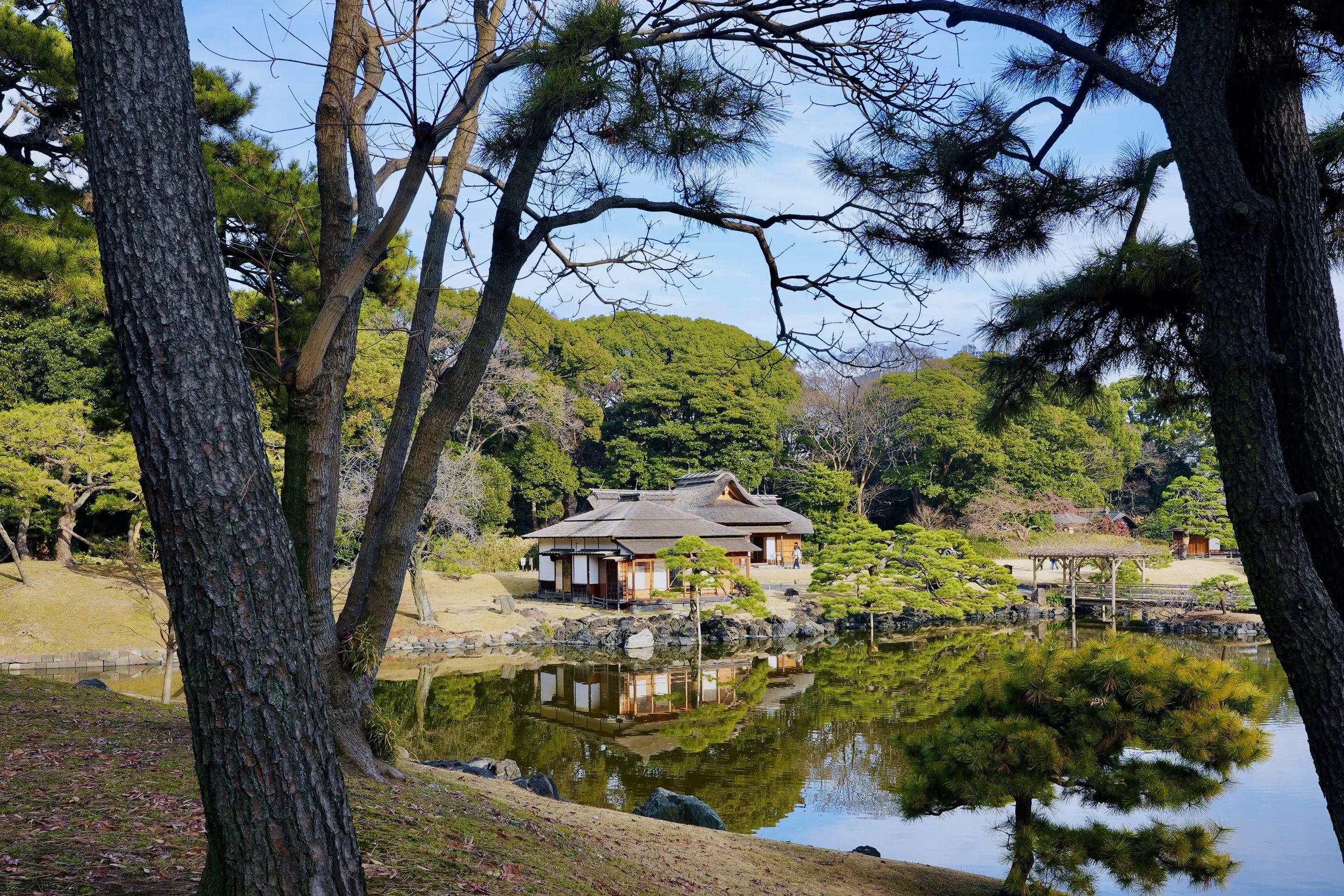
Stillness as conclusion
The final image captures reflection and structure in equal measure. A bridge, trees, skyline — all softened by water. The tension between acceleration and calm dissolves.
Tokyo processes millions daily through rail networks, financial markets, and vertical architecture. Hamarikyu processes none of that.
It simply holds space.
And in a metropolis defined by throughput, that might be its most valuable function.
To see more photos & videos from my travels visit the links below
happy traveling,
~Sean
