Ubon Ratchathani: First Impressions
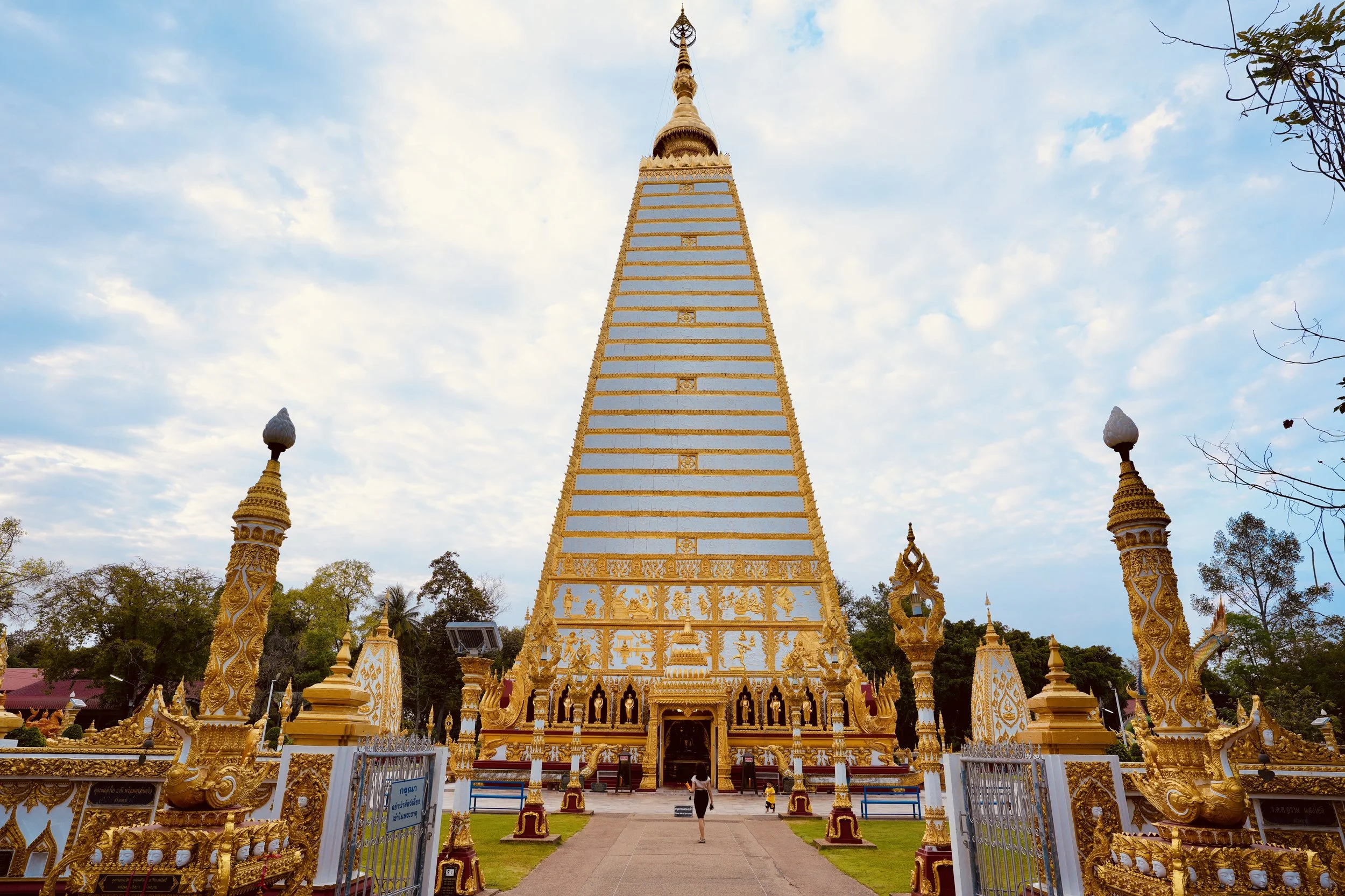
The central chedi of Wat Phra That Nong Bua — Ubon's quiet answer to Bodh Gaya, rising white against the Isan sky.
Six hundred and thirty kilometers from Bangkok, the road runs out of Thailand.
Not literally — but almost. Ubon Ratchathani sits at the southeastern edge of Isan, the vast plateau that makes up Thailand's northeast, where the province shares its borders with Laos to the north and east and Cambodia to the south. It is a city at the end of a line, in the geographic sense — the last major stop before the region dissolves into river and forest and the borders of three nations converge. Most travelers stop long before they reach it. That, it turns out, is their loss.
The metro area population of Ubon Ratchathani sits at around 521,000 — large enough to have shape and weight, small enough that it hasn't yet learned to perform for visitors. There are no rooftop bars advertising sunset views of the Mun River. There are monks on bicycles and market stalls assembling themselves in the dark at five in the morning, and old men drinking coffee from small cups, and the slow, unhurried logic of a city that has never needed to explain itself.
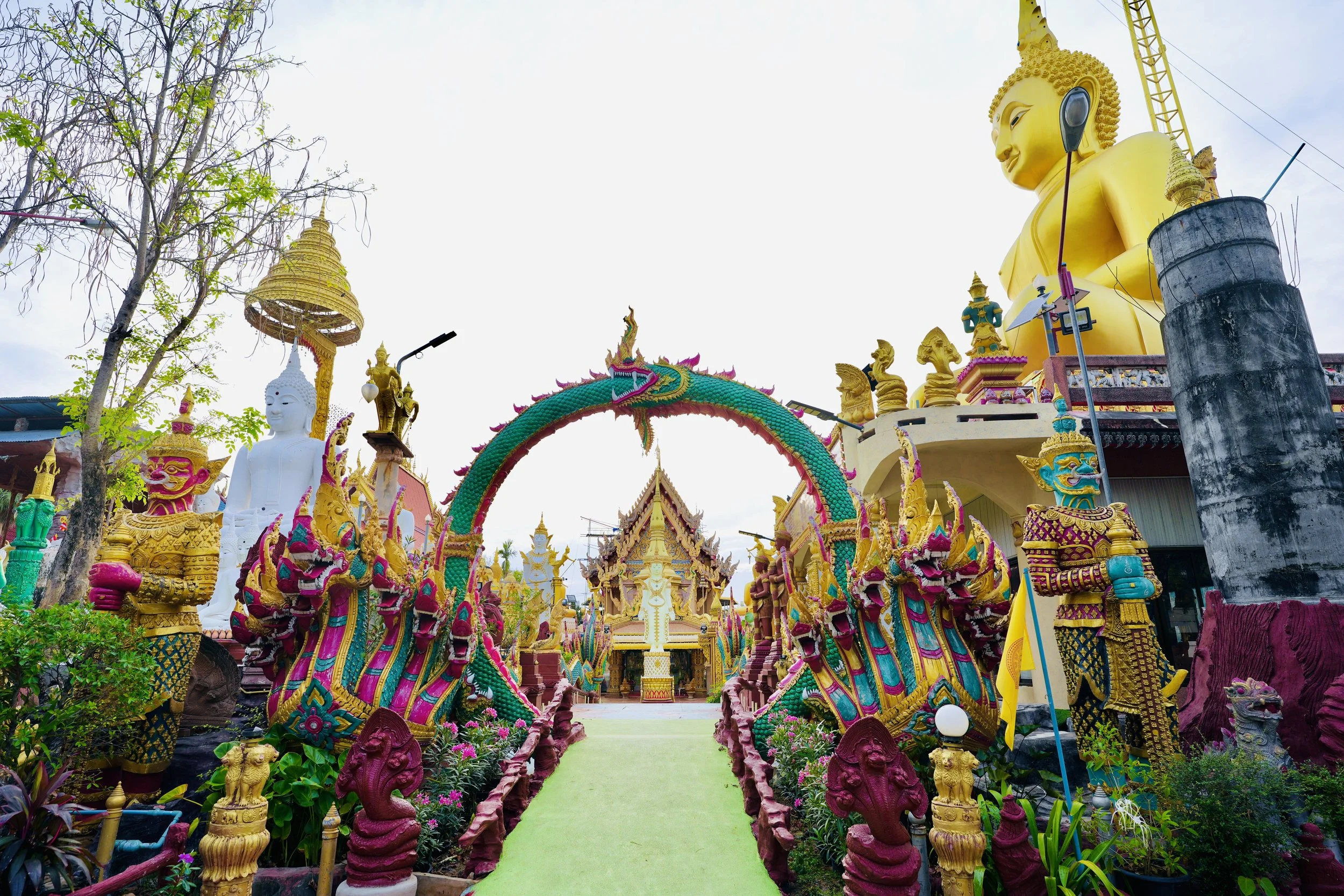
One of Ubon's older temples, carrying the Lao architectural inheritance that defines the city's spiritual character.
The name tells you something. Ubon — as it is almost always called — means "royal lotus city," and the lotus is not incidental. It appears on the provincial seal, in temple ponds, in the languid geometry of the Mun River at dusk. There is something deliberately quiet about a city that chose a flower as its symbol rather than a fortress or a flame.
What strikes you first is the texture of the place — the way Lao and Thai culture have folded into each other over centuries until the seam is invisible. The cultural and economic character of early Ubon Ratchathani formed under the strong influence of Lao traditions, visible in the architecture of the temples and in the local dialect. You hear it in the cadence of conversations at the morning market. You see it in temple rooflines that curve differently from those in Bangkok — more Lan Xang than Rattanakosin, more Vientiane than the capital. The city was founded in the late 18th century by settlers who escaped from Vientiane, and that origin hasn't faded. Ubon didn't arrive from Bangkok outward. It arrived from the river, inward.
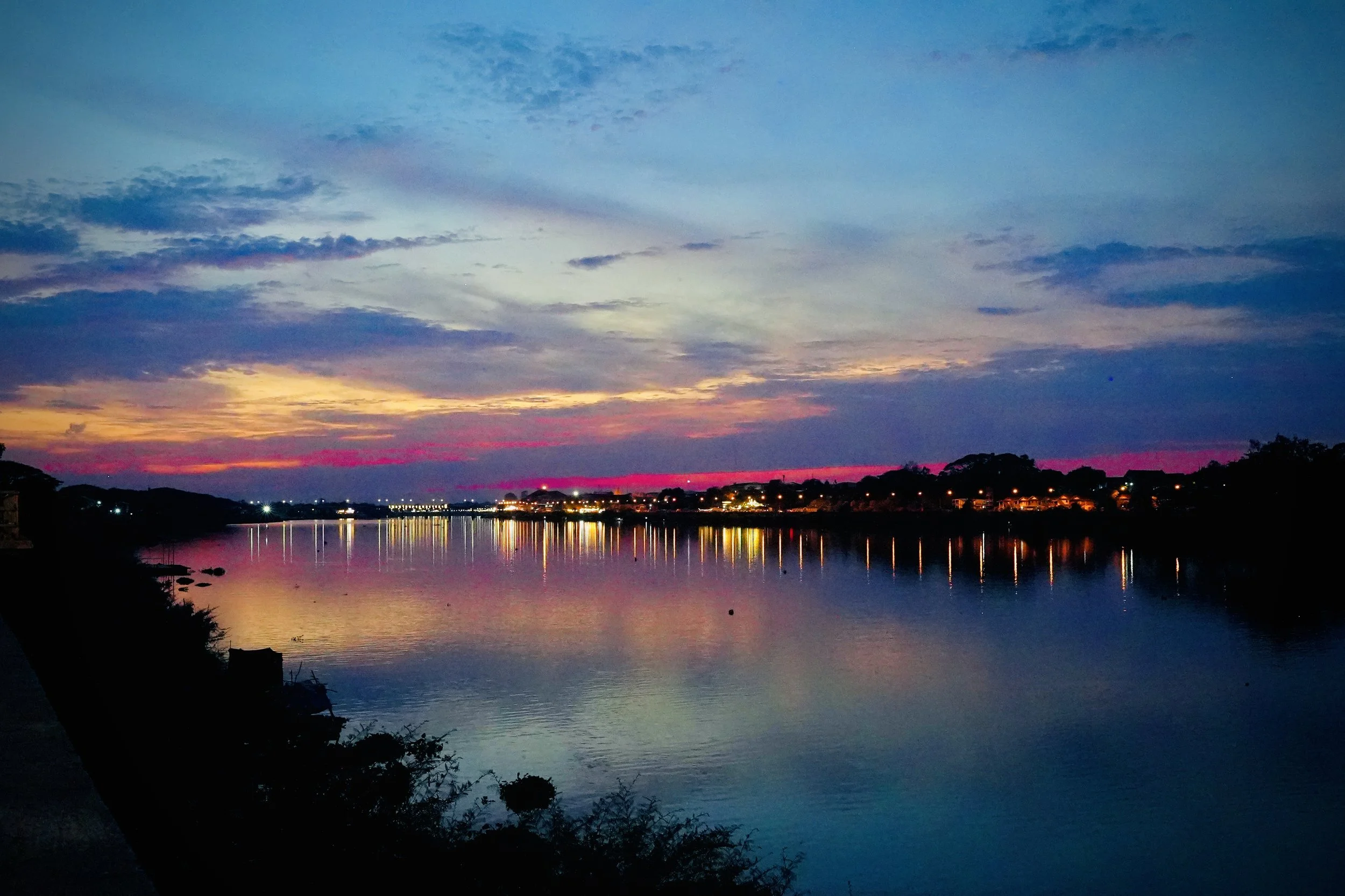
The Mun River at dusk, looking toward Warin Chamrap. Two cities, one river, one light.
The Mun River is the connective tissue of the city. Ubon sits on its northern bank — the Mun being the largest tributary of the Mekong — which once served as the city's primary transport artery. The suburb of Warin Chamrap sprawls across the southern bank, linked by bridges that carry the daily commute of a city that is, in practice, two cities sharing a river. In the evenings, the Mun turns a particular shade of pale gold that doesn't photograph the way it looks. You have to be standing on the bank to understand it.
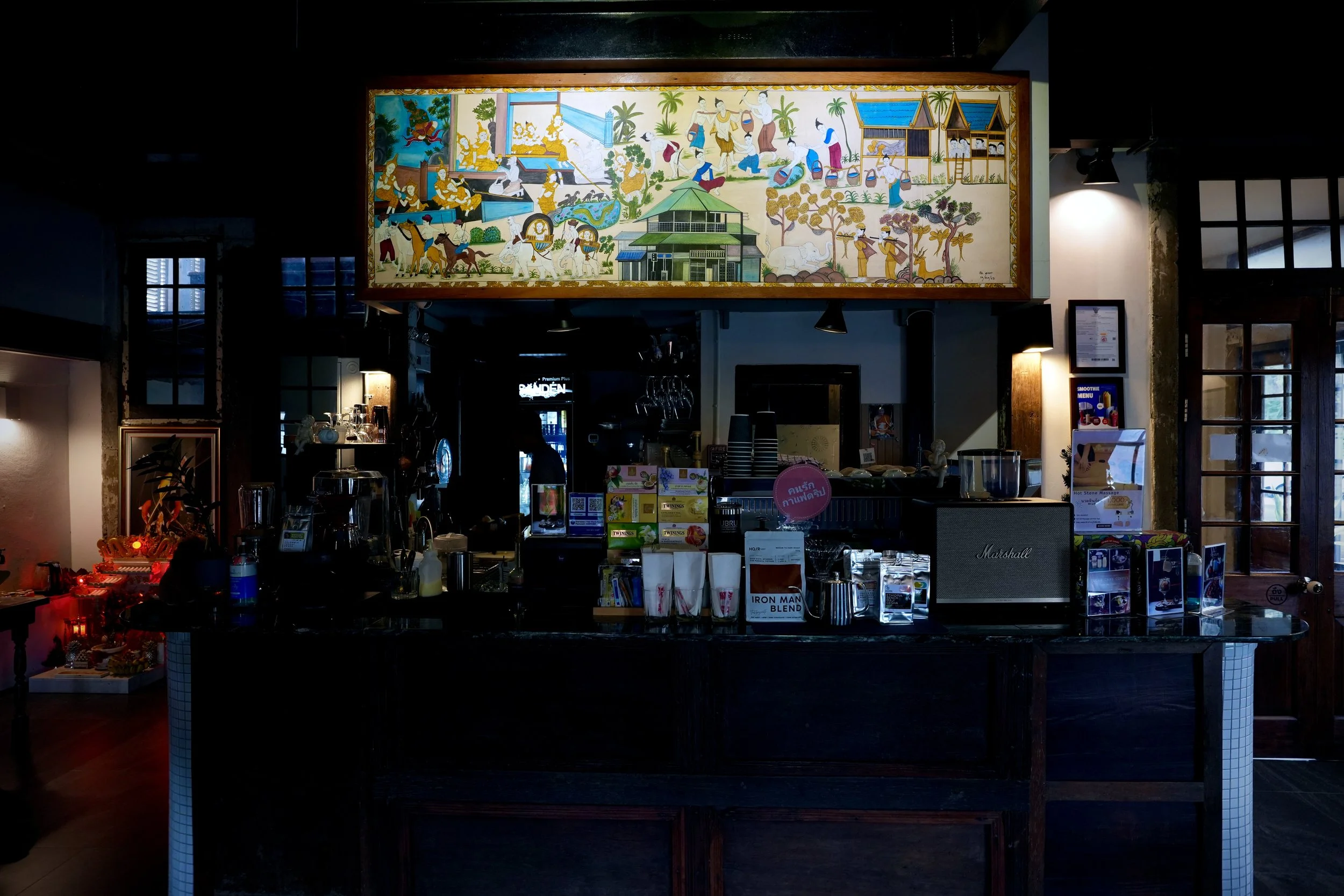
A quiet corner of Ubon's everyday life. The city has mastered the art of unhurried.
Isan is often described, from the outside, as Thailand's poorest region — an area whose people have for centuries eked out an existence on the Khorat Plateau as subsistence-level agrarians. Ubon Ratchathani province is the nation's leading rice-producing province, earning more than 10 billion baht a year from rice sales, with around half of its workforce in the agricultural sector. But poverty as a descriptor misses the particular dignity of a place that has always fed the country while remaining, somehow, on the country's periphery. The markets here have an abundance to them — sticky rice wrapped in banana leaves, whole grilled fish from the river, papaya pounded loud and sharp with enough chili to make your ears ring. The food is not simple. It is precise.
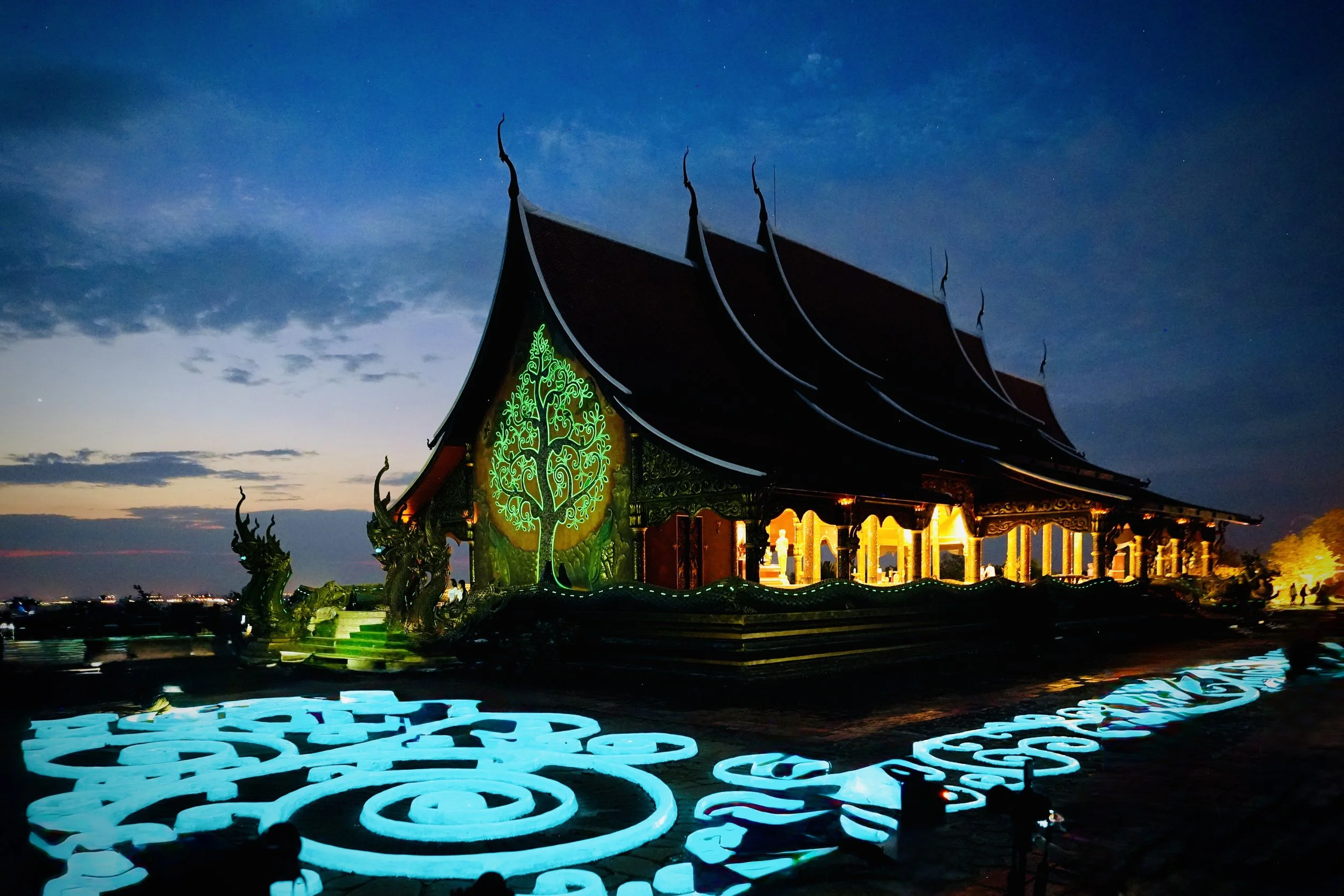
Light through temple glass, somewhere east of the city. In Ubon, the spiritual and the everyday share the same address.
Then there is the spiritual dimension, which in Ubon is inseparable from the physical landscape. The city is the birthplace of Ajahn Chah, the world-renowned meditation teacher who established one of the most significant forest monastery traditions in Theravada Buddhism, drawing practitioners from across the globe to a province that most of the world has never heard of. There is something quietly remarkable about that — a place whose most lasting export is not a product but a practice. Stillness, exported from the edge of the Mekong.
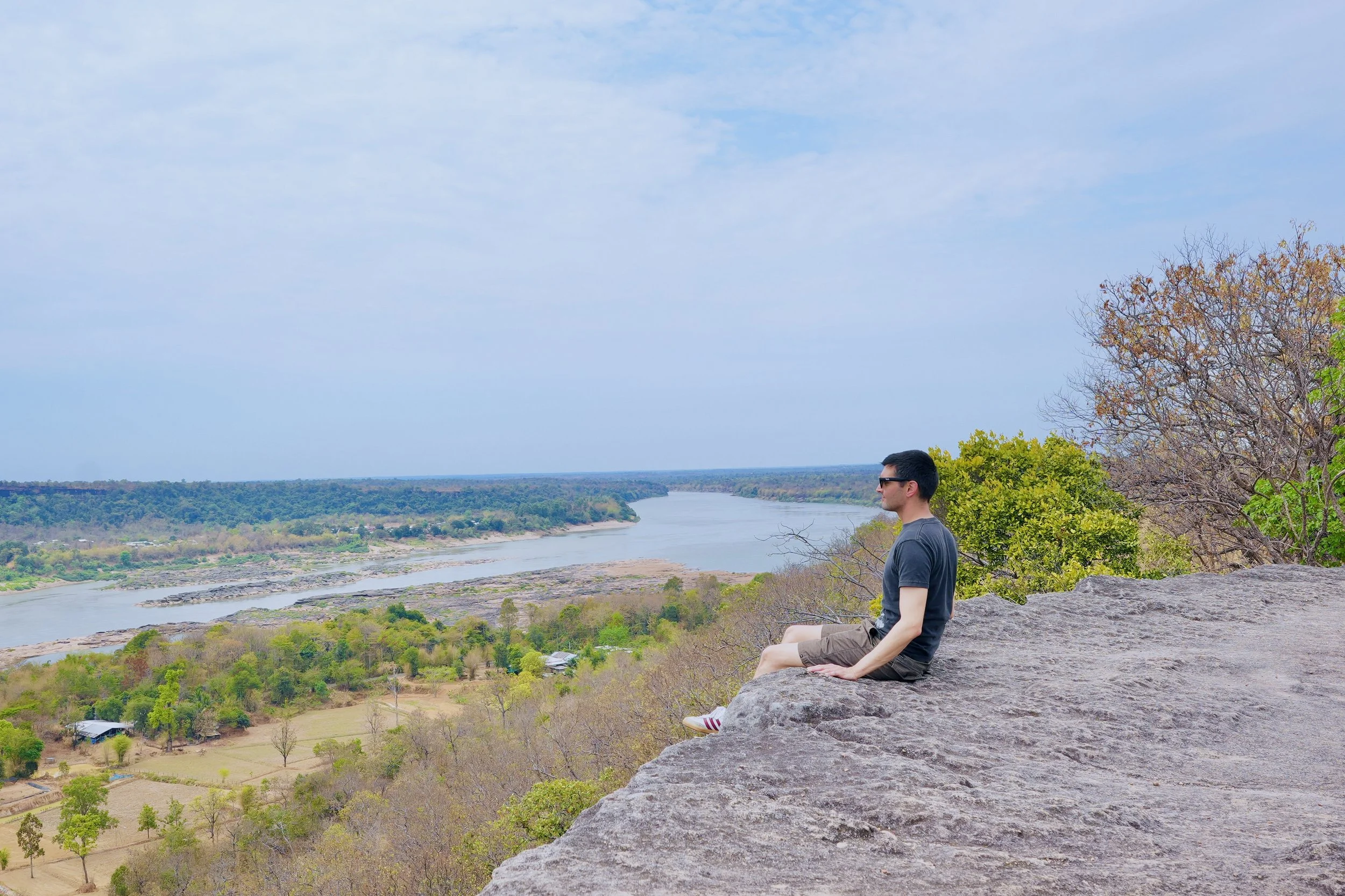
The edge of Thailand, looking east into Laos. This land was mapped long before borders existed.
Pha Taem National Park preserves prehistoric rock paintings along the Mekong River estimated to be 3,000 to 4,000 years old — depicting fishing, rice farming, and the daily life of communities who understood this land long before any border existed. Standing at the cliff edge in early morning light, looking east into Laos, with those painted hands and fish still visible on the sandstone below you, it is difficult to think of Ubon as peripheral to anything. It is, in fact, a center. Just not the kind that announces itself.
Numbers frame the outline of Ubon Ratchathani — its distance from the capital, its river, its rice, its borderlines. But numbers don't explain the particular unhurriedness of the place, or why you find yourself slowing down within hours of arriving, or why the city stays with you in ways that louder, more visited places don't.
This essay is the first in a series about time spent in Ubon and the province surrounding it. In the pieces that follow, the focus will move through Isan food and its logic, the temples and what they reveal about the city's layered histories, and the landscapes at the far eastern edge of Thailand — where the land ends and the river takes over.
Ubon Ratchathani does not try to impress you. That's precisely why it does.
To see more photos & videos from my travels visit the links below
happy traveling,
~Sean
